Category: Hearing Loss

At What Level of Hearing Loss Are Hearing Aids Recommended
August 30, 2026 Comments (0)

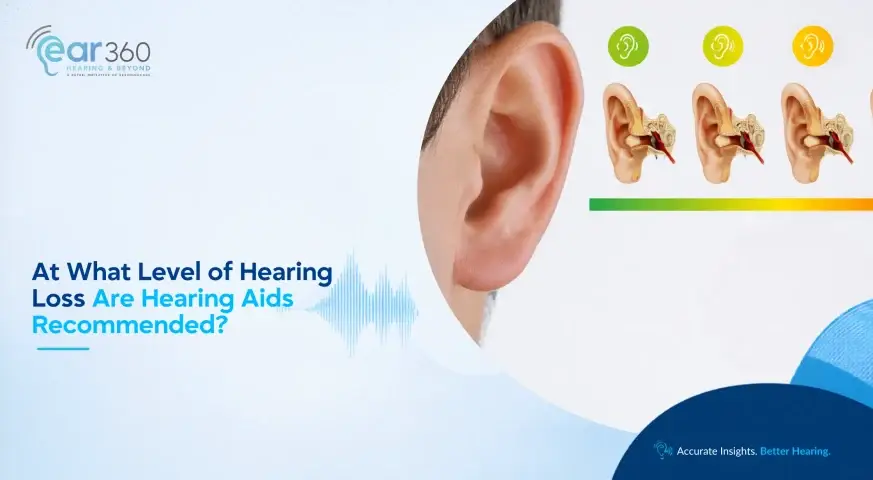
At What Level of Hearing Loss Are Hearing Aids Recommended?

TL; DR: This blog is aimed at adults experiencing hearing difficulties, older adults, caregivers, and family members who want to understand when hearing loss may require hearing aids and when they should consult an audiologist or ENT specialist. Hearing-aid recommendations are not based on decibel level alone. The blog explains that audiologists consider the severity and type of hearing loss, speech understanding, ear health, communication difficulties, lifestyle, and listening needs before recommending hearing aids. Even mild hearing loss may justify hearing aids. Mild hearing loss can affect speech clarity, high-frequency sounds, conversations in background noise, work, social interactions, and listening comfort, so patients should not wait for hearing loss to become severe before seeking an assessment. The blog helps patients understand hearing-loss levels and audiograms. It explains common hearing-loss ranges from slight and mild through moderate, severe, and profound hearing loss, while showing why an audiogram needs to be interpreted alongside real-world communication difficulties. Getting hearing aids is a clinical journey, not simply buying a device. If hearing aids are appropriate, effective care involves device selection, trial, proper fitting, personalised programming, real-life testing, and ongoing follow-up and fine-tuning with an audiologist. Not all cases of hearing loss start with a significant hearing loss. The first changes many people notice are slight, such as speech doesn’t sound as clear; listening in restaurants gets tiring, or the TV volume continually goes up. This frequently results in the question, “At what point does hearing loss warrant hearing aids? The one-size-fits-all approach to hearing aids doesn’t exist. Recommendations vary according to the severity and nature of the hearing loss, speech understanding ability, situations where you find yourself challenged, ear health, and communication needs. A professional hearing test combines all these factors. What Are the Signs You May Need Hearing Aids? If you have the following symptoms, think about having a hearing test: Have others repeat themselves. Feel that others are mumbling. Miss parts of group discussions. Have difficulty hearing others in noisy environments, e.g., restaurants or meetings. Loud music and loud mobile phones. Have difficulty hearing softer or higher-pitched voices. Experience fatigue from focusing on conversations. It’s not too late to seek help when hearing loss is significant. On paper, the changes can seem minor, but in the real world, they can create difficulties in communication or make it very tiring. Know More About Hearing Aid Prices in India by Type, Features and Technology Hearing Loss: Symptoms, Causes, Types & Treatment Options Sudden Hearing Loss: Symptoms, Causes & When It Is an Emergency Does Mild Hearing Loss Require Hearing Aids? Sometimes, yes. Soft speech, consonants, high-frequency sounds, and talking in background noise are among the areas affected by mild hearing loss. It may be possible to hear someone talking, but you may miss too many words to lose the meaning. The answer to the question of what level of hearing loss needs hearing aids should not be taken for granted, so mild hearing loss shouldn’t be ruled out. If it is impacting work, family communication, social interaction, listening, comfort, or safety, an audiologist can discuss with family members the use of hearing aids or another appropriate hearing management option. What Level of Hearing Loss Requires Hearing Aids? The intensity of a sound is measured on a decibel hearing level (dB HL). Commonly used clinical ranges are: Hearing Level Approximate Hearing Threshold What You May Notice Normal or near-normal Up to about 15–20 dB HL Most normal conversation is heard. Slight hearing loss About 16–25 dB HL Some very soft or distant voices may not be heard. Mild hearing loss 26–40 dB HL Some parts of speech and conversation may be hard to understand. Moderate hearing loss 41–55 dB HL Normal speech may not be easily understood. Speech may become garbled. Some degree of hearing loss (40- 70 dB). 56–70 dB HL Amplification is frequently seen as Severe hearing loss 71–90 dB HL Much ordinary speech may be missed without amplification Profound hearing loss 91+ dB HL Without the proper hearing technology, access to speech may be extremely restricted. These ranges are approximate, and the terms used to indicate the degree of hearing loss can differ slightly between clinical systems. Hearing aids are typically recommended for mild to severe hearing loss if there is a clinically appropriate need for amplification and a measurable communication difficulty. An audiologist or ENT specialist may also discuss the need for further hearing technology or specialist evaluation for severe or profound hearing loss. Understanding Your Audiogram and What Level of Hearing Loss Requires Hearing Aids An audiogram is a chart that indicates the quietest sounds that can be heard at various pitches. Frequency or pitch is plotted on the horizontal axis, and hearing level (dB HL) is plotted on the vertical axis. Individuals who have an average hearing level can experience different challenges. For instance, consonants like “s,” “f,” and “sh” might be difficult to hear in high-frequency hearing loss. You might be able to hear a voice and feel the words are not clear. That is why it’s important to take a look at more than one average number to understand what degree of hearing loss calls for hearing aids. The audiologist takes into account the extent, nature, and frequencies involved in the loss of hearing and how this affects speech comprehension. Why Decibel Level Alone Does Not Decide Whether You Need Hearing Aids   Pure-tone threshold gives us our threshold of detection in a quiet test environment. Listening each day is more complex. The audiologist might also take into account: Speech understanding Which ear is affected or both ears. The nature and characteristics of hearing loss Challenge to hear particular sounds in the background. Cases of ear-health findings and tinnitus The work and language needs Your ability to comfortably handle and use a device Previous hearing-aid experience Your self-related communication objectives and choices. The functional impact is therefore of importance, in addition to the audiogram. A person with mild hearing loss who frequently goes to meetings or

Read More
Sudden-Hearing-Loss-Symptoms-Causes-and-When-It-Is-an-Emergency
August 30, 2026 Comments (0)

Sudden Hearing Loss: Symptoms, Causes, and When It Is an Emergency

TL; DR; This blog is for people who experience a sudden drop in hearing, ringing in one ear, ear fullness, dizziness, or muffled hearing, as well as their family members seeking to understand when sudden hearing loss requires emergency medical care. Recognize sudden hearing loss as a medical emergency: The blog explains the warning signs of sudden sensorineural hearing loss (SSHL), including rapid hearing loss in one ear, tinnitus, ear fullness, and dizziness, emphasizing that immediate medical attention within 24–72 hours offers the best chance of recovery. Understand the causes and diagnosis: Readers learn about possible causes, including viral infections, circulatory problems, autoimmune diseases, acoustic neuroma, trauma, and ototoxic medications. It also explains how audiological tests, otoscopy, tympanometry, MRI, and blood tests help identify the cause and severity. Learn about treatment options and recovery: The article covers the importance of corticosteroid treatment and intratympanic steroid injections, as well as hearing rehabilitation options, including hearing aids, CROS systems, and tinnitus management, for patients with incomplete recovery. Know why prompt action matters: The blog reinforces that delaying treatment can lead to permanent hearing loss and highlights Resonnocare’s comprehensive hearing assessments, collaboration with ENT specialists, online consultations, hearing aid trials, and ongoing aftercare to support patients throughout their recovery journey. Sudden hearing loss is an unexpected experience, which can be frightening. You can hear a good sound out of one ear one minute and the next minute it’s blocked, muffled, or you can’t hear it well at all. Others experience pressure, difficulty understanding speech, dizziness, or tinnitus. Many people will wait for it to pass, as it can feel like earwax or a cold or temporary plugging of the ear, and wait for it to “clear up. But sudden hearing loss is different from gradual hearing loss. At times, it may be a medical emergency, particularly when there is a sudden loss of hearing in one ear. Putting off care can decrease the likelihood of a better recovery. It is important to obtain assessment as early as possible if you or a loved one has sudden hearing loss. An early hearing test and medical assessment can help determine the possible cause and next steps. What Is Sudden Hearing Loss? Also known as sudden sensorineural hearing loss (SSHL) in clinical settings, sudden hearing loss is an unexplained, rapid decline in hearing (usually in one ear). It can manifest over hours or seem instant. The development of this condition is alarming because it progresses very quickly and drastically. People can hear normally at bedtime, but upon waking, their hearing may have declined in one ear, leaving them with one impaired ear. Some see it when they’re talking on the phone or listening to music. The hearing can be low or even muffled in the other ear (more severe cases). It is known as sensorineural because it is usually due to damage to the cochlea (inner ear), the auditory nerve, or the pathways that carry sound signals to the brain. This distinction is important since it influences the diagnosis and treatment of the condition. Urgent Action: What to Do if Your Hearing Suddenly Drops If hearing in one or both ears suddenly becomes significantly reduced, muffled, blocked, or different over a few hours or days, seek urgent medical or ENT evaluation rather than waiting for it to clear on its own. This is especially important when the hearing change: Appears suddenly after waking Affects one ear much more than the other Develops over hours or within a few days Occurs with new tinnitus Occurs with dizziness, vertigo, or imbalance Feels like a blocked ear but does not resolve Makes speech suddenly much harder to understand Occurs without an obvious explanation Do not postpone assessment while waiting to see whether the ear “opens” overnight. Sudden sensorineural hearing loss can require time-sensitive medical treatment, and routine hearing-aid decisions should come later, after the urgent cause and treatment pathway have been assessed. What Counts as “Sudden” Hearing Loss? Sudden hearing loss does not have to mean complete deafness in a single instant. A sudden change can also feel like a rapid reduction in hearing, severe muffling, or a major difference between the ears developing over hours or a few days. Examples include: You go to bed hearing normally and wake with one ear significantly muffled One ear suddenly sounds much quieter during a phone call Music suddenly sounds unbalanced between the ears Speech becomes noticeably unclear in one ear over the course of a day A blocked-ear sensation appears suddenly and hearing remains reduced New tinnitus appears at the same time as a sudden hearing change Hearing becomes reduced together with dizziness or vertigo A sudden change should be evaluated based on how quickly it appeared, not only on whether hearing disappeared completely. What Are the Symptoms of Sudden Hearing Loss? By knowing what to look for, people can act quickly, and it’s important with this condition. The most frequent symptoms are a sudden, dramatic decrease in hearing in one ear; a feeling of pressure or fullness in the affected ear; ringing, buzzing, or hissing sounds in the ear (tinnitus); and, in a few cases, dizziness or vertigo. The sound seems to come from one ear instead of both, or it sounds muffled or as though the ear is plugged, like you are underwater or have plugged ears on an airplane. In contrast, the blockage doesn’t go away with swallowing or yawning. Sudden hearing loss may not be painful to everyone. If a child doesn’t complain of pain, it doesn’t mean it isn’t a serious problem. If hearing has decreased significantly in one ear for no apparent reason, it’s worth getting evaluated as soon as possible. For a broader overview of ear symptoms that warrant clinical attention, the Resonnocare ear symptoms and conditions page provides helpful guidance on when to be concerned. Sudden Hearing Loss in One Ear vs Both Ears Sudden hearing loss most commonly raises urgent concern when one ear changes abruptly, but a rapid change

Read More
Mild-Hearing-Loss-Symptoms-Test-Results-Do-You-Need-Hearing-Aids
August 30, 2026 Comments (0)

Mild Hearing Loss: Symptoms, Test Results & Do You Need Hearing Aids?

TL: DR; This blog is for adults experiencing early signs of hearing loss, parents of children with hearing concerns, older adults with age-related hearing changes, and anyone unsure whether mild hearing loss requires treatment or hearing aids. Recognize the early signs of mild hearing loss: The blog explains common symptoms such as difficulty understanding conversations in noisy environments, asking people to repeat themselves, difficulty hearing soft or high-pitched voices, listening fatigue, tinnitus, and gradually withdrawing from social interactions. Understand the causes and diagnosis: Readers learn that mild hearing loss can result from aging, noise exposure, ear infections, earwax buildup, genetics, certain medications, or medical conditions. It also explains how audiologists diagnose hearing loss using pure tone audiometry and speech discrimination tests. Learn when hearing aids may help: The article clarifies that not everyone with mild hearing loss immediately needs hearing aids. The decision depends on communication challenges, lifestyle, work requirements, tinnitus, and progression of hearing loss. It also highlights the value of a hearing aid trial before making a long-term decision. Importance of early intervention and expert care: The blog emphasizes that early treatment of mild hearing loss can improve communication, cognitive health, and quality of life. It also outlines Resonnocare’s comprehensive hearing assessments, personalized care plans, home visits, video consultations, and ongoing aftercare support. Mild hearing loss is a gradual process. Most sounds are still audible, familiar voices can be heard, and you can still handle routine conversations, which can make it seem that nothing is amiss. However, you may slowly find yourself asking people to repeat themselves, having trouble hearing them in busy environments, turning up the TV volume, or getting tired after a long conversation. The changes take place over time; therefore, many people adapt without realizing it. They sit closer, don’t join in any groups, try to read their lips, or think everyone is speaking quietly. That’s why individuals with subtle hearing loss may not realize for years that they aren’t hearing as they should, until it begins to impact how they communicate, their self-assurance, relationships, and personal health. What Is Mild Hearing Loss? The clinical criterion for mild hearing loss is a hearing threshold of 26-40 dB HL. This, in practical terms, means that some consonant sounds in speech may be harder to hear, as may be the case with soft sounds and quiet conversations. Individuals with mild hearing loss may hear well in quiet settings, such as one-on-one conversations. It is easier to notice when there is background noise, in group situations, or when a person is located in another room. This is why, for so many people, hearing loss is often not diagnosed for so long; it is a measurable, actual hearing loss, but most of the time, life is not an awful experience. Mild hearing loss may be in one ear (unilateral) or both ears (bilateral). It may occur at birth, gradually over time as you get older, or following an illness, exposure to noise, or other events. What Does a Mild Hearing-Loss Result on an Audiogram Actually Mean? A mild result on an audiogram means that some sounds need to be louder before you can detect them compared with someone whose hearing thresholds are within the expected range. However, the number on the audiogram does not by itself show how difficult communication feels in daily life. Two people with similar mild hearing thresholds may have very different experiences because the impact also depends on: Which frequencies are affected Whether high-frequency speech sounds are difficult to hear Whether one ear or both ears are affected Speech-understanding ability The amount of background noise in everyday environments The distance from the speaker Work and social communication demands Whether tinnitus is also present Whether hearing is stable, fluctuating, or progressively changing This is why a mild audiogram result should be interpreted together with speech testing, symptoms, communication difficulties, medical history, and real-life listening needs rather than being treated as a number alone. Can Mild Hearing Loss Still Cause Major Everyday Difficulty? Yes. “Mild” describes the measured hearing level; it does not necessarily describe how mild the communication problem feels. A person who spends most of the day in quiet one-to-one conversations may notice relatively little difficulty, while someone working in meetings, classrooms, restaurants, or busy offices may struggle much more. Situation What mild hearing loss may feel like Quiet one-to-one conversation Speech may remain relatively easy when the person is close and clearly visible. Restaurant or café Background conversation can make important speech sounds difficult to separate. Work meeting Soft-spoken colleagues, people sitting farther away, or multiple speakers may be difficult to follow. Video or phone call Loss of visual cues or inconsistent sound quality can make words easier to miss. Family gathering Rapid conversation and several people speaking can increase listening effort. Television Dialogue may feel less clear even though music and other sounds remain audible. Conversation from another room Distance and reduced visual cues can make speech harder to understand. Car journey Road and engine noise may mask softer parts of speech. The decision about monitoring or hearing support should therefore consider where you struggle not only the degree written on the hearing report. What Causes Mild Hearing Loss? Mild hearing loss is caused by similar factors or more than one factor in many cases, as are other levels of hearing loss. One of the most frequent contributors is likely to be age-related change. Starting in middle age, hearing begins to change naturally, usually with a loss of the ability to hear higher frequencies. This usually manifests as a slight hearing impairment in the early stages and can worsen if not treated. Over time, noise may damage the delicate hair cells of the inner ear – either from work-related environments or from recreational or personal listening habits, especially when listening through earphones at high volume. Children can experience mild hearing loss due to ear infections and middle ear fluid. This is usually only temporary, but repeated infections may result in more permanent

Read More

Resonnocare Health-Tech Private Limited Provides hearing and audiology services through a structured, clinically guided approach.

Popular Clinic Locations:

Delhi | Bangalore | Pune | Ludhiana

contact info

RESONNOCARE HEALTH-TECH PVT. LTD

Head Office 403, Office Block ‘C’

4th Floor – Above Retail Block R1 & R5,

M3M URBANA, Sector 67, Gurgaon 122101 Haryana

2026, All rights reserved by Resonnocare  health-tech private limited