Category: Audiologist

Audiometry-Test-Procedure-Cost-How-to-Read-the-Results
July 14, 2026 Comments (0)

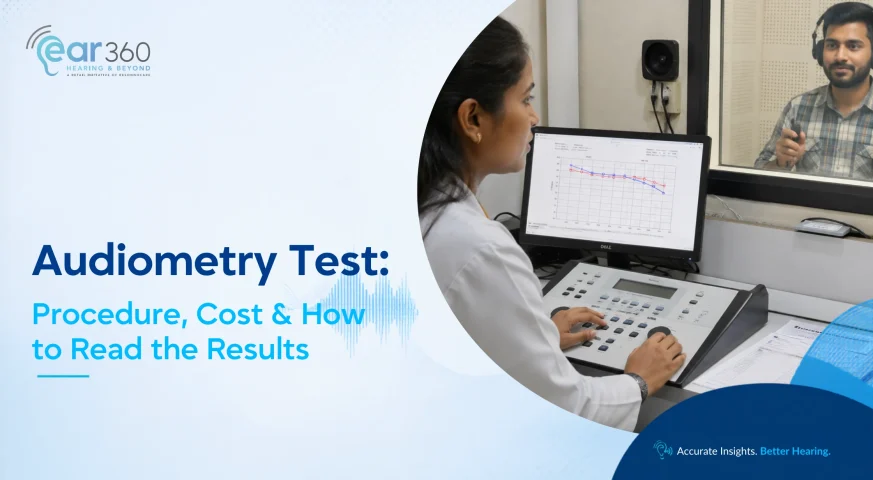
Audiometry Test: Procedure, Cost & How to Read the Results

TL: DR; This blog is for people planning to take an audiometry test, especially adults with hearing difficulties, parents concerned about a child’s hearing, people experiencing tinnitus, and anyone who wants to understand the procedure, costs, and results before visiting an audiologist. An audiometry test is a painless and non-invasive hearing assessment. It helps measure how well a person hears different sounds, pitches, and speech, and supports the diagnosis of hearing loss in both children and adults. The blog explains when someone should consider an audiometry test. Warning signs include trouble hearing conversations, increasing TV or phone volume, ringing in the ears, ear fullness, sudden changes in hearing, ear infections, exposure to loud noise, or speech delays in children. The test process is explained step by step. It includes pre-test consultation, otoscopy, pure-tone audiometry, bone-conduction testing, speech audiometry, and tympanometry, with the complete assessment usually taking about 30 to 60 minutes. The blog also helps readers understand audiogram results and cost. It explains hearing levels in decibels, common audiogram patterns, possible conditions detected through the test, and the typical audiometry test cost range in India. Uncertainty is the first thing that comes to mind when the hearing is not clear. Is it temporary? Is it because of earwax, age, noise exposure, infection, or a true hearing loss? Many people know the symptoms but do not know if they should get a hearing test or what type of test is suitable for them. An audiometry test can help answer these questions. A simple hearing test that determines the ability to hear various sounds, tones, and speech. The test allows your audiologist to know the level of your hearing, what type of hearing loss you may have, and if you require additional testing, medical referral, hearing protection, or hearing support. Audiometry Tests are performed at Resonnocare with a trained audiologist and in a comfortable clinical setting. This guide is designed to clarify what the audiometry test is, who should have it performed, how the test is conducted, what the results mean, and how it can help you take the next best step in your hearing health. What Is an Audiometry Test? Audiometry is a painless, non-invasive clinical assessment of an individual’s hearing. It is used to determine your ability to hear sounds across a range of frequencies and intensities and to detect the nature, severity, and shape of hearing loss, if present. A trained audiologist will perform the test in a soundproof booth or other quiet clinical setting. It is one of the most reliable tools available for diagnosing hearing problems in children and adults. A general hearing test should consist of: Pure tone audiometry (PTA) is a hearing test that measures the ability to hear tones of various pitches Speech audiometry: tests your ability to hear words when they are spoken Auditory: evaluates the ear’s ability to hear sound. Bone conduction testing: determines if hearing loss is in the outer/middle ear or the inner ear All these components provide your audiologist with a complete profile of your hearing. When Should You Consider an Audiometry Test? Many individuals have held off on a hearing evaluation because they do not know whether their symptoms warrant it. In fact, if you have noticed any of the following, it’s time to get on to the audiometry sooner rather than later: Trouble hearing group conversations or in noisy places Often asks to have things repeated Making the television or cell phone louder than it normally is Noises in the ears, such as ringing, buzzing, or hissing (tinnitus) Fullness or pressure in the ears Changes in hearing that occur quickly or slowly Having had ear infections, loud noise exposure, or a family history of hearing loss. An audiometry test may also be helpful for children who have delays in learning to speak, who don’t pay attention in class, or who have difficulty pronouncing words. Please consult us immediately if you experience sudden hearing loss, severe ear pain, dizziness, or ear discharge, rather than waiting for a regular check-up. How Is the Audiometry Test Performed: Step-by-Step Procedure Knowing what happens during an audiometry test can make the experience feel easier and more comfortable. The test is simple, painless, and usually done by an audiologist in a quiet testing environment. At Resonnocare, the audiometry test process usually includes the following steps: Step 1: Understanding Your Hearing Concern Before the test begins, the audiologist will speak with you about your hearing concerns. You may be asked when the problem started, whether one or both ears are affected, whether you have ringing in the ears, dizziness, ear pain, ear discharge, a history of ear infections, exposure to loud noise, or any history of medications. This helps the audiologist understand your condition better before testing your hearing. Step 2: Ear Check The audiologist may look inside your ear using a small light-based instrument called an otoscope. This helps check for earwax, blockage, infection, or any visible concern in the ear canal or eardrum. Step 3: Pure Tone Audiometry You will wear headphones and sit in a quiet room or sound-treated space. Different sounds will be played at different volumes and pitches. Each time you hear a sound, you may be asked to press a button or raise your hand. This test is done separately for each ear and helps measure the softest sounds you can hear. Step 4: Bone Conduction Test A small vibrating device may be placed behind your ear. This test checks how well sound reaches the inner ear through vibration. It helps the audiologist determine whether the hearing problem is related to the outer or middle ear, or to the inner ear or hearing nerve. Step 5: Speech Audiometry You may be asked to listen to and repeat certain words. This helps check how clearly you can understand speech, not just sounds. It is especially useful for people who say they can hear voices but cannot clearly understand words. Step 6: Tympanometry, If Required In some cases, a

Read More
Audiologist-Near-Me-How-to-Choose-the-Right-Hearing-Specialist
July 14, 2026 Comments (0)

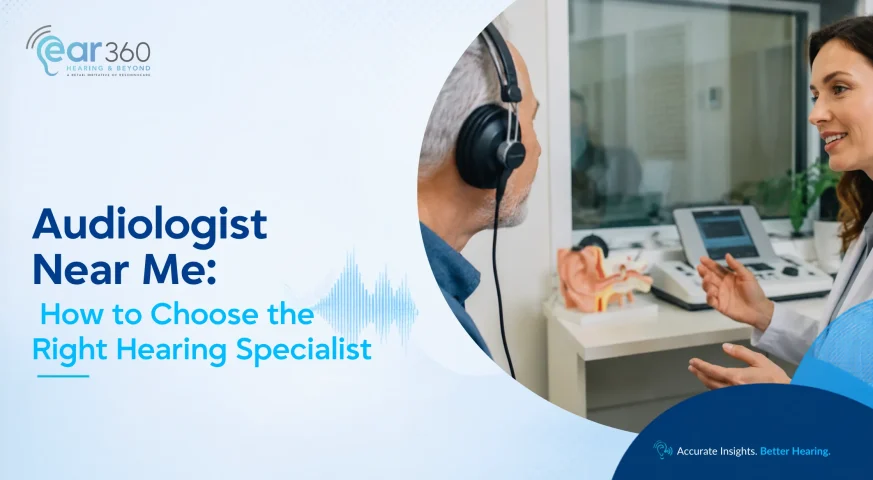
Audiologist Near Me: How to Choose the Right Hearing Specialist

TL: DR; This blog is for people searching for an audiologist near them, especially adults with hearing difficulty, seniors with age-related hearing loss, parents concerned about a child’s hearing, and anyone experiencing tinnitus, muffled hearing, or trouble understanding speech. An audiologist does more than selling hearing aids. They assess hearing problems, conduct hearing evaluations such as pure-tone audiometry, speech audiometry, and tympanometry, explain the reports, identify the type of hearing loss, and recommend the appropriate care plan. Early warning signs should not be ignored. Repeatedly asking people to repeat themselves, increasing TV or phone volume, struggling in noisy places, ringing in the ears, blocked-ear sensation, or delayed response to sound in children are signs that a hearing evaluation may be needed. Choosing the right audiologist depends on clinical quality and aftercare. Patients should look for appropriate qualifications, detailed hearing testing, experience with their specific concern, access to multiple hearing aid options, and post-fitting support, such as programming, counseling, and follow-ups. The best audiologist near you may not simply be the closest clinic. Look for a professional who conducts appropriate testing, explains the findings clearly, recommends only clinically suitable care, and provides continued support after the first appointment. It may be frustrating to find conversations difficult to follow, to have to ask people to repeat themselves, to turn up the volume on the television, or to experience constant ringing in the ears. It is at this stage that people begin to search for an “audiologist near me” they can rely on for hearing care. Selecting an audiologist is not simply a matter of choosing the closest audiology clinic. It is about finding a qualified hearing specialist who can properly assess your hearing, explain your hearing-test results in a simple manner, and inform you about the appropriate hearing care based on your age, symptoms, lifestyle, and listening needs. From a baby who has been referred for early hearing-screening support to older adults and seniors experiencing hearing loss, tinnitus, hearing aid problems, or age-related hearing changes, our clinical team is available to assist. This guide will help you understand when you should see an audiologist, what an audiologist does, what happens during an appointment, and how to find one. This article provides general educational information and does not replace an individual hearing assessment, medical diagnosis, or advice from an ENT specialist or another qualified healthcare professional. What Is an Audiologist? An audiologist is a healthcare professional trained to assess, identify, manage, and rehabilitate hearing and balance disorders in people of all ages. Audiologists work with newborns, children, adults, and older people who experience hearing loss, tinnitus, sound sensitivity, balance difficulties, or problems using hearing devices. Audiologists may provide: Hearing screening and diagnostic assessment Pure-tone and speech audiometry Middle-ear testing OAE and BERA or ABR testing Pediatric hearing assessment Hearing aid evaluation, fitting, and programming Cochlear implant candidacy support and rehabilitation Tinnitus assessment and counselling Balance and vestibular testing where available Hearing-conservation and noise-protection advice Assistive listening-device recommendations Communication and auditory rehabilitation Referrals for medical or specialist care Audiologists assess and rehabilitate hearing and balance disorders, but they are not medical doctors and do not perform ear surgery. Audiologists and ENT specialists often work together when a patient requires both audiological and medical care. What Does an Audiologist Actually Do? An audiologist is a trained healthcare professional who specializes in the assessment, identification, management, and rehabilitation of hearing and balance disorders. They can perform a thorough hearing evaluation, which includes pure-tone audiometry, speech audiometry, tympanometry, and other tests, and explain the results and what they mean for your hearing health. Important: An audiologist is not a hearing aid salesperson. Their job is more comprehensive: determining the type and extent of hearing loss and creating a plan of care to meet your personal needs. They also coordinate with ENT specialists or other medical practitioners, if needed, for cases that require further investigation. Depending on the patient’s needs and the services available at the clinic, an audiologist may also: Examine the ear canal and eardrum before testing Assess the impact of hearing loss on communication Recommend hearing aids or assistive devices Program and verify hearing aids Provide hearing aid trials Teach patients and caregivers how to use and maintain devices Monitor changes in hearing Support people with tinnitus Assess selected balance symptoms Provide auditory rehabilitation and communication strategies Refer patients to an ENT, neurologist, pediatrician, speech-language therapist, or another professional An audiologist’s recommendation should be based on the assessment results and the patient’s communication needs, not on the need to sell a particular device. Audiologist vs ENT vs Hearing Aid Dispenser Professional Primary Role Common Services When You May Need Them Audiologist Assessment and rehabilitation of hearing and balance disorders Hearing tests, hearing aid fitting, tinnitus support, balance testing, and auditory rehabilitation Hearing difficulty, tinnitus, hearing aid needs, or selected balance concerns ENT specialist Medical and surgical care for ear, nose, and throat conditions Diagnosis, medication, procedures, surgery, and management of ear diseases Ear pain, discharge, infection, sudden hearing loss, structural problems, or surgery Hearing aid dispenser or technician Device supply or selected hearing-aid-related services, depending on training and local regulations Product demonstration, basic fitting support, maintenance, or earmould services Device-related support under an appropriate clinical care pathway Speech-language therapist Assessment and treatment of speech, language, voice, fluency, and communication difficulties Speech and language therapy, communication development, and rehabilitation Speech delay, language delay, articulation concerns, or communication difficulties An audiologist and an ENT are not interchangeable. The audiologist evaluates hearing and supports rehabilitation, while the ENT investigates and treats medical or surgical ear conditions. Many patients benefit from coordinated care between both professionals. Who Should Search for an Audiologist Near Me? Consider booking an appointment with an audiologist if you or a family member: Frequently asks people to repeat themselves Feels that people mumble Struggles to understand conversation in background noise Turns the television or telephone volume higher than others prefer Has difficulty understanding telephone calls Misses doorbells, alarms, announcements, or high-pitched voices Experiences persistent

Read More

Resonnocare Health-Tech Private Limited Provides hearing and audiology services through a structured, clinically guided approach.

contact info

RESONNOCARE HEALTH-TECH PVT. LTD

Head Office 403, Office Block ‘C’

4th Floor – Above Retail Block R1 & R5,

M3M URBANA, Sector 67, Gurgaon 122101 Haryana

2026, All rights reserved by Resonnocare  health-tech private limited