Category: Hearing Loss

Sudden-Hearing-Loss-Symptoms-Causes-and-When-It-Is-an-Emergency
July 14, 2026 Comments (0)

Sudden Hearing Loss: Symptoms, Causes, and When It Is an Emergency

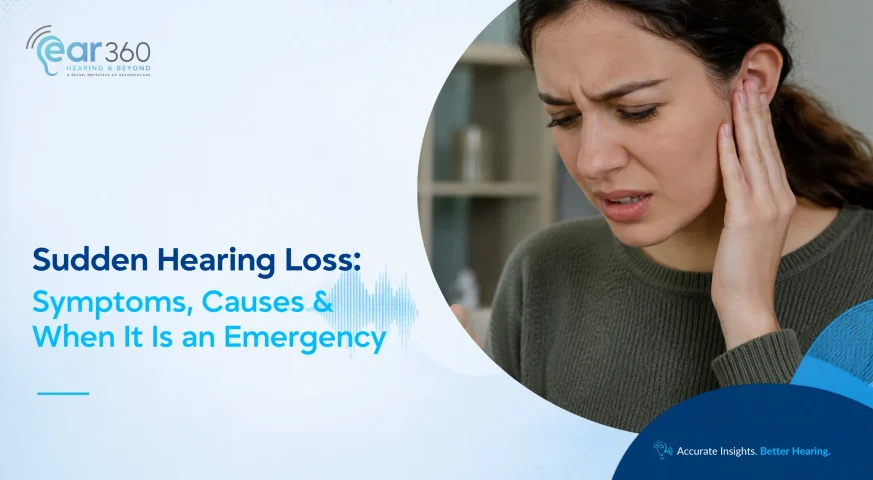
TL; DR; This blog is for people who experience a sudden drop in hearing, ringing in one ear, ear fullness, dizziness, or muffled hearing, as well as their family members seeking to understand when sudden hearing loss requires emergency medical care. Recognize sudden hearing loss as a medical emergency: The blog explains the warning signs of sudden sensorineural hearing loss (SSHL), including rapid hearing loss in one ear, tinnitus, ear fullness, and dizziness, emphasizing that immediate medical attention within 24–72 hours offers the best chance of recovery. Understand the causes and diagnosis: Readers learn about possible causes, including viral infections, circulatory problems, autoimmune diseases, acoustic neuroma, trauma, and ototoxic medications. It also explains how audiological tests, otoscopy, tympanometry, MRI, and blood tests help identify the cause and severity. Learn about treatment options and recovery: The article covers the importance of corticosteroid treatment and intratympanic steroid injections, as well as hearing rehabilitation options, including hearing aids, CROS systems, and tinnitus management, for patients with incomplete recovery. Know why prompt action matters: The blog reinforces that delaying treatment can lead to permanent hearing loss and highlights Resonnocare’s comprehensive hearing assessments, collaboration with ENT specialists, online consultations, hearing aid trials, and ongoing aftercare to support patients throughout their recovery journey. Sudden hearing loss is an unexpected experience, which can be frightening. You can hear a good sound out of one ear one minute and the next minute it’s blocked, muffled, or you can’t hear it well at all. Others experience pressure, difficulty understanding speech, dizziness, or tinnitus. Many people will wait for it to pass, as it can feel like earwax or a cold or temporary plugging of the ear, and wait for it to “clear up. But sudden hearing loss is different from gradual hearing loss. At times, it may be a medical emergency, particularly when there is a sudden loss of hearing in one ear. Putting off care can decrease the likelihood of a better recovery. It is important to obtain assessment as early as possible if you or a loved one has sudden hearing loss. An early hearing test and medical assessment can help determine the possible cause and next steps. What Is Sudden Hearing Loss? Also known as sudden sensorineural hearing loss (SSHL) in clinical settings, sudden hearing loss is an unexplained, rapid decline in hearing (usually in one ear). It can manifest over hours or seem instant. The development of this condition is alarming because it progresses very quickly and drastically. People can hear normally at bedtime, but upon waking, their hearing may have declined in one ear, leaving them with one impaired ear. Some see it when they’re talking on the phone or listening to music. The hearing can be low or even muffled in the other ear (more severe cases). It is known as sensorineural because it is usually due to damage to the cochlea (inner ear), the auditory nerve, or the pathways that carry sound signals to the brain. This distinction is important since it influences the diagnosis and treatment of the condition. What Are the Symptoms of Sudden Hearing Loss? By knowing what to look for, people can act quickly, and it’s important with this condition. The most frequent symptoms are a sudden, dramatic decrease in hearing in one ear; a feeling of pressure or fullness in the affected ear; ringing, buzzing, or hissing sounds in the ear (tinnitus); and, in a few cases, dizziness or vertigo. The sound seems to come from one ear instead of both, or it sounds muffled or as though the ear is plugged, like you are underwater or have plugged ears on an airplane. In contrast, the blockage doesn’t go away with swallowing or yawning. Sudden hearing loss may not be painful to everyone. If a child doesn’t complain of pain, it doesn’t mean it isn’t a serious problem. If hearing has decreased significantly in one ear for no apparent reason, it’s worth getting evaluated as soon as possible. For a broader overview of ear symptoms that warrant clinical attention, the Resonnocare ear symptoms and conditions page provides helpful guidance on when to be concerned. What Causes Sudden Hearing Loss? One of the first questions patients ask is, “Why did my hearing suddenly drop?” In many cases, the exact cause may not be clearly identified. When sudden hearing loss happens without a confirmed reason, it is called idiopathic sudden sensorineural hearing loss. However, there are several possible causes that doctors and audiologists look for during evaluation: 1. Viral Infections Some viral infections can affect the inner ear, the hearing nerve, or nearby structures by causing inflammation. Infections such as influenza, mumps, measles, herpes, and other viral illnesses have sometimes been linked to sudden hearing loss. 2. Reduced Blood Supply to the Inner Ear The inner ear is very delicate and depends on a steady supply of oxygen-rich blood. If this supply is affected by a clot, blood vessel spasm, or a circulation problem, hearing may drop suddenly. 3. Autoimmune Conditions In some cases, sudden hearing loss may be related to autoimmune conditions. This happens when the body’s immune system mistakenly attacks the tissues of the inner ear, leading to hearing changes. 4. Acoustic Neuroma A noncancerous growth on the hearing and balance nerve, called an acoustic neuroma, may sometimes cause sudden changes in hearing. Although it is usually benign, it still needs proper medical evaluation. 5. Head Injury or Ear Trauma Injury to the head or ear can also suddenly affect hearing. This may happen after an accident, fall, direct injury, or damage to the ear structures. 6. Sudden Pressure Changes Rapid pressure changes during flying or diving can sometimes affect the ear and cause sudden hearing problems, especially if the inner or middle ear is involved. 7. Certain Medicines Certain medicines can damage the inner ear and may affect some people’s hearing. They are known as ototoxic medications and should always be discussed with a physician when there are sudden changes in hearing. Sudden hearing loss

Read More
Mild-Hearing-Loss-Symptoms-Test-Results-Do-You-Need-Hearing-Aids
July 14, 2026 Comments (0)

Mild Hearing Loss: Symptoms, Test Results & Do You Need Hearing Aids?

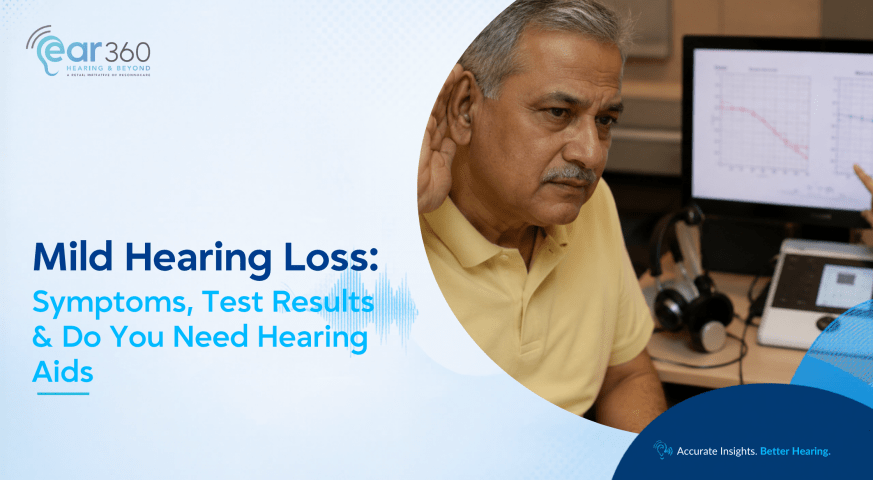
TL: DR; This blog is for adults experiencing early signs of hearing loss, parents of children with hearing concerns, older adults with age-related hearing changes, and anyone unsure whether mild hearing loss requires treatment or hearing aids. Recognize the early signs of mild hearing loss: The blog explains common symptoms such as difficulty understanding conversations in noisy environments, asking people to repeat themselves, difficulty hearing soft or high-pitched voices, listening fatigue, tinnitus, and gradually withdrawing from social interactions. Understand the causes and diagnosis: Readers learn that mild hearing loss can result from aging, noise exposure, ear infections, earwax buildup, genetics, certain medications, or medical conditions. It also explains how audiologists diagnose hearing loss using pure tone audiometry and speech discrimination tests. Learn when hearing aids may help: The article clarifies that not everyone with mild hearing loss immediately needs hearing aids. The decision depends on communication challenges, lifestyle, work requirements, tinnitus, and progression of hearing loss. It also highlights the value of a hearing aid trial before making a long-term decision. Importance of early intervention and expert care: The blog emphasizes that early treatment of mild hearing loss can improve communication, cognitive health, and quality of life. It also outlines Resonnocare’s comprehensive hearing assessments, personalized care plans, home visits, video consultations, and ongoing aftercare support. Mild hearing loss is a gradual process. Most sounds are still audible, familiar voices can be heard, and you can still handle routine conversations, which can make it seem that nothing is amiss. However, you may slowly find yourself asking people to repeat themselves, having trouble hearing them in busy environments, turning up the TV volume, or getting tired after a long conversation. The changes take place over time; therefore, many people adapt without realizing it. They sit closer, don’t join in any groups, try to read their lips, or think everyone is speaking quietly. That’s why individuals with subtle hearing loss may not realize for years that they aren’t hearing as they should, until it begins to impact how they communicate, their self-assurance, relationships, and personal health. What Is Mild Hearing Loss? The clinical criterion for mild hearing loss is a hearing threshold of 26-40 dB HL. This, in practical terms, means that some consonant sounds in speech may be harder to hear, as may be the case with soft sounds and quiet conversations. Individuals with mild hearing loss may hear well in quiet settings, such as one-on-one conversations. It is easier to notice when there is background noise, in group situations, or when a person is located in another room. This is why, for so many people, hearing loss is often not diagnosed for so long; it is a measurable, actual hearing loss, but most of the time, life is not an awful experience. Mild hearing loss may be in one ear (unilateral) or both ears (bilateral). It may occur at birth, gradually over time as you get older, or following an illness, exposure to noise, or other events. What Causes Mild Hearing Loss? Mild hearing loss is caused by similar factors or more than one factor in many cases, as are other levels of hearing loss. One of the most frequent contributors is likely to be age-related change. Starting in middle age, hearing begins to change naturally, usually with a loss of the ability to hear higher frequencies. This usually manifests as a slight hearing impairment in the early stages and can worsen if not treated. Over time, noise may damage the delicate hair cells of the inner ear – either from work-related environments or from recreational or personal listening habits, especially when listening through earphones at high volume. Children can experience mild hearing loss due to ear infections and middle ear fluid. This is usually only temporary, but repeated infections may result in more permanent changes. Wax can also cause a temporary hearing loss that appears as mild hearing loss on an audiogram. This is one of the easier causes to rectify and is definitely simpler. It may be a result of the genes passed on and can lead to a mild form of hearing loss from birth or develop later in life for no other reason. Other medicines that damage hearing (ototoxic) and some other health problems, including diabetes or heart disease, have also been linked to hearing changes, including mild hearing loss. What Are the Symptoms of Mild Hearing Loss? Symptoms may be easily overlooked or blamed on other factors. Common signs include: Muffled conversations: Speech sounds like people are constantly mumbling. Consonant dropouts: High-pitched sounds like “f,” “s,” and “th” become hard to distinguish. Background noise battles: Following conversations in noisy restaurants becomes a major struggle. Cranked-up media: The TV and radio volume must be turned up higher than others prefer. Social exhaustion: Brain power drains quickly from straining to hear in groups. Missed nature sounds: Soft environmental noises like birds chirping or rain falling disappea Avoidant behavior is one of the most indicative features of mild hearing loss. Individuals start to avoid noisier social settings, lip-read more, or participate less in conversations. This can occur so slowly that the individual and others don’t realize the change has taken place. How Is Mild Hearing Loss Diagnosed and What Do the Test Results Mean? A hearing test performed by a qualified audiologist is the way to determine mild hearing loss. One of the most common tests is pure-tone audiometry. In this test, different sounds are played at varying pitches and sound levels. Your audiologist will note the quietest sounds you can hear and plot them on an audiogram or chart. Normal hearing is 0-15 dBHL. The average hearing loss level for mild hearing loss is 26 to 40 dB HL. This means some sounds must be louder than normal for you to hear them clearly. For instance, speech may be less audible in noisy environments, when people are speaking quietly, or when they are farther away. An audiogram can also be useful in determining the pattern of hearing

Read More
Sensorineural-Hearing-Loss-Causes-Symptoms-Treatment-Options
July 14, 2026 Comments (0)

Sensorineural Hearing Loss: Causes, Symptoms & Treatment Options

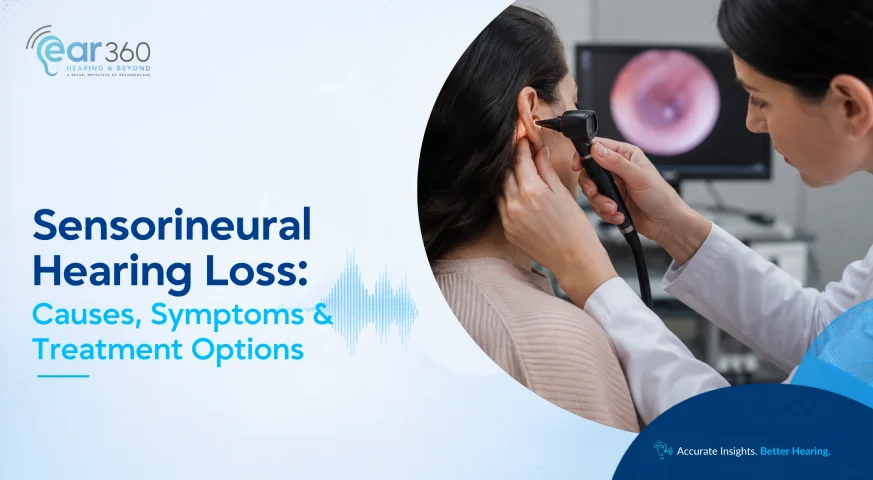
TL: DR; This blog is written for people experiencing hearing difficulties, tinnitus, or trouble understanding speech; parents concerned about a child’s hearing; and family members seeking treatment options for sensorineural hearing loss. Sensorineural hearing loss occurs when the inner ear or auditory nerve is damaged, making it a more permanent type of hearing loss than conductive hearing loss. Common causes include aging, long-term noise exposure, infections, ototoxic medicines, head trauma, family history, Meniere’s disease, acoustic neuroma, and sudden unexplained hearing loss. Early signs include difficulty hearing in noisy places, asking people to repeat, increasing TV or phone volume, muffled hearing, tinnitus, and trouble understanding phone conversations. Treatment depends on the severity and may include hearing aids, cochlear implants for severe cases, auditory rehabilitation, tinnitus support, home visits, video consultations, and long-term aftercare. Hearing loss isn’t necessarily silence. Many individuals perceive it as “mumbling,” “can’t hear in a crowd,” or “unclear speech. Sounds can still be heard, but it can be a challenge to understand conversations, particularly in loud environments. A common cause of this is sensorineural hearing loss. Typically occurs when the inner ear/hearing nerve is damaged. It can arise gradually over time, as a result of age, chronic exposure to noise, various diseases, or other health conditions. The change is usually slow, and the individual neglects it for months or even years. Knowing what sensorineural hearing loss is can help you make the appropriate move at the right time. If you have a proper hearing test, your audiologist will be able to determine the level of hearing loss, explain the results, and provide information on the best hearing solutions. Our audiologists frequently evaluate and aid patients with sensorineural hearing loss at Resonnocare. This guide describes what it is, why it occurs, how it is assessed, and how you might hear better and communicate more effectively. What Is Sensorineural Hearing Loss? Sensorineural hearing loss is caused by damage to the inner ear (cochlea) or to the auditory nerve, which transmits sound signals to the brain. While conductive hearing loss, which affects the outer or middle ear, can be caused by blockage or structural problems, sensorineural hearing loss usually reflects permanent damage within the inner ear or auditory pathway. The tiny hair cells within the cochlea convert sound vibrations into electrical signals. If these hair cells have been damaged, they will not regenerate. Hence, sensorineural hearing loss is sometimes called “permanent,” but in many instances, it can be managed effectively with the proper support. Some individuals have mixed hearing loss, which combines sensorineural and conductive hearing loss. It is important to have a proper diagnosis and a hearing assessment to determine the type of hearing loss you have. What Causes Sensorineural Hearing Loss? There is no one cause. Sensorineural hearing loss can have several causes, and more than one factor may contribute. The most frequent cause is age-related hearing loss (presbycusis). The hair cells in the cochlea begin to deteriorate with age. Usually, it starts out with problems hearing high-pitched sounds and gradually worsens over time. Another major cause is noise exposure, especially for individuals who are exposed to high levels of noise at work (e.g., in factories, construction sites, music venues) or who listen to earphones at high volume for long periods. Some cases are congenital, while others develop later in life without an obvious cause. Infections such as meningitis, mumps, measles, or other serious viral diseases may affect the inner ear, sometimes very quickly. Some drugs may have a side effect of damaging the hair cells in the inner ear (ototoxic). Sudden sensorineural hearing loss is an emergency, usually affecting one ear and occurring without warning. If you have a sudden, unexplained hearing loss, please seek medical attention on the day you notice it. Less common causes include autoimmune disorders, Ménière’s disease, acoustic neuroma, and head trauma. What Are the Early Signs of Sensorineural Hearing Loss? Early symptoms are sometimes not noticeable, and that’s part of the reason people often put off getting help. Typical signs are: Trouble understanding what is said when there is background noise, such as in a restaurant or with a family group. Repeating words and sentences many times Having an easier time hearing lower-pitched voices as compared to higher ones Increasing the volume of the TV or phone more than usual. Persistent ringing, buzzing, or hissing in one or both ears (tinnitus). A feeling that sounds are muffled or hard to hear when they are loud enough Struggling to understand phone calls or conversations. Difficulty with phone conversations or understanding phone calls. Children might have speech delays, have trouble attending classes, or hear words they don’t understand. A hearing evaluation is always recommended if a teacher has had concerns about listening or attentiveness. For a full overview of ear-related symptoms and when to seek help, visit our ear symptoms and conditions page. How Is Sensorineural Hearing Loss Diagnosed? A comprehensive hearing evaluation by a qualified audiologist is used for diagnosis. It usually takes the form of: Pure Tone Audiometry (PTA): The audiologist presents a series of tones to you through headphones and plots your hearing levels on an audiogram (chart). In sensorineural hearing loss, both air and bone conduction thresholds are reduced, typically without a significant air-bone gap. Speech audiometry: This test determines the clarity of understanding of spoken words at varying volumes, especially to plan appropriate management. Tympanometry: This is not the primary diagnostic tool for sensorineural hearing loss, but it can be used to exclude middle ear involvement. At Resonnocare, we offer hearing care for all ages, from infants and children to older adults. Accurate diagnosis is the foundation of everything we do, and our audiologists take the time to explain your results in plain language. Treatment and Management Options for Sensorineural Hearing Loss Here are the common treatment and management options: Hearing Aids Hearing aids are the most common support option for sensorineural hearing loss. Modern hearing aids are small, comfortable, and designed to make speech and sounds clearer. They

Read More
Conductive-Hearing-Loss-Causes-Symptoms-Diagnosis-Treatment
July 14, 2026 Comments (0)

Conductive Hearing Loss: Causes, Symptoms, Diagnosis, and Treatment

TL: DR; This blog is written for adults, parents, caregivers, and families who are noticing muffled hearing, ear blockage, ear pain, repeated ear infections, or hearing difficulty in children or older adults. Conductive hearing loss occurs when sound cannot pass properly through the outer or middle ear to reach the inner ear, often due to a physical or mechanical issue. Common causes include earwax blockage, middle ear infections, glue ear in children, perforated eardrum, otosclerosis, Eustachian tube dysfunction, foreign objects, or structural ear problems. Key symptoms include muffled hearing, reduced sound clarity, ear fullness or pressure, mild pain, ear discharge, tinnitus, increased TV or phone volume, and delayed speech or inattentiveness in children. Conductive hearing loss is often treatable with the right diagnosis and may be managed through earwax removal, infection treatment, medications, surgery, hearing aids, bone-anchored hearing aids, home visits, online consultations, and aftercare support. When sound is blocked, hearing is muffled, the ear hurts, there are frequent ear infections or difficulty hearing clearly after a cold, it can feel worrying. These symptoms often occur when sound is not conducted normally through the outer and/or middle ear. This is referred to as conductive hearing loss. It indicates that something might be wrong with the portion of the ear that conducts sound to the inside, including the ear canal, eardrum, or middle ear. May occur from earwax, fluid, infection, eardrum issues, or other middle ear problems. The good news is that once the cause of conductive hearing loss is properly diagnosed, it can be treated or improved. This is why it is important not to ignore the symptoms or assume the hearing loss is permanent, but to undergo a proper hearing assessment. Our audiologists evaluate hearing issues in children, adults, and seniors at Resonnocare. This guide can help you understand the following: What is conductive hearing loss? Some common causes of conductive hearing loss. What signs to look for. How is conductive hearing loss diagnosed? What treatment options are available? What Is Conductive Hearing Loss? Conductive hearing loss occurs when sound does not pass through the outer ear or middle ear. Although sound can reach the inner ear, it may be weak, blocked, or unclear. To gain a better understanding, it is useful to know how hearing works normally. Sound first passes through the external (outside) ear and down the ear canal. It is then transmitted to the drum and then passes through three small bones within the middle ear. The vibrations then pass into the inner ear, where they are converted into a signal the brain can interpret. In conductive hearing loss, the issue typically occurs before sound reaches the inner ear. This is why people often feel that their hearing is blocked, muffled, or even diminished, rather than a total loss of hearing. Conductive hearing loss is not the same as sensorineural hearing loss, which is typically associated with the inner ear or the hearing nerve. It also differs from mixed hearing loss, in which both the external ear (conductive) and the inner ear (sensorineural) are involved. An appropriate hearing test can indicate the nature of the hearing loss and the potential cause. This is crucial as the next step in the care pathway will depend on the site of the hearing problem. What Causes Conductive Hearing Loss? There are several common causes, and treatment depends on identifying the correct one. There are simple and reversible causes. Others need medical or surgical treatment. In clinical practice, one of the most common causes is earwax blockage. Wax builds up and hardens in the ear canal, blocking sound from reaching the eardrum. It can occur in anyone at any age. Middle ear infection (otitis media) is very common in children. Fluid or pus accumulates behind the eardrum, reducing its ability to vibrate freely. A chronic form of the condition known as glue ear, in which thick, sticky fluid builds up in the middle ear without infection, is a common cause of conductive hearing loss in school-age children. Depending on the size and location of the perforation, a perforated eardrum can also drastically affect hearing, which may result from infection, trauma, or sudden changes in pressure. Otosclerosis is a disorder that affects the middle ear, in which abnormal bone growth causes one of the three ossicles (usually the stapes) to become stuck and to move incorrectly. It causes progressive conductive hearing loss and is more common in young and middle-aged adults. Foreign objects in the ear canal, abnormal growths such as cholesteatoma, and congenital structural abnormalities can also cause similar symptoms. In certain patients, Eustachian tube dysfunction may make it difficult for the middle ear to maintain normal pressure, leading to a feeling of fullness or muffled hearing. What Are the Symptoms of Conductive Hearing Loss? Conductive hearing loss can make sounds seem as though you are hearing through a filter or with your fingers in your ears. Sounds quieter, less distinct, or muffled. You might find yourself having to turn up the volume on your television, phone, or computer, hearing only half of what people are saying, or not hearing well in noisy places. Common associated symptoms include a feeling of fullness or pressure in the ear, mild pain or discomfort, ear leakage if infected, and, in some patients, tinnitus (a ringing or buzzing sound in the affected ear). Children with conductive hearing loss may seem inattentive, speak more loudly, and experience delays in speech and language development. These are easy to overlook or mistake for other reasons, making it crucial to do a formal hearing exam. Visit the Resonnocare ear symptoms and ear conditions page for details on all of the ear symptoms and conditions that could relate to your hearing. How Is Conductive Hearing Loss Diagnosed? Conductive hearing loss is discovered during a thorough hearing test by a trained audiologist. The aim is to determine the source of the hearing loss and what may be interfering with or impeding sound transmission. The exam typically starts with an

Read More

Resonnocare Health-Tech Private Limited Provides hearing and audiology services through a structured, clinically guided approach.

contact info

RESONNOCARE HEALTH-TECH PVT. LTD

Head Office 403, Office Block ‘C’

4th Floor – Above Retail Block R1 & R5,

M3M URBANA, Sector 67, Gurgaon 122101 Haryana

2026, All rights reserved by Resonnocare  health-tech private limited