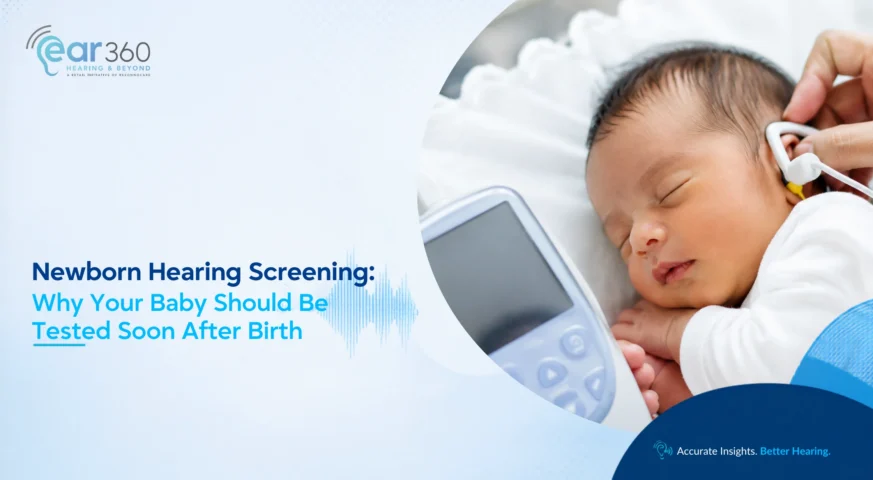
Newborn Hearing Screening: Why Your Baby Should Be Tested Soon After Birth
TL;DR: This blog is aimed for Parents of newborns and infants, especially those whose babies have not yet undergone hearing screening, received a “refer” or inconclusive screening result, have birth-related hearing risk factors, or whose parents are concerned about hearing and speech development. Newborn hearing screening helps identify concerns early: The blog explains why babies should ideally be screened soon after birth, before hearing difficulties become noticeable through delayed responses, speech, or developmental milestones. The screening is quick, painless, and non-invasive: Newborn hearing tests can usually be performed while the baby is sleeping or resting and are designed to check whether the baby’s auditory system is responding appropriately to sound. A failed initial screening does not necessarily mean hearing loss: Temporary factors such as fluid, vernix, movement, or background noise can affect results. Babies receiving a “refer” result may require repeat screening or further diagnostic testing such as BERA. Early diagnosis enables timely support and intervention: The blog covers when parents should consult an audiologist, possible follow-up tests and management options, and how Resonnocare supports families through screening, diagnosis, hearing aids, home visits, consultations, and continued hearing care. Once you bring your newborn home, there are numerous areas to consider, including feeding, sleeping, immunizations, and check-ups. Even though it might not be something parents can easily assess in the first few days of their baby’s life, hearing is equally important. A baby may seem to be hearing normally, but may have a hearing problem that is not detected without testing. This is why it’s recommended to screen infants right after birth. It is painless and easy to perform a test to help check early how your baby is reacting to sound. Here we will discuss the significance of newborn screening, the timing of newborn screening, what happens to your baby during the screening, and what to do if your baby is offered a second screening. What Is Newborn Hearing Screening? Newborn hearing screening is a straightforward, non-invasive test that is typically conducted in the first 24-48 hours after birth, either in the hospital or at a very early paediatric visit. Determines if your baby’s ears and ear bones are reacting to sound properly. The test is harmless to your baby, and it is usually performed during a sleep or still time in your arms. This is now a common part of newborn care in the majority of hospitals in India; however, not all do so automatically. If your baby was born at home or at a smaller clinic, it is important to make a specific enquiry with your paediatrician before you leave the hospital or at the first follow-up visit about the screening for hearing loss. Know More About Hearing Tests and Hearing Aids Hearing Aid Price: What Affects the Cost of Hearing Aids? Hearing Aid Price in India: Complete Cost Guide by Type & Features Hearing Aids Near Me: How to Choose the Right Hearing Aid Center Why Does Newborn Hearing Screening Matter So Early? Hearing plays an important role in how your baby begins to recognise voices, respond to sounds, and eventually develop speech and language. These skills start developing from the very first months of life, which is why checking hearing early is so important. A hearing concern in a newborn may not always be easy for parents to notice at home. Your baby may still react to certain sounds, even if they are not hearing clearly in one or both ears. Newborn hearing screening helps identify possible concerns before they begin to affect important speech and language milestones. If a concern is found early, your family has more time to understand what it means, complete any further testing that may be needed, and get the right support for your baby. The goal is not to create worry, but to make sure your baby’s hearing development is being followed from the start. What Can Cause Hearing Concerns in Newborns? Hearing concerns in newborns can happen for several reasons, and sometimes there may be no clear cause at all. It is also important to remember that having a risk factor does not mean that your baby will definitely have hearing loss. Some babies may need closer hearing monitoring if there is a family history of childhood hearing loss, if they were born prematurely or with a low birth weight, or if they needed a longer stay in the NICU. Certain infections during pregnancy, complications around birth, severe jaundice requiring treatment, or exposure to particular medications may also increase the risk of hearing difficulties. However, hearing loss can also occur in babies who have none of these risk factors. This is why newborn hearing screening is recommended for all babies, rather than only for those considered at higher risk. What Are the Early Signs Parents Should Watch For? Newborn screening is intended to detect issues before symptoms present, but it is useful to be aware of what normal hearing development might be like as your baby grows. If your baby doesn’t react to loud noises, doesn’t turn toward familiar voices by 4-6 months, babbling is scarce or none by about 9 months, or doesn’t seem to be consoled by your voice during fussy periods, you might want to discuss it with your child’s paediatrician or audiologist. While not an indicator of a hearing loss, these observations should be discussed, particularly if your baby did not have a hearing screening at birth. More on related symptoms is available on our ear symptoms and conditions page. When Should You See an Audiologist for Your Baby? It is important to arrange a formal hearing evaluation if your baby fails the initial screening, if screening fails, or if you notice any of the above hearing loss signs as your baby grows. It’s also logical to ask to have an evaluation if there’s a family history of hearing loss or complications around birth time. If your baby’s hearing screening results are a “miss” or a “refer,” it does not mean that your baby
Read More