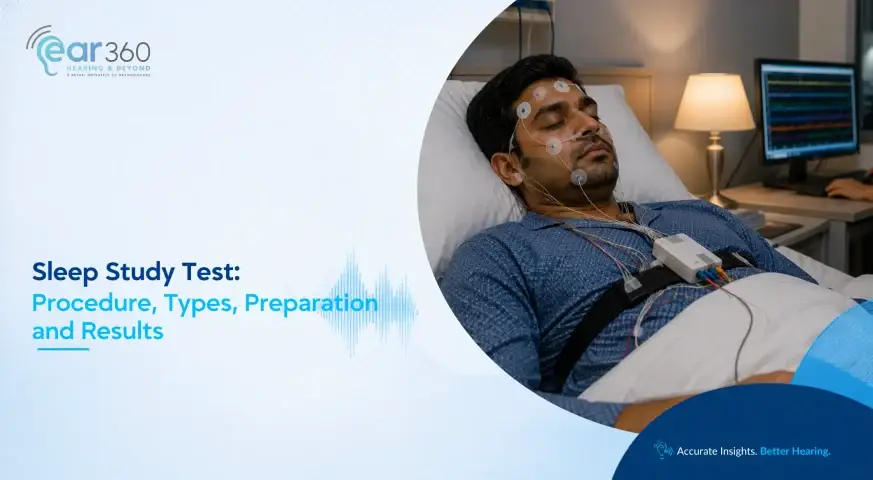
Sleep Study Test: Procedure, Types, Preparation and Results
TL;DR: This blog is intended for adults, parents, and caregivers concerned about persistent snoring, breathing pauses during sleep, choking, repeated awakenings, morning headaches, poor concentration, or excessive daytime sleepiness. A sleep study records important body functions during sleep. It may measure breathing, airflow, oxygen levels, heart activity, brain waves, sleep stages, eye movements, and body movements to identify possible sleep disorders. Different types of sleep tests serve different purposes: Options include overnight polysomnography, home sleep Apnea testing, CPAP titration studies, and multiple sleep latency tests. The appropriate test depends on the symptoms and medical history. Proper preparation improves recording quality: Patients may need to follow their normal sleep routine, limit caffeine, avoid alcohol, avoid hair products, and continue medicines only as advised by their clinician. Results must be interpreted by a qualified clinician: Measurements such as the Apnea-Hypopnoea Index, oxygen saturation and sleep efficiency are assessed alongside symptoms and medical history. Treatment may include lifestyle guidance, CPAP therapy, oral appliances, positional changes, ENT evaluation or further testing. Occasional snoring is common. However, loud and regular snoring, choking during sleep, repeated awakenings, morning headaches or persistent daytime sleepiness may point to an underlying sleep disorder. A sleep study test records important body functions while you sleep, helping a clinician assess your breathing, oxygen levels, heart activity, sleep stages and movements. It is usually painless and may be performed overnight at a sleep centre or, in selected cases, at home. At Resonnocare, we encourage patients and families not to dismiss ongoing sleep-related symptoms, especially when they affect concentration, mood, safety or quality of life. What Is a Sleep Study Test? A sleep study test is a medical assessment of what happens in your body while you sleep. Its most detailed form, called polysomnography, may record brain waves, eye movements, muscle activity, airflow, breathing effort, blood oxygen levels, heart rate and leg movements. These recordings help a sleep physician identify patterns that symptoms alone cannot confirm. Sleep studies are generally painless and are used to understand how well you sleep and how your body responds to possible sleep-related problems. The test is commonly recommended when obstructive sleep Apnea is suspected. It may also help evaluate central sleep Apnea, narcolepsy, periodic limb movements, unusual sleep behaviours, and other sleep disorders. The most appropriate investigation depends on your symptoms, medical history and initial clinical evaluation. When Is a Sleep Study Test Recommended? A doctor may recommend testing when you or your family notice symptoms such as: Loud and frequent snoring Pauses in breathing during sleep Gasping or choking while asleep Excessive sleepiness despite spending enough time in bed Morning headaches or a dry mouth Poor concentration, irritability or reduced work performance Repeated night-time awakenings Restless sleep or unusual body movements Falling asleep while reading, working or driving These symptoms do not automatically mean that you have sleep Apnea. However, they should be evaluated when they are persistent or begin interfering with your daily life. Sleep studies can help determine whether sleep Apnea is present and how severe it may be. Children may also require assessment for persistent snoring, mouth breathing, restless sleep, behavioural changes or poor attention. A paediatrician, ENT specialist or sleep specialist should decide which investigation is appropriate because sleep study interpretation differs between children and adults. What Types of Sleep Study Test Are Available? Different tests collect different levels of information. Your clinician will select the most suitable option based on the condition being investigated. Overnight Polysomnography Polysomnography is a comprehensive overnight sleep study performed in a sleep laboratory or hospital-based sleep unit. A trained technologist monitors your sleep stages, breathing, oxygen levels, heart rhythm, eye movements and body movements. This type of study provides detailed information and may be recommended when the diagnosis is uncertain, another sleep disorder is suspected or you have additional medical conditions that require closer monitoring. Home Sleep Apnea Test A home sleep Apnea test uses a portable device that usually records airflow, breathing effort, oxygen saturation and heart rate. You wear the equipment overnight in your own home and return it for analysis. Home testing may be suitable for uncomplicated adults who have a higher likelihood of moderate-to-severe obstructive sleep Apnea. It is not a complete replacement for laboratory polysomnography. A home test may not be appropriate when another sleep disorder or a significant heart, lung, neurological or neuromuscular condition is suspected. Clinical guidelines recognise home testing as an option for selected adults, while polysomnography remains the standard diagnostic investigation when a broader assessment is required. CPAP Titration Study If sleep Apnea has already been diagnosed, a titration study may be performed to identify an effective continuous positive airway pressure, or CPAP, setting. In selected cases, the first part of the night is used to diagnose sleep Apnea and the second part is used to adjust CPAP pressure. This is known as a split-night study. Multiple Sleep Latency Test A multiple sleep latency test is performed during the day, usually after an overnight study. It measures how quickly you fall asleep during a series of scheduled naps. It may be recommended when narcolepsy or severe, unexplained daytime sleepiness is suspected. How Should You Prepare for a Sleep Study Test? Always follow the instructions provided by your sleep centre, as preparation requirements may vary. General sleep test preparation may include: Maintaining your usual sleep routine before the appointment Avoiding an unplanned daytime nap Limiting caffeine, particularly from the afternoon onward Avoiding alcohol unless your doctor advises differently Washing and drying your hair before the study Avoiding hair oil, gel, sprays or heavy skin products Carrying comfortable nightwear and your regular medicines Informing the team about skin allergies or mobility concerns Tell your clinician about all prescription medicines, over-the-counter medicines and supplements you take. Some medicines can affect sleep patterns, but you should not stop or change any medicine without professional advice. For a home sleep Apnea test, ask the technician to demonstrate how each sensor should be positioned. Incorrect placement or insufficient recording time can produce
Read More