Month: July 2026

Sleep Study Test Procedure, Types, Preparation and Results (1)
August 30, 2026 Comments (0)

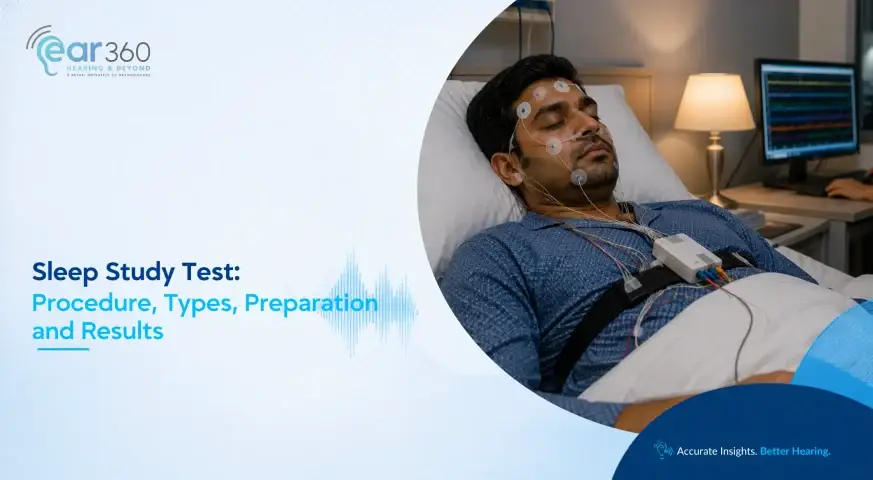
Sleep Study Test: Procedure, Types, Preparation and Results

TL;DR: This blog is intended for adults, parents, and caregivers concerned about persistent snoring, breathing pauses during sleep, choking, repeated awakenings, morning headaches, poor concentration, or excessive daytime sleepiness. A sleep study records important body functions during sleep. It may measure breathing, airflow, oxygen levels, heart activity, brain waves, sleep stages, eye movements, and body movements to identify possible sleep disorders. Different types of sleep tests serve different purposes: Options include overnight polysomnography, home sleep Apnea testing, CPAP titration studies, and multiple sleep latency tests. The appropriate test depends on the symptoms and medical history. Proper preparation improves recording quality: Patients may need to follow their normal sleep routine, limit caffeine, avoid alcohol, avoid hair products, and continue medicines only as advised by their clinician. Results must be interpreted by a qualified clinician: Measurements such as the Apnea-Hypopnoea Index, oxygen saturation and sleep efficiency are assessed alongside symptoms and medical history. Treatment may include lifestyle guidance, CPAP therapy, oral appliances, positional changes, ENT evaluation or further testing. Occasional snoring is common. However, loud and regular snoring, choking during sleep, repeated awakenings, morning headaches or persistent daytime sleepiness may point to an underlying sleep disorder. A sleep study test records important body functions while you sleep, helping a clinician assess your breathing, oxygen levels, heart activity, sleep stages and movements. It is usually painless and may be performed overnight at a sleep centre or, in selected cases, at home. At Resonnocare, we encourage patients and families not to dismiss ongoing sleep-related symptoms, especially when they affect concentration, mood, safety or quality of life. What Is a Sleep Study Test? A sleep study test is a medical assessment of what happens in your body while you sleep. Its most detailed form, called polysomnography, may record brain waves, eye movements, muscle activity, airflow, breathing effort, blood oxygen levels, heart rate and leg movements. These recordings help a sleep physician identify patterns that symptoms alone cannot confirm. Sleep studies are generally painless and are used to understand how well you sleep and how your body responds to possible sleep-related problems. The test is commonly recommended when obstructive sleep Apnea is suspected. It may also help evaluate central sleep Apnea, narcolepsy, periodic limb movements, unusual sleep behaviours, and other sleep disorders. The most appropriate investigation depends on your symptoms, medical history and initial clinical evaluation. When Is a Sleep Study Test Recommended? A doctor may recommend testing when you or your family notice symptoms such as: Loud and frequent snoring Pauses in breathing during sleep Gasping or choking while asleep Excessive sleepiness despite spending enough time in bed Morning headaches or a dry mouth Poor concentration, irritability or reduced work performance Repeated night-time awakenings Restless sleep or unusual body movements Falling asleep while reading, working or driving These symptoms do not automatically mean that you have sleep Apnea. However, they should be evaluated when they are persistent or begin interfering with your daily life. Sleep studies can help determine whether sleep Apnea is present and how severe it may be. Children may also require assessment for persistent snoring, mouth breathing, restless sleep, behavioural changes or poor attention. A paediatrician, ENT specialist or sleep specialist should decide which investigation is appropriate because sleep study interpretation differs between children and adults. What Types of Sleep Study Test Are Available? Different tests collect different levels of information. Your clinician will select the most suitable option based on the condition being investigated. Overnight Polysomnography Polysomnography is a comprehensive overnight sleep study performed in a sleep laboratory or hospital-based sleep unit. A trained technologist monitors your sleep stages, breathing, oxygen levels, heart rhythm, eye movements and body movements. This type of study provides detailed information and may be recommended when the diagnosis is uncertain, another sleep disorder is suspected or you have additional medical conditions that require closer monitoring. Home Sleep Apnea Test A home sleep Apnea test uses a portable device that usually records airflow, breathing effort, oxygen saturation and heart rate. You wear the equipment overnight in your own home and return it for analysis. Home testing may be suitable for uncomplicated adults who have a higher likelihood of moderate-to-severe obstructive sleep Apnea. It is not a complete replacement for laboratory polysomnography. A home test may not be appropriate when another sleep disorder or a significant heart, lung, neurological or neuromuscular condition is suspected. Clinical guidelines recognise home testing as an option for selected adults, while polysomnography remains the standard diagnostic investigation when a broader assessment is required. CPAP Titration Study If sleep Apnea has already been diagnosed, a titration study may be performed to identify an effective continuous positive airway pressure, or CPAP, setting. In selected cases, the first part of the night is used to diagnose sleep Apnea and the second part is used to adjust CPAP pressure. This is known as a split-night study. Multiple Sleep Latency Test A multiple sleep latency test is performed during the day, usually after an overnight study. It measures how quickly you fall asleep during a series of scheduled naps. It may be recommended when narcolepsy or severe, unexplained daytime sleepiness is suspected. How Should You Prepare for a Sleep Study Test? Always follow the instructions provided by your sleep centre, as preparation requirements may vary. General sleep test preparation may include: Maintaining your usual sleep routine before the appointment Avoiding an unplanned daytime nap Limiting caffeine, particularly from the afternoon onward Avoiding alcohol unless your doctor advises differently Washing and drying your hair before the study Avoiding hair oil, gel, sprays or heavy skin products Carrying comfortable nightwear and your regular medicines Informing the team about skin allergies or mobility concerns Tell your clinician about all prescription medicines, over-the-counter medicines and supplements you take. Some medicines can affect sleep patterns, but you should not stop or change any medicine without professional advice. For a home sleep Apnea test, ask the technician to demonstrate how each sensor should be positioned. Incorrect placement or insufficient recording time can produce

Read More
BERA Test Purpose, Procedure, Results and Who Needs It
August 30, 2026 Comments (0)

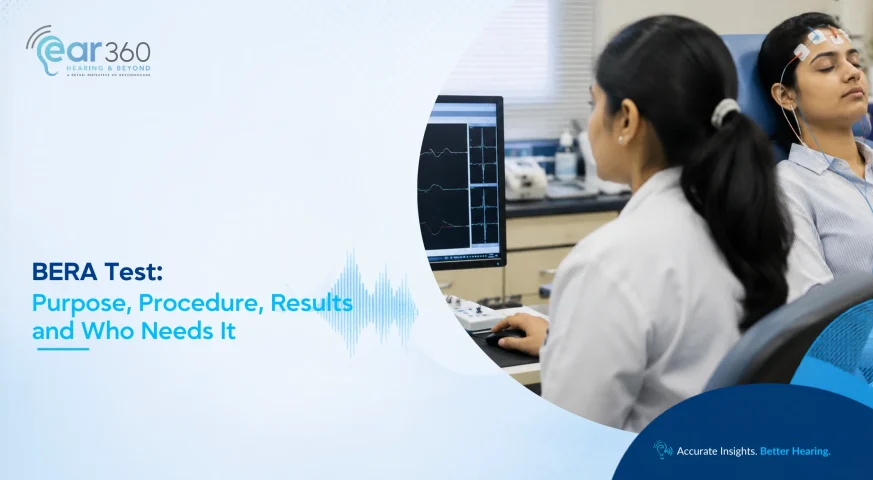
BERA Test: Purpose, Procedure, Results and Who Needs It

TL; DR: This blog is intended for parents of newborns and young children, adults with suspected hearing problems, caregivers, and individuals who need a clear understanding of BERA testing, hearing loss diagnosis, and auditory nerve health. Explains the Purpose of BERA Testing: The article describes how Brainstem Evoked Response Audiometry (BERA) measures the transmission of sound signals from the ear to the brainstem, making it especially useful for infants and people who cannot participate in conventional hearing tests. Identifies When a BERA Test Is Needed: The blog outlines common reasons for recommending a BERA test, including failed newborn hearing screenings, developmental delays, suspected auditory nerve disorders, unexplained hearing loss, and inconclusive audiometry results. Details the Procedure and Results: Readers learn what happens during a BERA test, including electrode placement, sound stimulation, brain response recording, and how audiologists interpret waveform patterns to assess hearing levels and nerve function. Highlights Early Diagnosis and Treatment Benefits: The article emphasizes the importance of timely hearing assessment, explains potential treatment and management options after testing, and shows how Resonnocare supports patients and families through diagnosis, hearing aid solutions, and ongoing hearing care. A BERA is a test recommended for babies who do not respond to loud noise, or for adults with hearing impairment when behavioral tests have not fully explained the loss. One of the most frequently asked questions from parents and patients at Resonnocare is: What does a BERA test actually measure, and how is it different from a normal hearing test? This guide makes it easy for you to understand. What Is a BERA Test? Brainstem Evoked Response Audiometry (BERA) is a hearing test that measures how sound signals travel from the inner ear through the auditory nerve to the brainstem. In a BERA test, the brain’s electrical activity is recorded in response to clicks or tones played through headphones, whereas a normal hearing test requires an active response, such as pressing a button when a sound is heard. This is particularly important for newborns, infants, and those unable to respond accurately, such as because of age, cognitive status, or other factors. What Is the Purpose of a BERA Test? The main goal of a BERA test is to assess the health of the auditory pathway (from the inner ear (cochlea) to the brainstem). It helps identify: Whether hearing loss is present and the approximate degree of hearing loss. If the hearing nerve is working fine or not. If it’s in the ear or in the nerve that leads from the ear to the brain (auditory nerve) Hearing concerns in infants who cannot undergo reliable behavioral hearing tests. As it does not need the patient’s cooperation, a BERA test is sometimes regarded as an objective hearing assessment that can be used in situations where subjective testing is not possible. What Causes the Need for a BERA Test? There are a few scenarios that can prompt an ENT specialist or audiologist to order a BERA test: Failing newborn hearing screening A family history of hearing loss or hearing problems that are genetically linked Auditory neuropathy, a condition in which sound enters the ear normally but is not transmitted properly along the auditory nerve. Failure to get reliable data from standard audiometry tests Tumors or lesions that are suspected along the auditory nerve pathway Developmental delays when hearing loss is not suspected as a cause of the delay. If a child or family member has noticed unusual signs alongside hearing concerns, it may help to review general ear symptoms and conditions so your audiologist has a complete picture before testing begins. What Are the Early Signs That a BERA Test May Be Needed? Given the frequency with which a BERA test is performed in babies and young children, it is common for signs to be detected by parents rather than by the child. These may include: Lack of reaction to unexpected, sudden noises Failure to respond to environmental sounds and voices. Language delay and/or language disorders in speaking and/or language disorders in listening comprehension. Failure to respond to sound by expected developmental milestones A newborn hearing screening that was failed, missed, or produced inconclusive results. A BERA test might be ordered for adults when hearing loss is not typical, or when nerve-related hearing loss is suspected. How Is a BERA Test Performed? The procedure for a BERA is not painful, and it usually goes through the following steps: Preparation: As with an ECG, small electrodes are carefully placed on the scalp and earlobes to capture brain waves. Tone bursts or clicking sounds: These sounds are played through soft earphones, one ear at a time. Brain response recording: The electrodes record the brainstem’s response to these sounds and measure how effectively the auditory pathway responds. Natural sleep or optional sedation (if necessary): In infants or young children who must be still, natural sleep or mild sedation (as indicated) may be used. Waveform analysis: The recorded waveforms are evaluated by an audiologist to estimate hearing thresholds and assess auditory nerve function. The entire test usually takes between 45 minutes and a couple of hours, depending on the patient’s age and cooperation. What Do BERA Test Results Mean? The BERA results are reported as waveforms that demonstrate the response of the auditory nerve and brainstem to sound at various intensities. This will help your audiologist to decide: Whether hearing levels fall within the normal range The severity of the hearing loss (mild, moderate, severe or profound) Whether the response pattern is indicative of a cochlear or neural problem Please note: A BERA test result is not a diagnosis in itself. It’s usually read in conjunction with other tests, medical history, and clinical observations, as waveform patterns can change with age, sedation, and test conditions. An audiologist or an ENT specialist should always interpret the results. When Should You See an Audiologist or Doctor? Some of the signs may require immediate professional attention without regard to age, although a pediatrician or ENT specialist may recommend a BERA test:

Read More
Tinnitus Retraining Therapy Process, Benefits and Results
August 30, 2026 Comments (0)

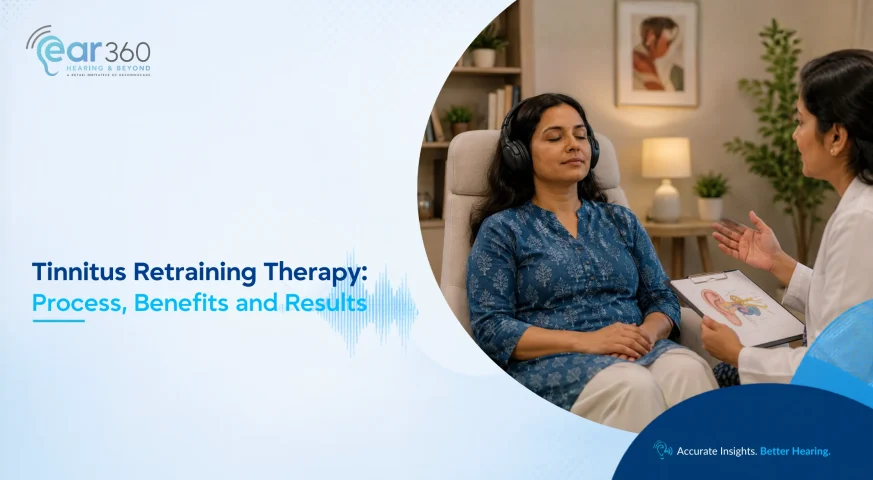
Tinnitus Retraining Therapy: Process, Benefits and Results

TL;DR: This blog is intended for people experiencing persistent tinnitus, especially those whose ringing, buzzing, humming, or hissing affects sleep, concentration, work, conversations, or emotional wellbeing. Tinnitus retraining therapy combines counselling and sound enrichment: Counselling helps patients understand and change their response to tinnitus, while gentle background sound reduces the contrast between tinnitus and quiet surroundings. The goal is habituation, not an instant cure: The therapy aims to help the brain treat tinnitus as an unimportant background signal so that it attracts less attention and causes less distress over time. Treatment should be personalised after a proper assessment: An audiologist may review hearing, sleep, stress, medical history, noise exposure, and tinnitus symptoms before recommending environmental sounds, hearing aids, wearable sound generators, counselling, or another treatment approach. Results are gradual and vary between individuals: Possible benefits include reduced tinnitus awareness, improved sleep, better concentration, and a calmer emotional response. Sudden hearing loss, one-sided or pulsatile tinnitus, severe vertigo, facial weakness, or neurological symptoms require prompt medical assessment. The room is quiet, yet there is still a sound. It may be a ring, buzz, whistle, hum, or hiss. At first, you may notice it only at bedtime. Later, it can begin to interrupt work, conversations, or moments that used to feel restful. Tinnitus retraining therapy is designed for people whose tinnitus has become difficult to ignore. It does not promise to switch the sound off. Instead, it aims to reduce the attention and emotional importance given to it, making everyday life easier to manage. What Is Tinnitus Retraining Therapy? Tinnitus retraining therapy combines counselling with planned sound enrichment. It is based on habituation, the brain’s ability to stop paying close attention to a familiar signal that carries no useful meaning. Think about a ceiling fan. You hear it when you enter a room, then stop noticing it. Tinnitus is harder to disregard when it becomes linked with fear, frustration, poor sleep, or repeated checking. Counselling helps you understand this cycle. Sound therapy reduces the contrast between tinnitus and a quiet environment. The National Institute on Deafness and Other Communication Disorders describes the same two-part approach: counselling to change the response to tinnitus and low-level sound to support habituation. Why Can Tinnitus Become So Noticeable? Tinnitus is the perception of sound without an outside sound source. It may be heard in one ear, both ears, or inside the head. People describe ringing, clicking, buzzing, roaring, and hissing. Its loudness does not always explain how distressing it feels. One person may continue normally. Another may listen for every change, worry about what it means, and find silence uncomfortable. That response can become a loop. Worry directs attention towards the sound. Greater attention makes it seem more dominant. Poor sleep then makes coping harder the next day. Tinnitus can occur alongside hearing loss, noise exposure, earwax, some ear conditions, certain medicines, or head and neck problems. Sometimes no single cause is found, which is why assessment should come before treatment. How Does Tinnitus Retraining Therapy Work? The process usually begins with a detailed conversation, not with a sound device. Your audiologist will ask when the tinnitus started, whether it is constant, which ear is affected, and what changes it. Hearing difficulties, sleep, stress, noise exposure, dizziness, medicines, and medical history may also be discussed. An ear examination and hearing tests may follow. These can include pure tone audiometry, speech testing, or middle-ear assessment. Resonnocare’s hearing care for all ages begins with understanding your hearing before recommending the next step. Counselling then addresses what keeps tinnitus in the foreground. One person may need reassurance about test results. Another may need guidance on safe listening after avoiding normal sounds. Someone else may need help separating tinnitus from bedtime anxiety. The sound plan is equally individual. It may use environmental sound, a bedside source, hearing aids, or wearable sound generators. The sound is usually gentle and comfortable rather than loud enough to cover tinnitus completely. What Does Sound Therapy Actually Do? Imagine a candle in a dark room. It immediately catches your eye. In daylight, the same candle is less noticeable. Sound enrichment works in a similar way: it changes the background against which tinnitus is heard. For some people, a fan or soft natural sound is enough at night. Others need a structured plan. When hearing loss is present, professionally fitted hearing aids can make speech and environmental sounds easier to hear. Hearing aids and sound generators may reduce tinnitus severity for some people, although no device option is clearly best for everyone. Sound should not be uncomfortable. Settings copied from an application or online video may not suit your hearing or sound tolerance. Who May Benefit From Tinnitus Retraining Therapy? The approach may be considered when tinnitus affects sleep, concentration, work, or emotional wellbeing. It may also be discussed when tinnitus occurs with hearing loss or reduced tolerance to everyday sound. Not everyone needs a full programme. Some people improve after an assessment, a clear explanation, and practical changes. Others may benefit more from cognitive behavioural therapy, sleep support, treatment of an ear problem, hearing rehabilitation, or combined care. A good clinician will not place every patient on the same pathway. The useful question is not only whether tinnitus is present, but what is keeping it important in your daily life. What Benefits and Results Can You Expect? Progress is often noticed in ordinary moments. You may finish a meeting without checking the sound. You may fall asleep without waiting for it to become louder. A quiet journey may stop feeling uncomfortable. Possible benefits include less awareness of tinnitus, a calmer response, better concentration, improved sleep, and less interference with work or family life. The sound may remain, but it no longer carries the same weight. This is why tinnitus retraining therapy should be described as a management approach rather than a cure. A large randomised trial found improvement with full TRT, partial TRT, and standard tinnitus care, without showing that the full protocol was

Read More

Resonnocare Health-Tech Private Limited Provides hearing and audiology services through a structured, clinically guided approach.

Popular Clinic Locations:

Delhi | Bangalore | Pune | Ludhiana

contact info

RESONNOCARE HEALTH-TECH PVT. LTD

Head Office 403, Office Block ‘C’

4th Floor – Above Retail Block R1 & R5,

M3M URBANA, Sector 67, Gurgaon 122101 Haryana

2026, All rights reserved by Resonnocare  health-tech private limited