
Free Hearing Aid Trial at EAR360: Eligibility & Process
Choosing a hearing aid involves more than comparing features. At EAR360, our audiologists assess your hearing needs and help you understand which devices may be suitable. Eligible devices can be considered for a free trial under the current programme, so you can assess comfort and everyday listening before making a purchase decision. Our team will explain availability and terms before you proceed.The trial is designed to support informed decision-making, guided by professional assessment and expert audiologist support. A trial is most useful after an appropriate hearing assessment has confirmed that hearing aids may be suitable. It helps you test benefit, comfort and everyday usability before making a purchase decision.


years of Exp in Hearing Care
Why a Hearing Aid Trial Matters
Hearing tests provide valuable clinical information, but real-world listening happens at home, work and social settings. A hearing aid trial helps individuals understand:
How clearly speech is heard in daily situations
Comfort and ease of use over several hours
Performance in different environments such as conversations, meetings and outdoor settings
Personal preference for sound quality and device style
How Does a Hearing Assessment Determine Trial Eligibility?
A professional hearing assessment helps an audiologist determine whether hearing aids may be suitable for you and which devices could be considered for a free hearing aid trial. The decision is based on your hearing test results, type and degree of hearing loss, communication difficulties, ear health and individual listening needs.
At EAR360, the hearing assessment provides a starting point for selecting an appropriate trial device rather than choosing a hearing aid solely by brand, price or appearance.
What Does the Audiologist Check Before Recommending a Trial?
Assessment factor | What the audiologist evaluates | How it helps with trial selection |
Audiogram | Hearing thresholds at different sound frequencies | Helps identify suitable amplification requirements |
Type of hearing loss | Whether the hearing loss is conductive, sensorineural or mixed | Helps determine whether hearing aids or further medical evaluation should be considered |
Degree of hearing loss | The extent of hearing reduction in each ear | Helps narrow down suitable hearing aid models and fitting options |
Speech understanding | How well you detect or understand speech, where assessed | Helps establish realistic communication goals |
Everyday listening needs | Difficulties during conversations, meetings, phone calls or social activities | Helps prioritise useful hearing aid features |
Ear anatomy and comfort | Ear canal shape, physical fitting requirements and handling ability | Helps identify suitable hearing aid styles |
Medical considerations | Symptoms or findings that may require ENT evaluation | Helps ensure appropriate medical concerns are addressed before fitting |
Does Everyone With Hearing Loss Qualify for a Free Trial?
Not necessarily. A person may be clinically suitable for hearing aids but still need to meet the programme’s eligibility requirements. Availability of particular brands, models and trial devices can also vary.
Some people may require further hearing tests or an ENT assessment before proceeding. Others may benefit from hearing protection, monitoring or different hearing-care options instead of amplification.
The audiologist should explain whether a trial is appropriate, which devices are available and what conditions apply before the trial begins.
What to Evaluate During Your Hearing Aid Trial
Hearing tests provide valuable clinical information, but real-world listening happens at home, work and social settings.A hearing aid trial helps individuals understand:


What the Trial Can and Cannot Prove
A hearing-aid trial can show whether appropriately fitted amplification provides meaningful benefit in your daily listening situations. It cannot guarantee perfect or “normal” hearing in every environment.
The goal is improvement in communication, listening effort and everyday confidence not elimination of every hearing difficulty.
Which Everyday Listening Situations Should You Compare During a Trial?
During a hearing aid trial, test the device in the everyday situations where you experience hearing difficulties. This may include conversations at home, watching television, talking on the phone, attending meetings, visiting restaurants and listening outdoors.
A hearing aid may perform differently across these environments because the amount, direction and type of background sound change.
Real-World Hearing Aid Trial Comparison
Listening situation | What to evaluate | Questions to ask yourself |
Conversations at home | Speech clarity during quiet one-to-one conversations | Can I follow family conversations more comfortably? |
Television listening | Speech understanding at a comfortable television volume | Do I need fewer repetitions or less volume adjustment? |
Phone calls | Call clarity and ease of use with a compatible phone | Can I understand the other person clearly enough for my needs? |
Meetings and group conversations | Ability to follow different speakers | Can I understand the discussion without excessive listening effort? |
Restaurants and social gatherings | Speech understanding with competing background sounds | Can I follow the person speaking to me more comfortably? |
Outdoor environments | Comfort with traffic, wind and environmental sounds | Do everyday outdoor sounds feel manageable? |
Longer wearing periods | Physical comfort, fit and handling | Can I wear and manage the device as recommended? |
Why Should You Compare Quiet and Noisy Environments?
Hearing aids may improve access to speech in quiet situations while still leaving some difficulty in noisy environments. This is because competing speech and background sounds can make conversation challenging, even with appropriately fitted devices.
Features such as directional microphones and noise management may help in selected situations, but their effectiveness depends on device capabilities and listening conditions.
How Can You Make the Comparison More Useful?
Try to compare similar activities with and without the hearing aid where safe and appropriate. For example, consider how easily you follow a family conversation at a comfortable speaking distance.
Do not deliberately expose yourself to very loud environments or remove hearing aids in situations where doing so could compromise safety.
Record specific observations rather than deciding that a device is simply good or bad. Your audiologist can use this information to assess whether fine-tuning or a different option may be useful.
How the Free Trial Works

Step 1: Professional Hearing Assessment
The process begins with a detailed hearing evaluation conducted by an audiologist to understand hearing levels, speech understanding and listening requirements.

Step 2: Device Recommendation
Based on test results and lifestyle discussion, suitable hearing device options are recommended across appropriate technology levels.

Step 3: Trial Period
Selected hearing aids are provided for a free trial period, allowing individuals to use them in real-life situations and assess benefit and comfort.

Step 4: Review, Fine-Tuning, and Informed Decision
During and after the trial, audiologists review user feedback and make necessary adjustments to optimise performance. Based on this experience, individuals can confidently decide whether to proceed, explore alternative options, or take additional time—without any pressure.
What the Trial Includes
• Trial of selected hearing aids.
• Professional fitting and programming.
• Guidance on daily use and care.
• One or more follow-up adjustments during the trial period.
Note: Administrative requirements may apply for the trial. Our team explains these clearly before starting.
What to Confirm Before You Take the Hearing Aid Home
Before the trial begins, ask the team to confirm:
- Trial duration and review/return date
• Whether any deposit or security requirement applies
• Which device and accessories are included
• What follow-up adjustments are included
• Whether another suitable model can be considered if required
• What happens if the device is lost or accidentally damaged
• What condition the device needs to be returned in
• Whether any amount becomes payable if you decide not to purchase
The current service information does not publish these exact administrative terms, so they should be clearly explained before the trial starts.
Free Hearing Aid Trial vs In-Clinic Demonstration: What’s the Difference?
A free hearing aid trial and an in-clinic hearing aid demonstration serve different purposes. An in-clinic demonstration allows you to experience a hearing aid in a controlled environment, while a take-home trial, where available, provides an opportunity to evaluate a fitted device during everyday activities over an agreed period.
Both can help you understand hearing aid technology, but a trial may provide more information about comfort, practical use and listening difficulties outside the clinic.
Comparison | In-clinic demonstration | Free hearing aid trial |
Where it takes place | Usually inside the hearing-care clinic | At home and in other appropriate everyday environments, if take-home use is permitted |
Duration | Typically a shorter listening session | A defined trial period agreed with the clinic |
Device programming | May involve a demonstration fitting or initial programming | Involves fitting and programming appropriate for the trial |
Listening environments | Mainly clinic-based listening examples | Conversations, television, phone calls and other real-life situations |
Comfort evaluation | Provides an initial impression of the fit | Allows observation during longer periods of use |
Follow-up adjustments | May be limited to the demonstration session | May include adjustments based on trial feedback |
Decision-making | Helps shortlist appropriate options | Helps evaluate everyday benefits and limitations before purchase |
Is a Hearing Aid Demonstration Enough Before Buying?
An in-clinic demonstration can be useful when comparing basic sound quality, comfort and features. However, clinic conditions may not reflect your normal listening environments.
For example, you might hear speech clearly during a quiet demonstration but experience different challenges in a restaurant or meeting. A trial can help identify these differences.
Does Every Demonstration Lead to a Free Trial?
No. Take-home trials depend on clinical suitability, eligible devices and the provider’s programme terms. The availability of a demonstration does not automatically mean a particular model is eligible for a free trial.
Before proceeding, ask whether the device can be taken home, what the agreed trial duration is and which return or purchase conditions apply.
Keep a Simple Trial Log
You do not need a complicated diary. Note how the device performs in five situations:
Situation | What to record |
Conversation at home | Easier / Same / Difficult |
TV or phone | Easier / Same / Difficult |
Background noise | Easier / Same / Difficult |
Work or social setting | Easier / Same / Difficult |
Comfort after several hours | Comfortable / Acceptable / Uncomfortable |
Also note anything specific you want adjusted, such as your own voice sounding unusual, excessive loudness, difficulty in noise or physical discomfort.
How Does Trial Feedback Help Your Audiologist Fine-Tune Hearing Aids?
Trial feedback helps your audiologist understand how your hearing aids perform in everyday situations and whether changes to programming, physical fit or device settings may improve your experience. Specific observations about speech clarity, loudness, background noise and comfort are more useful than general comments such as “it does not sound right.”
A hearing aid is initially programmed using your hearing assessment, but real-world listening feedback provides additional information that may guide adjustments.
Common Trial Problems and Possible Adjustments
What you notice during the trial | What the audiologist may investigate | Possible next step |
Speech sounds unclear | Amplification settings, speech perception and fitting accuracy | Review programming or recommend further assessment |
Everyday sounds seem too loud | Output levels, gain and sound comfort | Adjust suitable sound-processing settings |
Your own voice sounds unusual | Physical fit, ear coupling and sound processing | Assess the earpiece, venting or relevant settings |
Whistling or feedback occurs | Fit, acoustic leakage, earwax or feedback management | Check the device and adjust the fitting where appropriate |
Speech remains difficult in background noise | Directional microphone settings, noise management and listening conditions | Review programming or discuss communication strategies |
The device feels uncomfortable | Physical fit, earpiece size or insertion technique | Adjust or review the physical fitting |
Phone or Bluetooth performance is inconsistent | Device compatibility, connections and streaming settings | Review pairing and connectivity options |
Why Is Specific Feedback Important?
A comment such as “I struggle to hear my colleague in meetings” gives the audiologist more useful information than simply reporting that the hearing aid is not working well.
Try to describe where the problem occurred, who was speaking, how much background noise was present and whether the issue affected one or both ears.
Can Every Listening Problem Be Fixed Through Programming?
Not necessarily. Some difficulties may improve with changes to the hearing aid settings or fit, while others may be related to the degree of hearing loss, speech understanding, listening environment or limitations of the device.
The audiologist may recommend additional testing, listening strategies, accessories or another hearing aid option when appropriate.
Never continue wearing a hearing aid that causes pain or significant discomfort without seeking professional advice.
If you are considering hearing aids or unsure whether they are right for you, a trial can help.
Note - At EAR360, a hearing aid trial is not a standalone offering. Audiologists play a central role in ensuring the device is fitted correctly, adjusted appropriately and evaluated meaningfully. This professional guidance helps translate technology into real communication benefit.
What Happens at the End of Your Hearing Aid Trial?
At the end of your hearing aid trial, the audiologist reviews your experience, discusses whether the device provided meaningful benefit and helps you understand the available next steps. You may decide to purchase the selected hearing aid, request further adjustments where permitted, consider another eligible model or discuss other hearing-care options.
The outcome should depend on your hearing needs, comfort, real-world experience and the terms of the trial programme.
Possible Outcomes After Your Hearing Aid Trial
Trial outcome | What it may mean | Possible next step |
The hearing aid meets your needs | You experience useful improvements in important listening situations. | Discuss purchase, final fitting and continued aftercare. |
The hearing aid helps but needs adjustment | Some situations improve, but comfort or sound quality needs attention. | Review settings, fit or additional support options. |
The device is physically uncomfortable | The style or fitting may not suit you. | Assess the physical fit or consider another appropriate style. |
Speech remains difficult in some environments | Further programming, expectations or communication strategies may need review. | Discuss additional assessment, accessories or other suitable options. |
Another model may be more appropriate | A different style or feature set may better match your needs. | Check whether another device can be considered under the programme. |
You decide not to proceed with purchase | You are not ready to purchase or the trial did not meet your expectations. | Follow the agreed return terms and discuss other hearing-care options. |
What Should You Discuss at the Final Review?
- Which everyday listening situations improved
- Where hearing difficulties continued
- Whether the hearing aid was physically comfortable
- Whether additional programming or fitting adjustments are needed
- What the purchase price includes
- Which warranty and aftercare services apply
- Whether another suitable model can be considered
- What the agreed return, payment or trial-completion conditions are
If you choose to purchase the hearing aid, the audiologist can explain the ongoing fitting, maintenance and follow-up process.
If you decide not to purchase, the device should be returned according to the terms agreed before the trial began. Do not assume an automatic extension, model exchange or refund arrangement unless the clinic has confirmed it.
Who Should Consider a Hearing Aid Trial?
A trial may be appropriate if:
- You have completed a hearing assessment
- Hearing aids have been recommended as a suitable option
- You are unsure whether they will help enough in real life
- You want to test comfort before committing
- You want to compare benefit in home, work or noisy environments
- You are concerned about making the wrong purchase
If you have not yet had an appropriate hearing assessment, start there before choosing a trial device.
Which Hearing Aid Types May Be Available for a Free Trial?
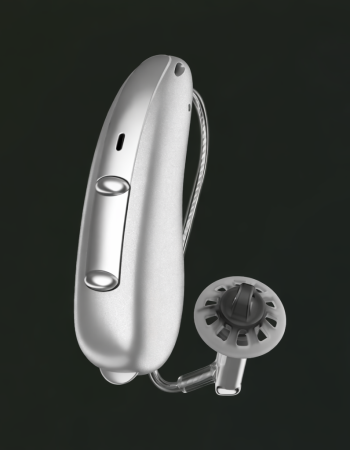
A free hearing aid trial may include selected receiver-in-canal (RIC), behind-the-ear (BTE), rechargeable or other suitable hearing aid styles, depending on the clinic’s programme and available trial devices. Not every hearing aid type, brand or model is automatically eligible.
The audiologist should recommend trial options according to your hearing loss, ear anatomy, handling preferences, communication needs and programme availability.
Hearing Aid Types to Discuss With Your Audiologist
Hearing aid type | Main characteristics | Trial considerations |
Receiver-in-Canal (RIC) | A small device worn behind the ear with a receiver positioned in the ear canal | Commonly offers a range of technology and fitting options, depending on the model |
Behind-the-Ear (BTE) | A hearing aid worn behind the ear, often connected to an earmould or earpiece | May suit people requiring easier handling or particular amplification options |
Rechargeable hearing aids | Use built-in rechargeable batteries and a compatible charger | Check whether the charger and necessary accessories are included during the trial |
In-the-Ear (ITE) | Custom-fitted hearing aids positioned in the outer ear | A custom fitting may be required, and trial availability can be limited |
Completely-in-Canal (CIC) | Small devices designed to fit largely inside the ear canal | Suitability depends on hearing needs and ear anatomy; availability must be checked |
Invisible-in-Canal (IIC) | Very small custom hearing aids placed deeper in the ear canal | Not suitable for everyone, and custom manufacturing may affect trial eligibility |
Can You Choose Any Hearing Aid Brand for Your Trial?
No. The hearing aid brands and models available for a trial depend on clinic inventory, programme conditions and whether the device is clinically suitable.
Rather than selecting a brand first, discuss the situations where you have difficulty hearing. The audiologist can then explain suitable device options and available features.
Can You Try Rechargeable or Bluetooth Hearing Aids?
Selected rechargeable or Bluetooth-enabled models may be considered where available and suitable. If connectivity matters to you, ask whether you can test phone calls, streaming and charging during the trial.
Device compatibility, charging arrangements and accessories should be confirmed before taking the hearing aid home.
Where Can You Book a Free Hearing Aid Trial Near You?
You can enquire about a free hearing aid trial through EAR360 and the Resonnocare hearing-care network. The website identifies Delhi, Bangalore, Pune and Ludhiana among its popular clinic locations, but participation in the trial programme and availability of eligible hearing aid models should be confirmed with the specific branch before visiting.
If you are searching for a free hearing aid trial near me, contact the selected clinic to check appointment availability and whether your hearing needs can be assessed at that location.
City | What to confirm before booking |
Delhi | Audiologist appointment availability, participating trial locations and suitable device options |
Bangalore | Hearing assessment, available trial models and programme conditions |
Pune | Trial eligibility, fitting appointments and availability of suitable hearing aids |
Ludhiana | Eligible devices, appointment scheduling and follow-up arrangements |
How to Prepare for Your Hearing Aid Trial Appointment
Bring any existing audiogram or hearing test reports, details of your current hearing aids if applicable, and a short description of the situations where you struggle to hear.
Before booking, ask the clinic:
- Is the free hearing aid trial currently available at this location?
- Do I need a new hearing assessment?
- Which hearing aid brands and models are eligible?
- What is the exact trial duration?
- Are there any deposits or administrative requirements?
- Are fitting, programming and follow-up adjustments included?
- What happens if I decide not to purchase?
A trial is most useful when the hearing aid is selected and programmed appropriately and you understand what to evaluate during everyday use.
The EAR360 team can explain the available programme, assess your hearing needs and help you take the next step.
FAQ's
What is a free hearing aid trial?
A free hearing aid trial allows you to experience selected hearing aids before making a purchase decision. It helps you understand how the hearing aid feels, how clearly you hear speech, and how comfortable the device is in your daily routine.
Who is eligible for a free hearing aid trial?
People who have completed a hearing assessment and have been advised hearing aids may be eligible for a trial of selected devices. The audiologist will explain trial availability, suitable models, and the next steps after reviewing your hearing test results.
What is included in a hearing aid trial?
A hearing aid trial may include device fitting, basic programming, usage guidance, care instructions, and follow-up support. The goal is to help you experience the hearing aid properly rather than simply test the device for a few minutes.
Why should I try a hearing aid before buying one?
Hearing aids are personal devices, and the right fit depends on your hearing needs, lifestyle, comfort, and listening environments. A trial helps you judge speech clarity, background noise comfort, device handling, and overall confidence before choosing a hearing aid.
Can I try hearing aids before buying them?
Yes. Many hearing clinics offer a hearing-aid trial or demonstration so you can experience how the device performs before making a purchase decision. The exact trial duration and terms depend on the clinic and hearing-aid provider.
What happens during a hearing-aid trial?
During the trial, the hearing aid is usually selected and programmed according to your hearing test and listening needs. You then use it in everyday situations such as conversations, watching TV, speaking on the phone, attending meetings, or spending time in noisy places. Your experience helps the audiologist decide whether further adjustments are needed.
How is the hearing aid selected for my trial?
The hearing aid is selected based on factors such as your type and degree of hearing loss, speech understanding, lifestyle, listening environments, ear anatomy, comfort, and technology requirements. Your audiologist may suggest one or more suitable options rather than choosing solely by brand.
What should I test during the trial?
Try the hearing aid in the situations where you normally have the most difficulty. This may include one-to-one conversations, family gatherings, restaurants, meetings, television, phone calls, outdoor environments, and conversations in background noise. Pay attention to speech clarity, comfort, sound quality, and how easily you can manage the device.
How many hours should I wear the hearing aid during the trial?
Your audiologist will usually recommend gradually increasing your daily wear time, especially if you are new to hearing aids. The goal is generally to build toward wearing them consistently during your normal waking activities, but the schedule may differ depending on your comfort and hearing needs.
What if it sounds too loud or unnatural?
Some sounds may initially seem unusually noticeable because your brain is getting used to hearing sounds that may have been reduced for a long time. However, hearing aids should not remain uncomfortably loud. Tell your audiologist what you are experiencing so the programming can be reviewed.
Can the hearing aid be adjusted during the trial?
Yes. Adjustments are an important part of the trial process. Your audiologist can change amplification, sound balance, noise-management settings, and other features based on your feedback and real-world listening experience.
Can I try another hearing aid if the first one does not suit me?
Depending on the clinic’s trial policy, another model, style, or technology level may be considered if the first hearing aid does not meet your needs. Sometimes the problem can be resolved through programming, while in other cases a different device may be more suitable.
What happens after the trial period?
At the end of the trial, your audiologist will usually review your experience and discuss whether the hearing aid provided enough benefit. You may decide to proceed with that device, make further adjustments, consider another option, or discuss other hearing-management approaches.
Do I need another appointment before buying?
Usually, a follow-up appointment is helpful before making the final decision. It allows your audiologist to review how the hearing aid performed in everyday situations, make any final adjustments, answer your questions, and confirm that the selected device is appropriate for your hearing and communication needs.
Will an audiologist help me during the trial?
Yes. An audiologist helps fit the device, adjust settings, explain usage, answer questions, and review your experience during the trial. This support is important because hearing aids often need fine-tuning before they feel natural and comfortable.