
Find the Right Hearing Aid.
Try It FREE for 7 Days Before You Decide.
Get your hearing assessed and compare suitable hearing aids with guidance from an audiologist. Experience selected devices in your everyday listening environments before making your decision.
Book Your Hearing Aid Trial
Share your details and our hearing care team will contact you to understand your needs and arrange your appointment.
🔒 100% confidential. No spam. Our team will contact you to confirm your preferred time and clinic.
Explore Hearing Aids From Leading Global Brands
Your audiologist can help you compare suitable hearing aid options based on your hearing needs, lifestyle and preferred features.
Explore Hearing Aids for Different Needs & Budgets
Starting prices are shown for quick comparison. The right option depends on your hearing assessment, lifestyle, features and fitting needs.
Basic Digital Hearing Aids
Reliable digital hearing support with essential features for everyday listening.
- Clear everyday sound
- Digital noise management
- Essential listening features
- Professional fitting & programming
Advanced Hearing Aids
Advanced convenience, connectivity and sound processing for active lifestyles.
- Rechargeable options available
- Bluetooth-enabled models available
- Advanced speech & noise processing
- Smart automatic listening features
Premium & Invisible Hearing Aids
Discreet, custom-fit and advanced hearing aid options for users who prioritise appearance, speech clarity and premium technology.
- Invisible and nearly invisible options
- AI-enabled sound processing on selected models
- Custom-fit styles available
- Advanced speech and noise management
*Starting prices are indicative and may vary by brand, model, hearing-aid style, technology level and features. Suitability is determined after hearing assessment and consultation.
How Discreet Can a Hearing Aid Be?
Compare common hearing aid styles, including discreet, custom-fit and behind-the-ear options. Your audiologist can help identify the style that best matches your hearing needs, ear anatomy and lifestyle.
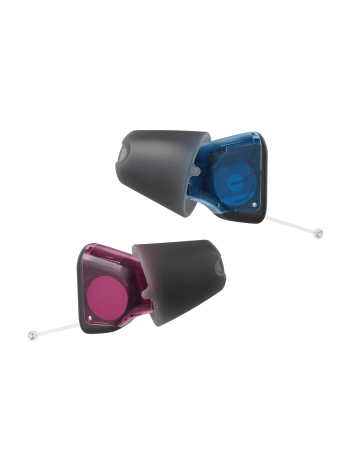
Invisible-in-Canal (IIC)
Placed deep inside the ear canal and nearly invisible when worn. Suitability depends on hearing level and ear canal anatomy.
Check IIC Suitability →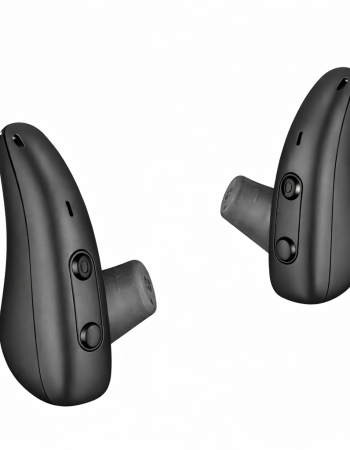
Receiver-in-Canal (RIC)
A lightweight behind-the-ear style with a slim wire and receiver positioned in the ear canal.
Try RIC Hearing Aids →Slim RIC
A slimmer RIC profile for users looking for discreet styling, comfort and modern connectivity options.
Explore Slim RIC →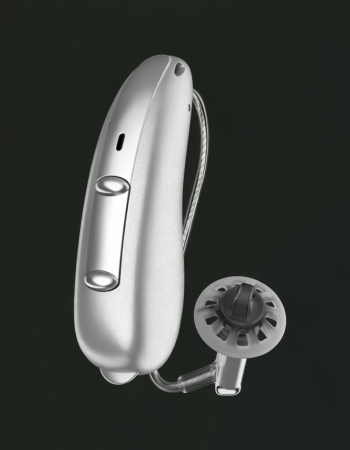
Behind-the-Ear (BTE)
Sits behind the ear and supports a wide range of hearing needs, with easier handling and robust amplification options.
Explore BTE Options →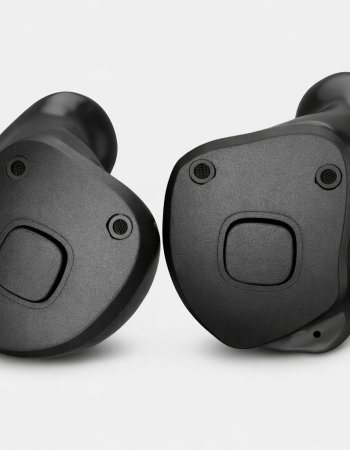
In-the-Ear (ITE)
Custom-made to fit the outer ear, with easier insertion and space for convenient controls on suitable models.
Explore ITE Options →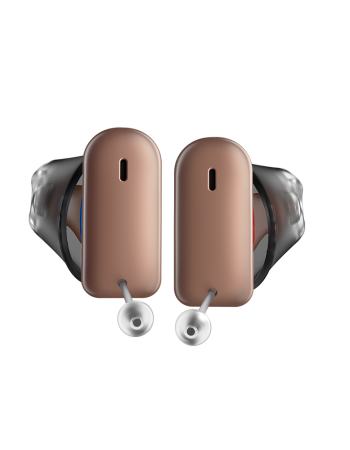
Completely-in-Canal (CIC)
Fits largely inside the ear canal for a discreet appearance, subject to hearing needs and ear anatomy.
Check CIC Suitability →What Factors Affect Hearing Aid Prices in India?
Hearing aid prices in India vary according to the device’s technology level, style, features, brand, fitting requirements and the professional services included in the package. Two hearing aids that look similar may have different prices because their sound-processing capabilities, connectivity and support services differ.
The total cost should be considered alongside hearing needs and long-term support, rather than the price of the device alone.
Price factor | How it influences the price | What to check before choosing |
Technology level | More advanced signal processing, automatic adjustments and speech-enhancement features may increase the cost. | Which features are useful for your everyday listening situations? |
Hearing aid style | BTE, RIC, ITE, CIC and IIC devices have different designs and fitting requirements. | Which style is suitable for your hearing loss and ear anatomy? |
Rechargeable or battery-powered | Rechargeable options may include built-in batteries and charging accessories. | Is the charger included, and what are the battery-service terms? |
Bluetooth connectivity | Wireless streaming and smartphone integration may differ between models. | Is the device compatible with your smartphone or television? |
Noise management | Directional microphones and advanced noise-processing systems may affect technology pricing. | How does the hearing aid perform in conversations and background noise? |
Professional fitting | Hearing assessment, programming, verification and adjustments may be included or charged separately. | What fitting services are included in the quotation? |
Warranty | Warranty periods and manufacturer service conditions vary. | Which repairs, parts and services are covered? |
Aftercare | Follow-up appointments, cleaning, reprogramming and servicing may affect the total care package. | What support is included after purchase? |
A higher-priced hearing aid is not necessarily the most appropriate choice for every person. Someone who mainly communicates in quiet environments may have different feature requirements from a person who frequently attends meetings, restaurants or group conversations.
Before comparing hearing aid prices, ask whether the quotation applies to one hearing aid or a pair, and whether it includes fitting, programming, follow-up visits, warranty support and accessories.
The audiologist should recommend suitable hearing aid options after reviewing your hearing test results and communication needs.
Which Hearing Aid Type Is Suitable for Different Hearing Needs?
The most suitable hearing aid type depends on your degree of hearing loss, ear anatomy, comfort, ability to handle small devices, lifestyle and personal preferences. Different hearing aid styles can support similar degrees of hearing loss, but their available features and fitting limitations may differ.
An audiologist can help compare hearing aid types after reviewing your audiogram and discussing your everyday communication needs.
Hearing aid type | May suit people who prioritise | Important considerations |
Behind-the-Ear (BTE) | Ease of handling, durability and a broad range of amplification needs | The device sits behind the ear and may be more visible. |
Receiver-in-Canal (RIC) | Comfort, relatively discreet design and flexible technology options | The receiver and earpiece must be appropriate for hearing needs and ear anatomy. |
Slim RIC | A streamlined appearance and everyday comfort | Features and suitable amplification levels depend on the model. |
In-the-Ear (ITE) | Custom fitting and accessible controls on suitable models | Ear anatomy and available space affect size and features. |
Completely-in-Canal (CIC) | A discreet custom-fitted hearing aid | Small controls and batteries may be difficult for some users to handle. |
Invisible-in-Canal (IIC) | Very low visibility | Not suitable for every degree of hearing loss or ear canal shape. |
Does the Degree of Hearing Loss Affect Hearing Aid Selection?
Yes. Mild, moderate, severe and profound hearing loss can require different levels of amplification and different fitting approaches. The audiologist also considers which frequencies are affected and how well you understand speech.
Some RIC and BTE models can accommodate a wide range of hearing needs, while certain small custom hearing aids may have greater fitting limitations. The suitability of any specific device must be confirmed for the individual patient.
Why Do Comfort and Handling Matter?
A hearing aid should be practical to wear, insert, remove, clean and maintain. Someone with limited hand dexterity or vision may prefer larger controls, rechargeable options or an easier-to-handle design.
Similarly, people who frequently use smartphones, attend meetings or travel may prioritise wireless connectivity and convenient charging.
Appearance is an important consideration, but it should not override appropriate amplification, comfort and clinical suitability.
How Do Hearing Aids Work?
If You Need Hearing Aids?
Hearing loss often develops gradually, making it easy to overlook early signs. Many people adapt without realising how much they are missing, until communication becomes tiring or frustrating.
You may benefit from hearing aids if you :





You may also notice increased listening fatigue, avoidance of social situations, or ringing in the ears (tinnitus). Over time, untreated hearing loss can affect confidence, relationships and overall quality of life.
A comprehensive hearing assessment is the only way to determine whether hearing aids are appropriate. At Resonnocare, hearing tests help identify the type and degree of hearing loss and guide whether hearing aids, medical care or other interventions are needed. When hearing aids are recommended, they are selected carefully to match individual hearing needs and lifestyle.
Can Hearing Aids Help You Understand Speech in Background Noise?
Hearing aids can improve access to speech and help some people communicate more comfortably in background noise. Features such as directional microphones, digital noise management and personalised sound processing can support speech understanding in selected listening situations. However, hearing aids cannot eliminate every unwanted sound or guarantee clear conversation in every noisy environment.
Understanding speech in restaurants, meetings and group conversations can be challenging because multiple sounds reach the ear simultaneously. The benefit of hearing aids depends on the person’s hearing loss, speech understanding, device technology, fitting and listening environment.
How Do Hearing Aids Support Speech Clarity?
Hearing aid feature | How it may help | Important limitation |
Directional microphones | Emphasise sound coming from selected directions, often towards the person speaking. | Performance varies with speaker position and background noise. |
Digital noise reduction | Can make some background sounds less distracting and improve listening comfort. | It does not remove all competing speech or guarantee better word understanding. |
Automatic environment detection | Adjusts selected settings as the listening environment changes. | Effectiveness depends on the device and the listening situation. |
Binaural processing | Allows compatible hearing aids worn in both ears to coordinate certain settings. | Benefits depend on hearing status and individual device capabilities. |
Remote microphone accessories | Transmit a speaker’s voice more directly to compatible hearing aids. | May require separate accessories and compatible devices. |
For example, a person may find it easier to follow a family conversation in a quiet room but continue to struggle in a busy restaurant. This does not automatically mean the hearing aids are unsuitable. Further fine-tuning, communication strategies or additional accessories may be helpful.
During a hearing aid trial, test the devices in situations that matter to you, including conversations at home, telephone calls, meetings and places with background noise.
Share specific examples of difficult listening situations with your audiologist so the settings can be reviewed.
How to Choose What’s Best for You?
Choosing the right hearing aids is a personalised process guided by a trained audiologist. At Resonnocare, hearing assessments and recommendations are made by experienced specialists who understand both the clinical aspects of hearing loss and the practical challenges faced in daily life.
The process begins with a detailed hearing test, performed by an audiologist, which results in an audiogram. The audiogram shows how well you hear different sound frequencies and forms the clinical foundation for hearing aid selection. This information is then combined with practical factors such as your listening environments, work or social activities, and everyday communication needs.
Lifestyle considerations play an important role. Individuals who attend meetings or social gatherings frequently may benefit from advanced noise management, while others may prioritise ease of use, comfort or rechargeable options. Ear shape, manual dexterity and visual ability also influence which hearing aid styles and features are suitable.
Technology level and budget are discussed transparently. Higher technology does not always mean better for everyone, but features such as rechargeable batteries, wireless connectivity, AI-based sound processing and remote fine-tuning can significantly improve daily listening comfort for many users.
At Resonnocare, audiologists guide this decision without pressure. Patients are supported through demonstrations, trial periods and clear explanations, helping them make informed choices with confidence and long-term satisfaction.
How Does Your Audiogram Help an Audiologist Recommend Hearing Aids?
An audiogram helps an audiologist recommend hearing aids by showing the softest sounds you can hear at different frequencies in each ear. These results help identify the degree and pattern of hearing loss and guide the amount of amplification that may be needed.
An audiogram is an important starting point, but hearing aid selection also considers speech understanding, ear health, comfort, lifestyle and personal preferences.
From Hearing Test to Hearing Aid Fitting
- Hearing Assessment
- Hearing thresholds, speech understanding and relevant clinical findings
- Identify Hearing Needs
- Type and degree of hearing loss, affected frequencies and listening difficulties
- Compare Suitable Devices
- Hearing aid style, amplification capability, features and budget
- Fitting and Programming
- Personalised settings, appropriate verification and comfort adjustments
- Trial and Follow-Up
Everyday listening feedback, fine-tuning and ongoing care
Why Are Different Frequencies Important?
Hearing loss does not always affect every sound equally. For example, a person with greater hearing loss at higher frequencies may have difficulty hearing certain speech consonants even when voices seem loud enough.
An audiologist uses the hearing assessment to determine how the selected hearing aid should amplify sounds at different frequencies while keeping louder sounds comfortable.
Why Is Professional Programming Important?
Hearing aids should be programmed to match the individual’s hearing profile rather than amplifying all sounds equally. Where appropriate, the audiologist may use real-ear measurement or another suitable verification method to assess the sound delivered in the ear.
Follow-up appointments allow the settings to be reviewed based on comfort, speech clarity and everyday listening experiences.
A hearing aid that fits your audiogram still needs to suit your physical comfort, communication goals and daily activities.
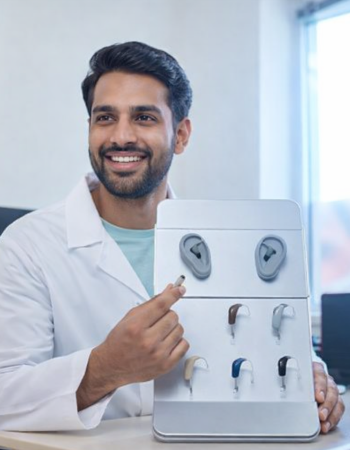
Hearing Aids
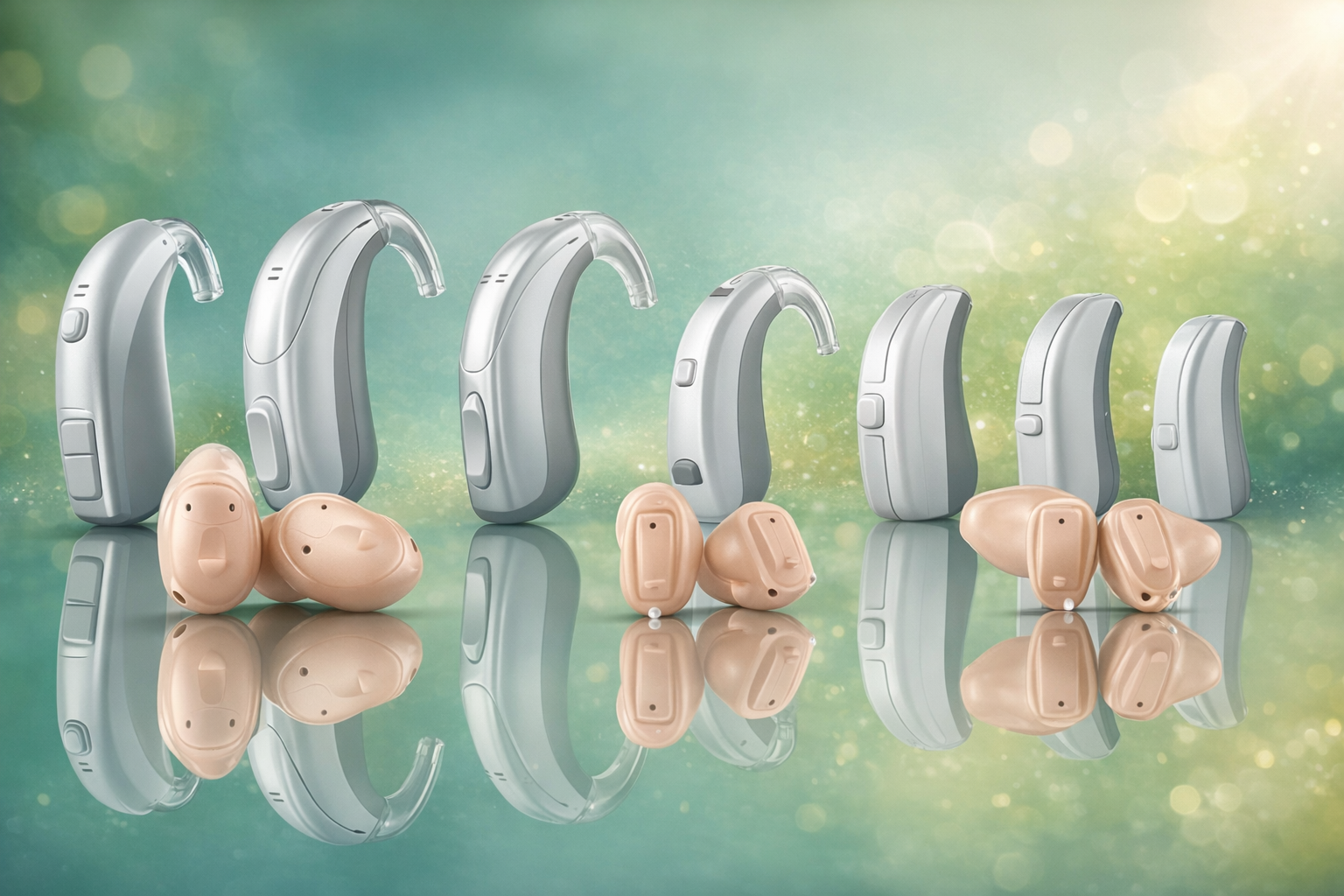
Hearing aids come in various styles to match different hearing needs, preferences and lifestyles.
Behind-the-Ear (BTE)
BTE hearing aids sit behind the ear and deliver sound through a tube or earmould. They are suitable for mild to profound hearing loss and offer strong amplification, longer battery life and durability. Modern BTEs are discreet and easy to handle, making them ideal for individuals who require powerful devices or simpler controls.
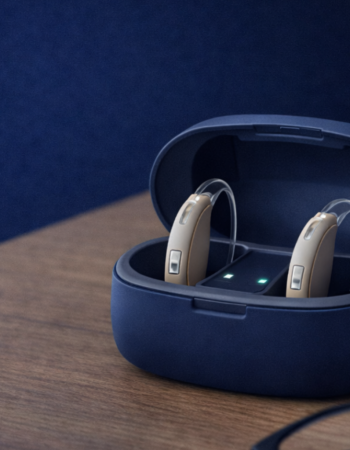
Receiver-in-Canal (RIC)
RIC hearing aids are smaller and lighter than traditional BTEs. The receiver sits inside the ear canal, connected by a thin wire. They provide excellent sound quality, a natural listening experience and suit mild to severe hearing loss. RICs are among the most commonly recommended styles today.
In-the-Ear (ITE)
ITE hearing aids are custom-made to fit the outer ear. They are easy to insert and remove and can include manual controls. These devices suit mild to severe hearing loss and are often chosen by individuals who prefer custom-fit solutions.
Invisible-in-Canal (IIC)
IIC hearing aids are placed deep inside the ear canal and are nearly invisible when worn. They suit mild to moderate hearing loss and specific ear canal shapes. Due to size limitations, feature options may be restricted.
At Resonnocare, style recommendations balance cosmetic preferences with hearing performance, comfort and long-term usability.
Smart Sound Technology (AI-Enabled Sound Processing)
Smart sound technology allows hearing aids to automatically adjust to different environments such as quiet rooms, busy streets or crowded gatherings.
How it helps: You do not need to manually change settings. Sound feels more natural and comfortable as you move through your day.
Directional Hearing for Clear Conversations
Directional hearing focuses on speech coming from in front of you while reducing surrounding noise.
How it helps: Conversations become easier to follow in meetings, family gatherings and restaurants, reducing listening effort and fatigue.
Feedback Management (No Whistling Sounds)
Modern hearing aids are designed to prevent whistling or squealing sounds, even when you hug someone or use the phone.
How it helps: You can wear your hearing aids confidently without discomfort or embarrassment.
Rechargeable Batteries for All-Day Use
Rechargeable hearing aids are charged once a day, similar to a mobile phone, eliminating the need for frequent battery changes.
How it helps: This makes daily use simpler, especially for older adults, and ensures reliable hearing throughout the day.
Wireless Streaming from Phones, TVs and Devices
Hearing aids can connect wirelessly to mobile phones, televisions and other devices.
How it helps: Phone calls, video calls and TV audio are streamed directly into your hearing aids, making sound clearer and more personalised.
Connectivity with Android and iOS Devices
Modern hearing aids are compatible with both Android and iOS smartphones through dedicated apps.
How it helps: You can control volume, switch listening modes and monitor battery levels easily using your phone.
Remote Fine-Tuning and Programming
Audiologists can adjust hearing aid settings remotely, without requiring a clinic visit.
How it helps: Minor changes can be made quickly and conveniently, saving time while ensuring continued comfort and clarity.
These features work together to reduce listening effort, improve communication and increase confidence in social and professional settings. Hearing aids today are designed not just to amplify sound, but to support natural hearing, comfort and independence in everyday life.
These technologies help bring listening closer to natural hearing and reduce the effort required to follow conversations.
Trusted Global Hearing Aid Brands
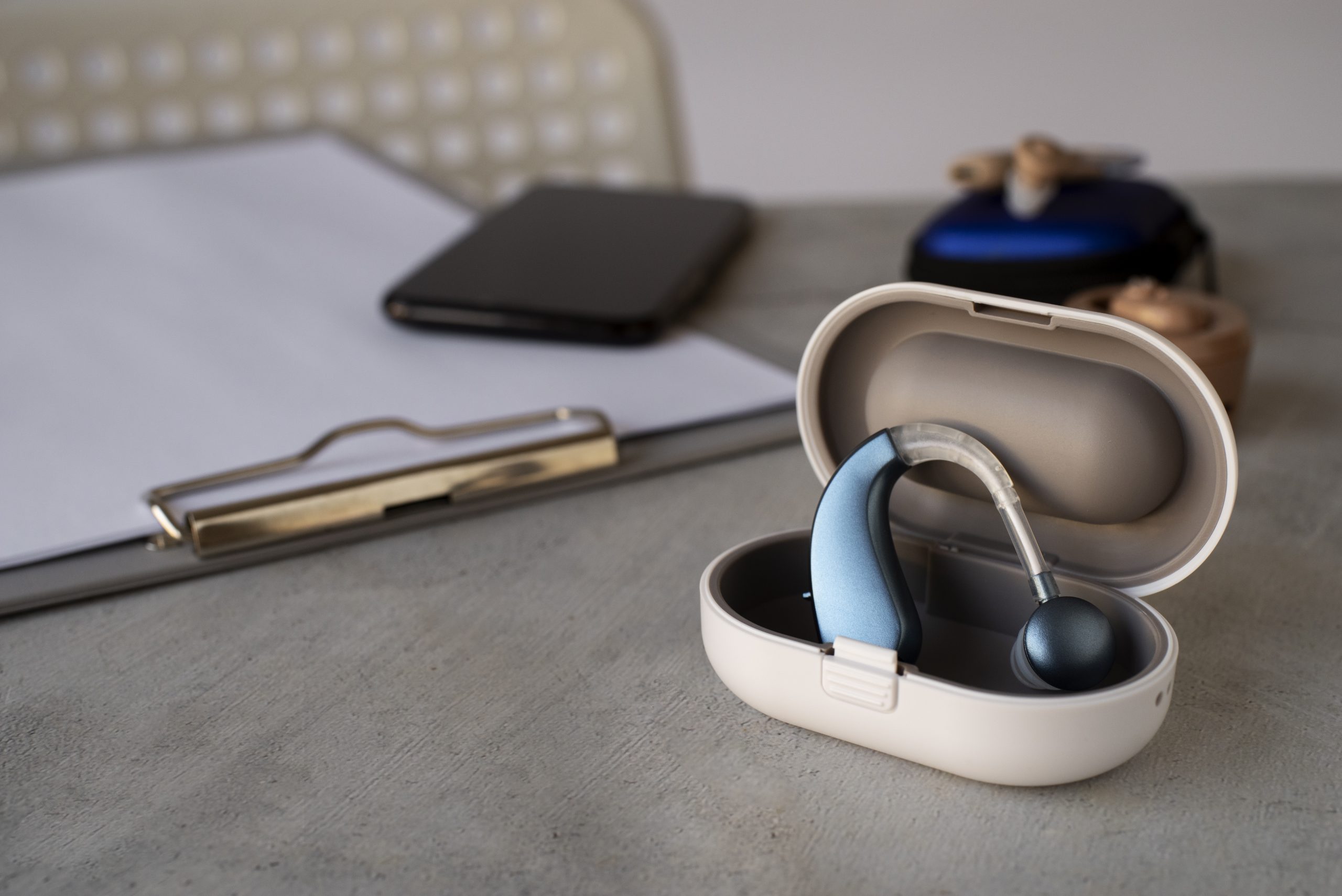
We don’t limit you to one manufacturer because different brands excel in different areas. Your hearing loss pattern, lifestyle needs, and personal preferences guide our recommendations.We provide unbiased advice based on what genuinely serves you best, backed by our clinical expertise and experience with each brand’s strengths. You’re not just buying a device-you’re investing in a comprehensive care relationship


Pricing, Trials and Upgrade Options for Hearing Aids
Quality hearing care should be accessible. At Resonnocare, hearing aids are available across clearly defined price ranges, allowing patients to choose solutions that match their hearing needs, lifestyle and budget, while maintaining clinical appropriateness. Hearing Aid Price Ranges (Per Ear)
Entry-Level Hearing Aids: ₹20,000 – ₹40,000
These devices provide essential amplification and basic noise reduction, suitable for individuals with simpler listening needs.
Mid-Range Hearing Aids: ₹41,000 – ₹80,000
Mid-range devices include automatic sound adjustment, feedback management and wireless connectivity, supporting improved listening comfort in everyday situations. • Advanced Hearing Aids: ₹81,000 and above
Advanced technology devices incorporate artificial intelligence, enhanced speech clarity, personalised sound processing, smart connectivity and improved performance in challenging listening environments.
Our pricing is transparent and includes more than just the device. When you choose hearing aids from Resonnocare, you receive comprehensive professional care, including diagnostic testing, expert counselling, precise programming, fitting appointments, follow-up adjustments, cleaning and maintenance guidance, warranty support and ongoing care.
7-Day Free Hearing Aid Trial
Selected hearing aids are available with a 7-day free trial, allowing you to experience the device in your daily routine before making a decision. The trial is offered through a simple administrative process and helps ensure comfort, clarity and confidence with your chosen solution.
Exchange Programme
If you currently use hearing aids that no longer meet your needs, Resonnocare offers an exchange programme. Existing devices whether outdated, underpowered or uncomfortable may be accepted as trade-ins, with appropriate value applied towards newer technology after evaluation.
Flexible Payment Options
To further support accessibility, we offer flexible payment options and bilateral fitting packages where appropriate. Our team also assists with reimbursement guidance, helping you understand and optimise available benefits.
At Resonnocare, the focus remains on finding the right hearing solution, supported by transparent pricing, professional care and long-term support.
What Is Included in the Total Cost of Hearing Aids?
The total cost of hearing aids may include more than the price of the physical device. Depending on the provider and package, it can include professional hearing assessment, device fitting, programming, verification, follow-up appointments, warranty and aftercare support.
Before purchasing, request an itemised quotation explaining what is included and what may be charged separately.
Cost component | What it covers | What to confirm |
Hearing aid device | The selected brand, model, technology and style | Is the quoted price for one device or two? |
Hearing assessment | Audiometry and other assessments as clinically indicated | Is testing included in the quoted price? |
Fitting and programming | Device setup based on hearing test results | Are initial programming appointments included? |
Fitting verification | Checks to assess whether amplification matches the fitting targets, where appropriate | What verification procedure is offered? |
Fine-tuning | Adjustments to sound quality, comfort and listening settings | How many follow-up adjustments are included? |
Trial service | Opportunity to evaluate eligible devices before purchase | What are the trial terms and any charges? |
Warranty | Manufacturer coverage for eligible faults | What is the duration and what is excluded? |
Accessories | Chargers, streaming devices or other compatible accessories | Which accessories are included or extra? |
Repair and servicing | Professional cleaning, troubleshooting and eligible repairs | Which services are included and which are chargeable? |
For example, two hearing aids may have similar purchase prices but differ in included fitting appointments, charger availability, servicing arrangements or warranty terms.
If you are comparing prices across hearing aid centres, ask for the total expected cost of ownership, not only the advertised starting price.
The final recommendation should balance clinical suitability, everyday usability, long-term support and your budget.
Hearing Aid Listening Programme at Resonnocare
At Resonnocare, hearing aids are supported through a structured Hearing Aid Listening Programme designed to help patients adapt comfortably, use their devices effectively and achieve the best possible listening outcomes. This programme guides you step by step from the first day of use to long-term maintenance and follow-up.
Step 1: Getting Started (Day 1 to Day 3)
When you first receive your hearing aids, our audiologists programme them based on your hearing test results and daily listening needs. During the initial days, you are encouraged to wear the hearing aids for short periods in quiet environments.
What to expect:
Sounds may feel new or different at first. This is normal as the brain begins to re-learn sounds it may not have heard clearly for some time.
Step 2: Building Listening Confidence (Day 4 to Day 7)
As comfort improves, wearing time is gradually increased. You are guided to use hearing aids during conversations, phone calls and simple outdoor activities.
What to focus on:
Pay attention to speech clarity, comfort and any situations where listening feels difficult. These observations help fine-tune settings.
Step 3: Everyday Listening and Program Use (Week 2 onwards)
Once basic comfort is established, different listening programmes are introduced. These may include automatic, noise, music or television programmes based on your lifestyle. What this achieves:
You learn when and how to use listening programmes to improve clarity in real-life environments such as restaurants, meetings and social gatherings.
Step 4: Fine-Tuning and Optimisation
Follow-up appointments are scheduled to adjust settings based on your feedback. Minor changes in sound balance, volume or noise control can significantly improve comfort. Support options:
In many cases, fine-tuning can be done remotely, reducing the need for frequent clinic visits.
Step 5: Care, Maintenance and Daily Use
Patients are trained on correct insertion, cleaning and storage of hearing aids. Guidance is also provided on charging, battery care and use of accessories.
Why this matters:
Proper maintenance ensures consistent performance and extends the life of the hearing aids.
When to Contact Resonnocare
You should reach out to our team if:
- Speech remains unclear after regular use
- Sounds feel uncomfortable or too loud
- Hearing aids stop working or lose charge quickly
- You experience whistling, distortion or discomfort
Early support helps resolve issues quickly and prevents unnecessary frustration.
Long-Term Hearing Support
Hearing needs can change over time. Resonnocare Hearing Aid Listening Programme includes periodic reviews, adjustments and ongoing counselling to ensure your hearing aids continue to support your communication needs effectively.
At Resonnocare, hearing aids are not just devices they are part of a guided care journey. Our structured programme ensures patients feel supported, informed and confident at every stage of hearing aid use.
What Happens During the First 30 Days of Wearing Hearing Aids?
During the first 30 days of wearing hearing aids, many people gradually become familiar with amplified sounds, learn to manage their devices and identify situations where further adjustments may be useful. The adjustment period varies depending on hearing history, device settings, daily use and individual listening needs.
Sounds such as footsteps, dishes, running water and background conversations may initially seem unfamiliar or more noticeable. With suitable fitting, regular use and professional support, listening may become more comfortable over time.
Hearing Aid Adjustment Timeline
Period | What you may experience | What to do |
Days 1–3 | Everyday sounds may seem different or more noticeable. | Become familiar with insertion, removal, controls and the wearing schedule recommended by your audiologist. |
Days 4–7 | You may begin identifying comfortable and challenging listening situations. | Try conversations, television and routine activities, and record specific difficulties. |
Week 2 | Longer wearing periods and more varied environments may become easier to manage. | Discuss uncomfortable sounds or unclear speech with your audiologist. |
Week 3 | You may become more familiar with the hearing aid’s settings and daily maintenance. | Continue using the devices as recommended and review any ongoing difficulties. |
Week 4 | You may have a clearer understanding of the benefits and limitations of the devices. | Attend any planned follow-up appointment for fine-tuning, verification or additional counseling. |
What Is Normal During Hearing Aid Adjustment?
It can be common for previously unnoticed sounds to become more audible. Some people also need time to learn how to use programmes, streaming features and accessories.
However, ongoing pain, significant discomfort, excessive loudness or persistent poor sound quality should not simply be ignored. Contact your audiologist for assessment and adjustment.
Why Are Follow-Up Visits Important?
Follow-up appointments help the audiologist understand how the devices are working outside the clinic. Adjustments may be made to improve comfort, review speech clarity, address feedback or check the physical fit.
The first month should be viewed as the beginning of hearing rehabilitation, rather than a deadline by which every listening difficulty must disappear.
Hearing Aid Accessories
Hearing aid accessories are designed to improve convenience, listening clarity and overall performance in daily life. At Resonnocare, we offer a complete range of accessories to help you get the best possible experience from your hearing aids.
Wireless Streaming Accessories
Wireless streaming devices allow sound to be sent directly to your hearing aids. • TV streamers deliver clear television sound directly into your hearing aids, improving speech clarity without increasing volume for others.
• Remote microphones can be worn by a conversation partner or placed near a sound source, making speech easier to hear in meetings, classrooms or noisy environments. • Phone clips support hands-free calling, especially useful with older smartphones. How they help: Clearer sound, less background noise and easier communication in challenging listening situations.
Remote Controls
Remote controls allow you to adjust volume or change listening programmes discreetly without touching your hearing aids.
How they help: Ideal for individuals who prefer simple control or have limited manual dexterity.
Charging Solutions
Rechargeable hearing aids are supported by a range of charging options: • Standard home chargers for daily overnight charging
• Portable chargers for travel and on-the-go use
• Multi-chargers that can charge multiple devices together
• Drying chargers that charge and remove moisture at the same time
How they help: Reliable all-day power, reduced battery handling and easier daily use.
Connectivity Accessories
Connectivity adapters allow hearing aids to connect with older televisions, computers and audio systems that do not support direct wireless streaming.
How they help: Expands compatibility and improves listening comfort across different devices.
Maintenance and Care Accessories
Maintenance tools help protect hearing aids and ensure consistent performance. These include cleaning brushes, wax guards, drying containers and protective storage cases. How they help: Regular care prevents sound blockages, reduces repairs and extends device life.
Assistive Listening Devices
For large spaces such as auditoriums, theatres or places of worship, assistive listening devices such as FM systems and loop receivers can be used alongside hearing aids. How they help: Improve speech clarity over distance and reduce background noise in complex environments.
Smartphone Applications
Most modern hearing aids connect to smartphone apps compatible with Android and iOS devices.
These apps allow users to adjust volume, change programmes, monitor battery status, locate misplaced hearing aids and, in some cases, track hearing health.
How they help: Greater independence, personal control and confidence in daily hearing aid use.
Guided Accessory Selection at Resonnocare
At Resonnocare, audiologists demonstrate relevant accessories during the hearing aid fitting process. Recommendations are based on your lifestyle, listening needs and comfort. Clear instructions and hands-on guidance ensure you feel confident using each accessory. Accessories are selected to support your hearing aids, enhance everyday communication and make hearing care simpler and more effective.
Maintenance of Hearing Aids
Regular maintenance helps ensure consistent performance, comfort and long-term reliability of hearing aids. Simple daily care, combined with periodic professional support, protects your device and supports better hearing outcomes.
Daily Care and Cleaning
Hearing aids should be wiped gently with a soft, dry cloth after use. Wax openings and vents should be checked regularly and cleaned using recommended tools. This prevents sound blockage and maintains clarity.
Moisture Protection
Hearing aids should be removed before bathing, swimming or exposure to moisture. Overnight storage in a drying container or charger with drying function helps reduce moisture build-up, especially in humid conditions.
Battery and Charging Care
Disposable batteries should be replaced as advised and battery doors kept open when not in use. Rechargeable hearing aids should be charged daily using approved chargers to maintain battery health and ensure all-day use.
Safe Handling and Storage
Hearing aids should be handled over soft surfaces and stored in their protective case when not in use. They should be kept away from heat, pets and small children to prevent accidental damage.
Professional Maintenance
Periodic visits to Resonnocare are recommended for professional cleaning, performance checks and preventive care. These visits help identify minor issues early and ensure the hearing aids continue to function as intended.
When to Seek Support
If sound quality changes, the device feels uncomfortable, or performance is inconsistent, it is advisable to contact the Resonnocare team. Timely support helps prevent prolonged inconvenience and device damage.
Ongoing Care and Support
At Resonnocare, hearing aid maintenance is supported through routine follow-ups, guidance and repair coordination. Our team ensures patients receive timely assistance, helping hearing aids remain effective over the long term.
Ready to Discover Better Hearing?
Hearing aids transform lives by restoring connection, confidence, and independence. At Resonnocare, we combine advanced technology with compassionate expertise to deliver hearing solutions that truly work for you.
Contact us today to schedule your comprehensive hearing evaluation and explore the possibilities. Your journey to clearer, richer sound begins with one conversation.
Aftercare
At Resonnocare, aftercare is an essential part of hearing care not an add-on. Hearing needs change over time, influenced by lifestyle, health and listening environments. Our aftercare programme ensures continued support beyond the initial fitting, helping hearing remain comfortable, clear and natural over the long term.
We stay connected with our patients through regular follow-ups, fine-tuning and guidance, ensuring hearing aids continue to perform as intended months and years after fitting.
What Is Included in Hearing Aid Warranty and Aftercare Support?
Hearing aid warranty and aftercare support are related but different services. A warranty generally covers eligible manufacturing defects or equipment faults under the manufacturer’s terms, while aftercare may include professional cleaning, adjustments, reprogramming, maintenance guidance and follow-up appointments.
Coverage varies by hearing aid brand, model, purchase package and provider. Always request the applicable warranty terms in writing.
Service | What it may include | What to confirm |
Manufacturer warranty | Repair or replacement for eligible covered defects | Warranty duration, conditions and exclusions |
Hearing aid programming | Adjustments to amplification and listening settings | Whether routine fine-tuning is included |
Follow-up appointments | Review of comfort, hearing performance and communication difficulties | Number and frequency of included visits |
Professional cleaning | Cleaning and inspection of appropriate device components | Whether cleaning is complimentary or chargeable |
Repair coordination | Assessment and coordination with the manufacturer or service provider | Possible repair, shipping or service fees |
Consumables | Wax guards, domes, batteries or other replaceable items | Which items are included and which require purchase |
Accidental damage | Coverage only where specifically included in the policy | Whether loss, water damage or accidental damage is excluded |
Replacement devices | Temporary or replacement devices where available | Eligibility, availability and possible charges |
What Is Usually Not Automatically Covered?
Standard manufacturer warranties may exclude accidental damage, loss, unauthorised modifications, misuse and normal wear of selected accessories or consumable parts. Battery coverage and moisture-related exclusions can also differ between policies.
These are general examples, not confirmed exclusions for any particular Resonnocare product. The manufacturer’s written warranty terms take precedence.
Why Is Hearing Aid Aftercare Important?
Hearing needs, listening environments and device performance can change over time. Regular follow-up can help identify when cleaning, reprogramming, maintenance or an additional hearing assessment may be useful.
Before buying, ask who provides warranty support, where servicing takes place, whether remote adjustments are available and how to request assistance after fitting.
Hearing Aid Repairs
When hearing aids do not function as expected, daily communication can be affected. At Resonnocare, repair support is prompt and structured.
Whether the issue requires professional cleaning, component replacement or technical repair, our team manages the process efficiently. If a device needs to be sent for manufacturer service, we coordinate repairs transparently and keep patients informed at every stage.
Hearing Aid Upgrades
Hearing technology continues to evolve, offering improvements in comfort, connectivity and sound processing. When considering an upgrade, our clinicians provide clear, unbiased guidance based on individual listening needs and lifestyle changes.
Upgrade support includes explaining new features, assessing clinical benefit and facilitating a smooth transition through exchange or upgrade programmes, without pressure.
Hearing Aid Adjustments
Precise calibration plays a key role in hearing comfort. Even small adjustments can significantly improve sound clarity and listening ease.
If speech sounds unclear, too sharp or inconsistent across environments, our audiologists fine-tune hearing aid settings to restore balance. Adjustments are available both in-clinic and, where supported, through remote programming for added convenience.
Long-Term Care and Patient Support
Aftercare also allows us to build lasting relationships with our patients. Through regular interaction, we ensure continued satisfaction, timely support and appropriate guidance as needs evolve.
Patients who benefit from ongoing aftercare often become advocates for better hearing within their families and communities.
Where Can You Get a Hearing Aid Trial Near You?
You can enquire about a hearing aid trial through Resonnocare’s hearing care network. The website identifies Delhi, Bangalore, Pune and Ludhiana among its popular clinic locations. However, the availability of specific hearing aid models and the 7-day trial must be confirmed with the selected clinic before visiting.
A hearing aid trial should begin with an assessment of your hearing needs, followed by discussion of eligible devices and trial conditions.
City | What to enquire about |
Delhi | Audiologist appointments, eligible hearing aid models and availability of a 7-day trial |
Bangalore | Hearing assessment, hearing aid fitting and participating trial locations |
Pune | Available hearing aid styles, appointment scheduling and trial conditions |
Ludhiana | Audiologist consultation, suitable device options and 7-day trial eligibility |
What Should You Confirm Before Booking?
- Whether the selected clinic currently offers the 7-day hearing aid trial
- Which brands and models are eligible
- Whether a hearing assessment is required before the trial
- Whether the trial applies to one hearing aid or a pair
- Whether any deposit, documentation or other conditions apply
- Whether fitting and programming are included
- How the device is returned or purchased after the trial
- Whether follow-up adjustments can be arranged during the trial
If you are searching for a hearing aid trial near me, contact the clinic directly to confirm current availability and eligibility. Not every hearing care location necessarily stocks every brand or model.
Our team can help you understand the available options and the appropriate next step based on your hearing assessment and listening needs.
About Hearing Aids
Pricing Options for Hearing Aids
At Resonnocare, hearing aids are available in clear price ranges to suit individual needs and budgets.
Get in TouchModern Hearing Aid Advancements
Recent advancements have transformed hearing aids into intelligent, connected devices.
Get in TouchHearing Aid Listening Programs
At Resonnocare, a structured programme ensures comfortable hearing aid adaptation.
Get in TouchHearing Aid Accessories
Hearing aid accessories enhance convenience, listening clarity and overall daily performance.
Get in TouchMaintenance of Hearing Aids
Regular maintenance ensures reliable performance and long-term hearing aid comfort.
Get in TouchAbout Hearing Aids

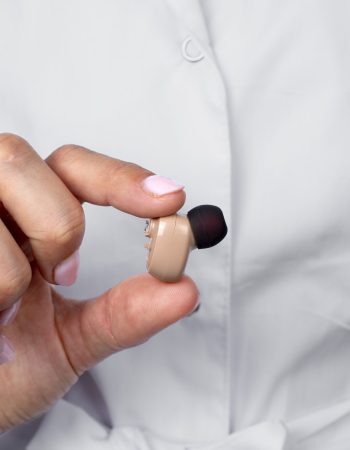

Discover Better Hearing?
Hearing aids transform lives by restoring connection, confidence, and independence. At Resonnocare, we combine advanced technology with compassionate expertise to deliver hearing solutions that truly work for you.
FAQ's
How do hearing aids work?
Hearing aids are digital devices that pick up sound, process it, and make important sounds clearer. Modern hearing aids can help improve speech understanding, reduce background noise, and make everyday listening more comfortable when they are correctly selected and programmed by an audiologist.
How do I know if I need a hearing aid?
You may need a hearing aid if your hearing test shows hearing loss that affects daily communication. Signs may include difficulty understanding speech, frequently asking others to repeat themselves, avoiding conversations, or struggling in noisy environments. At Resonnocare, the audiologist explains whether a hearing aid is required or whether another care option is more suitable.
What types of hearing aids are available?
Hearing aids are available in different styles such as behind-the-ear, receiver-in-canal, in-the-ear, and completely-in-canal models. The right choice depends on your hearing loss, ear condition, comfort, lifestyle, handling ability, budget, and cosmetic preference.
Can I try a hearing aid before buying one?
Yes, eligible patients may be able to try selected hearing aids before making a final decision. A hearing aid trial helps you experience how the device performs in real-life situations such as home conversations, phone calls, meetings, and outdoor environments.
Which hearing aid brands are available at Resonnocare?
Resonnocare offers hearing aids from leading brands, including Signia, Widex, Starkey, Phonak, and ReSound, subject to availability. The recommendation is based on your hearing test results, listening needs, lifestyle, comfort, and the level of technology that suits you.
What is the average cost of hearing aids in 2026?
Hearing aid prices vary depending on device style, technology level, features, brand and the professional services included. At Resonnocare, hearing aids are recommended after a hearing assessment so the device matches your hearing needs, comfort, lifestyle and communication goals. Ask your clinic for the current price and what fitting and aftercare are included
What hearing aid features should I look for?
Useful hearing aid features include background noise reduction, directional microphones, Bluetooth connectivity, rechargeable batteries, feedback control, and automatic sound adjustment. Some advanced devices also use AI to recognise different listening environments and improve speech clarity. The right features depend on where you spend time, how often you use phones or televisions, and whether you frequently communicate in noisy places.
What are the latest advancements in hearing aid technology in 2026?
The latest hearing aid technology includes AI-based sound processing that recognises listening environments better, improved speech clarity in noise, smartphone connectivity, remote programming, rechargeable batteries, fall alerts,Tap control and personalised listening programs. Many modern hearing aids can adjust automatically as the user moves between quiet rooms, traffic, restaurants, and conversations. These features can improve daily listening, but the most advanced device is not always the most suitable one for every patient.
Does everyone with hearing loss need hearing aids?
No. Some people with hearing loss may only need monitoring, medical treatment, hearing protection, or communication strategies. Hearing aids are usually considered when the hearing loss is permanent and is affecting day-to-day communication.
Can mild hearing loss need a hearing aid?
Yes. Mild hearing loss can still cause significant difficulty, especially in meetings, restaurants, group conversations, or when listening to soft speech. If these problems are affecting your daily life, hearing aids may be helpful even if the hearing loss is classified as mild.
Can hearing aids restore normal hearing?
Hearing aids do not restore natural hearing or cure hearing loss. They are designed to make important sounds and speech clearer and more accessible. The amount of benefit varies depending on the type and degree of hearing loss, speech understanding, and how well the devices are fitted and programmed.
Should I use one hearing aid or two?
If hearing loss is present in both ears, two hearing aids are often recommended because they can support more balanced hearing, speech understanding, and awareness of where sounds are coming from. If hearing loss affects only one ear, the recommendation may be different.
Which hearing-aid type is best for me?
The best hearing aid depends on your hearing test, ear health, lifestyle, communication needs, comfort, dexterity, cosmetic preferences, and technology requirements. Common styles include behind-the-ear, receiver-in-canal, and in-the-ear devices. Your audiologist can recommend suitable options after assessing your hearing.
Should I choose a brand before my hearing test?
Usually, no. It is better to understand your hearing needs first. Different hearing-aid models and technology levels suit different types of hearing loss and lifestyles, so choosing a brand before testing may unnecessarily limit your options.
Are rechargeable hearing aids better?
Rechargeable hearing aids can be more convenient because they remove the need to change small disposable batteries regularly. However, they are not automatically better for everyone. Battery life, charging habits, hearing needs, device style, and personal preferences should all be considered.
Can I try hearing aids before buying?
Many hearing clinics offer a trial or demonstration period, although the exact terms vary. A trial can help you understand how hearing aids perform in real situations such as conversations, television listening, meetings, and noisy environments before making a final decision.
Why do hearing aids need professional programming?
Hearing aids need to be programmed according to your individual hearing thresholds and listening needs. Simply making everything louder can make listening uncomfortable or unclear. Professional programming helps provide the right amount of amplification across different frequencies while keeping louder sounds comfortable.
Can hearing aids be adjusted after fitting?
Yes. Hearing-aid fitting is usually an ongoing process rather than a one-time adjustment. Your audiologist can fine-tune the devices based on your experience with speech clarity, background noise, comfort, volume, and different listening environments.
What happens after I buy hearing aids?
After fitting, you will usually have follow-up appointments to check comfort, review your listening experience, clean and maintain the devices, and make programming adjustments when needed. Your hearing may also be monitored over time so that the hearing aids can be updated if your hearing needs change.
What are the different types of hearing aids and how do they work?
The main types of hearing aids are behind-the-ear, receiver-in-canal, in-the-ear, in-the-canal, and completely-in-canal, Invisible -in – canal , Cross/Bicros devices. There are both variations in these Hearing aids, rechargeable or non-rechargeable.All hearing aids use microphones to capture sound, a processor to adjust it, and a speaker to deliver it into the ear. The best style depends on the degree of hearing loss, ear shape, comfort, visibility preference, dexterity, and required amplification.
What is the process of getting hearing aids?
The hearing aid process usually begins with a professional hearing assessment. An audiologist then reviews the results, understands the patient’s listening difficulties, and recommends suitable devices. The selected hearing aid is programmed according to the audiogram, fitted, and adjusted for comfort. Follow-up appointments are used for fine-tuning, counselling, maintenance, and adaptation. Resonnocare also provides hearing aid trials and aftercare support where applicable.
Do You Offer 0% EMI on Hearing Aids?
0% EMI options may be available on eligible hearing aids at EAR360. Contact our team to learn about available repayment tenures and the options applicable to the model recommended by your audiologist.
Which Hearing Aids Are Available on 0% EMI?
EMI eligibility depends on the hearing aid model and applicable financing terms. Contact our team to check which models qualify and whether any minimum purchase requirements apply.
Is There Any Processing Fee or Down Payment for EMI?
Processing fees and down payment requirements depend on the applicable EMI plan. Our team will explain the payment terms and provide a complete EMI breakdown before you make a purchase.
Which Cards or Finance Options Can I Use for EMI?
Available EMI options depend on the participating banks, accepted cards, and finance partners. EMI approval is subject to the terms and conditions of the relevant bank or finance provider.
Can I Try the Hearing Aid Before Choosing EMI?
You may be able to try selected hearing aids before deciding on a payment option. Contact our team to confirm trial availability, duration, and applicable terms.
Can I Buy Two Hearing Aids for Both Ears on EMI?
EMI availability for a pair of hearing aids depends on the applicable financing terms and eligibility criteria. Contact our team to confirm the available options for your recommended hearing aids.
Comments are closed.
5 Comments
[…] Hearing Aids […]
[…] Hearing Aids […]
[…] Hearing Aids […]
[…] Hearing Aids […]
[…] Hearing Aids […]