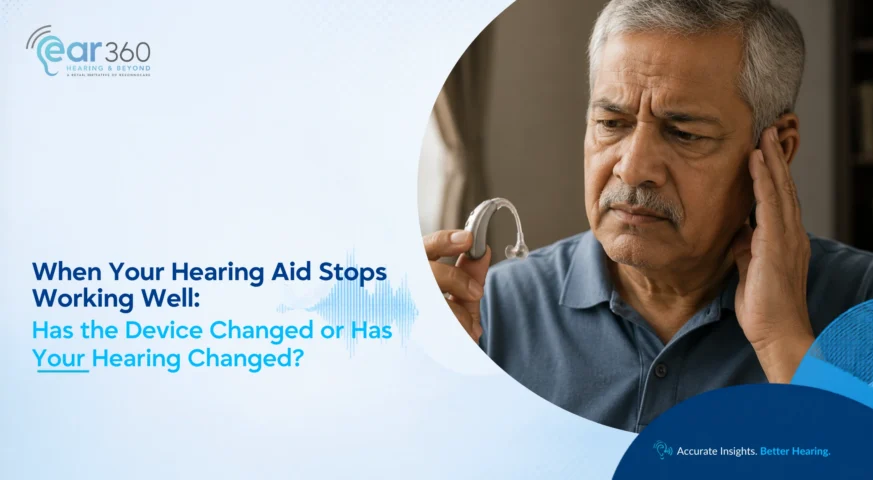
When Your Hearing Aid Stops Working Well: Has the Device Changed or Has Your Hearing Changed?
TL;DR: This blog is aimed for especially older adults, caregivers, and family members who have noticed that a hearing aid no longer seems as clear or effective as before and want to know whether the issue is with the device or a change in hearing. A hearing aid may seem less effective for more than one reason: Reduced clarity, muffled sound, feedback, intermittent sound, or needing higher volume can result from technical issues such as earwax, moisture, weak batteries, worn parts, or blocked microphones and receivers. Changes in hearing can also make an otherwise functional hearing aid feel ineffective: Hearing levels may gradually change because of ageing, noise exposure, medications, or other health factors, meaning previously programmed hearing aid settings may no longer match the user’s current hearing needs. A professional check helps distinguish device problems from hearing changes: An audiologist can inspect and clean the hearing aid, check its performance, repeat hearing tests where necessary, and compare new results with previous assessments to identify the actual cause. The solution may range from a simple adjustment to a new hearing aid: Depending on the findings, management may include cleaning, replacing parts, reprogramming the device, updating hearing aid settings, or considering a newer hearing aid if the existing device can no longer meet the user’s hearing requirements. You wear your hearing aid, but you are still not able to hear well during conversations. The TV volume begins to rise again, or there is a repetition of certain details in family speech. The first thing you might think is, “My hearing aid doesn’t seem to work anymore.” It is possible that your hearing aid may sound differently than it used to due to a number of reasons. In other cases, the problem lies with the device itself, e.g., a clogged microphone, low battery, broken ear tip, or a change in performance. Otherwise, a change in your hearing could have occurred since you last had an assessment, which may result in a change in your hearing aid settings to reflect this. It is important to know what has changed: the hearing aid, your hearing, or both. In this blog, we’ll discuss the symptoms to watch for, how an audiologist can help in determining the cause, and what to do before considering a repair or replacement. What Does It Mean When a Hearing Aid Is Not Working Properly? If your hearing aid does not seem to be helping the way it used to, it does not always mean the device is broken. Sometimes, the problem is with the hearing aid itself. In other cases, your hearing may have changed, and the current settings may no longer suit you. You may notice that: Sounds seem softer or more muffled than before The hearing aid cuts in and out You need to increase the volume more often The device whistles or produces feedback Speech is still difficult to understand even when the hearing aid is on One hearing aid seems to work better than the other These changes can happen for simple reasons, such as a low battery, earwax blocking the microphone or receiver, moisture in the device, or a worn ear tip. But sometimes, the hearing aid may be working properly, and your hearing itself may have changed over time. In that case, the device may simply need to be rechecked and adjusted to match your current hearing needs. Because both situations can feel very similar, it is better to have the hearing aid and your hearing checked rather than relying only on trial and error at home. Know More About Hearing Aids Hearing Aid for Elderly People: Best Features to Look For Hearing Aid Trial: What to Expect Before Buying Hearing Aids Hearing Aid Price in India: Complete Cost Guide by Type & Features Why Might a Hearing Aid Stop Working Well: Device Issues vs Hearing Changes? If your hearing aid does not seem to be helping as much as it used to, it does not always mean that the device is broken. There are usually two possibilities: something has changed with the hearing aid, or something has changed with your hearing. It could be a problem with the hearing aid Sometimes, a small issue with the device can make sounds seem softer, unclear, or inconsistent. Common reasons include: A weak or low battery Earwax or debris blocking the microphone or receiver A damaged or worn ear tip Moisture inside the hearing aid The hearing aid cutting in and out Changes in the fit of the device Many of these issues can be identified and corrected during a hearing aid check. Your hearing may have changed Hearing can gradually change over time, especially with age or certain ear and health conditions. If this happens, the hearing aid settings that worked well when the device was first fitted may no longer be suitable. You may notice that: Speech sounds less clear than before You need people to repeat themselves more often You are increasing the television or phone volume again You can hear sounds but have difficulty understanding words The hearing aid does not seem loud or clear enough even after basic cleaning This does not automatically mean that you need a new hearing aid. An audiologist can first test your hearing again and compare the results with your previous hearing test. If your hearing has changed, the device may simply need to be reprogrammed to match your current hearing needs. The best way to find out what has changed is to have both your hearing and your hearing aid checked rather than trying to guess the cause at home. What Causes These Changes to Happen? Hearing aids are used on a daily basis, and over time, they will naturally vary in their performance. Sometimes the change has to do with the device. Other times, it may have been a change that you noticed over time. Changes in the hearing aid Day to day factors that can impact the functioning of a hearing aid
Read More