
Category: Hearing Aids

What Should You Test During a Hearing-Aid Trial
August 31, 2026 Comments (0)

What Should You Test During a Hearing-Aid Trial?

TL; DR:  This blog is aimed at people considering hearing aids, first-time hearing-aid users, seniors, and family members/caregivers who want to know what they should test during a hearing-aid trial before deciding whether a device is suitable for everyday use. A hearing-aid trial should test real-life performance, not just clinic sound. The blog explains that users should try the device during conversations at home, in background noise, at family gatherings, while watching TV, and during phone calls to understand how well it actually supports daily communication. Speech clarity, background noise, and comfort are the most important areas to evaluate. Users should check whether speech becomes clearer, whether conversations are easier to follow in noisy environments, and whether the device remains physically comfortable after several hours of wear. Practical usability matters as much as sound quality. The hearing-aid trial should also include testing phone calls, TV, Bluetooth connectivity, charging, controls, cleaning, insertion, and removal, especially for seniors or users with reduced vision or dexterity. Users should document their experience and review problems with an audiologist. Keeping notes on situations that were better, unchanged, or difficult can help the audiologist identify whether programming, volume, physical fit, noise-management settings, or even the hearing-aid style needs adjustment. Although a hearing aid may sound good in a short clinic demonstration, it is not until you use it in your day-to-day activities that you will truly know. Some of the answers may be found in conversations at home, the noise of traffic, family gatherings, television, and phone calls, that won’t be found in a few minutes in a quiet room. This is why it’s helpful to have a hearing aid trial checklist. It will assist you in considering the clarity of speech, the comfort of the device, and how listening to the device makes it easier to hear what others are saying. We at Resonnocare want patients to feel free to use a hearing-aid trial to learn how the device that we recommend works in the situations that really matter to them. Before Your Hearing-Aid Trial: Know What You Struggle With Consider situations in which hearing will be challenging when you are considering using a device. For example: Lack of family conversation?Have to miss out on parts of conversations with family? Are you having trouble understanding the restaurant conversation? Are you loath to attend meetings? When a person speaks while watching television, is it hard to understand? Do you find it hard to talk on the phone? Do you frequently ask people to repeat themselves? Are some voices more difficult to hear? These scenarios are your test environments. A hearing aid should be selected after an appropriate hearing assessment rather than simply because a particular model is popular. Resonnocare’s hearing-aid services follow an assessment-led process in which hearing levels, listening needs, lifestyle and comfort are considered before device selection. Know More About Hearing Aid for Elderly People: Best Features to Look For Hearing Aid Trial: What to Expect Before Buying Hearing Aids Hearing Aid Center Near Me: Checklist Before Booking an Appointment Hearing Aid Trial Checklist: What to Test A helpful trial should address this question: Does the hearing aid help you to communicate more comfortably with people in your everyday life? Follow the seven areas below to use as a hearing aid trial checklist. 1. Test Speech Clarity in Quiet Start in a quiet room with a one-on-one conversation. Rather than asking the question, “Can you hear the person?”, why not ask: Do words seem more distinct? If you feel like you need fewer reps, then reduce them. Are you able to hear quieter voices? Is it fluent enough to understand easily? Though hearing aids are designed to make sound easier to hear, clarity of speech is a more important factor in the effectiveness of communication than is simply loudness. Try speaking to other members of the family as voices are different in pitch and volume. 2. Test Conversations in Background Noise One of the most critical situations to test is background noise. Test the hearing aid in a typical setting like a café, family gathering, shopping centre or other environment you are likely to find yourself in from time to time. It’s not a matter of having to pick a very loud area. The aim is to understand the person talking when there are other noises. Ask yourself: Are conversations more easily understood? Does background sound bother you? Is it possible to listen to what the speaker is saying? Do you need to rely less on lip-reading or repeating your sentences? No hearing aid can eliminate all unwanted noises. The realistic target is to obtain better access to speech and a less intense listening experience. 3. Test Your Own Voice and Everyday Sounds Hearing aids may cause some changes in the sound of your own voice. It was described by some users as sounding more “full” or “unfamiliar” – especially in the first few days. Also notice everyday sounds such as: Running water Cutlery Fans Traffic Footsteps Doorbells Paper rustling Kitchen sounds Other sounds might be more obvious just because you haven’t heard them clearly for a while. Allow reasonable time to get used to them, but inform your audiologist of sounds that are still too sharp, too uncomfortable, or distracting. Maybe you need to make some programming changes. 4. Check Fit and Comfort Over Several Hours A hearing aid that is comfortable for 10 minutes can get uncomfortable after a few hours. Use while performing regular activities and check: Is it still comfortable? Does it feel loose? Are there earaches? Does it move when talking and chewing? Will it get in the way of wearing glasses? Is it comfortable to wear for the suggested amount of time? There will be some degree of awareness of a new device at first, but persistent pain should not be disregarded. Physical fit is important because if it doesn’t fit properly, hearing aids are not used regularly. 5. Test the Hearing Aid in Your Normal Routine

Read More
Which Hearing Aid Style Is Best for Seniors
August 31, 2026 Comments (0)

Which Hearing Aid Style Is Best for Seniors?

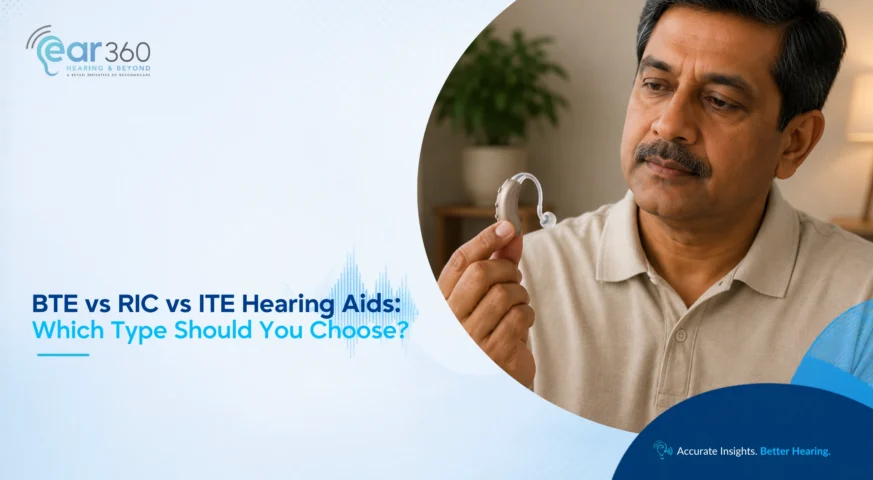
TL; DR: This blog is aimed at seniors with hearing loss, older adults considering hearing aids, and their family members or caregivers who want to understand which hearing-aid style RIC, BTE, ITE, or smaller in-ear devices may be easiest and most suitable for everyday use. There is no single best hearing-aid style for every senior. The right choice depends on hearing loss, ear anatomy, dexterity, vision, lifestyle, comfort, communication needs, and personal preferences rather than age alone. RIC, BTE, and ITE hearing aids each suit different needs. RIC devices can be lightweight and discreet, BTE models may be easier to handle, while ITE devices offer larger controls that can be more convenient for some older adults. Ease of use is especially important for seniors. Arthritis, tremors, reduced finger sensation, poor vision, and mobility limitations can make small devices or batteries difficult to manage, making larger or rechargeable hearing aids more practical. A professional hearing assessment and trial should guide the final decision. The blog emphasizes evaluating hearing levels and real-world listening needs, followed by trying the device for comfort, speech clarity, charging, controls, and everyday usability before making a final choice. When selecting a hearing aid for an older adult, it’s not just about choosing the smallest or the most advanced. The most appropriate hearing aid for a senior should complement the individual’s hearing loss, yet must be comfortable, convenient, and functional to wear every day. A receiver-in-canal (RIC) device could be ideal for some seniors. Others may prefer to wear a behind-the-ear (BTE) or in-the-ear (ITE) model device. We take your hearing levels, communication needs, health of your ears, dexterity, vision, lifestyle, and personal preferences into account when recommending a style at Resonnocare. What Makes the Best Hearing Aid Type for Seniors Senior-Friendly? A good hearing aid for older people should help them hear better without causing hearing aid maintenance to be a chore. Important factors include: Easy insertion and removal. Comfortable fit The controller features simple charging/battery management. Controls are easily operated. Communicate effectively in normal, common contexts. Easy cleaning and maintenance Reliable audiologist support There are no age restrictions on the best aid type for seniors. If two people are the same age, they may require different devices due to their varying hearing, sight, hand function, or routines. Know More About Hearing Aid Prices in India by Type, Features and Technology Hearing Aid Machine Price: What Determines the Cost? Hearing Aids Near Me: How to Choose the Right Hearing Aid Center RIC vs BTE vs ITE: Which Is Easier for Seniors? Style Potential Advantages Points to Consider RIC Light, inconspicuous, and appropriate for a wide range of hearing loss patterns Small receiver/dome requires special care BTE Strong, practical, and easily manageable. The ears are more visible behind the ears. ITE Made specifically for them; larger controls may be easier for some seniors The suitability is dependent on the ear shape and level of hearing. A senior with an acceptable hand control could be comfortable and discreet in RIC. A person who has arthritis, tremor, or diminished finger sensation will find a larger BTE or ITE model to be more suitable. No overall winner. Usability is best evaluated by going to the site. Which Hearing Aid Styles Are Available? Modern hearing aids are available in several styles. 1. Receiver-in-Canal (RIC): The main body is positioned behind the ear with a small receiver in the ear canal. These devices are small and widely used in many different ranges of hearing loss. 2. Behind-the-Ear (BTE): Device worn behind the ear, with sound directed through tubing or earmould. It may be easier to handle for some seniors due to its size. 3. In-the-Ear (ITE): These are custom-made devices that fit in the outer ear. They are larger in size and may be easier to insert and easier to manipulate controls. 4. ITC, CIC and IIC: These are placed partially or completely in the ear canal. They are inconspicuous, but might be cumbersome to use on a daily basis due to their small size. Is RIC the Best Hearing Aid Type for Seniors? RIC devices are often well suited for older people as they can be both comfortable and discreet, and fit many types of hearing loss. But RIC is not the top choice of hearing aids for seniors, however. It may be difficult for a person with arthritis, tremor, poor vision, or decreased finger sense to handle a small dome or receiver. If this is the case, a bigger or rechargeable device might make more sense. This should be based on the hearing test, the ear anatomy, and the person’s comfort level in using the device. Are Invisible Hearing Aids Better for Seniors? Not necessarily. Invisible devices are great for those who want to be inconspicuous; however, smaller is not necessarily less convenient. You may find that a small hearing aid is more difficult to wear, remove, clean, or operate, particularly if you have poor eyesight or poor dexterity in your fingers. They do work very well for some people. Others may prefer a slightly larger size for the greater convenience of everyday use. If your appearance is important, consult with your audiologist about it to ensure a balance of discretion, comfort and hearing needs. How Dexterity, Vision and Mobility Affect Hearing-Aid Choice Fine motor coordination and sight can be of crucial importance for everyday function. For a person living with arthritis, larger controls or rechargeable hearing aids that minimize the use of small disposable batteries can help. Small battery doors, filters or markings may be hard to see with reduced vision. If frequent clinic visits are difficult, ask whether home visit support or remote guidance is appropriate. A device should be selected for the person who will actually use it every day. What Features Matter Most for Seniors? Some of the useful features that would be included include: Rechargeable batteries: These can help anyone who has trouble handling small batteries manage their day with ease. Automatic listening programmes: These

Read More

Resonnocare Health-Tech Private Limited Provides hearing and audiology services through a structured, clinically guided approach.

Popular Clinic Locations:

Delhi | Bangalore | Pune | Ludhiana

contact info

RESONNOCARE HEALTH-TECH PVT. LTD

Head Office 403, Office Block ‘C’

4th Floor – Above Retail Block R1 & R5,

M3M URBANA, Sector 67, Gurgaon 122101 Haryana

2026, All rights reserved by Resonnocare  health-tech private limited