
TL;DR:
This blog is intended for adults, parents, and caregivers concerned about persistent snoring, breathing pauses during sleep, choking, repeated awakenings, morning headaches, poor concentration, or excessive daytime sleepiness.
- A sleep study records important body functions during sleep. It may measure breathing, airflow, oxygen levels, heart activity, brain waves, sleep stages, eye movements, and body movements to identify possible sleep disorders.
- Different types of sleep tests serve different purposes: Options include overnight polysomnography, home sleep Apnea testing, CPAP titration studies, and multiple sleep latency tests. The appropriate test depends on the symptoms and medical history.
- Proper preparation improves recording quality: Patients may need to follow their normal sleep routine, limit caffeine, avoid alcohol, avoid hair products, and continue medicines only as advised by their clinician.
- Results must be interpreted by a qualified clinician: Measurements such as the Apnea-Hypopnoea Index, oxygen saturation and sleep efficiency are assessed alongside symptoms and medical history. Treatment may include lifestyle guidance, CPAP therapy, oral appliances, positional changes, ENT evaluation or further testing.
Occasional snoring is common. However, loud and regular snoring, choking during sleep, repeated awakenings, morning headaches or persistent daytime sleepiness may point to an underlying sleep disorder. A sleep study test records important body functions while you sleep, helping a clinician assess your breathing, oxygen levels, heart activity, sleep stages and movements. It is usually painless and may be performed overnight at a sleep centre or, in selected cases, at home.
At Resonnocare, we encourage patients and families not to dismiss ongoing sleep-related symptoms, especially when they affect concentration, mood, safety or quality of life.
What Is a Sleep Study Test?
A sleep study test is a medical assessment of what happens in your body while you sleep. Its most detailed form, called polysomnography, may record brain waves, eye movements, muscle activity, airflow, breathing effort, blood oxygen levels, heart rate and leg movements.
These recordings help a sleep physician identify patterns that symptoms alone cannot confirm. Sleep studies are generally painless and are used to understand how well you sleep and how your body responds to possible sleep-related problems.
The test is commonly recommended when obstructive sleep Apnea is suspected. It may also help evaluate central sleep Apnea, narcolepsy, periodic limb movements, unusual sleep behaviours, and other sleep disorders. The most appropriate investigation depends on your symptoms, medical history and initial clinical evaluation.
When Is a Sleep Study Test Recommended?
A doctor may recommend testing when you or your family notice symptoms such as:
- Loud and frequent snoring
- Pauses in breathing during sleep
- Gasping or choking while asleep
- Excessive sleepiness despite spending enough time in bed
- Morning headaches or a dry mouth
- Poor concentration, irritability or reduced work performance
- Repeated night-time awakenings
- Restless sleep or unusual body movements
- Falling asleep while reading, working or driving
These symptoms do not automatically mean that you have sleep Apnea. However, they should be evaluated when they are persistent or begin interfering with your daily life. Sleep studies can help determine whether sleep Apnea is present and how severe it may be.
Children may also require assessment for persistent snoring, mouth breathing, restless sleep, behavioural changes or poor attention. A paediatrician, ENT specialist or sleep specialist should decide which investigation is appropriate because sleep study interpretation differs between children and adults.
What Types of Sleep Study Test Are Available?
Different tests collect different levels of information. Your clinician will select the most suitable option based on the condition being investigated.
Overnight Polysomnography
Polysomnography is a comprehensive overnight sleep study performed in a sleep laboratory or hospital-based sleep unit. A trained technologist monitors your sleep stages, breathing, oxygen levels, heart rhythm, eye movements and body movements.
This type of study provides detailed information and may be recommended when the diagnosis is uncertain, another sleep disorder is suspected or you have additional medical conditions that require closer monitoring.
Home Sleep Apnea Test
A home sleep Apnea test uses a portable device that usually records airflow, breathing effort, oxygen saturation and heart rate. You wear the equipment overnight in your own home and return it for analysis.
Home testing may be suitable for uncomplicated adults who have a higher likelihood of moderate-to-severe obstructive sleep Apnea. It is not a complete replacement for laboratory polysomnography.
A home test may not be appropriate when another sleep disorder or a significant heart, lung, neurological or neuromuscular condition is suspected. Clinical guidelines recognise home testing as an option for selected adults, while polysomnography remains the standard diagnostic investigation when a broader assessment is required.
CPAP Titration Study
If sleep Apnea has already been diagnosed, a titration study may be performed to identify an effective continuous positive airway pressure, or CPAP, setting.
In selected cases, the first part of the night is used to diagnose sleep Apnea and the second part is used to adjust CPAP pressure. This is known as a split-night study.
Multiple Sleep Latency Test
A multiple sleep latency test is performed during the day, usually after an overnight study. It measures how quickly you fall asleep during a series of scheduled naps.
It may be recommended when narcolepsy or severe, unexplained daytime sleepiness is suspected.
How Should You Prepare for a Sleep Study Test?
Always follow the instructions provided by your sleep centre, as preparation requirements may vary. General sleep test preparation may include:
- Maintaining your usual sleep routine before the appointment
- Avoiding an unplanned daytime nap
- Limiting caffeine, particularly from the afternoon onward
- Avoiding alcohol unless your doctor advises differently
- Washing and drying your hair before the study
- Avoiding hair oil, gel, sprays or heavy skin products
- Carrying comfortable nightwear and your regular medicines
- Informing the team about skin allergies or mobility concerns
Tell your clinician about all prescription medicines, over-the-counter medicines and supplements you take. Some medicines can affect sleep patterns, but you should not stop or change any medicine without professional advice.
For a home sleep Apnea test, ask the technician to demonstrate how each sensor should be positioned. Incorrect placement or insufficient recording time can produce an unclear result and may make a repeat test necessary.
What Happens During the Procedure?
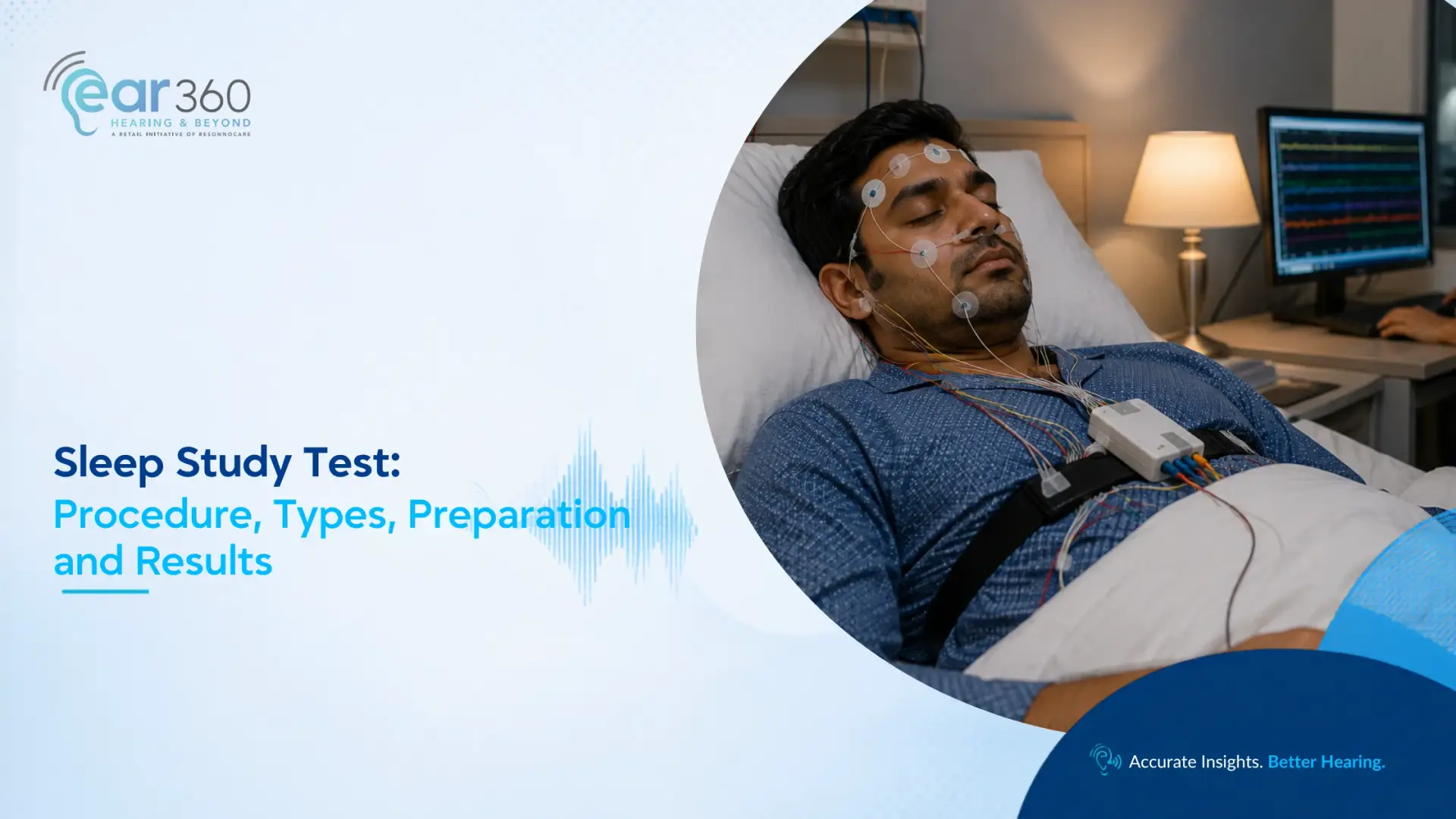
For a laboratory study, you will usually arrive at the sleep centre in the evening. A technologist places small sensors on your scalp, face, chest, finger and legs using skin-safe adhesive.
- Soft belts may be placed around your chest and abdomen to monitor breathing effort. A small sensor near your nose and mouth measures airflow, while a finger sensor records blood oxygen levels.
- The wires are arranged so that you can change your sleeping position. The technologist monitors the signals from another room and can communicate with you if assistance is required.
- The procedure does not involve needles or electrical shocks. Some people take a little longer to fall asleep because the environment feels unfamiliar, but you do not need to sleep perfectly for the study to provide useful information.
The sensors are removed in the morning, and most people can return to their usual routine unless the medical team advises otherwise.
What Do Sleep Study Test Results Mean?
Sleep study results contain several measurements rather than a simple positive or negative answer. Important findings unless the medical may include:
- Apnea-Hypopnoea Index: The number of complete or partial breathing interruptions per hour
- Oxygen saturation: Whether the oxygen level in your blood falls during breathing events
- Sleep efficiency: The percentage of your time in bed that was spent asleep
- Sleep stages: The pattern of light, deep and rapid eye movement sleep
- Arousal index: How frequently your sleep was briefly interrupted
- Heart rate and rhythm
- Leg movements and sleeping position
- Frequency and pattern of snoring
In adults, an Apnea-Hypopnoea Index of 5 to 14.9 is generally classified as mild obstructive sleep Apnea. A result of 15 to 29.9 may indicate moderate sleep Apnea, while 30 or more may indicate seturn213582search24
These values should never be interpreted on their own. Your symptoms, oxygen changes, medical history, test type and recording quality also influence the diagnosis. Different criteria are used for children.
When a home study is negative or unclear but your symptoms still strongly suggest sleep Apnea, your clinician may recommend attended polysomnography.
What Happens After the Results?
A sleep physician reviews the recorded information before discussing the findings with you. The next step depends on the diagnosis, severity of symptoms, and your general health.
Management may include:
- Lifestyle and weight-management guidance where appropriate
- Changes in sleeping position
- Treatment for nasal obstruction
- Positive airway pressure therapy
- An oral appliance
- ENT evaluation
- Further testing for another sleep disorder
Do not purchase or adjust a CPAP device only because you snore or received a high score on an online questionnaire. The type of breathing problem and the appropriate treatment should be assessed professionally.
When Should You See a Doctor?
Book a medical evaluation when snoring occurs with witnessed breathing pauses, choking, severe daytime sleepiness, reduced concentration, or repeated morning headaches.
Seek urgent medical care if you experience severe breathing difficulty, chest pain, fainting, confusion or a sudden neurological symptom.
Professional evaluation is also recommended for sudden hearing loss, severe ear pain, ear discharge, persistent tinnitus, vertigo or ongoing hearing difficulty. These symptoms may be unrelated to your sleep concern and should not be self-diagnosed.
You can learn more about common ear symptoms and conditions or arrange a video consultation when visiting a clinic is difficult.

Why Choose Resonnocare for Hearing and Audiology Care?
At Resonnocare, we provide clinically guided hearing and audiology care through experienced audiologists and clinicians. Our approach begins with accurate hearing assessments and a clear explanation of the findings.
A personalised care plan is then developed according to your age, symptoms, communication requirements and lifestyle.
Where relevant, our services include hearing care for all ages, professionally selected hearing aids, home visits, video consultations and ongoing aftercare support.
When a sleep concern occurs alongside tinnitus, hearing changes, dizziness or other ear symptoms, our team can evaluate the audiology-related concerns and guide you on whether an ENT specialist or sleep physician should also be consulted.
Conclusion
A sleep study test provides an objective picture of your sleep, breathing, oxygen levels and body responses during the night. The appropriate type of test depends on your symptoms, medical history and the condition being investigated.
Your report should always be interpreted by a qualified clinician rather than read in isolation. If poor sleep occurs alongside snoring, breathing pauses, daytime sleepiness, tinnitus, hearing difficulty or vertigo, arrange a professional evaluation.
Contact Resonnocare to book a hearing assessment, consultation or clinic visit and receive guidance on the most appropriate next step.
Frequently Asked Questions
What does a sleep study test diagnose?
A sleep study test helps evaluate sleep-related conditions such as obstructive sleep Apnea, central sleep Apnea, narcolepsy, periodic limb movements and unusual sleep behaviours. The appropriate test depends on your symptoms, medical history and clinical evaluation.
Is a sleep study test painful?
No. A sleep study is generally painless and does not involve needles or electrical shocks. Small sensors are placed on the scalp, face, chest, finger and legs to record breathing, oxygen levels, heart activity, sleep stages and body movements.
Can a sleep study test be performed at home?
A home sleep Apnea test may be suitable for selected adults who are likely to have moderate-to-severe obstructive sleep Apnea and do not have significant additional medical conditions. A laboratory sleep study may be required when the diagnosis is uncertain or another sleep disorder is suspected.
How should I prepare for a sleep study test?
You may be advised to follow your usual sleep routine, avoid daytime naps, limit caffeine, avoid alcohol and wash your hair without applying oil or styling products. Carry your regular medicines and do not stop any medication unless your doctor advises you to do so.
What happens if my home sleep study result is normal but symptoms continue?
A normal or unclear home test does not always rule out sleep Apnea. When symptoms such as loud snoring, breathing pauses, choking or severe daytime sleepiness continue, your clinician may recommend an attended overnight polysomnography for a more detailed assessment.