Bone Conduction & BAHA Hearing Aids: How They Work, Cost & Who Needs Them
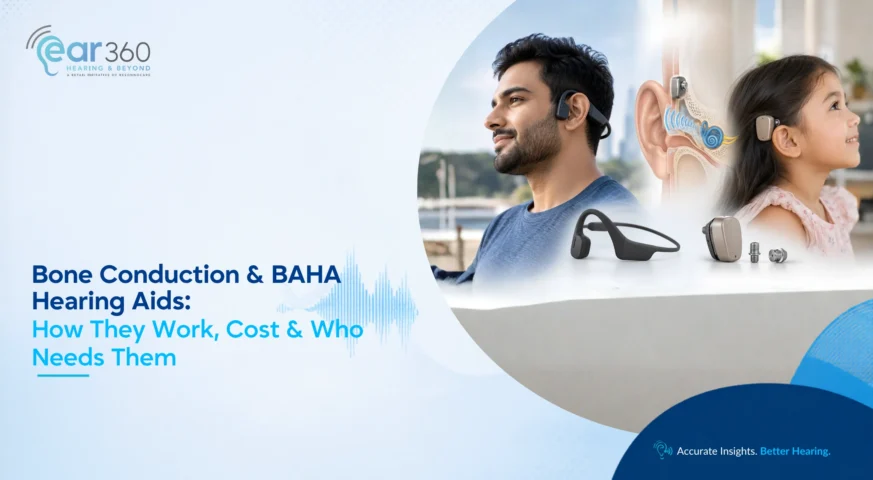
TL; DR: This blog is aimed at people with conductive or mixed hearing loss, individuals with chronic outer or middle ear problems, people with single-sided hearing loss, parents of children with congenital ear conditions, and families exploring alternatives when conventional hearing aids are not suitable. Bone Conduction Hearing Aids Work by Bypassing the Outer and Middle Ear: Instead of sending amplified sound through the ear canal, a bone conduction hearing aid converts sound into vibrations that travel through the skull directly to the cochlea, making it useful when the normal sound pathway is impaired. BAHA and Non-Surgical Bone Conduction Are Not the Same: Bone conduction can be delivered through non-surgical options such as softbands or headbands, while BAHA-type systems use an implanted component to transmit vibrations through bone. A BAHA is also different from a cochlear implant. Suitability Depends on the Type of Hearing Loss and Clinical Assessment: Bone conduction may be considered for conductive hearing loss, mixed hearing loss, congenital ear-canal abnormalities, chronic ear conditions, and selected cases of single-sided deafness. Audiometry, speech testing, ENT evaluation, and sometimes imaging may be needed before deciding on a device. Cost and Treatment Pathway Vary Considerably: The total cost may include the sound processor, implant where required, softband or headband, ENT and hospital charges, hearing tests, imaging, fitting, programming, follow-ups, batteries, accessories, and servicing. The blog also explains that some patients may be able to try a non-surgical bone conduction processor before considering implantation. You might have heard about a bone conduction hearing aid if an ordinary hearing aid has not been appropriate due to a blocked, malformed, or chronically problematic ear canal. This technology stimulates the inner ear by vibrating through the skull rather than sending amplified sound through the ear canal, as is the normal method. This may be a significant choice for individuals who have conductive or mixed hearing loss and for certain individuals with unilateral (one-sided) hearing loss. Not all hearing difficulties can be treated with it. The first step at Resonnocare is to do a full hearing evaluation to understand the nature and course of your hearing loss prior to discussing a device. What Is a Bone Conduction Hearing Aid and How Does It Work? Typically, sound passes from the outer ear, through the ear canal, and then through the middle ear to the cochlea. The bone conduction hearing aid does not. A sound processor transforms sound into vibrations that pass through the bone in the skull to the cochlea. This will avoid some of the outer or middle ear that are not transmitting sound well. Useful if the inner ear is able to hear sound and there is a problem with how it is being heard by the regular route. These include some congenital ear-canal atresia and chronic middle-ear disease and other conductive hearing losses. The amount of benefit you can expect will depend on your hearing levels, the function of your inner ears, and underlying diagnosis. Know More About Hearing Aid for Elderly People: Best Features to Look For Hearing Aid Trial: What to Expect Before Buying Hearing Aids Hearing Aid Center Near Me: Checklist Before Booking an Appointment Bone Conduction Hearing Aid vs BAHA: What Is the Difference? The transmission of sound by skull vibration is referred to as bone conduction. Some can accomplish this vibration without surgery with a softband or other methods like a headband. BAHA stands for bone-anchored hearing system, which means a system in which sound vibration is conducted through the bone with the aid of an implant. For each system, the external processor may be connected with an abutment or magnetically under intact skin with the implant. There are several other varieties of active bone conduction devices. A BAHA is not a cochlear implant. Cochlear implants work by stimulating the auditory nerve. Bone-anchored systems transmit sound to the working cochlea via vibration. The key message from the patient’s point of view is that surgery is not a prerequisite for bone conduction, so don’t be afraid to opt for it! Who May Need a Bone Conduction Hearing Aid? The bone conduction hearing aid may be suggested when a traditional hearing aid is not appropriate due to the nature of the hearing loss or outer or middle ear conditions. Your audiologist or ENT specialist might discuss bone conduction in situations such as: Conductive hearing loss Mixed hearing loss Either a complete or partial lack of the ear canal. Persistent ear issues that cause the earmould or in-ear device to be difficult to use. A few cases of single-sided deafness were selected. A BAHA implant is not always necessary if you have one of these conditions. All your hearing-test results, your age, ear anatomy, medical history, previous treatment, and your daily communication needs are important. A non-surgical processor may be employed with a softband for some children prior to considering an implant. Audiology and ENT assessment should be co-ordinated in paediatric cases. What Tests Are Needed Before Choosing Bone Conduction or BAHA? It’s not whether the device options should be purchased. It’s the nature of the hearing loss. Typically, pure-tone audiometry is used to record air-conduction and bone conduction hearing thresholds. Your audiologist will be able to tell if the problem is in the outer or middle ear by comparing these results. Speech testing can also be used to find out how well you can recognise words. ENT exam might be required to evaluate the ear canal, eardrum, and middle ear. Depending on your anatomy and the system being evaluated, further medical evaluation and/or imaging may be needed if you are considering implantation. A processor can also be used in some patients prior to discussing surgery. Resonnocare’s hearing care for all ages starts with assessment and clinically guided recommendations rather than choosing a device based only on symptoms. How Much Does a Bone Conduction Hearing Aid Cost in India? The price of a bone conduction hearing aid in India cannot be fixed, as the term may be used for a non-surgical
Read More