
TL; DR:
This blog is for people with persistent or bothersome tinnitus, especially those whose symptoms are affecting sleep, concentration, work, social situations, relaxation, or emotional well-being.
- Tinnitus Retraining Therapy combines counselling and sound therapy: TRT aims to help people understand tinnitus better and gradually reduce how much attention and emotional significance the brain gives to the sound.
- TRT works through gradual habituation, not by instantly removing tinnitus: The goal is for tinnitus to become less intrusive and less disruptive over time, even if the sound itself does not completely disappear.
- A professional assessment should come before starting therapy: An audiologist or doctor may review the tinnitus pattern, hearing ability, associated symptoms, noise exposure, and other factors to determine whether TRT or another management approach is appropriate.
- Tinnitus management should be personalised: Depending on individual needs, care may include TRT, hearing aids when hearing loss is present, counselling, sound enrichment, sleep support, stress management, treatment of underlying ear problems, or medical referral.
Persistent ringing, buzzing, humming or whistling can be difficult to ignore, especially when it begins to affect sleep, concentration or everyday activities.
Tinnitus retraining therapy is one strategy that can be used to manage tinnitus when it’s bothersome, and is discussed following a comprehensive hearing and medical evaluation.
What Is Tinnitus Retraining Therapy?
Traditionally, tinnitus retraining therapy (TRT) combines two elements: counselling and sound therapy.
The counselling part helps you to understand what tinnitus is and how your brain reacts to tinnitus. Sound therapy uses carefully selected background sound to reduce the contrast between tinnitus and the surrounding environment.
The method is based on the concept of habituation.
Your brain does this naturally each day – it’s called habituation. Our brains can “tune out” our clothes, a ceiling fan, or traffic outside the house when they are not relevant to us anymore.
The goal of tinnitus management is to promote a shift in attention and reaction. The tinnitus can remain, but the aim is to make it less intrusive and less emotionally significant.
Habituation usually takes time, and TRT is not an instant cure for tinnitus.
Why Does Tinnitus Sometimes Become So Difficult to Ignore?
Not everyone has tinnitus in the same manner.
For some, a faint sound is almost imperceptible, but for others, it can be very disturbing. This is partly because the level of distress caused by tinnitus is related to the amount of attention, worry, frustration, and emotional significance that is given to the sound by the brain.
You might discover a rhythm, for example:
- The tinnitus is heard.
- You start to get concerned about it.
- You begin to wonder if it’s still there.
- You are able to maintain focus on the sound.
- This tinnitus then appears even more noticeable.
This cycle can be more challenging due to stress, fatigue, lack of sleep, quiet places, and anxiety regarding the significance of the tinnitus.
There’s a reason why an evaluation shouldn’t just focus on how loud your tinnitus sounds.
How Does Tinnitus Retraining Therapy Work?
A programme of tinnitus retraining therapy generally focuses on changing both your understanding of tinnitus and your response to the sound.
Counselling helps you understand what you are hearing
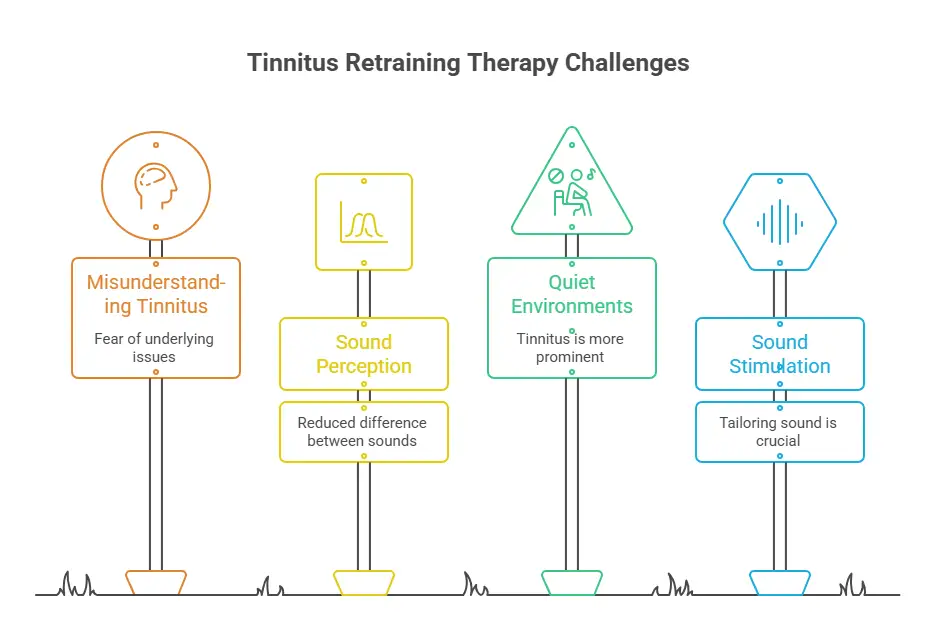
When there is no apparent cause for tinnitus, individuals are likely to be concerned that it indicates that something is amiss.
Professional counselling can provide you with information about your hearing results, factors that may have contributed to your tinnitus, and why it may be easier to hear in some situations.
There is no goal of telling you that the tinnitus is “in your head” or to simply ignore it.
Rather, you discover how hearing, focus, feelings, and your nervous system can impact the way you encounter tinnitus.
You can hear the difference between sound and silence. The difference between sound and silence is reduced.
Tinnitus might be more prominent in very quiet places.
Sound stimulation can help to lessen the difference between the background noise and the tinnitus. This can include environmental sound, low-level background sound, sound generators, or hearing aids if hearing loss is also present.
Treatment of tinnitus by sound should be tailored on an individual basis, not just overwritten with the loudest possible sound.
Who May Benefit From Tinnitus Retraining Therapy?
Tinnitus retraining therapy is recommended for individuals with persistent or troublesome tinnitus that is interfering with daily activities.
Please consult with an audiologist if you’re having problems with your tinnitus, if it’s impacting:
- Sleep
- Concentration
- Work or studies
- Relaxation
- Social situations
- Emotional wellbeing
- Your sensitivity to quiet places.How well you can handle being in quiet places.
It may also be considered if tinnitus is present and constantly bothers you, or you are increasingly upset when you hear tinnitus.
Treatment is different for everyone who experiences tinnitus. Reassurance and education are the primary needs after assessment for some. Some other methods to manage the condition, such as counselling, sound therapy, or hearing support, may be beneficial for others.
This will depend on the cause or contributing factors, your level of hearing, your symptoms, and how much your tinnitus is impacting your life.
Can Tinnitus Retraining Therapy Help if You Also Have Hearing Loss?
It’s true that tinnitus and hearing loss go hand in hand, and that one doesn’t necessarily imply the other.
If hearing loss is found during testing, correcting the hearing loss can be included as a component of your tinnitus treatment.
Appropriately selected hearing aids can make environmental sounds and speech more accessible. For some people with both hearing loss and tinnitus, this also reduces the contrast between tinnitus and everyday sound.
Recommendation of a hearing aid, however, must be based on the communication requirements and hearing assessment of the individual and not just because they have tinnitus.
A professional hearing assessment can help to identify if there is a hearing loss and what type of support could be available.
What Happens Before Tinnitus Retraining Therapy Begins?
The initial step is to get a correct diagnosis of your tinnitus symptoms before starting tinnitus retraining therapy.
Your audiologist or doctor may ask you:
- At what point did the tinnitus start?
- Does it sound in one or both ears?
- If intermittent, how often does it occur?
- Does it sound like ringing, buzzing, clicking, humming, or another sound?
- Does it feel as if it’s beating with your heart?
- Have hearing loss?
- Ever had vertigo/dizziness?
- Have ear pain or ear discharge?
- Does tinnitus interfere with your sleep or with your concentration?
- Have you been exposed to loud noise in the past few days?
A hearing test also might be suggested.
You can learn more about common hearing and ear concerns through our information on ear symptoms and conditions.
The purpose of assessment is important because tinnitus is a symptom, not a single disease. Different people may experience it for different reasons.
How Long Does Tinnitus Retraining Therapy Take to Work?
There is no one correct time.
Tinnitus retraining therapy is not a rapid treatment, but a gradual one. Habituation requires time because the intent is to alter the salience and importance of your brain’s response to and focus on the tinnitus signal.
Some progress may be more or less.
The first symptom of tinnitus you may feel is that it bothers you less during the day. You might find later on that you didn’t pay attention to it throughout part of the day. It is possible that sleep or concentration becomes easier over time even though the tinnitus hasn’t gone away.
Progress is best determined in terms of how tinnitus affects your life rather than by asking many questions if the sound has disappeared.
Follow-up is also important, as it will allow your hearing-care professional to assess what is working and if your management plan should be altered.
Does Tinnitus Retraining Therapy Cure Tinnitus?
Have realistic expectations.
Tinnitus retraining therapy should not be offered as a tinnitus cure. This is typically to make the sound less noticeable, less emotionally responsive, and less disruptive to daily life.
There are some individuals who will benefit from significant improvement in coping with tinnitus; others will respond differently.
Various tinnitus treatments are being studied, and there is no one-size-fits-all solution.
That is why treatment should start with an individual treatment plan and not just something that has worked for someone else.
What Other Tinnitus Management Options May Be Recommended?
The management plan will be based on the results of the assessment.
Care may include:
- Using a hearing device when hearing is impaired
- Tinnitus education and counselling.
- Appropriate sound enrichment
- Sleep-related advice
- Stress management strategies
- Consulting your doctor about medicines if applicable
- Treatment of underlying ear or hearing problems
- Medical counseling for those who are distressed because of tinnitus.
There may be individuals who can use more than one method.
Resonnocare’s broader hearing care services can help assess hearing difficulties and determine whether additional audiological support is appropriate.
When Should Tinnitus Be Checked by a Doctor or Audiologist?
Don’t expect that all new symptoms of tinnitus can be treated at home.
An ear, nose, and throat specialist evaluation is important for those with new or persistent tinnitus, worsening tinnitus, or tinnitus that impacts daily life, especially if only one ear is affected.
If tinnitus is accompanied by:
- Sudden hearing loss
- Severe or sudden dizziness or vertigo
- Severe ear pain
- Ear discharge
- A sudden, significant change in hearing.
- Neurological symptoms
- Pulsatile Tinnitus – Sounds that seem to be in time with your heartbeat.
Especially sudden hearing loss should not be addressed as a common tinnitus issue. It must be promptly evaluated medically.
If you are troubled by tinnitus or if it interferes with your sleep, communication, concentration, or quality of life, tinnitus should be evaluated even if there are no immediate warning signs.
How Can You Manage Tinnitus Between Appointments?
There are simple changes you can make that can help reduce the annoyance of tinnitus until you get professional help or during your treatment.
If tinnitus is more noticeable when everyone is quiet, don’t be quiet for extended periods. Some people may benefit from gentle environmental noises, like a fan or other comfortable background noise.
Unnecessary ear protection should be used only in normal, safe conditions if you are not hearing protected by you when the noise is actually loud.
Establishing a regular sleep pattern, exercising, and stress management can also help control symptoms, particularly if tiredness affects your ability to hear the tinnitus.
Above all, don’t constantly check to see if the tinnitus is still there. The constant checking of the sound will help to keep attention on it.

Why Choose Resonnocare for Hearing and Audiology Care?
Tinnitus and hearing issues are treated differently at Resonnocare, not following a universal formula.
Our highly trained audiologists and clinicians can evaluate your symptoms, hear your ears, and decide what next steps are recommended.
Your care plan may be:
- Accurate hearing assessments
- Custom-made hearing care programs
- Counselling and hearing support for tinnitus.
- Using hearing aids, if clinically indicated.
- Follow-up and aftercare
- Suitable home visiting undertaken where appropriate
- Video consultation for issues that can be discussed remotely
Where hearing aids form part of your treatment, ongoing hearing aid aftercare can also help with fitting, programming, comfort, maintenance, and changes in your hearing needs.
Our goal is to help you understand what you are experiencing and guide you towards an appropriate evidence-based next step rather than promising a quick fix.
Find a Resonnocare Clinic Near You
Select your city to find the nearest Resonnocare clinic and book an appointment with our hearing care team.
Bangalore
Ear 360, Jayanagar
Ground Floor, Site No. 499, Municipal No. 499/97, East End Main Road, 9th Block, Jayanagar, Bangalore, Karnataka 560041
Timings: 10:00 AM to 7:00 PM
[Call] [Book an Appointment]
Ear 360, Spandana Sarjapura Hospital
239/205/34A, near Trinity Complex, Sompura Gate, Sarjapura Main Road, Bangalore, Karnataka 562125
Timings: 10:00 AM to 7:00 PM
[Call] [Book an Appointment]
Resonnocare, HSR Layout
150/5/72, 7th Cross, 24th Main, HSR Layout, Bangalore, Karnataka 560102
Timings: 10:00 AM to 7:00 PM
[Call] [Book an Appointment]
Resonnocare, Banashankari
272, 7th Cross Road, BSK 1st Stage, 2nd Block, Srinivasan Agra, 80 Feet Road, Bangalore, Karnataka 560050
Timings: 10:00 AM to 7:00 PM
[Call] [Book an Appointment]
Resonnocare, Indiranagar
34, Wind Tunnel Road, Murugeshpalya, Muniyappa Layout, Bangalore, Karnataka 560017
Timings: 10:00 AM to 7:00 PM
[Call] [Book an Appointment]
Delhi
Ear 360, Dr. Hans Anand Lok
46, Anand Lok Road, Anand Lok, Sadiq Nagar, New Delhi, Delhi 110049
Timings: 10:00 AM to 7:00 PM
[Call] [Book an Appointment]
Resonnocare, Dr. Hans Vasant Vihar
28, Basement, Paschimi Nagar, Vasant Vihar, New Delhi, Delhi 110057
Timings: 10:00 AM to 7:00 PM
[Call] [Book an Appointment]
Gurgaon
Resonnocare Head Office, M3M Urbana
Office 403, Office Block, 4th Floor, above Retail Blocks R1 and R5, M3M Urbana, Sector 67, Gurgaon, Haryana 122101
Timings: 10:00 AM to 7:00 PM
[Call] [Book an Appointment]
Resonnocare, Dr. Hans Sector 28
Plot No. 1SP, adjoining DLF Phase 1 Metro Station, Sector 28, Gurgaon, Haryana 122002
Timings: 10:00 AM to 7:00 PM
[Call] [Book an Appointment]
Ludhiana
Ear 360, BRS Nagar
963, Block B, BRS Nagar, Ludhiana, Punjab 141012
Timings: 10:00 AM to 7:00 PM
[Call] [Book an Appointment]
Resonnocare, Fawwara Chowk
565-A and 565-B, Upper Ground Floor, Cemetery Road, near Fawwara Chowk, West City, Ludhiana, Punjab 141001
Pune
Ear 360, Vighnaharta Healthcare Center
D-106-107, Choice Arcade, opposite Ruby Hall Hospital, Dhole Patil Road, Pune, Maharashtra 411001
Timings: 10:00 AM to 7:00 PM
[Call] [Book an Appointment]
Ear 360, Khan Parab ENT Hospital
Plot No. 102, Anand Nagar, Talegaon Dabhade, Taluka Maval, Pune, Maharashtra 410507
Timings: 10:00 AM to 7:00 PM
[Call] [Book an Appointment]
Tumkur
Resonnocare, Ashok Nagar
PID No. 3563, 8th Main, 8th Cross, Ashok Nagar, Tumkur, Karnataka 572103
Timings: 10:00 AM to 7:00 PM
[Call] [Book an Appointment]
Conclusion: Is Tinnitus Retraining Therapy Right for You?
For some people, the tinnitus becomes a chronic problem and is a source of frustration, especially when it interferes with sleep, concentration or daily activities.
One treatment strategy which may help minimise the attention and emotional meaning attributed to tinnitus is called tinnitus retraining therapy and involves structured counselling and appropriate sound therapy.
TRT is not a guaranteed treatment and may not be appropriate for everyone. The most effective first step is an assessment by a professional so that you can gain information about your tinnitus, your hearing, symptoms that may require medical investigation, and options for management.
If tinnitus is becoming difficult to manage or is affecting sleep, concentration or daily life, a professional assessment can help clarify the available management options.
FAQ’s
Does tinnitus retraining therapy work?
Yes, there is help for many people to cope with tinnitus, and it is known as Tinnitus Retraining Therapy (TRT). TRT is a therapy that combines sound therapy and counseling so that, over time, the brain is less aware of tinnitus. It doesn’t cure tinnitus, but it can help make a person feel better about their life and help them focus, sleep well, and enjoy life.
What is the 10-second technique to stop tinnitus?
Some people use the “10-second tinnitus technique” of gentle tapping or relaxation exercises that are available on the internet that can help them temporarily forget about the tinnitus. But these methods have not been scientifically proven to have a long-term effect on reducing tinnitus. Typically, long-term management will include use of sound therapy, hearing aids, stress reduction, and professional evaluation.
Does tinnitus go away?
If the tinnitus is temporary, like from exposure to loud noise, earwax, or an ear infection, it may pass. But chronic tinnitus can last for months or years. While some people may not be able to get rid of their tinnitus, many can improve it with the right treatment and management.
Can I live a good life with tinnitus?
Yes, the majority of people who experience tinnitus can lead full and active lives. Many people control the symptoms using sound therapy, hearing aids, relaxation methods, and counselling. Eventually, the brain may tune out the tinnitus, making it less bothersome and noticeable.
What are the signs that tinnitus is permanent?
If the tinnitus lasts more than 6 months, particularly if it is accompanied by hearing loss or long-term damage to the inner ears, tinnitus can be regarded as chronic or even permanent. Treatment, lifestyle changes, and professional tinnitus management programs can make longstanding tinnitus less bothersome, but, of course, very often it does become much less bothersome with treatment.