
Month: September 2026

Digital vs Cheap Analog Hearing Machine Price in India Protect Your Ears
November 10, 2026 Comments (0)

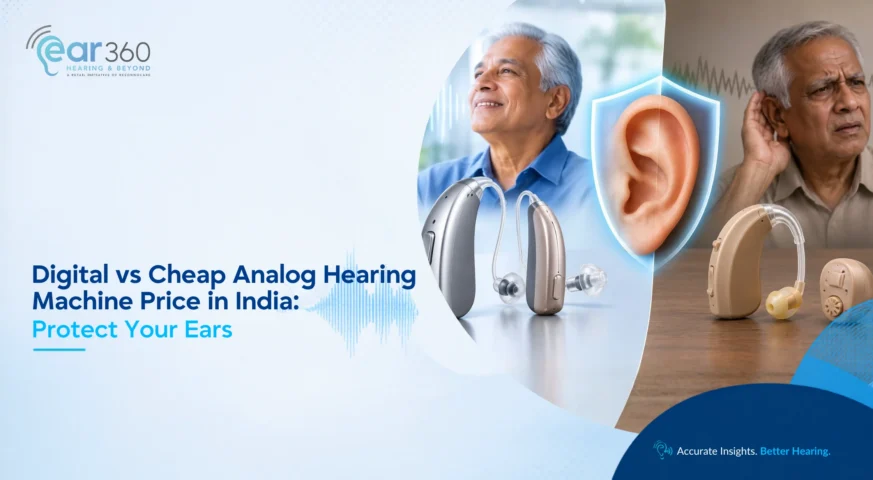
Digital vs Cheap Analog Hearing Aid Machine Price in India: Protect Your Ears

TL; DR: This blog is aimed at people with hearing loss, seniors, caregivers, and family members in India who are comparing low-cost analog hearing machines with professionally fitted digital hearing aids, especially those concerned about price, safety, sound quality, and value for money. Analog and Digital Hearing Devices Work Differently: Low-cost analog-style devices or sound amplifiers generally offer limited sound adjustment, while digital hearing aids can be programmed according to different hearing frequencies and may include features such as noise management, feedback control, rechargeability, and Bluetooth. Hearing Aid Machine Price Depends on Technology and Support: The blog explains that hearing aid prices in India vary considerably based on technology level, brand, style, features, professional fitting, warranty, and aftercare, rather than price being determined by amplification alone. Cheaper Does Not Automatically Mean Unsafe, but Proper Fitting Matters: The key concern with very inexpensive devices is whether amplification is appropriate and properly controlled for the individual hearing loss. Simply making every sound louder may cause discomfort without improving speech understanding. Choose Based on Hearing Needs, Not Just the Lowest or Highest Price: The blog recommends starting with a professional hearing assessment and comparing programming, fitting, warranty, follow-up support, trial options, and real-life usability before purchasing. The most expensive hearing aid is not necessarily the best if its features do not match the patient’s lifestyle and hearing requirements. The hearing aid machine price in India is very attractive if you compare a hearing aid that is professionally fitted to an affordable machine that costs a few thousand rupees. When purchasing for an older relative or yourself, budget is a concern. However, the cheapest model won’t indicate whether it is your own hearing loss, whether it handles loud noises well, or whether it will actually help you to understand speech. At Resonnocare, we want you to consider more than just noise level while shopping for a device. Is the key that it is amplifying enough for you to hear and listen to the world around you? What Is the Difference Between an Analog and Digital Hearing Machine? Older analog hearing aids offer limited adjustments for sound amplification. There are some very low-cost products available as “hearing machines” that may be little more than sound amplifiers. A digital hearing aid works with a digital chip to process sound. They can be programmed at various frequencies based on the hearing test. They can also include feedback control, noise management, directionality, rechargeable batteries, and Bluetooth. This does not imply that the priciest device is the best. When your listening needs are fairly basic, you might be satisfied with a properly sized entry-level digital hearing aid. Know More About Hearing Aid Machine Price: What Determines the Cost? Hearing Aid Prices in India by Type, Features and Technology Hearing Aid Price in India: Complete Cost Guide by Type & Features Hearing Aid Machine Price in India: Why Does It Vary So Much? The price of a hearing aid in India is not fixed. The entry-level digital devices start at about the low tens of thousands of rupees per ear, and middle and top technology are available at ₹40,000, ₹80,000, ₹1 lakh, or even higher per ear. Device Category Broad IPP.Broad IPP (Indicative Price level). You should check out the following: Simple sound booster / extremely low-cost device Often below ₹10,000 Whether it is purposeful and modifiable for hearing loss A low-level digital hearing aid. Around ₹12,000–₹40,000+ per ear You will learn to program, fit, and support a 12 Hour Digital Console TV. Digital hearing aid for the middle range of frequencies. Around ₹40,000–₹1,00,000+ per ear Further noise management, connectivity & recharging. When purchasing a high-tech model, make sure it is an advanced/premium digital hearing aid. ₹1,00,000+ per ear Advanced processing and other features These are examples of the markets from which Resonnocare purchases, not a Resonnocare Price List. The final cost may vary due to brand, style, features, fitting, warranty, and aftercare. Is a Cheap Analog Hearing Machine Safe for Your Ears? Devices with low prices do not necessarily have to be dangerous. The real question is whether the amplification is inappropriate or poorly controlled. It is rare for hearing loss to be the same at all frequencies. Some sounds may be heard reasonably well, and others may be very difficult to hear. Just increasing the volume may make the sounds of traffic, utensils, or voices uncomfortable, but provide little benefit in terms of improving speech clarity. The programmable digital hearing aids can also have output controls and compression to better match amplification to your usable hearing range. This is why appropriate assessment and fitting is important. If it feels like it is loud, or causes discomfort or high sound no matter what volume you set, have it checked; do not use it. Digital Hearing Aid Machine Price: What Are You Actually Paying For? The higher the cost of the digital hearing aid does not necessarily equate with “more volume.” It typically reveals higher levels of processing power, extra characteristics, and expert assistance. Audiologists can set specific frequencies individually and adjust the device once you start using it. Factor Basic Analog-Style/Amplifier Device A hearing aid that is programmable digitally.Digital programmable hearing aid. Frequency-specific adjustment Limited or absent Available Personal fitting Often limited Based on hearing assessment Loud-sound management May be basic Programmable Noise management Usually limited Involves technology level Follow-up fine-tuning May not be available Commonly available The most important criterion is that it offers you a comfortable level of hearing that you can use and enjoy, rather than just the device with the highest number of features. Can a ₹2,000–₹5,000 Hearing Machine Replace a Digital Hearing Aid? Not necessarily. If you’re looking for something affordable, you can find products that will simply amplify the sounds that are already in your environment. This is not to be confused with a hearing aid that has been chosen and programmed to accommodate a known hearing loss. If cost is the primary issue, talk with the audiologist about your budget. Premium

Read More
RIC vs BTE Hearing Aids Which Style is Best for Moderate to Severe Hearing Loss
November 10, 2026 Comments (0)

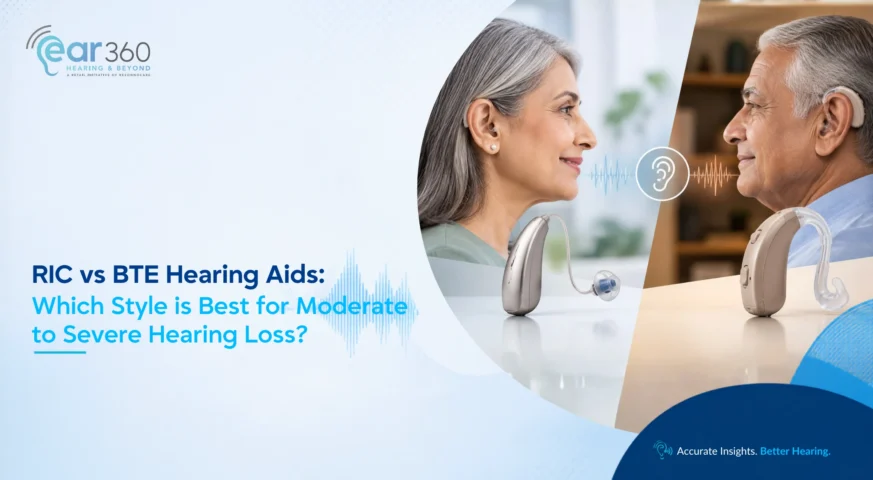
RIC vs BTE Hearing Aids: Which Style Is Best for Moderate to Severe Hearing Loss?

TL; DR: This blog is aimed at people with moderate to severe hearing loss, existing hearing aid users, seniors, caregivers, and family members who are comparing RIC and BTE hearing aids and want to understand which style may better suit their hearing level, comfort, handling needs, and lifestyle. RIC and BTE Hearing Aids Differ in Design and Fit: A RIC hearing aid places the receiver inside the ear canal and connects it to the behind-the-ear unit with a thin wire, while a BTE keeps the receiver inside the hearing aid body and delivers sound through tubing to an earmould or earpiece. Both Styles Can Work for Moderate to Severe Hearing Loss: RIC devices can be suitable for many people with moderate and some severe hearing loss, depending on receiver strength and fitting, while power BTE models may be preferred when greater amplification, a secure earmould, or additional fitting reserve is needed. Comfort, Handling and Maintenance Matter: RIC devices are generally smaller but involve components such as receivers, domes, and wax filters that require regular care. BTE devices may be easier for some users to handle and clean, especially when dexterity or managing small components is a concern. The Right Choice Should Be Based on an Audiological Assessment: An audiologist considers factors such as audiogram results, speech understanding, ear condition, hand-eye coordination, daily listening environments, and future hearing needs before recommending RIC or BTE. The blog emphasizes that there is no single best style for everyone. The initial choice when considering hearing aids for moderate to severe hearing loss may be whether to opt for a BTE or a RIC hearing aid. They are both worn behind the ear, but have different playback qualities and are appropriate for different types of audio and handling requirements. The selection of an appropriate hearing aid at Resonnocare will depend on an audiogram, speech understanding, ear health, and the hearing aid’s ability to be used in the environment and managed by the listener – not appearance. The best is the one that fits the individual hearing profile. What Is a RIC Hearing Aid and How Is It Different From a BTE? Also referred to as a RIC (receiver in the canal) hearing aid, this type is compact and small and has a thin wire that extends to a receiver, or speaker, which is placed into the ear canal. For many RIC models, this design keeps the size of the RIC relatively small. With a BTE or ‘behind the ear’ device, the receiver is located inside the hearing aid body. The sound is conducted through the tubes to the earmoulds or earpiece. That difference has an impact on size, power available, fit, and maintenance. Know More About Hearing Aid Prices in India by Type, Features and Technology Hearing Aid Machine Price: What Determines the Cost? Hearing Aids Near Me: How to Choose the Right Hearing Aid Center When Is a RIC Hearing Aid Suitable for Moderate to Severe Hearing Loss? Great hearing loss is not a contraindication for receiver-in-canal devices. A RIC hearing aid can fit well with many moderate and some severe hearing loss, depending on the hearing aid model, receiver strength, and earpiece type. It may be used if you want a smaller device behind your ear, you have a hearing profile that allows it, and you can comfortably handle the receiver, dome, and wax filter. If the hearing loss is greater, a stronger receiver and a closed dome or custom earmould might be required for adequate amplification and feedback control. Resonnocare’s hearing aid service focuses on selecting devices around hearing levels, listening needs, comfort, and practical use. When Might a BTE Hearing Aid Be Better? If more amplification or handling of the hearing aid is required, BTE hearing aids are important. A BTE might be recommended if a higher output/extra room for spares is required, a secure custom earmould is suitable, or a larger device is easier for you to manage and clean. For larger hearing losses, power BTEs are often used, as they will have a more powerful sound delivery and can be fitted with custom earmoulds. Not everyone with profound hearing loss will require a BTE. Also, some high-power RIC fittings may be suitable depending on the severity and form of the hearing loss, speech understanding, and the range of fitting of the device. RIC Hearing Aid vs BTE: Which Is More Comfortable? Comfort is personal. Smaller does not necessarily mean more comfortable. RIC devices are generally based on a thin wire and a small dome or earpiece. If it is deemed safe to have an open fitting, some individuals opt for the less obstructed feel. However, a tighter dome or earmould might be required with a higher level of hearing loss. Typically, BTE devices are attached to an earmould via a tube. This fitting is preferred by some patients because they feel that it provides more stability, particularly if small receivers are hard to position. If the pain or pressure continues to be persistent, the audiologist should be consulted instead of being ignored. RIC Hearing Aid vs BTE: Which Provides More Power? When hearing loss is moderate, both RIC and BTE models can offer sufficient amplification if they are appropriately chosen and programmed. The fitting range becomes more important for severe hearing loss. Some patients will benefit from high-power RIC receivers, and high-power BTE receivers might be beneficial for specific hearing profiles. The more powerful the device, the better it is, not always. Audiograms, or measurements of hearing levels, need to be used to program the hearing aids. If it is too loud and too amplified, this does not necessarily aid in understanding speech. Which Style Is Easier to Clean and Maintain? RIC devices have a receiver placed within the ear canal and are therefore subject to earwax and moisture. It is recommended to check domes and wax filters regularly. The receiver is still kept in the case, which is behind the ear, and the earmould and tubing do

Read More
Rechargeable vs Battery-Powered Hearing Aids 3-Year Cost & Convenience Comparison
November 10, 2026 Comments (0)

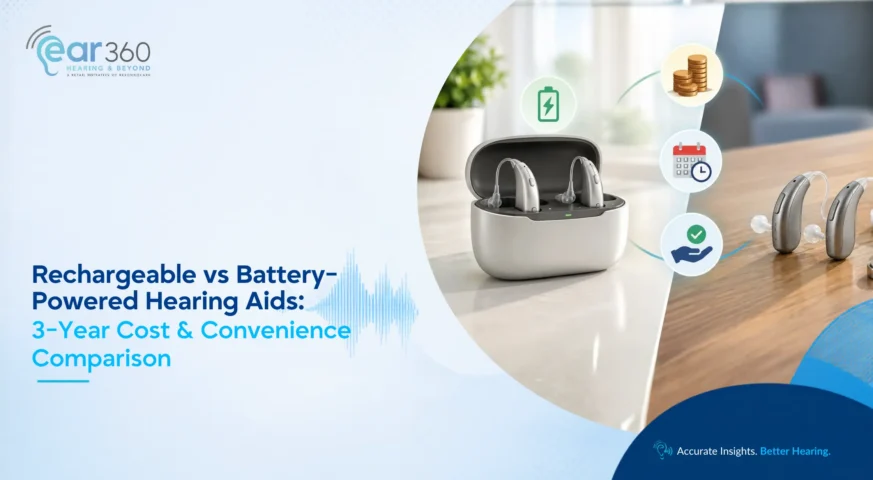
Rechargeable vs Battery-Powered Hearing Aids: 3-Year Cost & Convenience Comparison

TL; DR: This blog is aimed at people with hearing loss, hearing aid users, seniors, caregivers, and families who are deciding between rechargeable and battery-powered hearing aids, especially those comparing long-term cost, convenience, travel needs, usability, and daily maintenance. Rechargeable and Battery-Powered Hearing Aids Work Differently: Rechargeable hearing aids are typically charged overnight, while battery-powered models use replaceable zinc-air batteries. However, battery type alone does not determine hearing quality; fitting, programming, receiver strength, and sound processing remain equally important. Rechargeable Hearing Aids May Reduce 3-Year Battery Costs: The blog compares the recurring cost of disposable batteries over three years and explains that rechargeable models can reduce ongoing battery purchases, although charger costs, servicing, device choice, and warranty should also be considered. Convenience Depends on Lifestyle and Dexterity: Rechargeable models may be easier for people who struggle with small batteries because of reduced finger dexterity, arthritis, tremors, or poor eyesight, while disposable batteries can be useful for people who prefer instant replacement without waiting for charging. The Best Choice Depends on Individual Hearing and Daily Needs: Factors such as hearing loss, amplification requirements, lifestyle, travel habits, Bluetooth usage, access to charging, budget, ear anatomy, and comfort with battery handling should guide the decision rather than choosing one power system as universally better. The decision to upgrade to a rechargeable hearing aid versus hearing aid batteries may seem like a trivial one, but it can impact your life for years. Maybe you’re wondering about battery life, charging, travel, usability, or the possibility of not having enough battery life. No one can be pleased with just one. The selection will depend on the type of hearing you need, your lifestyle, your hand dexterity, streaming, and charging. At Resonnocare, we want you to make the cost comparison and convenience comparison and make a decision. What Is the Difference Between a Rechargeable Hearing Aid and a Battery-Powered Hearing Aid? The rechargeable hearing aid will typically have a rechargeable battery. You put it in a suitable charger (usually overnight) and use it the following day. The runtime of various models varies based on usage, from a full day of typical use for many models, depending on the model, battery life, Bluetooth streaming, calls, and listening environment. Activated by a small, disposable zinc air battery, battery-powered hearing aids are used. When the battery gets weak, it is taken out and replaced with a new one. Neither power system determines hearing quality by itself. Sound processing, fitting accuracy, receiver strength, ear acoustics, and programming remain important. A professional hearing aid consultation should therefore come before choosing a battery type. Know More About Rechargeable Hearing Aids: Benefits, Battery Life, Price & Suitability Hearing Aid Prices in India by Type, Features and Technology Hearing Aid Trial: What to Expect Before Buying Hearing Aids Is a Rechargeable Hearing Aid Cheaper Over 3 Years? It may save on continuous battery consumption, but this will vary based on what device you choose. The hearing aid purchase price should be differentiated from the powering cost for a fair comparison. If two battery-powered hearing aids are worn, each battery will last for 5-7 days per device, or 104-146 batteries per year, or approximately 312-438 over three years. Suppose that the cost of one disposable battery is ₹40; then one such comparison is as follows: Example Approximate Cost 104 batteries per year ₹4,160 per year 146 batteries per year ₹5,840 per year The cost of the equipment after 3 years, based on lower usage. ₹12,480 Rates for higher usage are based on a 3-year cost. ₹17,520 These prices are examples, not market prices. Actual cost depends on the size of the battery, brand, daily use duration, streaming, and power usage of the device. Typically, the regular replacement of batteries is not necessary with a rechargeable model. This charger can come as an add-on or be purchased separately, and in some cases battery servicing may be required later on, depending on the model and warranty. While cost may be a factor, it is not the only one that should be used to determine the hearing aid. Is a Rechargeable Hearing Aid More Convenient for Daily Use? Many people could find charging simpler than repeatedly dealing with small batteries. It may be helpful if you have decreased finger dexterity, arthritis, tremor, poor eyesight, or just like a set routine. The hearing aids are placed in the charger at night, and in the morning they are ready to wear. There is another advantage to disposable batteries. When one is needed, you can get a new one on the spot if you have one on hand; no need to wait for charging or look for a power outlet. The real question is, which technology is newer? This is which routine will be easier for you every day. A free hearing aid trial can help you assess comfort, sound, device handling, and charging or battery replacement before making a final decision. Rechargeable Hearing Aid vs Disposable Batteries: Which Is Better for Travel? If you bring your charger and remember to take it with you, you can use a rechargeable system for travelling purposes. There are also portable charging cases available in some systems that will store energy. When it’s not certain that you can charge, disposable batteries can be reassuring. A small pack of spares will be easy to transport and is an instant solution to get power back. Before a long journey, ask your audiologist about expected runtime, portable charging options, and a suitable backup plan. If clinic travel is difficult because of age or mobility, a home hearing care visit may also be relevant, depending on location and need. Which Option Is Easier for Older Adults? There is no “best” power system for any age. Sometimes hand function, eyesight, memory, home support, and routine are more important. Someone who has a problem with small batteries can use a rechargeable system to manage that. If an individual is familiar with battery changes, a battery-powered model might be appropriate. Do

Read More

Resonnocare Health-Tech Private Limited Provides hearing and audiology services through a structured, clinically guided approach.

Popular Clinic Locations:

Delhi | Bangalore | Pune | Ludhiana | Indore | 

Tumkur | Mysore | Mangalore

contact info

RESONNOCARE HEALTH-TECH PVT. LTD

Head Office 403, Office Block ‘C’

4th Floor – Above Retail Block R1 & R5,

M3M URBANA, Sector 67, Gurgaon 122101 Haryana

2026, All rights reserved by Resonnocare  health-tech private limited

✓ 14-Day FREE Hearing Aid Trial • Try Before You Decide Chat on WhatsApp → ✓ 14-Day FREE Hearing Aid Trial Call Now →