Month: September 2026

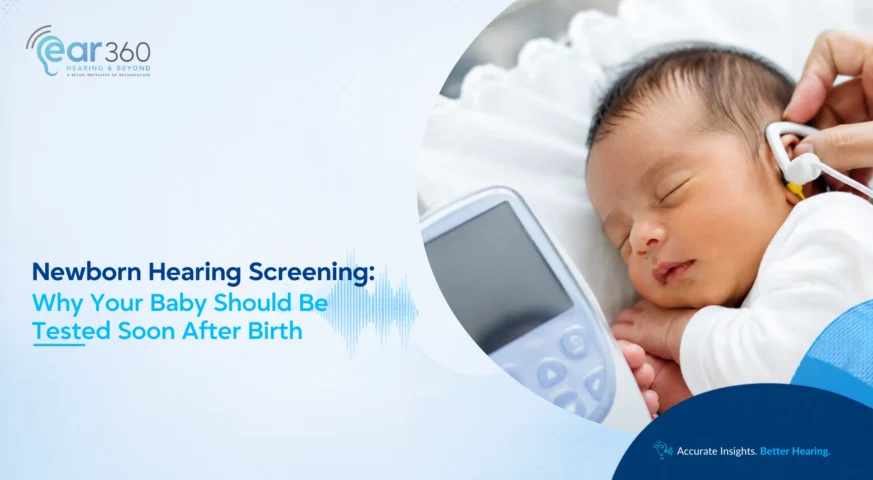
Newborn Hearing Screening Why Your Baby Should Be Tested Soon After Birth
November 10, 2026 Comments (0)

Newborn Hearing Screening: Why Your Baby Should Be Tested Soon After Birth

TL;DR: This blog is aimed for Parents of newborns and infants, especially those whose babies have not yet undergone hearing screening, received a “refer” or inconclusive screening result, have birth-related hearing risk factors, or whose parents are concerned about hearing and speech development. Newborn hearing screening helps identify concerns early: The blog explains why babies should ideally be screened soon after birth, before hearing difficulties become noticeable through delayed responses, speech, or developmental milestones. The screening is quick, painless, and non-invasive: Newborn hearing tests can usually be performed while the baby is sleeping or resting and are designed to check whether the baby’s auditory system is responding appropriately to sound. A failed initial screening does not necessarily mean hearing loss: Temporary factors such as fluid, vernix, movement, or background noise can affect results. Babies receiving a “refer” result may require repeat screening or further diagnostic testing such as BERA. Early diagnosis enables timely support and intervention: The blog covers when parents should consult an audiologist, possible follow-up tests and management options, and how Resonnocare supports families through screening, diagnosis, hearing aids, home visits, consultations, and continued hearing care. Once you bring your newborn home, there are numerous areas to consider, including feeding, sleeping, immunizations, and check-ups. Even though it might not be something parents can easily assess in the first few days of their baby’s life, hearing is equally important. A baby may seem to be hearing normally, but may have a hearing problem that is not detected without testing. This is why it’s recommended to screen infants right after birth. It is painless and easy to perform a test to help check early how your baby is reacting to sound. Here we will discuss the significance of newborn screening, the timing of newborn screening, what happens to your baby during the screening, and what to do if your baby is offered a second screening. What Is Newborn Hearing Screening? Newborn hearing screening is a straightforward, non-invasive test that is typically conducted in the first 24-48 hours after birth, either in the hospital or at a very early paediatric visit. Determines if your baby’s ears and ear bones are reacting to sound properly. The test is harmless to your baby, and it is usually performed during a sleep or still time in your arms. This is now a common part of newborn care in the majority of hospitals in India; however, not all do so automatically. If your baby was born at home or at a smaller clinic, it is important to make a specific enquiry with your paediatrician before you leave the hospital or at the first follow-up visit about the screening for hearing loss. Know More About Hearing Tests and Hearing Aids Hearing Aid Price: What Affects the Cost of Hearing Aids? Hearing Aid Price in India: Complete Cost Guide by Type & Features Hearing Aids Near Me: How to Choose the Right Hearing Aid Center Why Does Newborn Hearing Screening Matter So Early? Hearing plays an important role in how your baby begins to recognise voices, respond to sounds, and eventually develop speech and language. These skills start developing from the very first months of life, which is why checking hearing early is so important. A hearing concern in a newborn may not always be easy for parents to notice at home. Your baby may still react to certain sounds, even if they are not hearing clearly in one or both ears. Newborn hearing screening helps identify possible concerns before they begin to affect important speech and language milestones. If a concern is found early, your family has more time to understand what it means, complete any further testing that may be needed, and get the right support for your baby. The goal is not to create worry, but to make sure your baby’s hearing development is being followed from the start. What Can Cause Hearing Concerns in Newborns? Hearing concerns in newborns can happen for several reasons, and sometimes there may be no clear cause at all. It is also important to remember that having a risk factor does not mean that your baby will definitely have hearing loss. Some babies may need closer hearing monitoring if there is a family history of childhood hearing loss, if they were born prematurely or with a low birth weight, or if they needed a longer stay in the NICU. Certain infections during pregnancy, complications around birth, severe jaundice requiring treatment, or exposure to particular medications may also increase the risk of hearing difficulties. However, hearing loss can also occur in babies who have none of these risk factors. This is why newborn hearing screening is recommended for all babies, rather than only for those considered at higher risk. What Are the Early Signs Parents Should Watch For? Newborn screening is intended to detect issues before symptoms present, but it is useful to be aware of what normal hearing development might be like as your baby grows. If your baby doesn’t react to loud noises, doesn’t turn toward familiar voices by 4-6 months, babbling is scarce or none by about 9 months, or doesn’t seem to be consoled by your voice during fussy periods, you might want to discuss it with your child’s paediatrician or audiologist. While not an indicator of a hearing loss, these observations should be discussed, particularly if your baby did not have a hearing screening at birth. More on related symptoms is available on our ear symptoms and conditions page. When Should You See an Audiologist for Your Baby? It is important to arrange a formal hearing evaluation if your baby fails the initial screening, if screening fails, or if you notice any of the above hearing loss signs as your baby grows. It’s also logical to ask to have an evaluation if there’s a family history of hearing loss or complications around birth time. If your baby’s hearing screening results are a “miss” or a “refer,” it does not mean that your baby

Read More
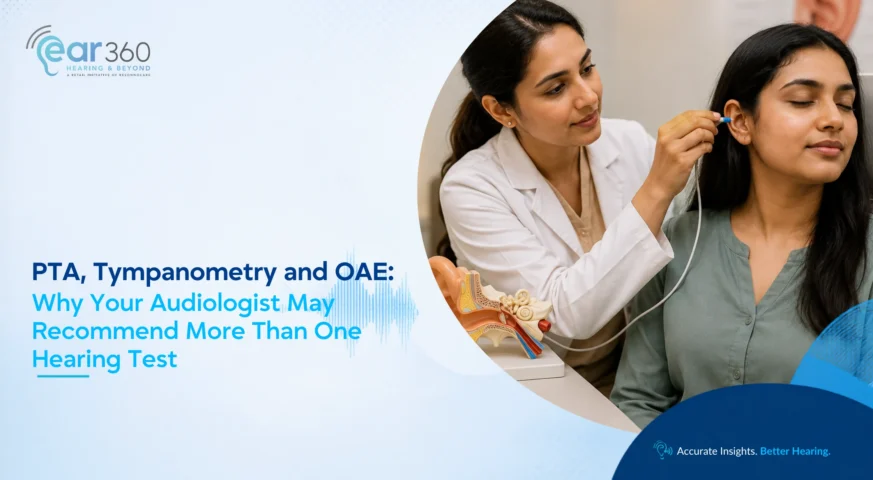
PTA, Tympanometry and OAE Why Your Audiologist May Recommend More Than One Hearing Test (1)
November 10, 2026 Comments (0)

PTA, Tympanometry and OAE: Why Your Audiologist May Recommend More Than One Hearing Test

TL;DR: This blog is aimed for Adults, parents, caregivers, and patients who have been advised to undergo PTA, tympanometry, or OAE testing and want to understand why an audiologist may recommend multiple hearing tests during the same evaluation. Each hearing test evaluates a different part of the hearing system: PTA measures hearing thresholds across different frequencies, tympanometry checks middle-ear and eardrum function, while OAE assesses how well the cochlea or inner ear responds to sound. Combining PTA and tympanometry provides a more complete diagnosis: PTA can identify whether hearing ability has reduced, while tympanometry helps determine whether middle-ear issues such as fluid, pressure imbalance, or eardrum problems may be contributing to the hearing difficulty. OAE may be added when more information about inner-ear function is needed: It can be particularly useful for young children or when PTA and tympanometry results require further clarification, helping audiologists distinguish between different types and possible causes of hearing loss. Accurate testing helps guide the right treatment or management plan: The blog explains common symptoms, when to see an audiologist, how the tests are performed together, and how results may lead to monitoring, ENT referral, hearing aids, or other personalised hearing-care recommendations. The hearing check might require only one test, but you may be asked to have a PTA, tympanometry, and maybe an OAE as well. Anyone can ask themselves why so many tests are required and why it is that they are all needed. This is because there isn’t a single hearing test that can give your audiologist all of the information they need. One test evaluates the sensitivity to sounds, another tests the motion and pressure of the middle ear, and another tests the response of the inner ear to sound. Combining these findings, your audiologist can also better determine the source of your hearing difficulty and what steps to take next. Here is a primer on PTA, tympanometry, OAE, what each test does, why your audiologist might need to order more than one type of hearing test, and what your test results can tell you about your hearing health. What Is PTA and Tympanometry? The most common test that people imagine when they think about a hearing check is PTA (Pure Tone Audiometry). You are seated in a quiet room or booth with headphones and listen as soft beeps are played at various frequencies and intensities. It determines the softest sound you can hear at every frequency, providing your audiologist with a precise picture of how well you hear at low, mid, and high frequencies. In contrast to the above, tympanometry is not a direct test of hearing. It, on the other hand, tests the response of your eardrum to air pressure changes. A small, soft probe is inserted into the ear canal for a few seconds, and the results indicate whether fluid is behind the eardrum, if perforation is possible, or if there is pressure imbalance in the middle ear. Combined, PTA and tympanometry provide a more comprehensive evaluation of hearing and why hearing problems may be arising. Know More About Hearing Tests PTA Test for Hearing: Procedure, Results and Normal Range PTA Test for the Ear: What It Measures and When It Is Needed Tympanometry Test: Procedure, Cost & Result Meaning Why Might Your Audiologist Recommend More Than One Test? The causes of hearing concerns are not always clear, which is why PTA and tympanometry are frequently all done at the same appointment. With PTA, your audiologist will know that your hearing threshold has changed, but not necessarily why. Tympanometry is a test that helps to determine if the middle ear is working correctly. In a few instances, especially for children younger than 18 months or for patients who require an in-depth inner ear response, OAE (Otoacoustic Emissions) testing is included as well, which measures how well the cochlea is reacting to sound. PTA and tympanometry can be used together – sometimes in combination with OAE – to help your audiologist determine if there is a middle ear problem and the type of hearing loss (conductive hearing loss versus sensorineural hearing loss caused by inner ear or auditory nerve problems). If one were to use just one of the above techniques, a diagnosis might be incomplete or incorrect. What Causes the Hearing Issues These Tests Help Identify? Hearing problems can happen for many different reasons, and the cause is not always obvious from symptoms alone. This is why audiologists may use PTA, tympanometry and OAE together to understand which part of the hearing system may be affected. Some common causes include: Earwax blockage, which can reduce the amount of sound reaching the eardrum Fluid behind the eardrum, often after a cold, allergy or infection Middle ear infections, which can temporarily affect hearing A perforated eardrum, which may change the way sound is conducted through the ear Age-related changes in hearing, which usually develop gradually Long-term exposure to loud sounds, which can affect the inner ear Inner ear or auditory nerve problems, which may need more detailed assessment Some hearing problems are temporary and may improve once the underlying cause is treated. Others may require ongoing monitoring or hearing support. This is why identifying where the problem is coming from is important before deciding on treatment. PTA, tympanometry and OAE give your audiologist different pieces of information that can be put together to form a clearer picture of your hearing. What Are the Early Signs You May Need Hearing Tests? You do not have to wait until hearing loss becomes severe before having your hearing checked. In fact, many hearing changes begin gradually and can be easy to overlook at first. You may want to consider a hearing test if you notice that: You often ask people to repeat themselves The television or phone volume needs to be higher than before Conversations are difficult to follow in restaurants, markets or family gatherings Speech sounds unclear or as though people are mumbling One ear seems to hear better than the other

Read More

Resonnocare Health-Tech Private Limited Provides hearing and audiology services through a structured, clinically guided approach.

Popular Clinic Locations:

Delhi | Bangalore | Pune | Ludhiana | Indore | 

Tumkur | Mysore | Mangalore

contact info

RESONNOCARE HEALTH-TECH PVT. LTD

Head Office 403, Office Block ‘C’

4th Floor – Above Retail Block R1 & R5,

M3M URBANA, Sector 67, Gurgaon 122101 Haryana

2026, All rights reserved by Resonnocare  health-tech private limited

✓ 14-Day FREE Hearing Aid Trial • Try Before You Decide Chat on WhatsApp → ✓ 14-Day FREE Hearing Aid Trial Call Now →