Month: October 2026

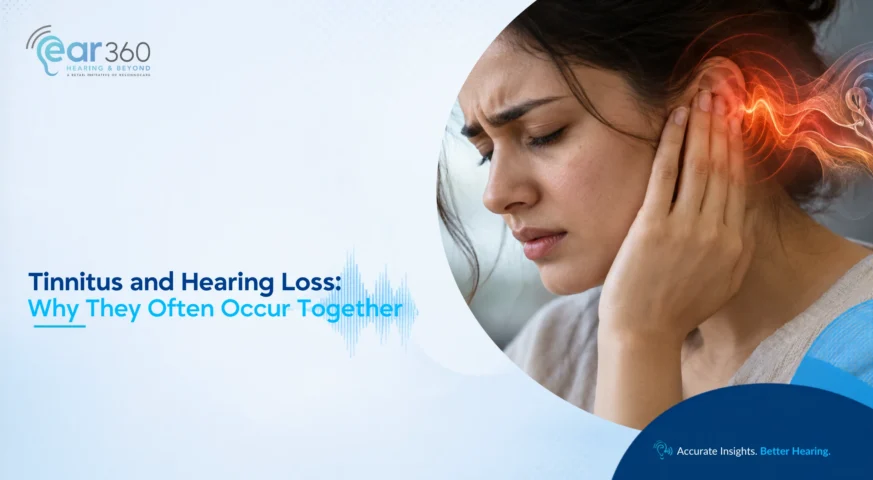
Tinnitus and Hearing Loss Why They Often Occur Together
October 17, 2026 Comments (0)

Tinnitus and Hearing Loss: Why They Often Occur Together

TL; DR: This blog is for people experiencing tinnitus, especially those who have also noticed changes in hearing, difficulty understanding speech, or problems hearing in noisy environments.  Tinnitus and hearing loss often occur together but are not the same condition: Tinnitus is the perception of sounds such as ringing, buzzing, or humming, while hearing loss refers to reduced ability to hear or understand sounds.  Several factors can affect both tinnitus and hearing: Age-related hearing changes, loud-noise exposure, earwax, middle or inner ear conditions, and certain medicines may contribute to both symptoms.   A hearing assessment can help identify what is happening: Hearing tests can determine whether measurable hearing loss is present, its type and severity, and whether further medical evaluation may be required.  Management depends on the underlying cause and individual symptoms: Depending on the assessment, care may involve treating an ear problem, hearing aids, counselling, sound enrichment, sleep or stress support, and medical referral when appropriate. If you are hearing a ringing, buzzing, humming, or whistling sound in your ears, it can be confusing, particularly if no one else can hear it. You might also find it harder to listen to what people are saying, and you may need to increase the volume of the TV. These two problems are intertwined. It is possible for tinnitus and hearing loss to occur simultaneously, as many hearing-related conditions can also cause tinnitus. Some individuals will be the first to know that they have tinnitus. Others discover that they have experienced a change in their hearing as well, at a hearing evaluation. If you have an understanding of this relationship, you will be able to determine when to consult a professional and what kind of assessments might need to be done. What Are Tinnitus and Hearing Loss? Tinnitus is hearing a sound such as ringing, buzzing, humming or whistling without an external sound source. Tinnitus is a unique condition for each person. You may hear: Ringing Buzzing Hissing Whistling Humming Clicking A high-pitched tone The sound can be heard in one ear, both ears, or from within the head. It may happen from time to time, or it may happen repeatedly. Hearing loss means reduced ability to hear or understand sound. You may notice difficulty with soft voices, conversations in noise, telephone calls, television or particular pitches. Tinnitus and hearing loss can coexist as they may share some common components of the auditory system, but they are different symptoms. Why Do Tinnitus and Hearing Loss Often Occur Together? Sound reaches your ears through the auditory system to your brain. When hearing is reduced, the auditory system receives less sound information than before. In some people, changes in how the auditory system responds to this reduced input may contribute to tinnitus. Not all people with hearing loss experience tinnitus. It also doesn’t imply that all tinnitus patients will have an actual hearing loss. But a few circumstances may have an impact on both hearing and tinnitus. They include aging, exposure to loud noises, ear diseases, earwax, some medicines, and inner ear diseases. As there are several possible causes, it is best to get your symptoms evaluated rather than just assuming that you are suffering from tinnitus and have to live with it. What Causes Tinnitus and Hearing Loss? There is no single cause that explains every case. Age-related changes in hearing As you age, your hearing may slowly deteriorate, especially for sounds that are higher in pitch. Initially, you might think that speech is not as intelligible, but not that it is just quieter. A member of the family may talk in a mumble, or it might be hard to follow a conversation in a restaurant. Some of these age-related changes in hearing can also be accompanied by tinnitus. Exposure to loud sounds Excessive exposure to loud music, machinery, traffic, industrial noise, construction noise, or loud recreational sound can compromise structures that are associated with auditory function. But it can be temporary or permanent changes if the sound is loud enough. A loud event may cause ringing in the ears. If the ringing does not quiet spontaneously, or there is also a loss of hearing, it is advisable to have an audiological assessment. Earwax blockage An excess accumulation of earwax may sometimes affect a person’s ability to hear well and can often be accompanied by tinnitus. Don’t use a cotton bud, pin, or other object to remove earwax, as this can either push the wax further in or harm the ear. Earwax should only be professionally checked, never removed with cotton buds, pins, or other objects that may push the earwax further or damage the ear. Middle or inner ear problems Other ear disorders may be associated with hearing changes in conjunction with the tinnitus. Ear pressure, dizziness, ear discharge, pain and sudden hearing changes are all good indicators of what is occurring. You can read more about common ear symptoms and conditions and why the combination of symptoms matters during assessment. Certain medicines In some situations, certain medicines can cause hearing problems or be a cause of tinnitus. Don’t discontinue any prescribed medication due to the development of tinnitus. Talk to the doctor who prescribed it to review your symptoms, dosage, medical history, and possible alternatives, all without compromising safety. What Are the Early Signs You May Have Hearing Loss Along With Tinnitus? People with tinnitus may become preoccupied with the tinnitus tone, and tune out when their hearing changes slightly. If you’re starting to experience that: Voices seem softer or less clear than before. You frequently ask people to repeat themselves. The volume of the television has been slowly turned up. Telephone conversations have become harder to follow. You can’t hear what people are saying in noisy places like restaurants or when you’re in a family setting Some pitches or voices are less clear than others. You can hear one ear more clearly than the other Tinnitus seems to be louder in quiet surroundings When you have tinnitus and hearing loss,

Read More

Your First 30 Days With Hearing Aids An Aftercare Guide
October 17, 2026 Comments (0)

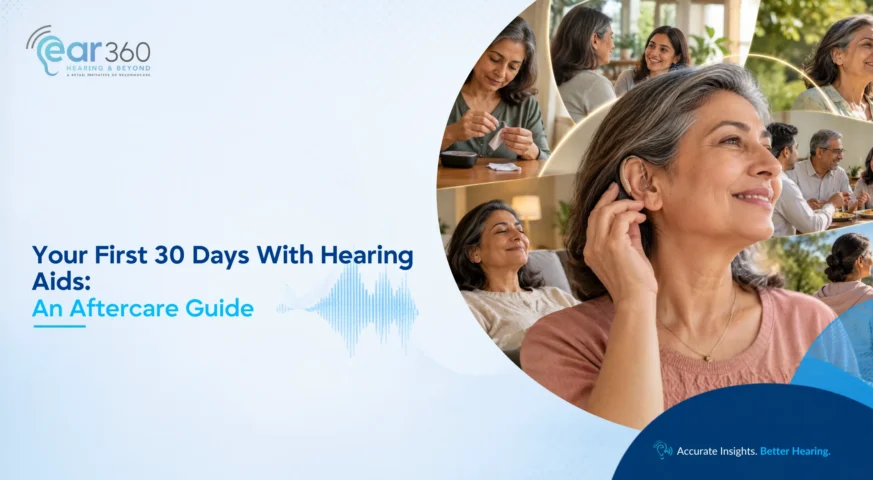
Your First 30 Days With Hearing Aids: An Aftercare Guide

TL; DR: This blog is for people who are using hearing aids for the first time, especially those in their first month of use who want to understand what is normal, how to adjust, and when to contact their audiologist.  The first 30 days are mainly about adjustment: New hearing aid users may notice everyday sounds, their own voice, or background noises more strongly at first. Gradual adaptation and consistent use are important during this period.  Each week brings different listening goals: The blog guides users from getting comfortable with their hearing aids in Week 1 to testing real-life environments, identifying fine-tuning needs, and building a regular routine by Week 4.    Daily care and specific feedback improve aftercare: Proper cleaning, charging, storage, and noting exactly where listening problems occur can help keep hearing aids working reliably and give audiologists better information during follow-up appointments.   Some problems should not simply be waited out: Persistent discomfort, poor fit, unclear speech, repeated feedback, sudden hearing changes, severe ear pain, discharge, vertigo, or severe tinnitus should be discussed with an audiologist or medical professional rather than treated as normal adjustment. During the first few weeks, your brain is becoming familiar with sounds that may not have been as noticeable for some time. Everyday noises such as fans, utensils, traffic, footsteps and even your own voice may initially seem different or more noticeable. What Should You Expect During Your First 30 Days With Hearing Aids? The first month is typically an adaptation period. Your hearing aids are set to your hearing assessment. A clinic fitting gives your audiologist a starting point. Everyday situations such as conversations, television, traffic, and meetings show how those settings work in real life. Sometimes speech may sound clearer, while at other times it may not. Some noises may sound louder than usual, or you might notice that your voice doesn’t sound the same. Try not to judge the hearing aids based on the first day alone. Use them on a schedule as recommended by your audiologist and be aware of the contexts in which listening is easy, challenging, too loud, or too unclear. These observations are valuable as hearing aid fitting doesn’t always stop once you walk out the door. Later changes can be made with the help of your own experience in your home, work, travel, and conversations. Week 1 of the First 30 Days With Hearing Aids: Getting Used to Sound Again In the first week, concentrate on comfort and everyday wear. Understand the proper insertion and removal of hearing aids. Know how to charge them or change batteries, how to clean parts that your audiologist has demonstrated to you, and how to store the devices safely. Start in familiar listening environments such as home and gradually build confidence with everyday use. Have one-on-one conversations with family, watch TV at a comfortable level, and listen to daily household noises. The ceiling fan, running water, rustling of paper, footsteps, or utensils might be more noticeable than usual all at once. These sounds may sound sharper at first since your auditory system is taking in information that might not have been as prominent in the past. If pain, pressure, soreness, or irritation is persistent, however, this shouldn’t be taken for granted as a normal part of the adjustment process. If your hearing aids whistle often, are loose, do not fit properly, or cause discomfort, contact your audiologist about a different fit and do not change the physical fit yourself. Week 2 of the First 30 Days With Hearing Aids: Testing Real-Life Listening After two weeks, slowly try your hearing aids out in more environments. This could be during family meals, small gatherings, out on walks, shops, places of worship, work meetings, etc. Rather than label the hearing aid as “good” or “bad”, identify particular listening contexts: Are you able to keep up with one individual in a calm room? Is television speech easier to follow? Are group conversations still difficult to follow? Do some sounds seem to be too loud for you? Is one ear noticeably different than the other? Do voices sound natural, too sharp, hollow or muffled? This information can assist your audiologist in determining if the problem is related to adaptation, fitting, device handling, or programming. Week 3 of the First 30 Days With Hearing Aids: Knowing What May Need Fine-Tuning By around the third week, many users have a clearer idea of what is working well and which situations remain difficult. If the speech is often difficult to understand, ordinary sounds are too loud, soft speech is difficult to hear, or background noise becomes too loud in some places, programming may need to be reviewed. If the hearing aid is unstable, causes pressure, or is uncomfortable after being worn for a couple of hours, the physical fitting may need attention. Use the controls and programmes your audiologist has shown you, but avoid repeatedly changing settings simply to make every situation louder. Persistent problems with clarity or comfort are better discussed at a follow-up appointment. At Resonnocare, hearing-aid aftercare may include fit checks, cleaning guidance, programming adjustments, troubleshooting and follow-up counselling where needed. Week 4: What Should Feel Better by the End of the First Month? After the fourth week, it’s possible that many start to form a more regular hearing aid routine. The basic controls- turning devices on and off, charging and cleaning them- may become easier. You might also be able to distinguish between comfortable and challenging listening situations. Hearing aids can improve access to speech and everyday sounds, but they cannot make every difficult listening environment effortless. There are cases where further listening effort is required in a noisy environment, such as a restaurant, when several people are talking at once, when people talk from a distance, or in rooms that have poor acoustics. The key question is whether the hearing aids are getting easier to use and more comfortable in your daily life. If you still take them out regularly due to

Read More
How to Know If Your Hearing Aid Needs Reprogramming
October 17, 2026 Comments (0)

How to Know If Your Hearing Aid Needs Reprogramming

How to Know If Your Hearing Aid Needs Reprogramming TL; DR: This blog is for existing hearing aid users who feel their device is no longer giving the same clarity, comfort, or performance and want to understand whether reprogramming may help.  Recognise the common signs that reprogramming may be needed: Speech becoming unclear, sounds feeling too loud or soft, difficulty managing background noise, frequent volume adjustments, and unnatural sound quality can indicate that hearing aid settings need review.  Understand why hearing aid settings may need to change over time: Changes in hearing, lifestyle, listening environments, or adaptation to hearing aids can make the original programming less suitable for current needs.  Know the difference between a programming issue and a device problem: Reduced performance can also result from blocked filters, batteries, moisture, microphone or receiver problems, poor fit, or earwax, so professional assessment is important before changing settings.  Professional reprogramming focuses on personalised hearing needs: An audiologist can review your hearing, device condition, everyday listening difficulties, and settings to adjust amplification, speech clarity, noise management, microphones, and listening programmes appropriately. If your hearing aid switches on and appears to be working but speech has become less clear, sounds feel uncomfortable or you keep changing the volume, the problem may be the settings rather than a fault in the device. The change may be gradual. You might notice that conversations are harder to follow, restaurants feel more difficult than before or the television volume is creeping up again. What Is Hearing Aid Reprogramming? Hearing aid programming is the adjustment of a digital hearing aid to a setting more appropriate for the current level of a person’s hearing loss, the setting of the environmental sounds and speech they are listening to, the comfort level, and the communication demands of the user. Modern hearing aids can be set to amplify sound at various pitches and speech clarity, manage background noise, direct the microphone towards the speaker, control feedback, and select various listening programmes. The initial settings are usually based on your hearing-test results. They may need further adjustment once you have used the hearing aids in everyday situations. If you are having trouble with your hearing aid, it does not automatically mean that the hearing aid is faulty. It could just be part of long-term hearing care. What Are the Early Signs That Your Hearing Aid Needs Reprogramming? Your everyday listening experience usually gives the first clues. Speech has started sounding unclear. You may hear that someone is speaking but still miss individual words, especially during group conversations, television or meetings. Your hearing aid feels too loud or too soft. Common noises can suddenly seem painful, irritating, or loud. Other times, voices can be weaker than normal. Simply increasing or reducing the overall volume may not solve the problem. An audiologist can adjust specific frequencies or listening settings instead. Professional reprogramming will give the audiologist the ability to fine-tune specific frequencies or sounds instead of increasing or decreasing the volume of all sounds. Background noise feels harder to manage. Difficulty in restaurants, family gatherings, offices, traffic or other busy environments is a common reason to review hearing-aid settings. A hearing aid does not eliminate background noise, but the noise management and microphone settings can be customised to lessen the impact of background noise in some situations. You are constantly changing the volume. Occasionally changing the volume is normal. If you are having to turn the device up and down throughout the day, however, the current settings may no longer suit your listening needs. Voices or sounds seem unnatural. For some people who use hearing aids, sounds are: Tinny Echoing Booming Hollow Too sharp Muffled Describing the sound in this way can help your audiologist understand what needs to be investigated or adjusted. Why Can a Hearing Aid Need Reprogramming After It Was Already Fitted? Your hearing and how you listen day to day may change. Long-term changes in hearing may occur. If this occurs, settings made according to an older hearing test may not be the correct settings for amplification. Your lifestyle can also change. You might begin to attend more meetings, travel more, spend more time in noisy places, or require more assistance from you and your family to have a good conversation. New hearing aid wearers can also benefit from some adjustments as they acclimate to hearing sounds they haven’t heard in a while. The first fitting is therefore not always the final setting. Follow-up visits are an important part of professional hearing aid aftercare. How Can You Tell Whether the Problem Is Programming or a Hearing Aid Fault? Not all hearing problems require hearing aid reprogramming. An audiologist might test the hearing aid before making adjustments. Sometimes the decreased performance is due to: A blocked wax filter means that a filter has become clogged. Weak or depleted batteries. Moisture inside the hearing aid Blocked microphones Damaged tubing Receiver problems Charging problems Poor physical fit Wax in the ear canal can also cause problems with how sounds are heard in the ear and may lead to a poorer understanding of sound or feedback. This is why the device should be checked before assuming that the programming is the problem. When Should Your Hearing Be Tested Again Before Reprogramming? If you have had a change in hearing since your hearing aid was programmed and the hearing test was performed a long time ago, then a new hearing test might be warranted. The hearing test is updated to assess your current hearing ability to sounds of varying frequencies. The audiologist will then know if it is necessary to program the hearing aid according to the most recent results. Consult a medical or audiological professional if you experience: Sudden hearing loss Severe ear pain Ear discharge New onset or worsening vertigo. Tinnitus that doesn’t go away or comes on suddenly. A sudden significant change in hearing. Such symptoms should not just be managed by changing hearing aid settings. You can also learn more about

Read More

Resonnocare Health-Tech Private Limited Provides hearing and audiology services through a structured, clinically guided approach.

Popular Clinic Locations:

Delhi | Bangalore | Pune | Ludhiana | Indore | 

Tumkur | Mysore | Mangalore

contact info

RESONNOCARE HEALTH-TECH PVT. LTD

Head Office 403, Office Block ‘C’

4th Floor – Above Retail Block R1 & R5,

M3M URBANA, Sector 67, Gurgaon 122101 Haryana

2026, All rights reserved by Resonnocare  health-tech private limited