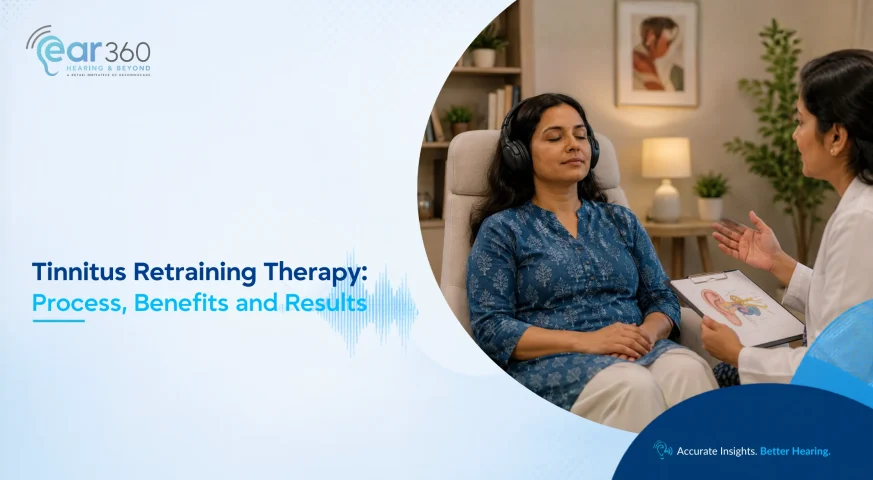
Tinnitus Retraining Therapy: Process, Benefits and Results
TL;DR: This blog is intended for people experiencing persistent tinnitus, especially those whose ringing, buzzing, humming, or hissing affects sleep, concentration, work, conversations, or emotional wellbeing. Tinnitus retraining therapy combines counselling and sound enrichment: Counselling helps patients understand and change their response to tinnitus, while gentle background sound reduces the contrast between tinnitus and quiet surroundings. The goal is habituation, not an instant cure: The therapy aims to help the brain treat tinnitus as an unimportant background signal so that it attracts less attention and causes less distress over time. Treatment should be personalised after a proper assessment: An audiologist may review hearing, sleep, stress, medical history, noise exposure, and tinnitus symptoms before recommending environmental sounds, hearing aids, wearable sound generators, counselling, or another treatment approach. Results are gradual and vary between individuals: Possible benefits include reduced tinnitus awareness, improved sleep, better concentration, and a calmer emotional response. Sudden hearing loss, one-sided or pulsatile tinnitus, severe vertigo, facial weakness, or neurological symptoms require prompt medical assessment. The room is quiet, yet there is still a sound. It may be a ring, buzz, whistle, hum, or hiss. At first, you may notice it only at bedtime. Later, it can begin to interrupt work, conversations, or moments that used to feel restful. Tinnitus retraining therapy is designed for people whose tinnitus has become difficult to ignore. It does not promise to switch the sound off. Instead, it aims to reduce the attention and emotional importance given to it, making everyday life easier to manage. What Is Tinnitus Retraining Therapy? Tinnitus retraining therapy combines counselling with planned sound enrichment. It is based on habituation, the brain’s ability to stop paying close attention to a familiar signal that carries no useful meaning. Think about a ceiling fan. You hear it when you enter a room, then stop noticing it. Tinnitus is harder to disregard when it becomes linked with fear, frustration, poor sleep, or repeated checking. Counselling helps you understand this cycle. Sound therapy reduces the contrast between tinnitus and a quiet environment. The National Institute on Deafness and Other Communication Disorders describes the same two-part approach: counselling to change the response to tinnitus and low-level sound to support habituation. Why Can Tinnitus Become So Noticeable? Tinnitus is the perception of sound without an outside sound source. It may be heard in one ear, both ears, or inside the head. People describe ringing, clicking, buzzing, roaring, and hissing. Its loudness does not always explain how distressing it feels. One person may continue normally. Another may listen for every change, worry about what it means, and find silence uncomfortable. That response can become a loop. Worry directs attention towards the sound. Greater attention makes it seem more dominant. Poor sleep then makes coping harder the next day. Tinnitus can occur alongside hearing loss, noise exposure, earwax, some ear conditions, certain medicines, or head and neck problems. Sometimes no single cause is found, which is why assessment should come before treatment. How Does Tinnitus Retraining Therapy Work? The process usually begins with a detailed conversation, not with a sound device. Your audiologist will ask when the tinnitus started, whether it is constant, which ear is affected, and what changes it. Hearing difficulties, sleep, stress, noise exposure, dizziness, medicines, and medical history may also be discussed. An ear examination and hearing tests may follow. These can include pure tone audiometry, speech testing, or middle-ear assessment. Resonnocare’s hearing care for all ages begins with understanding your hearing before recommending the next step. Counselling then addresses what keeps tinnitus in the foreground. One person may need reassurance about test results. Another may need guidance on safe listening after avoiding normal sounds. Someone else may need help separating tinnitus from bedtime anxiety. The sound plan is equally individual. It may use environmental sound, a bedside source, hearing aids, or wearable sound generators. The sound is usually gentle and comfortable rather than loud enough to cover tinnitus completely. What Does Sound Therapy Actually Do? Imagine a candle in a dark room. It immediately catches your eye. In daylight, the same candle is less noticeable. Sound enrichment works in a similar way: it changes the background against which tinnitus is heard. For some people, a fan or soft natural sound is enough at night. Others need a structured plan. When hearing loss is present, professionally fitted hearing aids can make speech and environmental sounds easier to hear. Hearing aids and sound generators may reduce tinnitus severity for some people, although no device option is clearly best for everyone. Sound should not be uncomfortable. Settings copied from an application or online video may not suit your hearing or sound tolerance. Who May Benefit From Tinnitus Retraining Therapy? The approach may be considered when tinnitus affects sleep, concentration, work, or emotional wellbeing. It may also be discussed when tinnitus occurs with hearing loss or reduced tolerance to everyday sound. Not everyone needs a full programme. Some people improve after an assessment, a clear explanation, and practical changes. Others may benefit more from cognitive behavioural therapy, sleep support, treatment of an ear problem, hearing rehabilitation, or combined care. A good clinician will not place every patient on the same pathway. The useful question is not only whether tinnitus is present, but what is keeping it important in your daily life. What Benefits and Results Can You Expect? Progress is often noticed in ordinary moments. You may finish a meeting without checking the sound. You may fall asleep without waiting for it to become louder. A quiet journey may stop feeling uncomfortable. Possible benefits include less awareness of tinnitus, a calmer response, better concentration, improved sleep, and less interference with work or family life. The sound may remain, but it no longer carries the same weight. This is why tinnitus retraining therapy should be described as a management approach rather than a cure. A large randomised trial found improvement with full TRT, partial TRT, and standard tinnitus care, without showing that the full protocol was
Read More