Category: Uncategorized

Top Hearing Aid Clinics in Pune
July 19, 2026 Comments (0)

Top Hearing Aid Clinics in Pune

TL; DR: This blog targets patients, families, senior citizens, and caregivers in Pune who are looking for trusted hearing aid clinics, audiologist consultations, hearing tests, hearing aid trials, home visits, video consultations, and aftercare support. The blog explains that choosing the top hearing aid clinics in Pune should not be limited to buying a hearing aid but should also include a proper hearing evaluation, clinical guidance, personalized device selection, fitting support, and follow-up care. It highlights the early signs of hearing loss, such as asking people to repeat themselves, increasing TV or phone volume, difficulty hearing in noise, ringing or buzzing in the ear, missing alarms or doorbells, and avoiding social interactions. The blog outlines Resonnocare’s hearing care process, including case history, ear and symptom review, hearing tests, counseling, hearing aid selection, free hearing aid trials, home visits, video consultations, and aftercare support. It positions Resonnocare as a reliable hearing care provider in Pune by emphasizing qualified audiologists, accurate hearing assessments, personalized care plans, trial options, long-term aftercare, and support for patients across different age groups. When you’re looking for the best hearing aid clinics in Pune, it may all start with a question: How well are you able to hear? You might find yourself struggling to get the gist of conversations; phone calls may grow louder and longer; the volume of the TV keeps climbing; or an older family member might quietly fade away from the current conversations. Initially, it is a slow-onset hearing loss, but not the only thing that is affected. Can affect communication, confidence, relationships, independence, and quality of life. Therefore, it is critical to choose the right hearing care aid. The proper evaluation, counseling, fitting, and follow-up services should be offered at clinics that provide hearing aids. We ensure our patients and families are supported throughout the hearing care journey at Resonnocare, Pune’s best hearing doctors. Here are some tips on when to visit an audiologist, how hearing loss is identified, what to expect during hearing aid maintenance, and what Resonnocare can do to help you make a confident choice for your hearing solution. What Makes Resonnocare One of the Top Hearing Aid Clinics in Pune? Don’t expect to see a hearing aid from a good hearing clinic first. It should start with listening to you. The first step to getting your care at Resonnocare is to gain an understanding of your hearing needs, how they affect you, your medical history, your lifestyle, your comfort needs, and your expectations. This helps us recommend a hearing solution for you rather than one for everyone. Most individuals who look for the best hearing aid clinics in Pune seek guidance and a solution, along with reliable clinical support. A one-in-a-million hearing aid does not exist. The choice of device depends on the type and severity of your hearing loss, your ability to understand speech, ear comfort, your age, your lifestyle, your dexterity, and your budget. Resonnocare is not just about buying a hearing aid; it’s about comprehensive hearing care. We can conduct hearing tests, provide hearing aid consultations, help guide you in choosing a hearing aid, fit it for you, assist you in trying it out, offer home visit services, provide video hearing aid consultations, and offer post-fitting support as required. For people from childhood to adulthood, and for older family members, our team makes it easy to understand the condition and take the next step with confidence. What Are the Early Signs That You May Need a Hearing Test? Some types of hearing loss develop slowly. Many people don’t realize it right away as they slowly change their habits. Signs might first be recognized by family members. If you or a loved one has one of the following changes, you should have a hearing test: Repeating things to people a lot Increasing the volume of the TV or phone more than usual Difficulty following conversations in crowds or noisy settings Feeling that others are mumbling or not speaking clearly Hearing difficulties with phones. Failure to hear doorbells, alarms, or soft sounds Delaying social interactions because of hearing loss Ringing, buzzing, or other sounds in the ear Struggle to hear what people say, despite hearing loud noises Any of these symptoms should not be ignored, particularly if they persist for longer than a few days or affect the ability to communicate on a daily basis. A hearing test will help determine whether it is temporary or age-related, noise-related, or related to another ear problem. How Do the Top Hearing Aid Clinics in Pune Assess Hearing Loss? The Top Hearing Aid Clinics in Pune should begin with a detailed hearing assessment before recommending any device. At Resonnocare, our audiology team first understands your symptoms, medical history, communication challenges, and lifestyle needs. A typical hearing evaluation may include: Case History Our team asks about when the hearing difficulty started, whether one or both ears are affected, exposure to loud noise, ear infections, family history, medication use, and related symptoms such as tinnitus, dizziness, or ear fullness. Ear and Symptom Review Some hearing problems may be linked to earwax, infection, ear discharge, injury, or middle ear conditions. If there are red-flag symptoms, a medical evaluation may be recommended before hearing aid fitting. Hearing Tests Hearing tests help measure the type and level of hearing loss. These tests guide the audiologist in deciding whether a hearing aid may help and what type of amplification is suitable. Counseling and Care Planning Once results are available, our team explains them in simple language. You are guided on whether monitoring, medical referral, hearing aids, assistive care, or follow-up support may be needed. This step is important because choosing a hearing aid without testing can lead to poor sound clarity, discomfort, incorrect amplification, or low device usage. What Services Should the Top Hearing Aid Clinics in Pune Offer? The Top Hearing Aid Clinics in Pune should provide complete support across assessment, device selection, fitting, and aftercare. Hearing care does not end when the hearing aid

Read More
Age-Related-Hearing-Loss-Signs-Causes-and-Best-Treatment-Options-1
July 19, 2026 Comments (0)

Age-Related Hearing Loss: Signs, Causes, and Best Treatment Options

TL; DR: This blog is written for senior citizens, their family members, and caregivers who are noticing gradual hearing difficulty, repeated requests to increase volume, or trouble following conversations. Age-related hearing loss, also called presbycusis, usually develops slowly and affects both ears, which is why many people ignore it in the early stage. Common signs include difficulty hearing speech in groups, asking people to repeat themselves, increasing the volume on the phone or TV, feeling that others are mumbling, and sometimes ringing or buzzing in the ears. Diagnosis requires a proper hearing assessment by an audiologist, including otoscopy, pure-tone audiometry, speech audiometry, and tympanometry to understand the type and severity of hearing loss. Although age-related inner ear damage cannot be reversed, hearing aids, communication guidance, auditory rehabilitation, home visits, online consultations, and regular aftercare can significantly improve daily communication and quality of life. Presbycusis can begin gradually. The parent may request the television to be turned up. Grandparents are not required to attend group conversations. A senior might be able to hear a person talking, but it may be difficult to hear what the person is saying. These minor adjustments can begin to affect confidence, family communication, and comfort over time. Medical professionals refer to this as “presbycusis” (age-related hearing loss). It typically develops slowly over time as the person ages and is often bilateral (both sides). This change is gradual, and many seniors and families think that it is a normal part of aging and put off seeking help. What is important to know is that age-related hearing loss can be evaluated and managed. Many seniors can communicate more effectively and remain more connected with family and those around them with a proper hearing test, guidance from an audiologist, and appropriate hearing support, if necessary. Our audiology team at Resonnocare provides regular services to older adults with hearing concerns, including advice on hearing aids, follow-up services, and family counseling. This guide discusses the causes of age-related hearing loss, how it can be diagnosed, and what can realistically be done to improve hearing and quality of life. What Is Age-Related Hearing Loss? Age-related hearing loss is the natural decline in hearing that occurs over time. It usually affects both ears and evolves gradually over many years, which is why it can go unnoticed or ignored in its early stages. Age-related hearing loss typically affects high-frequency sounds first. As a result, speech may become difficult to understand, especially when background noise is present, or the speaker has a higher-pitched voice, or if the speaker’s voice is distorted by background noise. Low-pitched sounds, such as a truck on the street, can still be heard quite well, and this can give a false sense of good hearing. Presbycusis is a form of sensorineural hearing loss caused by age-related damage to the sensory hair cells of the inner ear, which gradually lose their ability to convert sound into electrical signals. Sensorineural hearing loss (damage) is not reversible, whereas conductive hearing loss is hearing loss due to blockage or mechanical issues in the outer or middle ear. However, with proper management, its impact on communication and quality of life can often be significantly reduced. What Causes Age-Related Hearing Loss? Age-related hearing loss results from gradual changes in the structures of the inner ear over a person’s lifetime. If the hair cells in the cochlea that enable hearing are damaged, they cannot be repaired. As usual, these cells tend to decrease in number and activity as we grow older. But it is not usually the only factor involved in aging. There are a number of conditions and exposures that can accelerate or worsen hearing loss in older adults. The inner ear deteriorates much faster when an individual is exposed to loud noise over a long period, such as years spent working in a factory or on a construction site, or listening to loud music at concerts or through headphones. The cochlea depends on a healthy blood supply. Cardiovascular disease and poor circulation may reduce blood flow and impair its function. Damage to blood vessels and nerves throughout the body is another risk of diabetes and can result in hearing loss. Certain medications can be ototoxic (toxic to hearing), and are administered over long periods of time, such as some diuretics, chemotherapy, or aspirin in high doses. Other factors are smoking, hypertension, and hearing loss in family members. Knowing about them is important because, if you manage underlying health problems, you could slow the progression of age-related hearing loss, though it cannot be reversed. What Are the Early Signs of Age-Related Hearing Loss? Age-related hearing loss usually develops gradually, which is why many people do not notice it right away. In fact, family members often spot the signs before the individual does. What may seem like a minor hearing difficulty can slowly start affecting conversations, social interactions, and overall quality of life. Some common early signs of age-related hearing loss include: Frequently asking people to repeat themselves Finding it difficult to follow conversations in groups Feeling that others are mumbling or not speaking clearly Turning up the TV, radio, or mobile phone volume more than before Struggling to hear conversations on the phone Missing parts of conversations, especially in noisy environments Finding restaurants, weddings, or family gatherings is more tiring because of the effort required to listen Responding incorrectly because certain words or phrases were not heard clearly Avoiding social situations due to difficulty hearing conversations Experiencing ringing, buzzing, hissing, or whistling sounds in the ears (tinnitus) Many people with age-related hearing loss say, “I can hear people talking, but I can’t always understand what they are saying.” This happens because hearing loss often affects speech clarity before it affects overall loudness. If any of these signs are familiar to you or someone in your family, a formal hearing assessment is the right next step. You can also review related ear symptoms and conditions to understand what else may be contributing to the changes you are

Read More
Hearing-Aid-Price-in-India-Complete-Cost-Guide-by-Type-Features
July 19, 2026 Comments (0)

Hearing Aid Price in India: Complete Cost Guide by Type and Features

TL: DR; The blog is intended for people in India who have been diagnosed with hearing loss, their family members or caregivers, and anyone comparing hearing-aid types, prices, features, and clinical support before purchasing a device. Hearing-aid prices vary significantly: A hearing aid in India may cost from approximately ₹20,000 to over ₹4,00,000 per device, depending on its style, technology level, brand, features, customization, and included audiology services. The right type depends on individual needs: BTE, RIC/RITE, ITE, ITC/CIC, and IIC hearing aids differ in visibility, comfort, suitability for different levels of hearing loss, and price. The most discreet or advanced option is not automatically the most appropriate one. Technology and features influence both cost and performance: Advanced noise reduction, directional microphones, Bluetooth connectivity, rechargeable batteries, tinnitus management, automatic environment detection, and custom molding generally increase the price but may improve everyday hearing. Overall value includes professional care: Buyers should consider whether the quoted price covers hearing assessments, fitting, programming, follow-up adjustments, warranty, maintenance guidance, and ongoing aftercare. A free real-world trial can also help patients choose the right device before making a purchase. After being diagnosed with hearing loss, one question often comes before everything else: How much does a hearing aid cost? It is a simple question, but the answer is not always straightforward. Hearing aid prices in India can range from under ₹20,000 to more than ₹4,00,000 per device. The cost depends on several factors, including the hearing aid style, technology level, listening features, degree of hearing loss, and the professional care included with the fitting. The price may also depend on whether the device includes rechargeable technology, smartphone connectivity, accessories, custom earmoulds, an extended warranty, fitting verification, and long-term follow-up support. Without a clear understanding of these differences, it can be difficult to know whether you are paying for features that will genuinely improve your hearing or for technology you may not need. At Resonnocare, we believe hearing aid pricing should be transparent and easy to understand. Our audiologists explain the available options, costs, and clinical recommendations without pressure, helping you make an informed decision that suits both your hearing needs and budget. This guide breaks down hearing aid prices in India by device type, technology level, and the features that can make a meaningful difference in your everyday life. This article provides general educational information. Hearing aid selection should follow an appropriate hearing assessment and should not replace medical evaluation when sudden hearing loss, severe dizziness, ear discharge, bleeding, or significant ear pain is present. What Is a Hearing Aid? A hearing aid is a small electronic device worn in or behind the ear to make speech and other useful sounds more accessible to a person with hearing loss. It usually contains a microphone, digital processor, amplifier, receiver, and a rechargeable or disposable power source. Hearing aids can be programmed according to an individual’s hearing-test results. Depending on the model, they may also include directional microphones, background-noise management, Bluetooth connectivity, automatic listening programs, remote support, and tinnitus-support features. Hearing aids do not restore natural hearing or remove every listening difficulty. Their effectiveness depends on the type and degree of hearing loss, speech-understanding ability, device selection, fitting quality, regular use, and follow-up care. Who Should Consider a Hearing Aid Evaluation? Consider scheduling a hearing assessment if you or a family member: Frequently asks people to repeat themselves Finds speech unclear or muffled Struggles to understand conversations in background noise Increases the television, radio, or mobile-phone volume Has difficulty understanding telephone conversations Misses alarms, doorbells, announcements, or higher-pitched voices Feels that one ear hears better than the other Experiences persistent tinnitus Feels tired after listening for extended periods Avoids conversations or social activities because hearing feels difficult Has already been advised by an audiologist or ENT specialist to consider amplification Uses hearing aids but receives limited benefit Needs a hearing aid trial, fitting, replacement, repair, or programming adjustment Children require age-appropriate testing and pediatric hearing aid fitting. Adults with sudden, rapidly worsening, or one-sided hearing loss should receive urgent ENT evaluation before purchasing a hearing aid. Who Should Not Buy a Hearing Aid Without Professional Assessment? Do not select a hearing aid solely from an advertisement, online listing, product demonstration, or price comparison when: The hearing loss developed suddenly Only one ear appears affected There is ear pain, discharge, bleeding, or persistent blockage The patient experiences severe dizziness or imbalance The patient is a child Hearing loss may be severe or profound Speech understanding is unusually poor There is a history of ear surgery The patient has significant vision, dexterity, cognitive, or neurological concerns Previous hearing aids were uncomfortable or ineffective The cause, type, and degree of hearing loss have not been assessed These situations may require an ENT consultation, complete audiological assessment, or a different hearing solution. Purchasing a device without assessment may also delay the diagnosis of a treatable ear condition. Why Do Hearing Aid Prices Vary So Much in India? It is important to understand what you are purchasing before considering specific prices when buying a hearing aid. A hearing aid is not a simple amplifier. New devices are advanced medical instruments equipped with microprocessors, directional microphones, wireless communication, noise-management algorithms, and sometimes rechargeable batteries. They are designed to amplify different frequencies by different amounts according to the patient’s hearing-loss pattern rather than increasing every sound equally. The more advanced the processing, the more effectively the device may manage changing listening environments, such as noisy restaurants, busy classrooms, and open-plan offices. However, even premium hearing aids cannot eliminate every background sound or guarantee perfect speech understanding in noise. The hearing aid cost in India is also dependent on: The technology level, such as Basic, Essential, Advanced, or Premium The hearing aid style, including Behind-the-Ear, Receiver-in-Canal, In-the-Ear, In-the-Canal, Completely-in-Canal, or Invisible-in-Canal The brand and country of manufacture Whether the hearing assessment, fitting, follow-up appointments, and aftercare are included in the price The warranty period and what it covers Whether the hearing aid is rechargeable

Read More
OAE-Hearing-Test-Meaning-Procedure-Results-Who-Needs-It
July 19, 2026 Comments (0)

OAE Hearing Test: Meaning, Procedure, Results & Who Needs It

TL;DR This blog is designed for parents of newborns and young children with hearing concerns, adults experiencing sudden or unexplained hearing changes, people exposed to loud noise, and anyone advised by a doctor or audiologist to undergo an OAE hearing test. What an OAE hearing test is: An OAE (Otoacoustic Emissions) hearing test checks how well the tiny outer hair cells inside the inner ear respond to sound. It’s a quick, painless, and non-invasive screening test commonly used for early hearing detection. Who may need the test: OAE testing is especially useful for newborns, children with speech delays or recurrent ear infections, adults with sudden hearing loss or tinnitus, and individuals exposed to loud noise or unable to complete traditional hearing tests. How the procedure works and what the results mean: During the test, a small, soft probe is placed in the ear to deliver sounds and record inner-ear responses. Results are usually marked as “pass” or “refer,” and a “refer” result does not always mean permanent hearing loss; further evaluation may simply be needed. How Resonnocare supports hearing care: The blog highlights Resonnocare’s patient-focused hearing services, including expert audiologists, calibrated diagnostic equipment, personalized treatment plans, hearing aid support, home visits, video consultations, and long-term aftercare for patients of all ages. A normal OAE result is reassuring but does not rule out every hearing condition. Similarly, a “refer” result is not a final diagnosis and should be followed by the testing recommended by an audiologist. Hearing is one of our most important senses, and early detection can make a meaningful difference. One of the most effective screening tests for early hearing loss at Resonnocare is the OAE hearing test. It may be suggested by your pediatrician for your newborn or by your doctor as part of a more extensive hearing examination. This guide explains the OAE test, its procedure, results, uses, and limitations in simple, easy-to-understand terms. This article provides general educational information and should not replace an individual hearing assessment, medical diagnosis, or advice from an audiologist, pediatrician, or ENT specialist. What Is an OAE Hearing Test? OAE stands for Otoacoustic Emissions. There are thousands of small sensory cells in the inner ear known as outer hair cells. These cells help the cochlea respond to sound and produce a very soft sound of their own, similar to an echo. These sounds are called otoacoustic emissions. An OAE hearing test can be used to determine whether these outer hair cells are functioning as expected. If the outer hair cells are functioning, the testing equipment may record a measurable response. Damage, middle-ear interference, or hearing loss associated with outer hair-cell dysfunction may result in an absent or reduced response. This makes the OAE hearing test a useful, non-invasive first-line screening tool, particularly for newborns and young children who cannot yet respond reliably during a conventional hearing test. During the test, a small probe placed in the ear canal presents sounds and measures the faint echo generated by the inner ear. The procedure does not depend on a behavioural response, so a baby can be asleep during the screening. “OAE testing can identify whether the outer hair cells of the inner ear are responding to sound, making it a widely used first-line screening tool for newborns and young children who cannot actively participate in standard audiometry. A ‘refer’ result does not confirm permanent hearing loss. It means the ear requires further assessment.” Resonnocare – EAR360 Audiology Clinics What Does an OAE Test Measure? An OAE test measures sounds produced by the cochlea after it receives an auditory stimulus. These emissions are generated mainly through the activity of the outer hair cells in the inner ear. The test can provide information about: Whether measurable cochlear responses are present Whether outer hair-cell function appears to be working within the tested frequency region Whether further hearing assessment may be required Whether cochlear function has changed after noise exposure or potentially ototoxic treatment Whether an infant or difficult-to-test patient should be referred for diagnostic evaluation The test is objective because the patient does not have to indicate whether a sound was heard. However, the quality of the result can still be affected by movement, probe position, earwax, middle-ear fluid, and background noise. What an OAE Test Cannot Tell You An OAE test does not provide a complete diagnosis of hearing ability on its own. It does not directly measure how clearly a person understands speech or establish a complete behavioural audiogram. An OAE test may not independently determine: The exact degree of hearing loss How well speech is understood Whether the auditory nerve and brainstem are functioning normally Whether a person has an auditory processing disorder The exact cause of an absent response Whether a hearing aid is required How a person functions in everyday listening situations A patient can have present OAEs and still have a hearing disorder involving the auditory nerve or another part of the hearing pathway. This is why OAE results should be interpreted together with the medical history, ear examination, tympanometry, ABR or BERA, and behavioural hearing tests where appropriate. What Are the Types of OAE Tests Used in Clinical Practice? Two main types are used in clinical practice. Transient Evoked Otoacoustic Emissions Transient Evoked Otoacoustic Emissions, or TEOAEs, involve using short clicks or tone bursts to produce responses in the inner ear. This type is commonly used for screening across multiple frequencies in a short period and is often used in newborn hearing-screening programs. TEOAEs provide a broad assessment of cochlear outer hair-cell responses across a clinically useful frequency range. Distortion Product Otoacoustic Emissions During a Distortion Product Otoacoustic Emissions, or DPOAE, test, two tones are presented together and the inner ear produces a measurable distortion-product response. Specific frequency regions can be assessed using DPOAEs. They are often used with older children and adults, including in clinical monitoring and occupational hearing evaluations. DPOAEs may also be used to monitor cochlear function in people exposed to loud noise or medicines

Read More
Hearing-Aid-Price-What-Affects-the-Cost-of-Hearing-Aids
July 19, 2026 Comments (0)

Hearing Aid Price: What Affects the Cost of Hearing Aids?

TL; DR: The blog is intended for people experiencing hearing loss, older adults, caregivers, and family members researching hearing aid prices and suitable hearing solutions in India. Key factors affecting hearing aid prices: The cost depends on the device’s technology level, sound-processing capabilities, style, size, Bluetooth connectivity, smart features, battery type, brand, and country of origin. Higher price does not always mean better results: The most expensive hearing aid may not be the most suitable. The right device should be selected based on the type and severity of hearing loss, lifestyle, listening environment, and the audiologist’s assessment. The total cost includes professional care: Buyers should consider expenses beyond the device, including hearing tests, fitting and programming, follow-up adjustments, maintenance, repairs, batteries, and accessories. Trials and personalized guidance support better decisions: Resonnocare offers hearing aid trials, consultations, home visits, video consultations, and aftercare to help patients select a device that matches their hearing needs and budget. As a broad 2026 guide, professionally fitted hearing aids in India may range from around ₹20,000 to more than ₹4,00,000 per device. Some basic products may be advertised below this range, but the price, fitting services, warranty, and clinical suitability must be checked carefully. The best-value hearing aid is not necessarily the cheapest device. It is the one that provides the required features, is properly programmed for your hearing loss, feels comfortable, and includes dependable professional support. Being advised to use a hearing aid can bring both relief and uncertainty. You may finally have an explanation for the hearing difficulties you have been experiencing, but a new question often comes up immediately: How much does a hearing aid cost? Hearing aid prices in India can range from a few thousand rupees to several lakhs. This wide difference can feel confusing, especially when many devices appear similar at first glance. The price may vary depending on the type of hearing aid, technology level, listening features, severity of hearing loss, and the professional care included with the device. Prices are commonly quoted per device rather than per pair. A person who requires hearing aids in both ears should therefore confirm whether the quotation covers one hearing aid or two. The right hearing aid is not simply the cheapest or the most expensive option. It is the one that supports your hearing needs, feels comfortable, works well in your daily surroundings, and fits within your budget. At Resonnocare, our audiologists explain each option in clear and simple terms. We help you understand your hearing test results, compare suitable hearing aids, and identify the features that can genuinely improve your daily communication. This allows you and your family to make an informed decision with greater confidence and without unnecessary pressure. This article provides general educational information. Hearing aid selection should follow an appropriate hearing assessment and should not replace medical evaluation when symptoms such as sudden hearing loss, ear pain, discharge, bleeding, or severe dizziness are present. What Is a Hearing Aid? A hearing aid is a small electronic device worn in or behind the ear to make speech and other useful sounds more accessible to a person with hearing loss. It generally contains a microphone, digital processor, amplifier, receiver, and disposable or rechargeable power source. Modern hearing aids can be programmed according to an individual’s hearing-test results. Depending on the model, they may include directional microphones, background-noise management, Bluetooth connectivity, rechargeable batteries, smartphone controls, remote support, and tinnitus-support features. Hearing aids do not restore natural hearing and cannot remove every listening difficulty. Their purpose is to support access to speech and environmental sounds. The result depends on the type and degree of hearing loss, speech-understanding ability, device selection, fitting quality, consistent use, and follow-up care. Who Should Consider a Hearing Aid Evaluation? Consider scheduling a hearing assessment if you or a family member: Frequently asks people to repeat themselves Finds that people appear to mumble Struggles to understand speech in restaurants, meetings, or family gatherings Increases the television, radio, or mobile-phone volume Has difficulty understanding telephone conversations Misses doorbells, alarms, announcements, or higher-pitched voices Feels that one ear hears better than the other Experiences persistent tinnitus Feels tired after listening for long periods Avoids conversations because hearing feels difficult Has already been advised by an audiologist or ENT to consider amplification Uses hearing aids but is receiving limited benefit Needs a hearing aid trial, replacement, repair, or programming adjustment Children should receive age-appropriate assessment and pediatric hearing aid fitting. Adults with sudden, rapidly worsening, or one-sided hearing loss should seek urgent ENT evaluation rather than purchasing a hearing aid without medical guidance. Who Should Not Choose a Hearing Aid Without an Assessment? Do not select a hearing aid solely from an online listing, advertisement, or product demonstration when: Hearing loss developed suddenly Only one ear appears affected There is ear pain, discharge, bleeding, or persistent blockage The patient experiences severe dizziness or imbalance The patient is a child Hearing loss may be severe or profound Speech understanding is unusually poor The patient has a history of ear surgery There are significant vision, dexterity, cognitive, or neurological concerns Previous hearing aids were uncomfortable or ineffective The cause and degree of hearing loss have not been identified These situations may require a complete audiological assessment, ENT consultation, or a different hearing solution. A hearing aid should not be used to delay assessment of a potentially treatable or urgent ear condition. What Actually Determines Hearing Aid Price? The cost of a hearing aid is not arbitrary. Several factors come together to determine where a particular device sits on the price spectrum. 1. Technology Level and Processing Power Today’s hearing aids are complex medical devices. At the most basic level, they amplify and process sound. However, state-of-the-art hearing aids are far more than that. Some advanced devices use automatic environmental classification and machine-learning-based processing to analyze the listening environment, identify speech and background noise, and adjust settings. Such processing power requires extensive research and engineering, which is reflected in the price.

Read More
BERA-Test-Price-in-India-Cost-Procedure-Where-to-Get-Tested-2
July 19, 2026 Comments (0)

BERA Test Price in India: Cost, Procedure & Where to Get Tested

TL: DR; This blog targets parents of newborns/children with hearing or speech concerns, adults experiencing hearing changes, and anyone advised by an ENT specialist, pediatrician, or audiologist to get a BERA test. Explains the BERA test clearly: It defines BERA as a non-invasive hearing test that assesses how the auditory nerve and brainstem respond to sound, and is especially useful for infants, young children, and patients who cannot actively respond. Breaks down BERA test pricing in India: The blog explains that costs vary by city, clinic, hospital, equipment, and included services, and also compares related hearing tests such as Pure Tone Audiometry and Impedance Audiometry. Highlights factors affecting cost: It covers key price influencers such as location, government vs. private facilities, bilateral testing, sedation needs, and whether consultation, interpretation, and written reports are included. Positions Resonnocare as a trusted option: The blog emphasizes Resonnocare’s qualified audiologists, calibrated equipment, clear reporting, personalized guidance, home visits, video consultations, hearing aid support, and aftercare. The lowest BERA test cost may not provide the best value. Accurate testing conditions, qualified interpretation, and a clear plan for the next step are as important as the quoted fee. Whether it is a baby who did not pass the newborn hearing screening, a child who has delayed speech development, or an adult experiencing a gradual change in hearing, hearing concerns can be stressful. If your doctor advises you to have a BERA test, you are probably wondering where you can have it performed, what happens during the procedure, and how much it will cost. However, the BERA test price in India is not limited to the fee. It is also about the accuracy of the test, the skill level of the audiologist, the testing environment, the quality of the equipment, and the clarity of the direction you receive following the test. We are committed to transparent, reliable, and clinically guided hearing care at Resonnocare. This guide explains the BERA test price in India, the factors that influence its cost, how the procedure is performed, who may need it, and how to choose the right testing facility. This article provides general educational information and should not replace an individual assessment, medical diagnosis, or advice from an ENT specialist, pediatrician, neurologist, or audiologist. What Does BERA Stand For? BERA stands for Brainstem Evoked Response Audiometry. It is also commonly called an Auditory Brainstem Response or ABR test. Both terms generally refer to objective testing that records how the auditory nerve and brainstem pathways respond when sound is presented. Because the response is measured through electrodes, the patient does not need to identify the sound, raise a hand, press a button, or provide a spoken response. What Is a BERA Test? BERA is an acronym for Brainstem Evoked Response Audiometry. It is a specialized, non-invasive hearing test that assesses how the auditory nerve and brainstem respond to sound. When clicks or tones are played through earphones, tiny electrodes on the scalp detect the electrical activity generated along the auditory pathway. The test requires no active response or cooperation from the patient and is one of the most reliable tests for evaluating hearing in infants and young children who cannot be tested by standard audiometry, as well as in adults who are unable to respond or actively cooperate. During an ABR or BERA test, electrodes placed on the head and near the ears record electrical nerve activity in response to sounds delivered through earphones. The test is useful for infants and other patients who cannot reliably complete a behavioral hearing test. The BERA test is routinely performed to help detect hearing loss in newborns, investigate possible auditory nerve disorders when hearing loss remains unexplained, and assess hearing pathways before or after certain medical procedures. It provides ENT specialists and audiologists with an objective, quantifiable view of how sound-related signals travel from the ear through the auditory nerve and brainstem. Depending on the purpose of the test, BERA may help estimate hearing sensitivity, compare responses between the two ears, or examine whether the timing and pattern of the recorded waves suggest an auditory-pathway concern. “BERA is a non-invasive hearing test that measures how the auditory nerve and brainstem respond to sound, making it especially useful for infants, young children, and patients who cannot actively participate in standard hearing tests. The test uses electrodes to objectively record electrical activity along the auditory pathway, helping audiologists and ENT specialists investigate hearing loss and possible auditory nerve or brainstem pathway concerns.” Resonnocare – EAR360 Audiology Clinics What Can and Cannot Be Diagnosed With a BERA Test? A BERA test can provide objective information about hearing sensitivity and the functioning of the auditory nerve and brainstem pathways. It may help identify or investigate: Possible hearing loss in newborns and infants Hearing levels in patients who cannot complete behavioural testing Differences in hearing between the two ears Possible auditory neuropathy Unexplained or one-sided hearing loss Possible auditory nerve or brainstem pathway abnormalities Hearing function when behavioural results are unreliable Changes that require further ENT or neurological investigation However, BERA does not replace every other hearing test. It may not independently provide all the information needed about middle-ear function, everyday speech understanding, auditory processing, or the exact cause of a hearing problem. The audiologist may therefore recommend BERA as part of a broader test battery that includes OAE, tympanometry, pure-tone audiometry, speech audiometry, ASSR, imaging, or an ENT assessment. What Is the BERA Test Price in India? The BERA test price in India varies by city, clinic, hospital, equipment used, the type and purpose of the test, whether one or both ears are assessed, and the services included. As an indicative 2026 range, routine click-evoked or screening BERA may cost approximately ₹1,000 to ₹6,000. More detailed diagnostic or pediatric testing may range from approximately ₹2,500 to ₹12,000. A sedated BERA may cost approximately ₹5,000 to ₹15,000 because it can involve additional medical supervision, monitoring, and facility charges. These are broad market estimates rather than fixed prices. Published

Read More
Hearing-Aids-Near-Me-How-to-Choose-the-Right-Hearing-Aid-Center
July 19, 2026 Comments (0)

Hearing Aids Near Me: How to Choose the Right Hearing Aid Center

TL: DR; Find more than nearby options: Choose a hearing aid center based on care quality, not just location. Proper testing comes first: Hearing aids work best after a complete hearing assessment by an RCI-certified audiologist. Expert fitting matters: A RCI-certified audiologist helps select, fit, and fine-tune the right device. Ask before you buy: Check trial options, brands, pricing, warranty, repairs, and follow-up support. Aftercare is important: Regular adjustments and support help you get better long-term results. Visit Ear360 clinics: Get expert testing, hearing aid trials, personalized recommendations, and reliable aftercare at a center near you. What Are Hearing Aids? Hearing aids are electronic devices worn inside or behind the ear to make speech and other useful sounds more accessible to a person with hearing loss. They generally contain a microphone, sound processor, amplifier, receiver, and battery or rechargeable power source. Modern hearing aids can be programmed according to an individual’s hearing test results. Depending on the model, they may also include directional microphones, background-noise management, rechargeable batteries, Bluetooth connectivity, smartphone controls, and tinnitus-support features. Hearing aids do not restore natural hearing or remove every communication difficulty. Their purpose is to support access to speech and environmental sounds for suitable users. The benefit depends on the type and degree of hearing loss, speech-understanding ability, fitting quality, consistent use, and follow-up care. Selecting a hearing aid center is not the same as selecting a place to purchase a regular hearing aid. The search results can include independent audiology clinics, hospital audiology departments, online audiology providers, and retail stores, each offering varying levels of testing, fitting, aftercare, and support. It may be hard to determine which one will actually benefit your hearing in the long run without the proper guidance. Use of a hearing aid is best when the device is chosen to address your hearing test results, properly fitted, comfortable, and accompanied by ongoing care. A suitable hearing aid should also be programmed according to the patient’s speech-understanding ability, daily listening situations, and communication priorities. This is why it is essential for you to find the best center for your device as well. At Resonnocare, we guide patients through well-informed choices, accurate hearing assessments, and personalized hearing aid recommendations while providing continuous care. Here in this guide, you will get to know what you need to consider when picking a hearing aid center near you, so that you can proceed with clarity and assurance. This article is intended for general education and should not replace an individual hearing assessment, medical diagnosis, or ENT consultation. Who Should Visit a Hearing Aid Center? Consider scheduling a professional hearing assessment if you or a family member: Frequently asks people to repeat themselves Feels that people are mumbling Finds it difficult to understand speech in restaurants, meetings, markets, or family gatherings Increases the television, radio, or mobile-phone volume Has difficulty understanding telephone conversations Misses alarms, doorbells, announcements, or higher-pitched voices Feels that one ear hears better than the other Experiences persistent tinnitus Feels tired after listening for long periods Avoids conversations or social activities because hearing feels difficult Has undergone a hearing test and has been advised to consider amplification Already uses hearing aids but finds the sound weak, unclear, distorted, or uncomfortable Needs a hearing aid trial, fitting, adjustment, repair, or replacement Has been referred by an ENT, physician, pediatrician, neurologist, or another healthcare professional Children should receive age-appropriate hearing assessment and pediatric hearing aid fitting. Adults with sudden, rapidly worsening, one-sided, or medically concerning hearing changes should seek urgent ENT evaluation rather than proceeding directly with a routine hearing aid purchase. Why the Right Hearing Aid Center Matters More Than the Device Itself The hearing aid device is the most important component of improved hearing, many people believe. However, the reality is that the best hearing aid won’t function properly if it isn’t fitted correctly. The right hearing aid, properly fitted by a qualified audiologist, can deliver better results than an expensive, ill-fitted hearing aid. The hearing aid should be customized to your audiogram, your hearing loss, and the environments that you listen to every day. The recommendation should also consider your speech-understanding ability, ear anatomy, physical comfort, manual dexterity, technology requirements, and budget. Regular follow-up visits are also important to fine-tune the settings over time. The first settings may need to be adjusted after you have used the device at home, at work, during telephone calls, and in noisy environments. People will search for “hearing aids near me” and consider factors such as cost, brand, and proximity to their homes. These are all helpful factors. The difference, however, lies in the quality of the hearing test, the audiologist’s skill, and the aftercare received. The closest or most advertised hearing aid center is not necessarily the best. Look for a center with a Rehabilitation Council of India-certified audiologist. Also, ask for their registered RCI or CRR number. Patients should verify that the registration is current rather than relying only on terms such as “hearing expert,” “hearing consultant,” or “certified specialist.” The quality of clinical care, the fit, and continued support are important factors in achieving improved hearing and communication. A premium hearing aid programmed using default settings may provide less benefit than a reasonably priced device that has been selected, verified, and fine-tuned according to the patient’s individual needs. Hearing Aid Center vs Hearing Aid Retail Store Hearing Aid Center With Clinical Services Sales-Focused Hearing Aid Store Begins with an appropriate hearing assessment Begins by discussing products, offers, or prices Assessment and fitting are handled by a qualified audiologist Testing may be handled mainly by sales staff Explains the type and degree of hearing loss Provides limited explanation of the hearing results Recommends devices according to clinical and practical requirements Pushes one brand, model, or price category Offers a hearing aid trial where available Pressures the patient to purchase immediately Provides fitting, verification, and counseling Relies mainly on basic or default settings Clearly explains warranty and repair procedures Provides unclear verbal promises

Read More
Hearing Loss Symptoms, Causes, Types & Treatment Options
July 19, 2026 Comments (0)

Hearing Loss: Symptoms, Causes, Types, and Treatment Options

TL: DR; This blog is intended for individuals experiencing possible hearing difficulties, their family members and caregivers, and anyone seeking clear information about hearing loss, testing, and treatment options. How Do We Hear? Think of your ear as a microphone connected to a computer. Sound enters the outer ear. The eardrum vibrates. Tiny bones in the middle ear amplify and transmit the vibrations. The cochlea in the inner ear converts the vibrations into electrical signals. The hearing nerve carries those signals towards the brain. The brain interprets the signals as speech, music, warnings, and other sounds. When any part of this process is affected, hearing may become difficult. Hearing is not controlled by the ear alone. The ear collects and converts sound, while the hearing nerve and brain help identify, organize, and understand it. This is why some people can detect that a sound is present but still struggle to understand speech clearly. Key Facts About Hearing Loss Hearing loss can affect infants, children, teenagers, adults, and older people. It may develop gradually or occur suddenly. It can affect one ear or both ears. A person may hear some sounds normally while missing others. Hearing loss can be temporary, permanent, stable, or progressive, depending on the cause. Not everyone with hearing loss requires the same treatment or hearing technology. A hearing screening can identify possible difficulty, but a complete audiological assessment is needed to understand the type and degree of hearing loss. Early evaluation can help identify treatable causes and reduce delays in receiving suitable support. More than 1.5 billion people globally live with some degree of hearing loss. The World Health Organization projects that nearly 2.5 billion people could have some degree of hearing loss by 2050, with more than 700 million requiring hearing rehabilitation. Despite how common it is, hearing loss often goes unrecognized. Many people gradually become accustomed to asking for repetition, increasing the volume, or avoiding difficult listening environments. Hearing loss does not always arrive with an obvious warning. It may begin with needing the television to be slightly louder, missing parts of conversations, or finding it harder to understand speech in restaurants and family gatherings. By the time the change becomes noticeable, it may have been developing for some time. This is a common occurrence at Resonnocare. Our clinical approach is based on a simple principle: hearing changes should be assessed early rather than ignored until communication becomes significantly difficult. The first step towards getting suitable help is understanding what hearing loss is, what may cause it, and which treatment or rehabilitation options may be appropriate. This article provides general educational information and does not replace an individual hearing assessment, medical diagnosis, or ENT consultation. Hearing Loss: Myth vs Fact Myth Fact “Hearing loss only affects old people.” Hearing loss can occur at any age, including at birth, during childhood, or after exposure to excessive noise. “If I can hear some sounds, I do not need a hearing test.” Many people can detect sounds but struggle to understand speech, especially in background noise. “Hearing aids make hearing worse.” Properly selected and programmed hearing aids do not make hearing loss worse. They amplify and process sound to support communication. “Only factory workers develop noise-related hearing loss.” Loud headphones, concerts, traffic, machinery, firecrackers, and other recreational or environmental sounds can also damage hearing. “Hearing loss is always permanent.” Some causes, such as earwax blockage or certain middle-ear problems, may be temporary or treatable. Other forms may be permanent but manageable. “One hearing aid works for everyone.” Hearing aids must be selected and programmed according to the person’s hearing results, communication needs, comfort, and lifestyle. “I should wait until my hearing becomes severe.” Early assessment may identify treatable conditions and make it easier to plan appropriate hearing support. What Is Hearing Loss? Hearing loss is a partial or complete reduction in the ability to hear in one or both ears. It can range from difficulty hearing soft sounds to difficulty detecting speech and important environmental sounds. It may be present at birth or develop later in life. Depending on the cause, hearing loss may remain stable, fluctuate, improve with treatment, or become progressively worse. Importantly, hearing loss is not only an inevitable part of aging. While age-related hearing changes are common, many causes of hearing loss may be preventable, treatable, or manageable with timely assessment and suitable care. Who Should Get a Hearing Test? Consider scheduling a professional hearing assessment if you or a family member: Frequently asks people to repeat themselves Finds that speech sounds unclear or muffled Struggles to follow conversations in noisy places Increases the television, radio, or phone volume Has difficulty hearing telephone conversations Misses doorbells, alarms, announcements, or high-pitched voices Feels that one ear hears better than the other Has persistent tinnitus Experiences listening fatigue after meetings or conversations Avoids social situations because hearing feels difficult Has a history of repeated ear infections Has regularly been exposed to loud occupational or recreational noise Uses medicines known to potentially affect hearing Already wears hearing aids but notices reduced benefit Has been advised to undergo testing by an ENT, pediatrician, neurologist, physician, or another healthcare professional Children may require hearing assessment when there are concerns about speech and language development, inconsistent responses to sound, delayed academic progress, or repeated ear infections. What Are the Early Signs of Hearing Loss? Early signs of hearing loss are often subtle and easy to overlook. Recognizing these warning signs can help ensure timely evaluation and appropriate support. The initial symptoms may include: Having to ask people to repeat themselves, particularly during conversation Trouble understanding speech when there is background noise, such as in a restaurant, family gathering, market, or meeting Listening to the television or radio at a volume that other people find uncomfortable Not hearing high-pitched sounds such as doorbells, birds, alarms, or children’s voices Feeling that people are mumbling even when they are speaking clearly Having difficulty understanding telephone conversations Experiencing a blocked sensation or pressure

Read More
Hearing Aid Center Near Me Checklist Before Booking an Appointment
July 19, 2026 Comments (0)

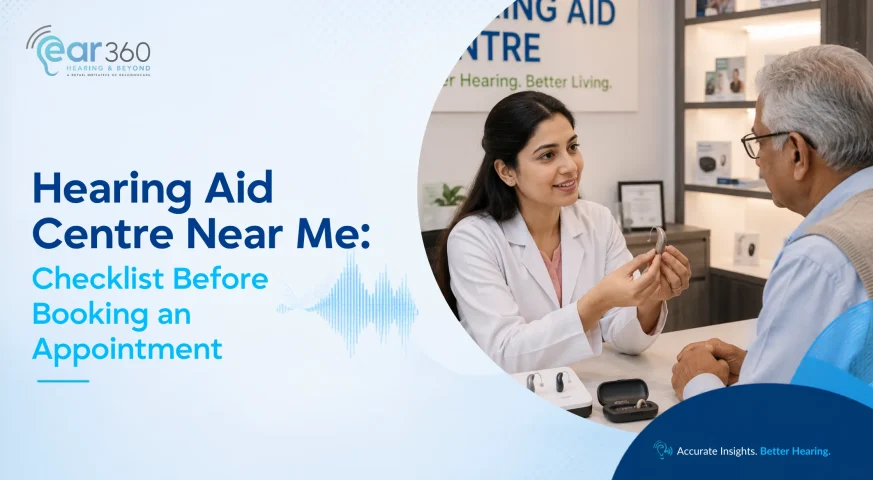
Hearing Aid Center Near Me: Checklist Before Booking an Appointment

TL: DR; This blog is written for people searching for a “hearing aid center near me,” especially patients, elderly individuals, caregivers, and families who want to choose a trustworthy hearing aid clinic before booking an appointment. Choose a center with qualified audiologists: “An Audiologist is a formally trained professional who specializes in the evaluation, diagnosis, and management of hearing and balance problems”.The blog advises the readers that Hearing aids are medical devices, so patients should ensure that their hearing tests, diagnoses, fittings, and follow-up care are handled by trained audiologists, not just sales staff or hearing aid dispensers. A proper hearing assessment is essential before buying a hearing aid: The blog advises readers that a reliable hearing aid center should conduct a complete Audiological evaluation, including tests such as pure-tone audiometry, speech audiometry, and tympanometry where needed, before recommending any device. Why Can’t I Just Buy a Hearing Aid Online: The blog suggests that not all hearing loss is the same. Two people may have hearing loss. One may struggle with soft sounds, and another may struggle only in noisy environments. Both require different hearing aid settings. A professionally fitted hearing aid is customized to your hearing test results, making it more comfortable and effective. Patients should check for trial options, transparent pricing, and device variety: The blog advises readers to look for centers that offer hearing aid trials, multiple brands and price ranges, clear cost breakdowns, warranties, and explanations for why a specific device suits their hearing needs. Aftercare and accessibility matter as much as the device itself: The blog highlights the importance of follow-up visits, device adjustments, servicing, cleaning, home visits, video consultations, and care for patients of all ages, positioning Resonnocare as a patient-focused hearing care provider. What Is a Hearing Aid Center? A hearing aid center is a clinic or hearing-care facility where hearing difficulties are assessed and suitable hearing solutions are recommended. A comprehensive center may provide hearing tests, audiologist consultations, hearing aid trials, device fitting, programming, counseling, repairs, and long-term aftercare. A hearing aid center should not function only as a retail shop. Its role is to understand the type and degree of hearing loss, identify situations that may require an ENT referral, and help the patient choose an appropriate next step. When looking for a “hearing aid center near me,” it can be easy to get confused about which center to select, since it is the first step towards improving your hearing. People may receive hearing care through hospital audiology departments, stand-alone audiology clinics, retail stores, or online providers, but the quality of care varies. Choosing the wrong center could lead to rushed consultations, incomplete hearing evaluations, unsuitable recommendations, and wasted money. In some centers, a hearing aid may be promoted before the patient’s hearing level and communication difficulties have been properly assessed. A quality hearing aid clinic begins with a comprehensive hearing test, asks about your lifestyle and communication needs, and presents you with a personalized care plan. It shouldn’t be only about a device being sold. This checklist will help you compare your options, ask the right questions, and choose a hearing aid center you can trust. This article is intended for general education and should not replace an individual hearing assessment, ENT consultation, or medical diagnosis. Who Should Book an Appointment at a Hearing Aid Clinic Near Me? Consider booking a hearing assessment if you or a family member: Frequently asks people to repeat themselves Turns the television or phone volume higher than others prefer Finds conversation difficult in restaurants, meetings, or crowded places Feels that people are mumbling Has trouble hearing telephone calls, doorbells, or announcements Experiences listening fatigue after conversations Has tinnitus or ringing or buzzing in the ears Already uses hearing aids but finds the sound unclear or uncomfortable Needs a hearing aid trial, fitting, repair, or programming adjustment Has been advised by an ENT or another healthcare professional to undergo a hearing test Children should receive age-appropriate assessment rather than being fitted through a general retail process. Adults with sudden, rapidly worsening, one-sided, or medically concerning symptoms should seek urgent clinical evaluation rather than waiting for a routine hearing aid appointment. Common Signs That a Hearing Assessment May Be Needed Hearing loss is not always experienced as a complete inability to hear. Many people hear sounds but struggle to understand speech clearly, particularly when background noise is present. Common signs include: Difficulty following group conversations Missing parts of words or sentences Trouble hearing higher-pitched voices Needing subtitles even when the television is audible Avoiding social situations because listening feels tiring Responding incorrectly because part of a question was missed Feeling that one ear hears better than the other Depending on lip-reading or facial cues Difficulty hearing while driving or speaking on the telephone Family members noticing the difficulty before the individual does These signs do not confirm that a hearing aid is required. They indicate that an appropriate hearing assessment may help determine the cause, type, and degree of the difficulty. Good Hearing Center vs Poor Hearing Center Good Hearing Center Poor Hearing Center Performs detailed hearing tests Recommends devices immediately Qualified audiologists Sales-focused staff Offers hearing aid trials No trial option Transparent pricing Hidden charges Provides follow-up care Limited support after a purchase Multiple device options Pushes one product Explains the hearing test results Uses technical terms without clear explanation Checks comfort and sound quality after fitting Ends support once the device is sold Refers medically concerning symptoms to an ENT Ignores warning signs and proceeds with a sale Provides written warranty and aftercare information Makes verbal promises without clear documentation Can I Buy a Hearing Aid Online Without Visiting a Clinic? Buying a hearing aid online may appear convenient, but it does not replace a diagnostic hearing assessment. An online device may not account for the type of hearing loss, differences between the ears, speech-understanding ability, ear-health concerns, physical fit, or the listening environments in which the patient needs support. Online or self-selected

Read More
Blog image 3
July 19, 2026 Comments (0)

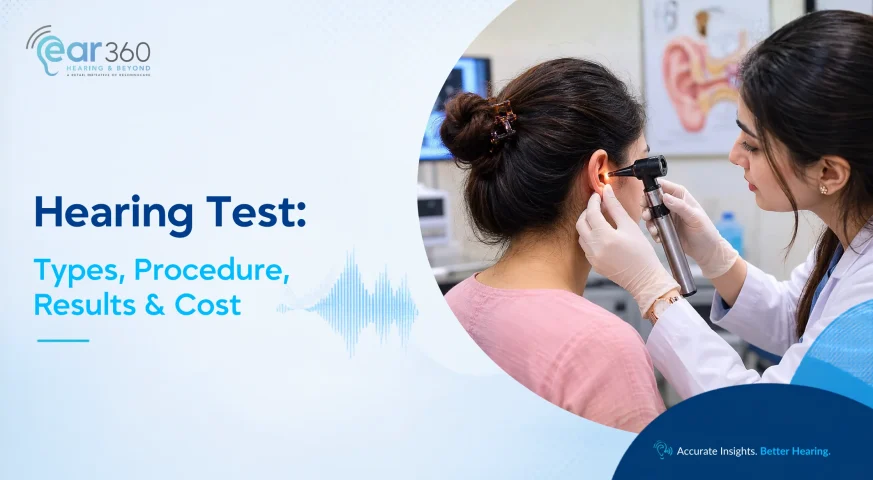
Hearing Test: Types, Procedure, Results, and Cost

TL: DR; Hearing tests: They check how well you hear different sounds, pitches, and volumes. Different tests check different needs: PTA, speech audiometry, tympanometry, OAE, and ABR assess different parts of hearing. The procedure is simple: Most hearing tests are painless, non-invasive, and guided by an audiologist. Results are clearly shown: Audiograms help classify hearing loss as normal, mild, moderate, severe, or profound. Costs vary by test type: Hearing test cost in India depends on the assessment needed and the clinic location. Get checked at Ear360 clinics: Visit Ear360 clinics for guided testing, clear results, and personalized hearing care. In most cases, people only call in for a hearing test when hearing issues have become a problem. But most often, hearing loss is a gradual process. It may become difficult to hear people when they are talking; you may find yourself repeating what you hear, turning the TV up to a higher volume, or becoming more fatigued after longer listening sessions. These signs may occur gradually, and some individuals adapt without noticing any changes in their hearing. A hearing test can eliminate the uncertainty. It is a non-invasive, easy-to-use method to determine the degree of hearing loss and its type, if any, and determine if any further intervention is required. We at ResonnoCare offer correct and clinically relevant hearing testing for all ages. Whether it’s a routine checkup or your child’s hearing problem, age-related or new symptoms, this guide will help you prepare for your initial appointment. What Is a Hearing Test? A hearing test measures the ability to hear various sounds, including loudness and pitch. It is performed by a trained audiologist and typically lasts about 30 to 60 minutes, depending on the tests required. This is not simply to determine if there is a hearing loss. An appropriate hearing test can also indicate if you have a hearing loss, the nature of the hearing loss, the affected ear(s), and what may be causing it. Your audiologist uses this information as a guide to the next steps. This can be hearing monitoring, additional medical testing, hearing aids, or other hearing support, depending on your results. Hearing tests are appropriate for everyone, from newborns to older adults. Our hearing care for all ages service at Resonnocare is built around exactly this understanding. What Are the Different Types of Hearing Tests? There is no one test that fits all. An effective audiological assessment is a sequence of assessments, each addressing a different aspect. The most common hearing test performed in clinics is known as Pure Tone Audiometry (PTA). Sounds can be heard at different pitch and volume levels through headphones, and the event of the sound can be perceived. These will be reported on an audiogram, which will show your speech range and hearing thresholds. Speech Audiometry: This test assesses not only tones but also speech. Words or phrases repeated are uttered at varying volumes. This is particularly beneficial for appreciating the effects of hearing loss on communication in everyday life. Tympanometry: This test determines the health and mobility of your eardrum and middle ear. The air pressure is slowly changed as a small probe is inserted into the ear canal. It is not a hearing test but a method of detecting underlying conditions such as fluid behind the eardrum, a perforated eardrum, or Eustachian tube problems. Otoacoustic Emissions (OAE): OAE tests measure the sounds produced by the inner ear (cochlea) when a sound is played in the ear. It lends itself especially well to newborn hearing screening and can be applied to persons who are unable to communicate verbally. Auditory Brainstem Response (ABR): A test used to evaluate the response of the auditory nerve and brainstem to sound. Electrodes are put on the scalp, and reactions are measured. May be done if an additional auditory pathway assessment is required or if standard tests are not possible. How Is a Hearing Test Performed? A Step-by-Step Overview Patients will feel more comfortable and know what to expect before their appointment. The following is a typical hearing test routine for an adult performed in a clinic such as Resonnocare: Step 1: Case History. Your audiologist will begin by discussing your symptoms, medical history, noise exposure history, and family history of hearing problems. This context should help to guide the testing approach. Step 2: Otoscopy. Your audiologist will use an otoscope to examine your ears prior to any electronic testing. This eliminates earwax plugging, infections, or structural problems that could impact the results. Step 3: Pure Tone Testing, you will be seated in a soundproof booth or quiet room with headphones. Various tones will be sounded, each rising or falling in pitch and volume, one ear at a time. On each occurrence of sound, whether weak or strong, you press a button or raise your hand. Bone Conduction Testing (Step 4). A bone conduction vibrator behind the ear and mastoid bone vibrates directly into the inner ear, bypassing the outer and middle ears. This helps differentiate between sensorineural and conductive hearing loss. Step 5: Speech Testing. Your audiologist will then have you say words at various levels to assess speech recognition. Step 6: Tympanometry. A probe is inserted into your ear canal. This only takes a minute and assesses the function of the middle ear. Step 7: Results and Counseling. After your tests, your audiologist will review your results and discuss the findings with you, including any further steps (if any) that are advisable. How Do You Read Hearing Test Results? The results are displayed on an audiogram, which is a chart that shows how well you hear sounds at various frequencies. On the X-axis, from left to right, are different frequencies (pitch), from low (250 Hz) to high (8000 Hz). Loudness is on the vertical axis from very soft at the top to very loud at the bottom. Normal hearing is defined as 0-15 dB. If the numbers are lower, it means that you need sounds to be louder to hear them,

Read More
Hearing Aid Trial What to Expect Before Buying Hearing Aids
July 19, 2026 Comments (0)

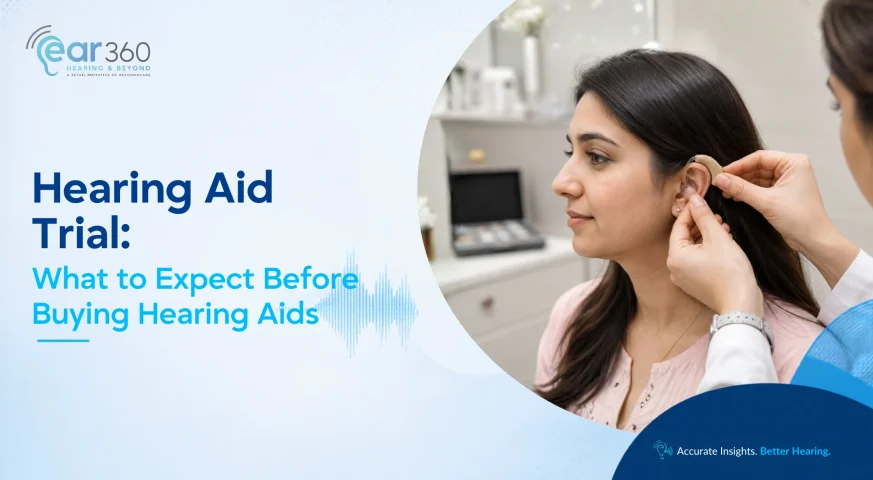
Hearing Aid Trial: What to Expect Before Buying Hearing Aids

TL: DR; A hearing aid trial reduces doubt: It helps you try hearing aids before making a purchase decision. You test them in real life: Use them at home, work, outdoors, and in conversations to judge performance. The process is audiologist-guided: It includes hearing assessment, device selection, fitting, usage support, and adjustments. Comfort and clarity matter: Notice speech clarity, background noise handling, ease of use, and overall comfort. Feedback helps fine-tune fit: Share issues like whistling, unclear sound, or unnatural voice quality with your audiologist. Get a free trial at Ear360 clinics: Visit Ear360 clinics for hearing aid trials, expert guidance, and personalized hearing care. The decision of which hearing aid to select can be daunting. Not only is it a medical choice, it is also a personal and financial choice. This is often a point people arrive at after months or years of having to ask others to repeat themselves, or of avoiding large crowds and places with a lot of noise, or of feeling left out of conversations that once came easily. When there are many hearing aid manufacturers and models available, it’s natural to ask yourself which hearing aid will work best for your lifestyle, hearing needs, comfort, and budget. No one wants to buy a hearing aid and discover that it doesn’t fit within their daily routine. You can make that decision with confidence after undergoing a hearing aid trial. Don’t just read about or be told what the device does, test it out in the real world: at home, at work, during discussions, and in the places where you need to hear it the most. At ResonnoCare, we offer a free hearing aid trial so you can experience the difference before committing. This guide explains how the trial works, what to expect, and how it can help you choose the right hearing aid for your hearing health. What Is a Hearing Aid Trial? A hearing aid trial is a structured period during which patients can try a hearing aid selected for their individual hearing profile before making a purchase. It is not just a quick demonstration or a listen-in. A well-designed trial, which typically runs for 3-5 days, takes place in real-world environments that matter to you, such as your home, workplace, family gatherings, and noisy public places. The goal of a hearing aid trial is to ask a practical question: Will this hearing aid make a difference in my life, in my hearing, and in my communication? That is something that can’t be recreated in a showroom. It’s only through experience with a hearing aid in various listening contexts that you’ll get the proof you need. A trial also gives your audiologist time to fine-tune device settings based on your feedback, and the experience you have during the trial accurately reflects what the device can do once it’s fitted to you. Who Should Consider a Hearing Aid Trial? If a hearing assessment has confirmed mild-to-profound hearing loss and an audiologist has recommended amplification, a hearing aid trial is the next logical step before purchasing a device. A trial might be helpful if you: You’ve been diagnosed with hearing loss and are not sure if you are ready for a hearing aid. You have used hearing aids before but want to try a newer model or a different style. You want an elderly parent or family member to experience the benefits of hearing aids firsthand. You are unsure about the cost and want to understand the value before making an investment. You have previously used a hearing aid for a short time but found it uncomfortable or unhelpful. A trial eliminates the uncertainty. Instead of thinking, “It might help,” you can confidently say, “Yes, this works for me,” or “Let’s try something different.” Our hearing care for all ages service means that whether you are arranging a trial for a young adult with hearing loss or an elderly parent who has been resisting hearing aids for years, we have the experience to guide the process thoughtfully. What Happens During a Hearing Aid Trial?  Knowing what to expect allows you to get the most out of the adventure. Step 1: Hearing Assessment: A complete hearing test is performed before a particular hearing device is chosen. The frequencies and volume levels that need amplification will depend on your audiogram. Choosing a hearing aid without this test would be like prescribing glasses without checking vision. At Resonnocare, each hearing aid trial starts with a clinically accurate assessment. Step 2: Device Selection and Fitting: Your audiologist will choose the appropriate hearing aid model(s) for you based on your audiogram, hearing needs, lifestyle, and preferences. This device can then be tailored to your hearing levels. It is important to check the fit carefully because even a technically good hearing aid may not feel comfortable or perform well if it does not fit properly. Step 3: Orientation and Education: Before you leave with the device, your audiologist will show you how to insert and remove it, use the controls, clean and care for it, and replace the batteries or charge it, if applicable. Before the trial, you should feel comfortable using the device. Step 4: “Living With It”: This is the most crucial step. Use the hearing aid in different environments: at home, during family conversations, in busy markets, while watching TV, on phone calls, and outdoors. Pay attention to which is easier and which is still difficult. Numerous audiologists offer a basic feedback diary for making observations. Step 5: Follow-Up Adjustment: After about the middle or end of the trial, you go back to the clinic to give feedback about your experience. This feedback allows your audiologist to make adjustments to the device’s programming. Some people need only minor adjustments, while others may feel comfortable with the first fitting itself. In either case, it is critical to know what needs to be done in the follow-up. Step 6: Decision & Next Steps: You and your audiologist review your hearing

Read More
Pure Tone Audiometry Test What Your Audiogram Means
July 19, 2026 Comments (0)

Pure Tone Audiometry Test: What Your Audiogram Means

TL: DR; This blog is primarily written for patients, caregivers, and families who are trying to understand hearing difficulties, pure tone audiometry test results, and what an audiogram means before seeking audiology care. Pure-tone audiometry tests hearing: by measuring how well you hear different pitches and volumes. Your audiogram shows results: It maps your hearing levels across low to high frequencies. Hearing thresholds matter: They show whether your hearing is normal, minimal, mild, moderate, severe, or profoundly reduced. It identifies hearing loss type: Results can suggest conductive, sensorineural, or mixed hearing loss. It guides treatment decisions: Your audiogram helps decide if you need medical care, hearing aids, or further evaluation. Get checked at Ear360 clinics: Visit Ear360 clinics if you notice tinnitus, muffled hearing, loud TV volume, or trouble hearing conversations. It is not always obvious that someone is losing their hearing. These can sometimes start with little things, such as making people repeat themselves, turning up the television volume, difficulty understanding what people say in noisy environments, or feeling really tired after listening all day. The changes can be baffling, particularly if you’re not sure whether they’re temporary, due to age, noise, or something that should be treated. This is where a pure tone audiometry test can come in handy. Helps to give a clear idea of how well you hear the various sounds and pitches, and the results are displayed on a chart called an audiogram. We believe that when patients are informed, they make better choices about their health, and that is why we are ResonnoCare. This article covers what happens during a pure-tone audiology test, what the results might mean, and what to do next. What Is Pure Tone Audiometry? Pure tone audiometry quantifies auditory sensitivity to sound frequency in hearing assessments. For audiologists, this helps assess the presence, configuration, and severity of hearing loss. This also pinpoints frequency impact. You are made to listen to tones of different frequencies and volumes through a bone vibrator. Tones are presented one at a time. You respond to each tone by pressing a button, and this is done for each tone at each frequency. Hearing threshold is defined as the softest tone that is detected 50% of the time. The pure tone audiometry test is noninvasive and painless. The test takes 20 to 30 minutes. The assessment is conducted for individuals as young as 5 and serves as the basis for many other auditory assessments. What Does an Audiogram Show? A pure-tone audiometry test produces a graph called an audiogram. At first, this chart may seem daunting, but it will be very easy to understand once you learn what you’re reading. Frequency or pitch is plotted on the horizontal axis, in units of Hertz (Hz). The range of frequencies is from 250Hz (low-pitched sounds, such as a rumble) to 8000Hz (high-pitched sounds, such as a whistle or a bird call). This frequency range is of great importance clinically because human speech is in the range of 500Hz-4000Hz. Loudness is shown on the vertical axis in dB Hearing Level (dB HL). Typically, it will range from 10 dB (very soft) at the top to 120 dB (extremely loud) at the bottom. The lower the mark on the audiogram, the louder a sound must be for you to hear it, and the greater the hearing loss. The thresholds on the audiogram are indicated by symbols for each ear: O (red) = right ear thresholds X (blue) = left ear thresholds [ and ] = bone conduction thresholds (help determine type of hearing loss). The thresholds for all frequencies tested on a normal audiogram are between 0 and 25 dB. Numbers higher than this indicate hearing loss of varying degrees. How Is the Degree of Hearing Loss Classified? One of the most significant things your pure tone audiometry results will show is how severe your hearing loss is. This is usually classified as: Minimal (16 to 25 dB HL): Difficulty hearing faint or distant speech, particularly in noisy environments. Mild (26 to 40 dB HL): Difficulty with everyday sounds that doesn’t interfere very much with everyday activities Moderate (41 to 55 dB HL): Needs to be heard by others at close range, such as when someone is talking quietly; difficulty hearing in noisy environments Moderate (41-55 dB HL): A hearing aid is required for normal conversation to be heard most of the time. Moderately Severe (56-70 dB HL): Needs to hear speech with loud volumes; group conversations are very difficult Severely hearing impaired (71-90 dB HL): Loud sounds and shouted speech may be heard, but not usual or conversational speech Low (91-100 dB HL): Not much ability to hear unaided or with minimal assistance (such as hearing aids or implants) Understanding the extent of your loss helps our team at Resonnocare guide you toward the most appropriate intervention, whether that is monitoring, a hearing aid fitting, or a referral for further specialist care. What Type of Hearing Loss Do You Have? Pure-tone audiometry is more than a measurement of your hearing loss. It can also assist your doctor in determining the cause of your hearing loss and in choosing the appropriate intervention or support. Conductive hearing loss is due to impaired transmission of sound through the outer or middle ear to the inner ear. This could be because of the earwax blockage, the accumulation of fluid behind the eardrum, a hole in the eardrum, or a problem with the small bones in the middle ear. Bone conduction is often normal, and air conduction is decreased on an audiogram. Medical or surgical therapies can improve conductive hearing loss in some instances. Sensorineural hearing loss happens when there is damage to the hearing cells in the inner ear or to the hearing nerve. This is the most common type of hearing loss in adults. Can be associated with prolonged noise exposure or age. Air conduction and bone conduction are both decreased on an audiogram. This type of hearing loss is typically permanent;

Read More
Tympanometry-Test-Procedure-Cost-Result-Meaning-1
July 19, 2026 Comments (0)

Tympanometry Test: Procedure, Cost & Result Meaning

TL: DR; Ear pressure, blocked-ear sensations, or hearing concerns can be worrying, especially when they affect a child. When a doctor recommends a tympanometry test, it is natural to wonder what the test involves, whether it will hurt, and what the results might mean. A tympanometry test is a quick, painless way to understand how well the eardrum and middle ear are working. It does not directly measure hearing, but it can help identify issues such as middle ear fluid, pressure imbalance, ear infections, or Eustachian tube dysfunction. At Resonnocare, we make hearing care simple, clear, and patient-focused. This guide explains what a tympanometry test measures, how it is performed, what different results mean, and when you or your child may need one. What Is a Tympanometry Test? Tympanometry is a diagnostic test that measures the functioning of the eardrum (tympanic membrane) and the middle ear system. It is not a test of how well a person can hear sounds; it specifically focuses on the eardrum’s movement in response to changes in air pressure. Behind the eardrum is a small space where sound vibrations are transferred to the inner ear by means of three small bones. If this system functions properly, the eardrum moves freely and efficiently. If there is a problem like fluid in the middle ear, an obstructed Eustachian tube, or a perforated eardrum, the movement of the eardrum is different from normal, and the tympanometry test will detect it. This is an extremely useful tool for diagnosing middle ear conditions that may not be seen during a routine ear examination. How Is a Tympanometry Test Done? The Procedure Explained A tympanometry test is simple, quick, and painless. Many patients worry that it may hurt, but the test only involves placing a soft probe into the ear canal and gently changing the air pressure inside the ear. Here’s what happens during the test: The test is done one ear at a time and usually takes only a few minutes. It is safe for adults, children, and no special preparation is usually needed. What Do Tympanometry Test Results Mean? A tympanogram graph from a tympanometry test can be categorized into the following types, most commonly known as Type A, Type B, and Type C. It should be noted that tympanometry test results should be compared to a complete clinical evaluation. Each hearing test is an independent test and does not give a full picture of your hearing health. If you are already experiencing ear symptoms and want to understand what they might indicate, our ear symptoms and conditions page is a helpful place to start. What Is the Cost of a Tympanometry Test in India? The price of Tympanometry in India may vary from one city to another, depending on the type of clinic and whether it’s included as part of a full hearing assessment. For a standalone test, the range is generally between ₹500 and ₹1800. If it is used as part of a complete hearing assessment (including pure-tone audiometry or other assessments), costs may differ. We make sure your hearing test is not buried in a bundle of other tests, and that it is thorough at Resonnocare. We don’t believe that cost should be a reason not to understand your hearing health. It is best to call us to get the most accurate and up-to-date pricing for your location and needs. Who Should Have a Tympanometry Test? A tympanometry test may be recommended if there are signs that the eardrum or middle ear is not working as it should. It is commonly used for both children and adults, especially when ear pressure, fluid, infections, or hearing changes are suspected. You or your child may need a tympanometry test if: Children are especially vulnerable to middle ear issues, and tympanometry is one of the more reliable tests for assessing middle ear health, even if a child is too young to clearly describe the symptoms of their middle ear problem. A hearing screening that includes a tympanometry test should be arranged for your child if they are not concentrating on the task, often turn up the TV volume, or are having difficulty with schoolwork. For families looking for comprehensive, age-appropriate hearing evaluations, our hearing care for all ages service is designed to meet the needs of patients from newborns to older adults. When Should You See an Audiologist Without Delay? A lot of middle ear conditions can be controlled if they are caught early, but if you have the following symptoms, it is important to get evaluated by a professional as soon as possible: Do not wait for these symptoms to go away. The sooner a diagnosis is made and the more accurate it is, the better the outcomes will be. Why Choose Resonnocare for Hearing and Audiology Care At Resonnocare, we combine clinical expertise with practical patient care and understand the challenges that concerns about hearing loss, especially when they involve children, can cause for the entire family. Conclusion Tympanometry can be short and simple, but the information it provides about middle ear health is extremely valuable. This test is a fundamental part of a comprehensive hearing assessment and is used to diagnose glue ear in children and Eustachian tube dysfunction in adults. If you have been recommended to have a hearing test recommended by your doctor or healthcare provider, or if you have concerns about your ear health and hearing, don’t delay. Early diagnosis of a middle ear problem means that appropriate treatment can start early. A tympanometry test may be quick and painless, but it can provide important information about your middle ear health. It helps identify issues such as fluid behind the eardrum, pressure imbalance, glue ear, Eustachian tube dysfunction, and other conditions that may affect hearing or comfort. If your doctor, ENT specialist, or audiologist has recommended this test, it is worth getting it done without delay. Early diagnosis can help you understand the cause of your symptoms and begin the right treatment

Read More
BERA Test Procedure, Uses, Results & When It Is Needed
July 19, 2026 Comments (0)

BERA Test: Procedure, Uses, Results & When It Is Needed​

TL: DR; This blog is designed for parents of newborns and children with hearing or speech concerns, adults experiencing hearing-related symptoms, and anyone advised by an ENT specialist or audiologist to undergo a BERA test. Hearing loss tends to happen gradually and be overlooked. However, if your doctor recommends a BERA test, you may have many questions to answer. What is the test? Why is it needed? Is it painful? What is the meaning of the results? When you don’t know what to expect, uncertainty can only make it feel more stressful than it’s supposed to be. At Resonnocare, we help make hearing care accessible. This guide offers an overview of the BERA test, how it is administered, why you may be recommended to have it, and what happens after. What Is a BERA Test? BERA assesses the brainstem’s reaction to sound. It is also referred to as the Auditory Brainstem Response (ABR) and is one of the most sensitive non-invasive hearing tests used in modern audiology. BERA is a test that examines the function of your auditory nerve and brainstem. Once sound is detected, it is transmitted along the auditory nerve to the brainstem. These responses are assessed using tiny electrodes placed on the forehead and the backs of the ears during the BERA. What emerges is a series of waveforms that reflect the brain’s response to sound at specific locations along the auditory pathway. A key benefit of the BERA test is that it is non-invasive and does not require the patient’s active cooperation. Since the test is performed while the patient is in deep sleep, it is especially useful for infants, children, or individuals who may not be able to participate in regular hearing tests.  Why Is the BERA Test Done? The BERA test has a number of clinical uses. In these situations, our audiologists at Resonnocare may recommend it: How Is the BERA Test Performed?  Knowing what to expect can help reduce anxiety before the test. The BERA test is painless and non-invasive, and is usually performed while the patient is in deep sleep or fully relaxed. Understanding Your BERA Test Results The BERA test result appears as a series of wave patterns, usually labeled Waves I to V. Each wave reflects electrical activity at a different point along the hearing pathway: The audiologist will look at these waveforms and take into account latency (the delay, or the time it took for the first wave to arrive) and amplitude (how strong the signal was). Normal result: Show waveforms within the time range and normal amplitude range. This usually means that the pathway that carries sounds from the ear to the brainstem is functioning normally. Unusual findings: These can be delayed latency, no waveforms, or an unequal ear response. The results can be due to sensorineural hearing loss, auditory nerve dysfunction, or a central auditory processing disorder, but will always need further clinical evaluation for diagnosis. It’s worth noting that a BERA result is only a part of the diagnostic picture. The hearing test results are always interpreted in the context of your clinical history, symptoms, and other hearing tests. When Should You or Your Child Have a BERA Test? If you or your child is suspected of having hearing loss issues, or your doctor wants to evaluate the ability of the hearing nerve to react to sound, then a BERA test may be suggested. If your child’s pediatrician, ear, nose, or throat specialist (ENT), or audiologist recommends a BERA test, it is likely because they are concerned about: If you’re not sure if a BERA is appropriate for yourself or your child, please consult with a skilled audiologist. You’ll be taken through the assessment process at Resonnocare and be helped to select the tests that are suitable for you. BERA Test in Children: What Parents Should Know Parents are not at ease if their child is tested for anything. Thankfully, the BERA test is very safe and well-tolerated by children, including newborns. Sometimes the test is performed in very young babies while they are sleeping. If the young child is having difficulty staying quiet, a light sedative may be necessary under medical supervision to obtain accurate results. We have experience and have a care plan for young children and families, and we try to make the process as relaxed and comfortable as possible. Early hearing assessment is one of the most important things a parent can do for their child’s development. Hearing care tailored to all ages is something our team is deeply committed to at every stage of life. What Happens After a BERA Test? Once your BERA test results are ready, your audiologist or referring doctor will explain the findings and guide you through the next steps. Depending on the results, they may recommend: If the BERA test confirms hearing loss, early support can make a meaningful difference. Modern hearing aids are highly advanced and can improve communication, confidence, and quality of life. At Resonnocare, our team will help you explore the right options, including a free hearing aid trial, so you can experience the benefits before making a decision. Why Choose Resonnocare for Hearing and Audiology Care We feel it’s important to provide accurate information and compassionate direction at Resonnocare to ensure that good hearing care starts here. Patients and families in India trust us with their hearing health for these reasons: Conclusion The BERA test is a safe, painless, and highly informative diagnostic tool that plays a key role in the audiologist/clinician’s evaluation of how well the auditory nerve and brainstem are functioning. The BERA test is suitable for screening a newborn’s hearing, investigating unexplained tinnitus in an adult, assessing a child who is unable to take standard tests, and providing objective, reliable information to inform clinical decisions. If you have been referred for BERA testing or have concerns about your or your child’s hearing, it is best not to delay evaluation. Identifying a hearing problem early means there are more

Read More

Resonnocare Health-Tech Private Limited Provides hearing and audiology services through a structured, clinically guided approach.

Popular Clinic Locations:

Delhi | Bangalore | Pune | Ludhiana

contact info

RESONNOCARE HEALTH-TECH PVT. LTD

Head Office 403, Office Block ‘C’

4th Floor – Above Retail Block R1 & R5,

M3M URBANA, Sector 67, Gurgaon 122101 Haryana

2026, All rights reserved by Resonnocare  health-tech private limited