
TL: DR;
This blog targets parents of newborns/children with hearing or speech concerns, adults experiencing hearing changes, and anyone advised by an ENT specialist, pediatrician, or audiologist to get a BERA test.
- Explains the BERA test clearly: It defines BERA as a non-invasive hearing test that assesses how the auditory nerve and brainstem respond to sound, and is especially useful for infants, young children, and patients who cannot actively respond.
- Breaks down BERA test pricing in India: The blog explains that costs vary by city, clinic, hospital, equipment, and included services, and also compares related hearing tests such as Pure Tone Audiometry and Impedance Audiometry.
- Highlights factors affecting cost: It covers key price influencers such as location, government vs. private facilities, bilateral testing, sedation needs, and whether consultation, interpretation, and written reports are included.
- Positions Resonnocare as a trusted option: The blog emphasizes Resonnocare’s qualified audiologists, calibrated equipment, clear reporting, personalized guidance, home visits, video consultations, hearing aid support, and aftercare.
The lowest BERA test cost may not provide the best value. Accurate testing conditions, qualified interpretation, and a clear plan for the next step are as important as the quoted fee.
Whether it is a baby who did not pass the newborn hearing screening, a child who has delayed speech development, or an adult experiencing a gradual change in hearing, hearing concerns can be stressful.
The BERA test price in India depends on the clinic or hospital, testing setup, patient requirements and services included in the quoted fee. Before booking, confirm whether the price covers the complete assessment, report interpretation and any additional testing or medical supervision that may be required.
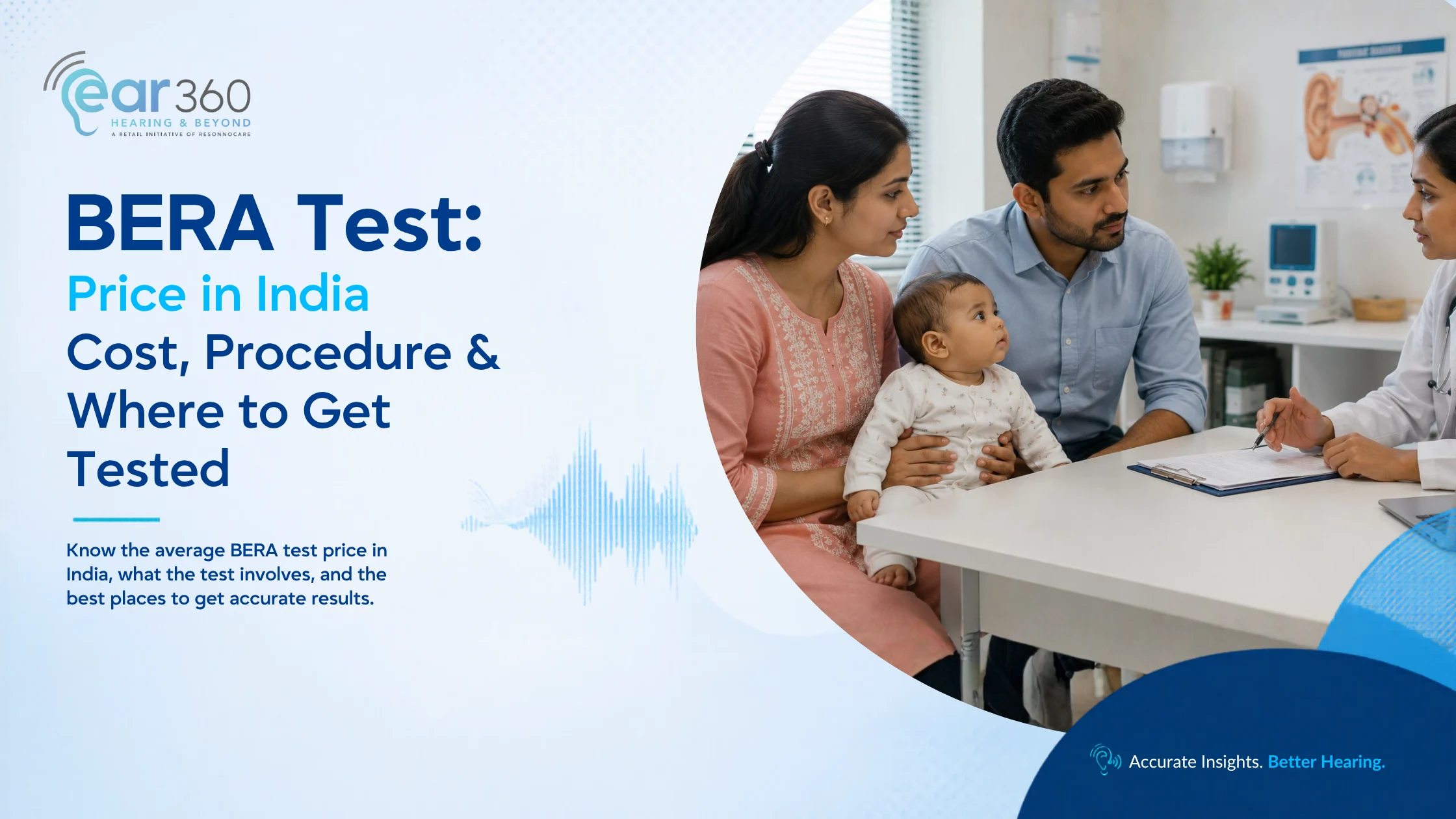
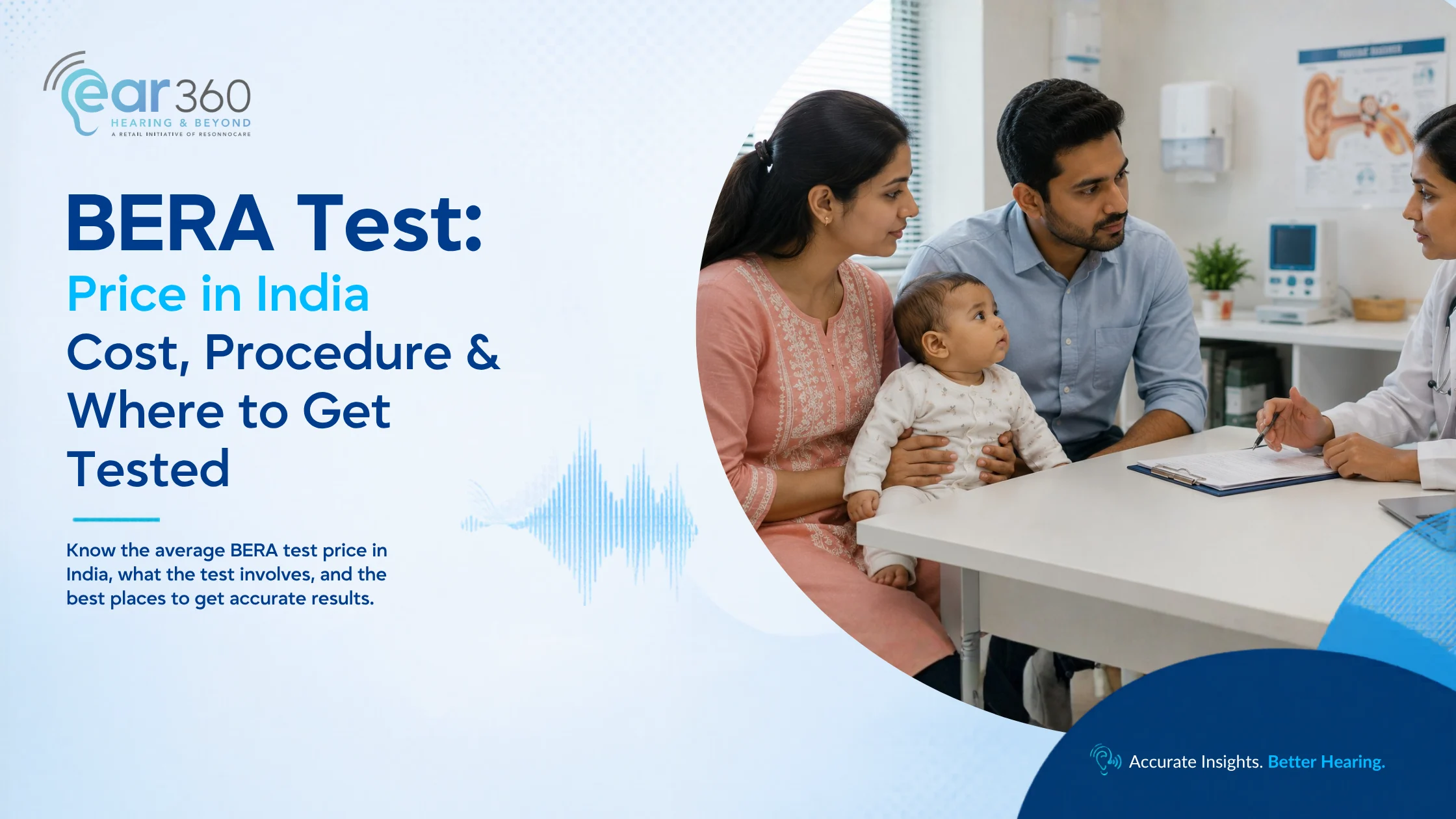
We are committed to transparent, reliable, and clinically guided hearing care at Resonnocare. This guide explains the BERA test price in India, the factors that influence its cost, how the procedure is performed, who may need it, and how to choose the right testing facility.
This article provides general educational information and should not replace an individual assessment, medical diagnosis, or advice from an ENT specialist, pediatrician, neurologist, or audiologist.
What Does BERA Stand For?
BERA stands for Brainstem Evoked Response Audiometry. It is also commonly called an Auditory Brainstem Response or ABR test. Both terms generally refer to objective testing that records how the auditory nerve and brainstem pathways respond when sound is presented.
Because the response is measured through electrodes, the patient does not need to identify the sound, raise a hand, press a button, or provide a spoken response.
What Is a BERA Test?
BERA is an acronym for Brainstem Evoked Response Audiometry.
It is a specialized, non-invasive hearing test that assesses how the auditory nerve and brainstem respond to sound.
When clicks or tones are played through earphones, tiny electrodes on the scalp detect the electrical activity generated along the auditory pathway.
The test requires no active response or cooperation from the patient and is one of the most reliable tests for evaluating hearing in infants and young children who cannot be tested by standard audiometry, as well as in adults who are unable to respond or actively cooperate.
During an ABR or BERA test, electrodes placed on the head and near the ears record electrical nerve activity in response to sounds delivered through earphones. The test is useful for infants and other patients who cannot reliably complete a behavioral hearing test.
The BERA test is routinely performed to help detect hearing loss in newborns, investigate possible auditory nerve disorders when hearing loss remains unexplained, and assess hearing pathways before or after certain medical procedures.
It provides ENT specialists and audiologists with an objective, quantifiable view of how sound-related signals travel from the ear through the auditory nerve and brainstem.
Depending on the purpose of the test, BERA may help estimate hearing sensitivity, compare responses between the two ears, or examine whether the timing and pattern of the recorded waves suggest an auditory-pathway concern.
“BERA is a non-invasive hearing test that measures how the auditory nerve and brainstem respond to sound, making it especially useful for infants, young children, and patients who cannot actively participate in standard hearing tests. The test uses electrodes to objectively record electrical activity along the auditory pathway, helping audiologists and ENT specialists investigate hearing loss and possible auditory nerve or brainstem pathway concerns.”
Resonnocare – EAR360 Audiology Clinics
What Can and Cannot Be Diagnosed With a BERA Test?
A BERA test can provide objective information about hearing sensitivity and the functioning of the auditory nerve and brainstem pathways. It may help identify or investigate:
- Possible hearing loss in newborns and infants
- Hearing levels in patients who cannot complete behavioural testing
- Differences in hearing between the two ears
- Possible auditory neuropathy
- Unexplained or one-sided hearing loss
- Possible auditory nerve or brainstem pathway abnormalities
- Hearing function when behavioural results are unreliable
- Changes that require further ENT or neurological investigation
However, BERA does not replace every other hearing test. It may not independently provide all the information needed about middle-ear function, everyday speech understanding, auditory processing, or the exact cause of a hearing problem.
The audiologist may therefore recommend BERA as part of a broader test battery that includes OAE, tympanometry, pure-tone audiometry, speech audiometry, ASSR, imaging, or an ENT assessment.
What Is the BERA Test Price in India?
The BERA test price in India varies by city, clinic, hospital, equipment used, the type and purpose of the test, whether one or both ears are assessed, and the services included.
As an indicative 2026 range, routine click-evoked or screening BERA may cost approximately ₹1,000 to ₹6,000. More detailed diagnostic or pediatric testing may range from approximately ₹2,500 to ₹12,000. A sedated BERA may cost approximately ₹5,000 to ₹15,000 because it can involve additional medical supervision, monitoring, and facility charges.
These are broad market estimates rather than fixed prices. Published hospital rates show substantial variation according to the type of BERA and clinical setup. Patients should request the current price directly from the chosen facility before booking.
As a general guide, other common hearing tests may cost:
- Pure Tone Audiometry: ₹500 to ₹1,500
- Impedance Audiometry: ₹500 to ₹1,000
- Comprehensive audiology packages: ₹1,500 to ₹8,500
The prices of related hearing tests may also vary by location and facility. These tests are not interchangeable, and the least expensive test may not be the test required for the patient’s symptoms or age.
While pricing is important, a lower BERA test cost does not always mean better value.
The quality of the test depends on calibrated equipment, qualified audiologists, proper testing conditions, and a detailed written report with clinical interpretation.
At private audiology centres, the BERA test price often includes the test, audiologist consultation, result interpretation, and formal report.
In some hospitals, these may be charged separately, so it is best to ask what is included before booking.
Before comparing prices, confirm whether the quotation covers both ears, the complete recording session, interpretation by a qualified professional, consultation, a written report, repeat testing if the recording is affected by movement, and sedation-related charges where applicable.
What Should a BERA Test Price Quote Include?
Before comparing the BERA test price in India, ask for a written or clearly explained quotation. Two centers may advertise a similar test fee but include very different services.
A complete quote should clarify whether the following are included:
- Testing of one ear or both ears
- Screening BERA, diagnostic BERA, or frequency-specific testing
- Audiologist consultation before or after the recording
- Use of insert earphones and calibrated BERA equipment
- Interpretation of the recorded waveforms
- A written BERA report
- Discussion of the result and recommended next step
- OAE, tympanometry, ASSR, or other additional hearing tests
- Repeat testing if movement or poor sleep prevents a reliable recording
- Medical assessment before sedation, if required
- Sedation medicine, monitoring, recovery, and facility charges where applicable
- Follow-up review after the report is issued
When asking for the price, request the total expected cost rather than only the basic recording fee. This makes it easier to compare providers fairly and reduces the chance of unexpected additional charges on the day of testing.
Indicative BERA Test Cost Comparison
Type of BERA Service | Indicative Cost in India | What May Affect the Price |
Screening or click-evoked BERA | ₹1,000 to ₹6,000 | Facility, city, one or both ears, and report inclusion |
Tone-burst or frequency-specific BERA | ₹2,500 to ₹8,000 | Number of frequencies tested and test duration |
Diagnostic BERA | ₹3,000 to ₹12,000 | Complexity, interpretation, and additional audiological tests |
Pediatric or infant BERA | ₹2,500 to ₹8,500 | Sleep preparation, test duration, and pediatric expertise |
Sedated BERA | ₹5,000 to ₹15,000 | Medical review, sedation team, monitoring, and facility charges |
Intraoperative BERA monitoring | ₹10,000 to ₹40,000 or more | Surgical setting, duration, medical team, and hospital charges |
These figures are indicative and should not be treated as a guaranteed quotation. Prices can change, and the exact test protocol should be selected according to clinical need rather than cost alone.
Is the BERA Test Price Different for Infants and Adults?
It can be. The equipment used may be similar, but the total cost can differ because infants and young children may require longer appointment time, natural-sleep preparation, pediatric expertise, additional hearing tests, or sedation when reliable recording cannot otherwise be obtained.
Patient situation | What may influence the total cost |
Newborn or young infant | Natural-sleep scheduling, newborn-screening records, OAE or tympanometry, longer settling time, pediatric interpretation |
Toddler or young child | Difficulty remaining still, longer recording time, possible sedation assessment, medical monitoring if sedation is used |
Cooperative older child | May require less sleep preparation, but the test protocol still depends on the referral question |
Adult | Complexity of hearing symptoms, unilateral vs bilateral testing, frequency-specific testing, additional audiology or medical evaluation |
Patient unable to cooperate with behavioural testing | Longer recording, special positioning or support, and additional clinical supervision may be needed |
Parents should therefore ask for the price based on the child’s age and planned testing method rather than assuming that the standard adult or screening fee will apply.
What Factors Influence the BERA Test Price?
In India, the price of the BERA test varies across the country and depends on several factors. Knowing these can help you ask the right questions before booking.
Location
Testing in major metro cities such as Mumbai, Delhi, Chennai, Hyderabad, Bengaluru, and Kolkata may be costlier than in some Tier 2 or Tier 3 cities.
This is not necessarily a measure of quality. It may reflect differences in operational costs, staffing, equipment, and hospital infrastructure.
Prices can also vary significantly within the same city, depending on whether the test is conducted in an independent audiology clinic, diagnostic center, multi-specialty hospital, or tertiary-care facility.
Government vs Private Facilities
Government hospitals may offer lower-cost BERA tests, although appointment availability and waiting periods may vary.
Private audiology clinics may provide greater scheduling flexibility and direct access to audiological interpretation.
Corporate hospitals may charge more because the fee can include hospital infrastructure and additional medical services.
Patients should compare not only the fee but also the expected waiting time, professional qualifications, test protocol, reporting quality, and access to follow-up care.
Bilateral vs Unilateral Testing
The majority of diagnostic hearing assessments involve both ears so that the responses can be compared.
Testing both ears may cost more or take longer than testing one ear.
Bilateral testing is commonly useful because a patient may have different hearing levels or auditory-pathway responses in each ear. The audiologist or referring doctor should decide the appropriate protocol.
Type of BERA Test
A short screening BERA is different from a detailed diagnostic BERA. Diagnostic testing may use several sound intensities, different stimuli, and frequency-specific tone bursts to estimate hearing levels more accurately.
A more detailed test takes longer to record and interpret, which may increase the cost.
Sedation
Sedation may be considered for some infants, toddlers, or patients who cannot remain still or asleep for the required amount of time.
This can increase the cost because medical assessment, medication, monitoring, and additional hospital resources may be required.
Sedation is not automatically necessary for every child. Young infants can often be tested during natural sleep. When sedation is being considered, parents should ask who will administer it, where the test will be performed, what monitoring will be used, and what fasting or preparation instructions must be followed.
Sedation should only be provided under appropriate medical supervision. Parents should never give a child sleep medicine at home unless it has been specifically prescribed for the procedure by the responsible medical team.
Audiologist Consultation and Written Report
Ask whether an audiologist consultation and written report are included or whether the quoted amount covers only the recording.
This difference has a significant impact on both the total BERA test cost and the usefulness of the assessment.
A complete report should clearly identify the patient, the ears tested, the stimuli used, the recorded findings, estimated hearing levels where applicable, the test limitations, and the recommended next step.
Additional Tests
The clinician may recommend tympanometry, OAE, ASSR, behavioural audiometry, or another test alongside BERA. These tests may be charged separately or included in a package.
Ask whether additional testing is essential for diagnosis or is optional before agreeing to the final cost.
Need for Repeat Testing
Movement, muscle activity, poor electrode contact, earphone displacement, background electrical interference, or an unsettled child may affect recording quality. In some cases, part or all of the test may need to be repeated.
Ask whether repeat testing is included if a reliable result cannot be obtained during the original appointment.
Natural-Sleep BERA vs Sedated BERA: How Cost Can Differ
A natural-sleep BERA generally avoids sedation-related medical charges, but it still requires the child to remain asleep and sufficiently still for reliable recording. If the child cannot settle or complete the required testing, another appointment or a sedated test may sometimes be recommended.
Cost component | Natural-sleep BERA | Sedated BERA |
BERA recording | Usually included | Usually included |
Sleep medicine | Not used | May be charged separately or included in a package |
Medical assessment | Usually not sedation-related | May be required before sedation |
Monitoring | Routine test monitoring | Additional medical monitoring may be required |
Recovery area | Usually not required | May be required after sedation |
Facility charges | Usually standard diagnostic-facility charges | May be higher because of medical supervision and recovery resources |
Fasting instructions | Usually not sedation-related | May be required according to the medical team’s instructions |
If sedation is being considered, ask whether the quoted price includes the doctor or sedation team, medicine, monitoring, facility use, and recovery observation. Do not assume these charges are included in the advertised BERA fee.
Is the BERA Report and Follow-Up Included in the Price?
Not always. Some facilities quote a single bundled price, while others charge separately for the recording, consultation, written report, or follow-up discussion. Before booking, ask exactly what you will receive after the test.
Useful questions include:
- Will I receive a written BERA report?
- Who will interpret and sign the report?
- Will the audiologist explain the findings on the same day?
- Is a follow-up consultation included if the report needs further discussion?
- Will the report state the next recommended test or referral?
- If the BERA is inconclusive, is repeat testing included or charged again?
- Can the report be reviewed online later if required?
- Will the center coordinate an ENT, pediatric, neurological, or rehabilitation referral when needed?
For families comparing prices, the value of a clear report and next-step guidance may be as important as the difference between two quoted test fees.
BERA vs OAE vs PTA vs Tympanometry
Test | What It Evaluates | Patient Response Needed? | Common Use |
BERA or ABR | Auditory nerve and brainstem responses to sound | No active response | Infants, difficult-to-test patients, and auditory-pathway assessment |
OAE | Responses generated by the cochlea’s outer hair cells | No active response | Newborn screening and cochlear-function assessment |
Pure Tone Audiometry | Softest sounds heard at different frequencies | Yes | Cooperative older children and adults |
Tympanometry | Eardrum movement and middle-ear function | No behavioural response | Middle-ear fluid, pressure, perforation, or related problems |
Speech Audiometry | Detection and understanding of speech | Yes | Understanding the functional effect of hearing loss |
These tests answer different clinical questions. A normal result on one test does not always remove the need for another. The audiologist should select the test combination according to the patient’s age, symptoms, and referral reason.
Is the BERA Test Covered by Insurance?
A few health insurance plans in India may cover diagnostic hearing assessments such as the BERA test when medically advised by a registered ENT specialist, pediatrician, neurologist, or another eligible doctor.
Whether the BERA test cost is reimbursed depends on your policy.
Coverage may also depend on whether the test is performed as an outpatient investigation, during hospital admission, before surgery, or as part of an approved treatment plan.
Before booking, review your policy documents or contact your insurance company.
Keep a referral letter ready if required.
If your policy covers the test, request a clinical summary and proper invoice from the facility. These documents may be necessary when submitting a reimbursement claim.
Ask the insurer specifically about diagnostic audiology benefits, outpatient diagnostic limits, pre-authorization requirements, network-hospital restrictions, and exclusions related to developmental or congenital conditions. Do not assume that the test is covered simply because it was medically recommended.
How Is the BERA Test Performed?
If you are a family member or patient new to this test, understanding the process can make it feel less intimidating.
Preparation the Night Before
Wash the patient’s hair with shampoo and avoid conditioner, hair oil, serum, gel, or styling products, as these may interfere with electrode adhesion.
Follow the clinic’s instructions about sleep. Parents may sometimes be asked to adjust an infant’s sleep schedule so that the baby is naturally sleepy during the appointment. Do not deliberately deprive a child of sleep unless the testing team has provided clear instructions.
Inform the clinic in advance about ear infections, fever, cough, breathing problems, allergies, current medicines, neurological conditions, or previous reactions to sedation.
Arrival and Initial Checks
The audiologist may review the referral, medical and hearing history, newborn screening results, developmental concerns, and any previous test reports.
The ear canals may be checked, and tympanometry or OAE may be completed before or alongside BERA where clinically appropriate.
Electrode Placement
Small adhesive electrodes are placed on the forehead, behind the ears or on the earlobes, and sometimes on the top of the scalp.
These electrodes only capture electrical activity. They do not provide any electrical current to the patient.
The skin may be cleaned gently before the electrodes are attached so that the equipment can record a clear signal.
Sound Delivery
Soft clicks or tone bursts are presented through insert earphones.
There is no need for the patient to respond.
In infants and young children, the test is often best performed during natural sleep.
The sounds may be presented at different loudness levels and frequencies depending on whether the aim is screening, threshold estimation, or assessment of the auditory pathway.
Recording
The equipment measures electrical activity as each sound is presented at varying intensities.
The entire test may last approximately 30 to 60 minutes.
A detailed diagnostic test can take longer, particularly when both ears, several frequencies, or multiple intensity levels must be assessed. Movement, crying, muscle tension, and electrical interference can also extend the appointment.
Result Interpretation
The audiologist examines the recorded waveforms, including their timing, repeatability, and responses at different sound levels.
A verbal explanation and written report may be provided on the same day.
Complex cases may require further review, comparison with other test findings, or discussion with an ENT specialist before a final care plan is provided.
The BERA test does not involve pain, injections, or routine recovery time.
If sedation is used, the patient may require observation and should follow the medical team’s discharge, feeding, travel, and activity instructions.
How Should You Prepare a Baby or Child for a BERA Test?
Preparation depends on the child’s age and whether the test is planned during natural sleep or with sedation. Follow the testing center’s individual instructions rather than using general advice alone.
For a natural-sleep BERA, parents may be advised to:
- Keep the child awake for an appropriate period before the appointment
- Schedule the test around the child’s usual sleep time
- Feed the baby shortly before electrode placement or as advised
- Bring milk, a bottle, comfort items, diapers, and a change of clothes
- Avoid hair oil, cream, or styling products
- Bring newborn screening and previous medical reports
- Allow enough time for the baby to settle naturally
For a sedated BERA, parents may receive instructions about fasting, medicines, arrival time, medical clearance, and post-test observation. These instructions must be followed exactly because incorrect fasting or undisclosed illness may require the procedure to be postponed.
Is a BERA Test Painful or Risky?
The recording portion of a BERA test is generally painless. The electrodes attach to the skin like small stickers, and the earphones deliver controlled sounds. The electrodes only record responses and do not send electricity into the head.
Possible minor inconveniences include:
- Temporary discomfort while the skin is cleaned
- Mild skin redness from the adhesive
- Discomfort from remaining still
- The need to repeat part of the test if movement affects the recording
The main additional risks arise only when sedation is used. These depend on the medicine, the patient’s health, and the clinical setting. Sedation-related benefits and risks should be explained by the responsible medical professional before consent is given.
When Is a BERA Test Recommended?
A BERA test may be recommended in a variety of circumstances.
A pediatrician, ENT specialist, neurologist, or audiologist may recommend the test when:
- A newborn did not pass the routine hospital hearing screening
- A child has delayed speech, language, or communication development
- The child or a parent has a family history of childhood or genetic hearing loss
- An adult has sudden or unexplained hearing loss
- An individual experiences persistent tinnitus with hearing concerns
- Hearing symptoms are accompanied by vertigo or dizziness
- An acoustic neuroma or auditory nerve disorder is suspected
- Hearing monitoring is required during or around certain neurosurgical procedures
- Behavioural hearing-test results are inconsistent or unreliable
- The patient cannot understand or follow conventional test instructions
- There is a significant unexplained difference between the two ears
- Auditory neuropathy is suspected
- A detailed objective estimate of hearing sensitivity is required before rehabilitation planning
If you or a family member is in one of these situations, early assessment is strongly encouraged.
Delayed diagnosis of hearing loss, particularly in children, can affect language, learning, communication, and participation.
The first three years of life are especially important for language development. NIDCD advises prompt diagnostic follow-up after a baby does not pass newborn screening, ideally by two to three months of age, with early intervention beginning as soon as possible when hearing loss is confirmed.
WHO reported in March 2026 that more than 95 million children and adolescents aged 5 to 19 years live with unaddressed hearing loss globally. WHO emphasizes early identification and timely intervention because untreated hearing loss can affect speech, language, education, psychological well-being, and social participation.
Who May Not Need a BERA Test as the First Hearing Test?
BERA is valuable, but it is not automatically the first or only test required for every hearing concern.
A cooperative older child or adult may initially undergo pure-tone audiometry, speech audiometry, tympanometry, and an ear examination. BERA may then be added if the results are inconclusive, inconsistent, or suggest an auditory nerve or brainstem concern.
Someone with obvious earwax blockage, ear discharge, acute ear pain, or a foreign object may first require medical examination and management. The hearing tests needed after treatment will depend on the clinician’s findings.
The referring professional should select BERA when it is likely to answer a specific clinical question. Patients should not request or undergo the test solely because it appears more advanced than other hearing assessments.
What Do BERA Test Results Mean?
BERA results are displayed as a series of waveforms generated after sound stimulation. The audiologist evaluates whether the waves are present, repeatable, appropriately timed, and consistent between the two ears.
The report may describe:
- The lowest intensity at which a repeatable response was recorded
- Whether the response was obtained in one or both ears
- The timing or latency of important waveform peaks
- Differences between the right and left ears
- Whether findings suggest normal pathway conduction or require further investigation
- Any limitations caused by movement, noise, middle-ear status, or incomplete testing
- Recommended follow-up tests or referrals
A result described as “no response” at a particular intensity does not by itself explain the cause of hearing loss. The findings must be interpreted alongside OAE, tympanometry, behavioural testing, medical history, and ENT findings.
Parents and patients should ask the audiologist to explain the report in everyday language rather than relying only on technical waveform terminology.
What Happens After the BERA Test?
If the Result Is Within the Expected Range
The audiologist may recommend routine monitoring, developmental observation, or another test if hearing concerns continue despite the BERA result. A normal BERA does not assess every aspect of listening or auditory processing.
If Hearing Loss Is Identified
The next step may include:
- ENT evaluation
- Repeat or frequency-specific BERA
- OAE or tympanometry
- Behavioural hearing assessment when developmentally appropriate
- Hearing aid evaluation
- Cochlear implant assessment in selected cases
- Speech, language, or auditory rehabilitation
- Developmental monitoring and family counseling
If an Auditory Nerve or Brainstem Concern Is Suspected
The patient may be referred to an ENT specialist, neurologist, pediatric neurologist, or another medical professional. Imaging or additional neurological and audiological tests may be recommended.
If the Test Is Inconclusive
A repeat BERA may be necessary if movement, poor sleep, electrical interference, earphone placement, or electrode contact prevented a reliable recording.
How to Choose a BERA Test Center Near You
When searching for a “BERA test near me,” prioritize testing quality over price or distance.
Ask the center:
- Who will perform and interpret the BERA test?
- Is the audiologist appropriately qualified and actively registered with the Rehabilitation Council of India?
- Is the equipment regularly calibrated?
- Is the test screening, diagnostic, click-based, or frequency-specific?
- Will one ear or both ears be assessed?
- Is natural-sleep testing available for infants?
- If sedation is required, who will administer and monitor it?
- Are OAE, tympanometry, or other tests included?
- Will a written report and explanation be provided?
- What is the complete cost, including consultation and sedation if applicable?
- What happens if the test must be repeated?
- Will the center provide an ENT referral or care plan if the result is abnormal?
In India, the Rehabilitation Council of India maintains the Central Rehabilitation Register for recognized rehabilitation professionals, including audiologists and speech therapists. Patients can ask to verify that the professional’s registration is current and active.
How to Compare BERA Test Prices Across Cities and Providers
BERA prices can vary between cities and between an independent audiology clinic, diagnostic center, multi-specialty hospital, and tertiary-care hospital. A higher or lower price does not by itself indicate better or worse testing quality.
Use the same comparison points for each provider:
What to compare | Question to ask |
Test type | “Is this screening, diagnostic, click-based, or frequency-specific BERA?” |
Both ears | “Does the quoted price include testing both ears?” |
Professional | “Who will perform and interpret the test?” |
Report | “Is the written report and explanation included?” |
Additional tests | “Are OAE, tympanometry, ASSR, or other tests included or extra?” |
Child preparation | “Is natural-sleep testing available for my child’s age?” |
Sedation | “If sedation is needed, what additional charges apply?” |
Repeat test | “What happens to the cost if a reliable recording is not obtained?” |
Follow-up | “Is post-test counseling or specialist referral included?” |
Location | “Is this BERA service available at the specific clinic or hospital I plan to visit?” |
Ask the provider to confirm BERA availability at the exact location before travelling, because not every hearing-care branch necessarily has the equipment, controlled testing environment, or sedation facilities required for every type of BERA.

Why Choose Resonnocare for Hearing and Audiology Care?
At Resonnocare, we understand that behind every hearing test is an individual or family with real questions and concerns.
Our emphasis is on clinical accuracy, compassionate communication, and long-term support.
Skilled Audiologists and Clinicians
We know how to perform, interpret, and place BERA results in a broader clinical context.
No report will be sent without an explanation.
Patients and parents are guided through what the test measured, what the findings may mean, what the test cannot confirm independently, and whether additional assessment is recommended.
Clinically Guided Care
All recommendations are evidence-based and tailored to your needs.
We do not rely on one standard recommendation for every patient.
The care plan considers the patient’s age, symptoms, medical history, developmental needs, previous screening results, and findings from other hearing tests.
Reliable Hearing-Test Equipment
Advanced hearing-test equipment is properly calibrated to provide reliable and meaningful results.
Accuracy is crucial because clinical decisions are based on these findings.
The testing environment, electrode contact, sound-delivery equipment, and professional interpretation are managed carefully to support recording quality.
Clear Next Steps
Whether your BERA result is within the expected range or indicates a concern, an individual care plan will be created.
We take time to explain the meaning of each finding and the available options.
Where appropriate, the next step may involve monitoring, an ENT referral, further audiological testing, hearing aid evaluation, cochlear implant assessment, or speech and language support.
Hearing Aids, Home Visits, Video Consultations, and Aftercare
When hearing loss is diagnosed and intervention is recommended, our team can guide you through hearing aid selection and trials.
Structured follow-up and aftercare are available as required.
If you cannot easily attend the clinic, we may be able to support selected aspects of hearing care through a home visit or video consultation.
BERA itself generally requires suitable clinical equipment and controlled testing conditions, so availability for home-based testing should be confirmed directly with the clinic. Video consultation can support report review, counseling, and follow-up but cannot replace the physical BERA recording.
Find a Resonnocare Clinic Near You
Select your city to find the nearest Resonnocare clinic and book an appointment with our hearing care team.
Bangalore
Ear 360, Jayanagar
Ground Floor, Site No. 499, Municipal No. 499/97, East End Main Road, 9th Block, Jayanagar, Bangalore, Karnataka 560041
Timings: 10:00 AM to 7:00 PM
[Call] [Book an Appointment]
Ear 360, Spandana Sarjapura Hospital
239/205/34A, near Trinity Complex, Sompura Gate, Sarjapura Main Road, Bangalore, Karnataka 562125
Timings: 10:00 AM to 7:00 PM
[Call] [Book an Appointment]
Resonnocare, HSR Layout
150/5/72, 7th Cross, 24th Main, HSR Layout, Bangalore, Karnataka 560102
Timings: 10:00 AM to 7:00 PM
[Call] [Book an Appointment]
Resonnocare, Banashankari
272, 7th Cross Road, BSK 1st Stage, 2nd Block, Srinivasan Agra, 80 Feet Road, Bangalore, Karnataka 560050
Timings: 10:00 AM to 7:00 PM
[Call] [Book an Appointment]
Resonnocare, Indiranagar
34, Wind Tunnel Road, Murugeshpalya, Muniyappa Layout, Bangalore, Karnataka 560017
Timings: 10:00 AM to 7:00 PM
[Call] [Book an Appointment]
Delhi
Ear 360, Dr. Hans Anand Lok
46, Anand Lok Road, Anand Lok, Sadiq Nagar, New Delhi, Delhi 110049
Timings: 10:00 AM to 7:00 PM
[Call] [Book an Appointment]
Resonnocare, Dr. Hans Vasant Vihar
28, Basement, Paschimi Nagar, Vasant Vihar, New Delhi, Delhi 110057
Timings: 10:00 AM to 7:00 PM
[Call] [Book an Appointment]
Gurgaon
Resonnocare Head Office, M3M Urbana
Office 403, Office Block, 4th Floor, above Retail Blocks R1 and R5, M3M Urbana, Sector 67, Gurgaon, Haryana 122101
Timings: 10:00 AM to 7:00 PM
[Call] [Book an Appointment]
Resonnocare, Dr. Hans Sector 28
Plot No. 1SP, adjoining DLF Phase 1 Metro Station, Sector 28, Gurgaon, Haryana 122002
Timings: 10:00 AM to 7:00 PM
[Call] [Book an Appointment]
Ludhiana
Ear 360, BRS Nagar
963, Block B, BRS Nagar, Ludhiana, Punjab 141012
Timings: 10:00 AM to 7:00 PM
[Call] [Book an Appointment]
Resonnocare, Fawwara Chowk
565-A and 565-B, Upper Ground Floor, Cemetery Road, near Fawwara Chowk, West City, Ludhiana, Punjab 141001
Pune
Ear 360, Vighnaharta Healthcare Center
D-106-107, Choice Arcade, opposite Ruby Hall Hospital, Dhole Patil Road, Pune, Maharashtra 411001
Timings: 10:00 AM to 7:00 PM
[Call] [Book an Appointment]
Ear 360, Khan Parab ENT Hospital
Plot No. 102, Anand Nagar, Talegaon Dabhade, Taluka Maval, Pune, Maharashtra 410507
Timings: 10:00 AM to 7:00 PM
[Call] [Book an Appointment]
Tumkur
Resonnocare, Ashok Nagar
PID No. 3563, 8th Main, 8th Cross, Ashok Nagar, Tumkur, Karnataka 572103
Timings: 10:00 AM to 7:00 PM
[Call] [Book an Appointment]
Conclusion
At Resonnocare, the BERA test price reflects our focus on clinically rigorous, patient-centered hearing care rather than only providing a test recording.
When comparing the BERA test cost in India, check whether the fee includes testing of both ears, qualified interpretation, a written report, consultation, additional hearing tests, and sedation-related services where applicable.
The right testing center should help you understand why the test is needed, how to prepare, what the findings mean, and what should happen next.
Feel free to contact our team if you have been advised to undergo a BERA test or if you are concerned about your hearing or your child’s hearing and communication development.
We are here to support you from the first question through assessment, explanation, and informed care.
FAQ’s
Can BERA tests detect all hearing issues?
Brainstem Evoked Response Audiometry (BERA) is highly useful for detecting auditory nerve or brainstem pathway dysfunction and hearing loss; however, it may not be sufficiently sensitive to detect all types of hearing loss. Additional hearing tests may be needed for a comprehensive diagnosis of certain conditions related to sound processing, mild hearing loss, or middle ear problems.
Is the BERA test safe for kids?
Brainstem Evoked Response Audiometry is very safe for children and even newborn babies. It is non-invasive, painless, and is particularly used to check infants for hearing impairments if they are unable to undergo regular hearing screening.
How much does the BERA test cost?
Brainstem Evoked Response Audiometry costs vary from hospital to hospital, city to city, and testing setup to testing setup. The test is typically conducted in India in ENT clinics, audiology clinics, or hospitals, at a moderate-to-low diagnostic cost that varies from hospital to hospital.
What is the BERA test for ENT?
Brainstem Evoked Response Audiometry is a test performed in ENT practice to evaluate auditory nerve function, transmission of sound signals to the brainstem, and hearing. It is generally prescribed by ENT specialists for hearing loss, speech delay, tinnitus, dizziness, and any type of hearing loss suspected to be nerve loss.
What are the side effects of the BERA hearing test?
Brainstem Evoked Response Audiometry does not commonly cause serious side effects since it only measures the electrical activity of the hearing pathway. For most people, the test procedure is fairly safe, although it may be uncomfortable for a short time if they have earphones or are standing still.