Try Hearing Aids FREE for 14 Days
Experience selected hearing aids in your daily life before you decide.
Start Your Free Trial Eligible patients • Selected devices • T&C apply

Category: Pure Tone Audiometry

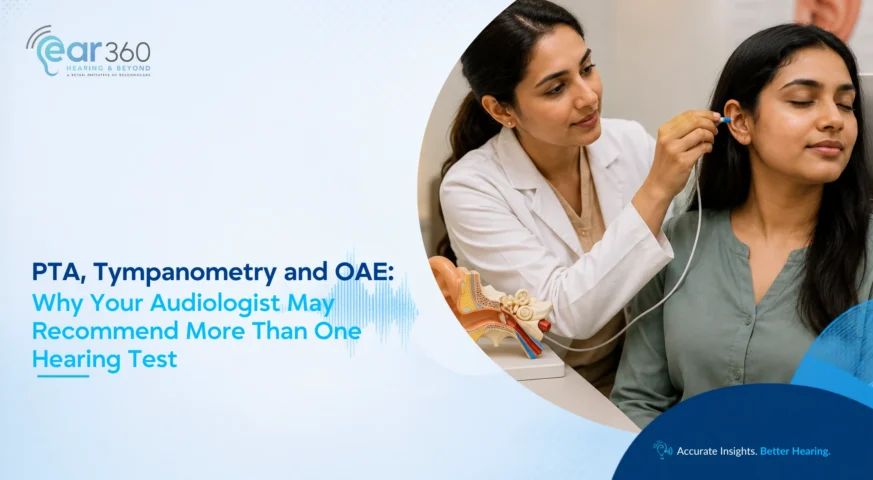
PTA, Tympanometry and OAE Why Your Audiologist May Recommend More Than One Hearing Test (1)
September 18, 2026 Comments (0)

PTA, Tympanometry and OAE: Why Your Audiologist May Recommend More Than One Hearing Test

TL;DR: This blog is aimed for Adults, parents, caregivers, and patients who have been advised to undergo PTA, tympanometry, or OAE testing and want to understand why an audiologist may recommend multiple hearing tests during the same evaluation. Each hearing test evaluates a different part of the hearing system: PTA measures hearing thresholds across different frequencies, tympanometry checks middle-ear and eardrum function, while OAE assesses how well the cochlea or inner ear responds to sound. Combining PTA and tympanometry provides a more complete diagnosis: PTA can identify whether hearing ability has reduced, while tympanometry helps determine whether middle-ear issues such as fluid, pressure imbalance, or eardrum problems may be contributing to the hearing difficulty. OAE may be added when more information about inner-ear function is needed: It can be particularly useful for young children or when PTA and tympanometry results require further clarification, helping audiologists distinguish between different types and possible causes of hearing loss. Accurate testing helps guide the right treatment or management plan: The blog explains common symptoms, when to see an audiologist, how the tests are performed together, and how results may lead to monitoring, ENT referral, hearing aids, or other personalised hearing-care recommendations. The hearing check might require only one test, but you may be asked to have a PTA, tympanometry, and maybe an OAE as well. Anyone can ask themselves why so many tests are required and why it is that they are all needed. This is because there isn’t a single hearing test that can give your audiologist all of the information they need. One test evaluates the sensitivity to sounds, another tests the motion and pressure of the middle ear, and another tests the response of the inner ear to sound. Combining these findings, your audiologist can also better determine the source of your hearing difficulty and what steps to take next. Here is a primer on PTA, tympanometry, OAE, what each test does, why your audiologist might need to order more than one type of hearing test, and what your test results can tell you about your hearing health. What Is PTA and Tympanometry? The most common test that people imagine when they think about a hearing check is PTA (Pure Tone Audiometry). You are seated in a quiet room or booth with headphones and listen as soft beeps are played at various frequencies and intensities. It determines the softest sound you can hear at every frequency, providing your audiologist with a precise picture of how well you hear at low, mid, and high frequencies. In contrast to the above, tympanometry is not a direct test of hearing. It, on the other hand, tests the response of your eardrum to air pressure changes. A small, soft probe is inserted into the ear canal for a few seconds, and the results indicate whether fluid is behind the eardrum, if perforation is possible, or if there is pressure imbalance in the middle ear. Combined, PTA and tympanometry provide a more comprehensive evaluation of hearing and why hearing problems may be arising. Know More About Hearing Tests PTA Test for Hearing: Procedure, Results and Normal Range PTA Test for the Ear: What It Measures and When It Is Needed Tympanometry Test: Procedure, Cost & Result Meaning Why Might Your Audiologist Recommend More Than One Test? The causes of hearing concerns are not always clear, which is why PTA and tympanometry are frequently all done at the same appointment. With PTA, your audiologist will know that your hearing threshold has changed, but not necessarily why. Tympanometry is a test that helps to determine if the middle ear is working correctly. In a few instances, especially for children younger than 18 months or for patients who require an in-depth inner ear response, OAE (Otoacoustic Emissions) testing is included as well, which measures how well the cochlea is reacting to sound. PTA and tympanometry can be used together – sometimes in combination with OAE – to help your audiologist determine if there is a middle ear problem and the type of hearing loss (conductive hearing loss versus sensorineural hearing loss caused by inner ear or auditory nerve problems). If one were to use just one of the above techniques, a diagnosis might be incomplete or incorrect. What Causes the Hearing Issues These Tests Help Identify? Hearing problems can happen for many different reasons, and the cause is not always obvious from symptoms alone. This is why audiologists may use PTA, tympanometry and OAE together to understand which part of the hearing system may be affected. Some common causes include: Earwax blockage, which can reduce the amount of sound reaching the eardrum Fluid behind the eardrum, often after a cold, allergy or infection Middle ear infections, which can temporarily affect hearing A perforated eardrum, which may change the way sound is conducted through the ear Age-related changes in hearing, which usually develop gradually Long-term exposure to loud sounds, which can affect the inner ear Inner ear or auditory nerve problems, which may need more detailed assessment Some hearing problems are temporary and may improve once the underlying cause is treated. Others may require ongoing monitoring or hearing support. This is why identifying where the problem is coming from is important before deciding on treatment. PTA, tympanometry and OAE give your audiologist different pieces of information that can be put together to form a clearer picture of your hearing. What Are the Early Signs You May Need Hearing Tests? You do not have to wait until hearing loss becomes severe before having your hearing checked. In fact, many hearing changes begin gradually and can be easy to overlook at first. You may want to consider a hearing test if you notice that: You often ask people to repeat themselves The television or phone volume needs to be higher than before Conversations are difficult to follow in restaurants, markets or family gatherings Speech sounds unclear or as though people are mumbling One ear seems to hear better than the other

Read More
PTA Test for the Ear What It Measures and When It Is Needed
September 18, 2026 Comments (0)

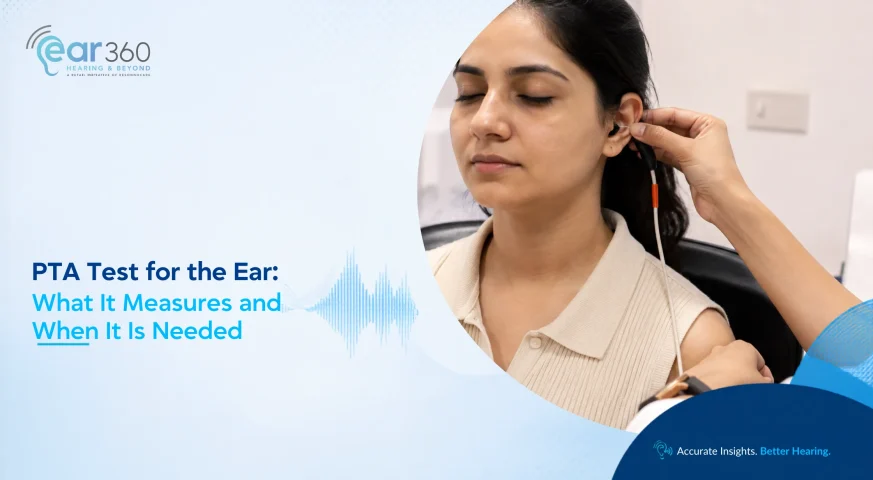
PTA Test for the Ear: What It Measures and When It Is Needed

TL;DR: The blog is intended for adults experiencing hearing difficulty, parents or caregivers concerned about a family member’s hearing, people frequently exposed to loud noise, and patients advised to undergo a PTA hearing test. Purpose of a PTA Test: The blog explains that Pure Tone Audiometry measures the quietest sounds a person can hear across different frequencies. The results are recorded on an audiogram to provide a detailed picture of hearing sensitivity in each ear. What the Test Measures: It describes air conduction and bone conduction testing, which help an audiologist identify whether hearing loss is conductive, sensorineural, or mixed, along with its severity and frequency pattern. When the Test May Be Needed: The blog highlights common warning signs such as frequently asking people to repeat themselves, difficulty understanding speech in noisy places, increasing device volume, tinnitus, and avoiding conversations because of hearing difficulties. Testing, Results, and Resonnocare Support: It explains that the PTA test is painless, non-invasive, and usually completed within 20 to 30 minutes. Based on the results, Resonnocare may recommend medical referral, earwax management, monitoring, hearing aids, or further hearing evaluation. If you or a family member has had a history of difficulty hearing conversations or hearing things that aren’t clearly heard, a PTA test to evaluate your ears is a first step towards understanding what is going on. PTA (also called Pure Tone Audiometry) is the most frequently used and widely accepted hearing test in audiology. This test is used at Resonnocare every day to aid hearing health patients of all ages with a clear and accurate picture. This blog is intended to tell you what the tests are as well as what they measure and when to consider getting one done. What Is a PTA Test for the Ear? The PTA test for ear assessment is a typical hearing test that measures the lowest sound level someone can hear at various frequencies, or pitches. It takes place in a quiet room or sound-treated room with headphones attached to an audiometer that produces tones of different volumes and frequencies. This is graphed on an audiogram, which will indicate the lowest volume that you can hear at each pitch for each ear. This also means the PTA test is one of the most objective and reliable means of understanding hearing sensitivity. Unlike a fast screening, the ear test performed by a PTA provides a detailed, frequency-specific assessment of hearing ability, which can assist an audiologist in determining the type, degree, and pattern of hearing loss (if there is one). What Does a PTA Test Measure? The typical PTA test performed on ears will measure two items: Air conduction: This is to see how sound is conducted along the ear canal and the eardrum and middle ear bones to the inner ear. Measured using headphones. Bone conduction: This measures the conduction of sound directly through bone (skull) without the outer and middle ear. It is measured by a small vibrating device located at the back of the ear. A comparison of these two results will help your audiologist determine if the hearing loss is conductive (ear canal or middle ear), sensorineural (inner ear or hearing nerve), or a combination of both. What Causes Hearing Loss That May Require a PTA Test? Over time, several factors can impact hearing, such as: Extended duration of exposure to loud noise, work, headphones, or living in a town with lots of traffic. Inner ear changes associated with aging. Middle-ear infection or fluid in the middle ear. Earwax blockage Some drugs that affect hearing (ototoxic drugs) Genetic or congenital disabilities Exposure to an injury to the head or exposure to sudden loud noises In most instances, hearing loss is not sudden and occurs over a prolonged period of time; this is where a PTA test for ear evaluation comes in handy, even if it doesn’t feel like a problem or if it is only occasional. What Are the Early Signs You May Need a PTA Test? The changes in hearing are usually gradual at first. Early indicators are: Frequently asking others to repeat themselves Increasing the volume of the TV or phone more than normal Trouble hearing what is said in crowded areas such as restaurants or family get-togethers The sensation of being unable to hear others speak. Ringing or buzzing noises in the ear (tinnitus) Avoiding social activities because of problems listening If you notice any of these patterns in yourself or a loved one, it may be worth reviewing common ear symptoms and conditions to understand what could be contributing to the change. When Should You See an Audiologist or Doctor? There is a certain amount of hearing loss that is normal and not a matter of concern; however, if there are some symptoms, it is important to seek immediate attention from a professional. If you have any of the following symptoms, it’s important to seek advice from an audiologist or an ENT specialist: Acute loss of hearing in one or both ears Severe ear pain Discharge or fluid coming from the ear Continued dizziness or vertigo When tinnitus persists and does not get better. Recurrent hearing loss (recurring for more than a couple of weeks) These symptoms are signs of other underlying problems that need immediate medical attention, and a PTA test for ear assessment might be a part of ear assessment tests. How Is a PTA Test for the Ear Conducted? It’s easy and painless and typically requires about 20-30 minutes. Here are some things to look for: You are required to sit in a quiet room or sound-treated room and to have headphones on. One ear will be used at a time and different tones will be played with different intensities. When a sound is made, you will have to raise a hand or press a button, and you will respond even if the sound is very faint. The procedure is repeated again with a bone conduction device to see how the sound is conducted through the

Read More
Pure Tone Audiometry Test A Complete Patient Guide
September 18, 2026 Comments (0)

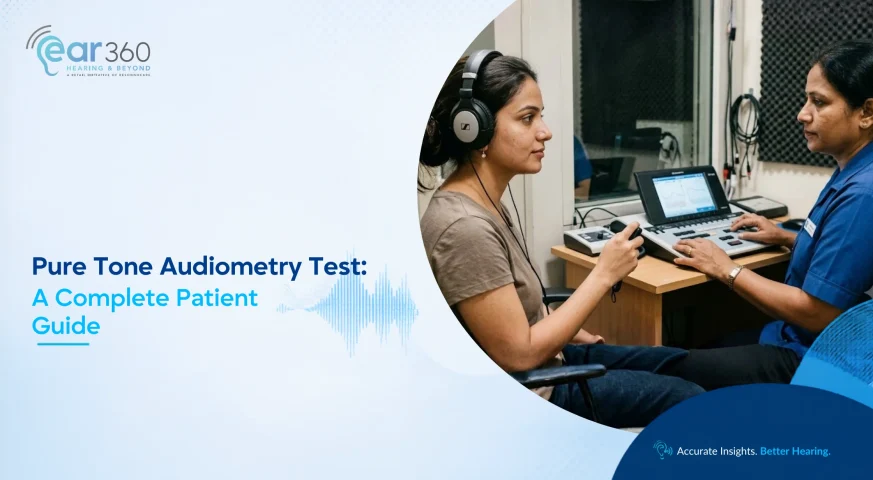
Pure Tone Audiometry Test: A Complete Patient Guide

TL; DR: This blog is designed for individuals experiencing hearing difficulties, tinnitus, or age-related hearing challenges; people preparing for their first hearing test; caregivers; and anyone seeking a clear understanding of the Pure Tone Audiometry (PTA) test process and results. Explains the Purpose and Importance of PTA Testing: The article describes Pure Tone Audiometry as the gold-standard hearing assessment that measures the softest sounds a person can hear at different frequencies and intensities, helping to identify hearing loss accurately. Guides Readers Through the Entire Testing Process: We provide a step-by-step explanation of how to prepare for the test through this blog, including what happens during the procedure, such as headphone testing and bone conduction assessment, and how long the evaluation typically takes. Helps Readers Understand Results and Hearing Health: We will explain how audiograms are used to interpret hearing ability, the different categories of hearing loss, and why professional interpretation is important for identifying the underlying cause of hearing problems. Highlights Treatment Options and Ongoing Care: What are the possible next steps after testing, including medical treatment, earwax removal, hearing aids, assistive listening devices, and regular monitoring, while emphasizing Resonnocare’s comprehensive hearing care and patient support services The uncertainty of an appointment for a hearing test can make it more stressful than it needs to be. You might ask yourself about discomfort, the length of the test, or the results. Actually, a pure tone audiometry test is a painless and simple test to assess how well each ear hears sounds at various frequencies and intensities. After learning the process, it becomes much easier and comforting. In this Resonnocare guide, we will outline some of the things you can do to prepare for a pure tone audiometry test, what to expect during the test, and how the results of your hearing test will be interpreted. What Is a Pure Tone Audiometry Test? Pure tone audiometry is a test that determines the lowest intensity (loudness) of sound that can be heard at different frequencies (pitches). It is regarded as the “gold standard” for measuring hearing sensitivity. It’s frequently the initial screening to perform after hearing issues are found, such as at a routine checkup, during pre-employment screening, or following an apparent change in hearing. For the test, you will be required to listen to a series of tones over your headphones and respond to them as soon as you hear any tone, regardless of how soft it is. Pure-tone audiometry is different from tests of brainstem and nerve response since it requires cooperation from the person being tested. Know More About Pure Tone Audiometry Test: What Your Audiogram Means Audiometry Test: Procedure, Cost & How to Read the Results Audiologist Near Me: How to Choose the Right Hearing Specialist What Can a Pure Tone Audiometry Test Tell You? Pure tone audiometry primarily measures hearing sensitivity. It identifies the softest tones you can respond to at different frequencies in each ear and helps the audiologist understand the degree and pattern of hearing loss. The test can help answer: Is hearing reduced in the right ear, left ear, or both? Which frequencies are affected? What degree of hearing loss is present? Do air- and bone-conduction results suggest a conductive, sensorineural, or mixed pattern? Is there a meaningful difference between the two ears? Does another hearing or medical test need to be considered? The result is one part of the hearing assessment. PTA does not independently explain every speech-understanding problem or identify the exact medical cause of every hearing loss. What Causes the Need for a Pure Tone Audiometry Test? A pure-tone audiometry test is commonly recommended because hearing loss can result from a variety of causes, including: Gradually worsening ability to hear, as a result of the natural aging process Exposure to prolonged noise, such as traffic, construction, or industrial noise. Regular use of earphones at high volume. A buildup of earwax that prevents sound from reaching the eardrum. Middle ear infections or fluid buildup in the middle ear. Some medications that have long-term effects on hearing A family history of hearing loss. Since hearing changes can stem from several different causes, understanding common ear symptoms and conditions beforehand can help you describe your concerns more clearly during your appointment. What Are the Early Signs You May Need This Test It may be so mild that it is not noticed for months or years. These are some symptoms that you can look out for: Requesting the repetition of words and phrases Desires greater volume on TV, phone, or radio than normal Difficulty hearing in loud or noisy surroundings and/or in group settings. When you interpret the words of others as mumbling.When you think others are mumbling. Ringing, buzzing, or hissing noises in ears (tinnitus) Difficulty hearing high-pitched noises such as a door buzzer, child’s voice If you recognize any of these, you can have answers to your questions instead of assuming answers. Is Pure Tone Audiometry Suitable for Children and Adults? PTA requires the patient to understand the task and give a reasonably consistent response whenever a tone is heard. Suitability therefore depends more on the ability to participate reliably than on age alone. Patient PTA suitability Possible approach Cooperative adult Usually suitable Standard air- and bone-conduction testing may be performed as required Older child who understands the instructions Often suitable The response method can be adapted to the child’s age and attention Very young child Standard adult-style PTA may not be reliable Age-appropriate behavioural or objective hearing tests may be considered Patient unable to provide consistent responses PTA alone may not provide reliable thresholds Objective assessments such as OAE or BERA/ABR may be considered depending on the clinical question Existing hearing-aid user Can be useful for reassessment Results may be reviewed together with speech understanding and hearing-aid performance The audiologist should select the hearing test according to the patient’s ability to respond and the information that needs to be obtained. How Should You Prepare Before the Test? The great thing about a

Read More

Resonnocare Health-Tech Private Limited Provides hearing and audiology services through a structured, clinically guided approach.

Popular Clinic Locations:

Delhi | Bangalore | Pune | Ludhiana

contact info

RESONNOCARE HEALTH-TECH PVT. LTD

Head Office 403, Office Block ‘C’

4th Floor – Above Retail Block R1 & R5,

M3M URBANA, Sector 67, Gurgaon 122101 Haryana

2026, All rights reserved by Resonnocare  health-tech private limited