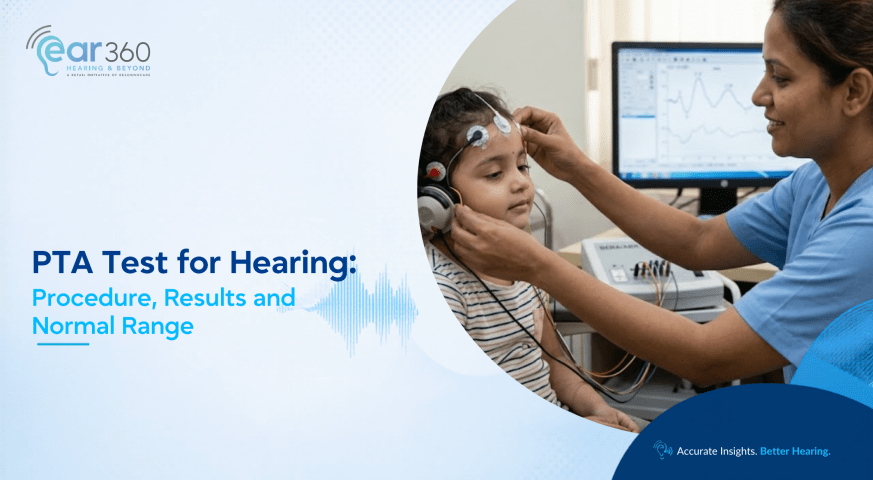
PTA Test for Hearing: Procedure, Results, and Normal Range
TL; DR: This blog is intended for individuals experiencing hearing difficulties, tinnitus, or age-related hearing changes; parents concerned about a child’s hearing; and anyone who has been advised to undergo a Pure Tone Audiometry (PTA) test to assess their hearing health. Explains What a PTA Test Measures: The article describes Pure Tone Audiometry as the gold-standard hearing test that evaluates the softest sounds a person can hear across different frequencies and volumes, helping diagnose hearing loss accurately. Highlights Common Causes and Early Signs of Hearing Loss: We will discuss hearing loss caused by aging, noise exposure, infections, earwax buildup, medications, genetics, and ear injuries, along with warning signs such as tinnitus, difficulty understanding speech, and needing higher volumes. Covers the Complete PTA Test Procedure and Results: The blog explains how the test is performed, including headphone-based sound testing, response recording, bone conduction assessment, and audiogram interpretation, while also outlining normal hearing ranges and hearing loss classifications. Provides Guidance on Treatment and Hearing Care: Possible management options after a PTA test, including medical treatment, earwax removal, hearing aids, assistive listening devices, and ongoing monitoring, while highlighting Resonnocare’s comprehensive hearing care and follow-up support. One of the easiest tests that can be conducted to gain an understanding of your hearing abilities is a PTA test. In the test, you will hear a sequence of soft sounds with various pitches and mark when you hear them. This makes it easier for the audiologist to determine what the quietest sounds are that each ear can hear. The Pure Tone Audiometry (also called PTA) test is painless and is a common test performed to determine if a child has any hearing loss and how serious it is. Resonnocare outlines the process of a PTA test, the documentation of the results, and what they could imply for your hearing. Know More About Sensorineural Hearing Loss: Causes, Symptoms & Treatment Options Hearing Aid Price in India: Complete Cost Guide by Type and Features Mild Hearing Loss: Symptoms, Test Results & Do You Need Hearing Aids? What Is a PTA Test? A PTA (Pure Tone Audiometry) test is a hearing test conducted to measure how loud it takes to hear each frequency/pitch and intensity/loudness of sound. It is considered to be the “gold standard” for measuring hearing sensitivity. It is the foundation of the majority of hearing assessment programs, such as routine hearing screening, workplace hearing screening, and the diagnosis of hearing loss. A PTA test cannot measure brain wave activity and is a test that you have to take. The audiologist sounds out different tones through the headphones, and you respond to them to help them draw a picture of your hearing profile. Point of Difference PTA Test BERA Test Full form Pure Tone Audiometry Brainstem Evoked Response Audiometry What it checks Measures the softest sounds a person can hear at different pitches Measures how the hearing nerve and brainstem respond to sound Type of test Subjective hearing test Objective hearing test Patient participation The patient must respond by pressing a button, raising a hand, or indicating when a sound is heard No active response is required from the patient How it is performed Sounds are played through headphones in a quiet room Small electrodes are placed on the forehead and behind the ears while sounds are played through earphones Best suited for Adults and older children who can understand and follow instructions Newborns, infants, young children, and people who cannot reliably respond during a regular hearing test What the patient needs to do Stay alert and respond whenever a sound is heard Remain relaxed, still, or asleep during the test Main purpose Identifies the degree and pattern of hearing loss across different frequencies Assesses the functioning of the auditory nerve and brainstem hearing pathways Results provided An audiogram showing hearing levels in each ear Waveforms showing how sound signals travel from the ear to the brainstem Can it identify the type of hearing loss? Air and bone conduction testing can help differentiate conductive, sensorineural, and mixed hearing loss Helps detect hearing loss and possible problems affecting the auditory nerve or brainstem Test duration Usually around 20–30 minutes, depending on the patient and tests required Usually takes longer and may last around 30–90 minutes Is it painful? No. It is painless and non-invasive No. The electrodes only record electrical activity and do not give electric shocks Need for sleep or sedation Not required Babies and young children may need to sleep naturally. Sedation may occasionally be considered under medical supervision when they cannot remain still Common recommendation Usually the first hearing test for cooperative adults and older children Recommended when reliable behavioural hearing responses cannot be obtained or when the auditory nerve pathway needs evaluation What Exactly Does a PTA Test Measure? A PTA test measures hearing sensitivity across a range of frequencies. The audiologist identifies the softest sound level that you can respond to reliably at each tested frequency in each ear. These points are then plotted on an audiogram. PTA can help answer: How much hearing sensitivity is reduced Which frequencies are affected Whether the right and left ears are similar Whether the loss appears mild, moderate, severe, or profound Whether air- and bone-conduction findings suggest conductive, sensorineural, or mixed hearing loss Whether another hearing or medical assessment may be appropriate PTA primarily measures detection of tones. It does not by itself show how well you understand everyday speech, especially in complex listening environments. What Causes Hearing Loss That a PTA Test Can Detect? A PTA test can help identify hearing loss associated with any of the following: Presbycusis (age-related hearing loss) Excessive noise, such as traffic, machinery, or listening to music at high volume for a long period of time. When earwax builds up or becomes blocked. Otitis media (ear infection) or otitis media with effusion (fluid in the middle ear) Hearing loss present at birth or inherited from parents. Some drugs that can cause hearing loss Traumatic injuries to the ear or
Read More