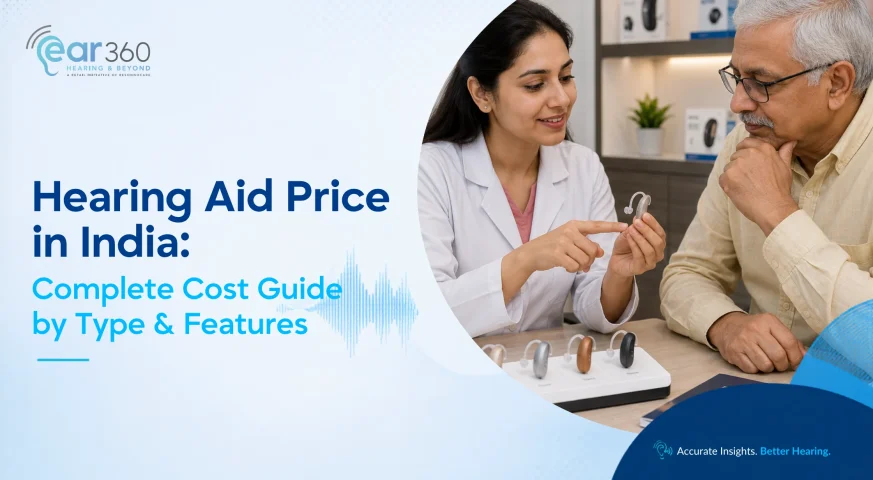
Hearing Aid Price in India: Complete Cost Guide by Type and Features
TL: DR; The blog is intended for people in India who have been diagnosed with hearing loss, their family members or caregivers, and anyone comparing hearing-aid types, prices, features, and clinical support before purchasing a device. Hearing-aid prices vary significantly: A hearing aid in India may cost from approximately ₹20,000 to over ₹4,00,000 per device, depending on its style, technology level, brand, features, customization, and included audiology services. The right type depends on individual needs: BTE, RIC/RITE, ITE, ITC/CIC, and IIC hearing aids differ in visibility, comfort, suitability for different levels of hearing loss, and price. The most discreet or advanced option is not automatically the most appropriate one. Technology and features influence both cost and performance: Advanced noise reduction, directional microphones, Bluetooth connectivity, rechargeable batteries, tinnitus management, automatic environment detection, and custom molding generally increase the price but may improve everyday hearing. Overall value includes professional care: Buyers should consider whether the quoted price covers hearing assessments, fitting, programming, follow-up adjustments, warranty, maintenance guidance, and ongoing aftercare. A free real-world trial can also help patients choose the right device before making a purchase. After being diagnosed with hearing loss, one question often comes before everything else: How much does a hearing aid cost? It is a simple question, but the answer is not always straightforward. Hearing aid prices in India can range from under ₹20,000 to more than ₹4,00,000 per device. The cost depends on several factors, including the hearing aid style, technology level, listening features, degree of hearing loss, and the professional care included with the fitting. The price may also depend on whether the device includes rechargeable technology, smartphone connectivity, accessories, custom earmoulds, an extended warranty, fitting verification, and long-term follow-up support. Without a clear understanding of these differences, it can be difficult to know whether you are paying for features that will genuinely improve your hearing or for technology you may not need. At Resonnocare, we believe hearing aid pricing should be transparent and easy to understand. Our audiologists explain the available options, costs, and clinical recommendations without pressure, helping you make an informed decision that suits both your hearing needs and budget. This guide breaks down hearing aid prices in India by device type, technology level, and the features that can make a meaningful difference in your everyday life. This article provides general educational information. Hearing aid selection should follow an appropriate hearing assessment and should not replace medical evaluation when sudden hearing loss, severe dizziness, ear discharge, bleeding, or significant ear pain is present. Price Review Date and How This Guide Is Updated Last price review: August 2026 The price ranges in this guide are intended as indicative planning ranges rather than fixed quotations. Hearing aid pricing can change according to manufacturer, product generation, technology tier, clinic, city, promotional offer, warranty, included services, accessories, and whether the quotation covers one device or a pair. When reviewing or updating this page, the price methodology should use the following checks: Keep prices clearly labelled as indicative rather than guaranteed Separate per-device pricing from pair pricing Compare equivalent technology levels rather than only brand names Check whether assessment, fitting, programming, verification, trial, follow-up, warranty, and aftercare are included Separate optional accessories from the core hearing-aid price Avoid treating promotional prices as standard market prices State when a listed range relates to a technology tier rather than a specific model Direct patients to request a current written quotation before purchase Because hearing aid models and commercial offers change, the written quotation provided for the patient’s selected device remains the most relevant source for the final payable amount. What Is a Hearing Aid? A hearing aid is a small electronic device worn in or behind the ear to make speech and other useful sounds more accessible to a person with hearing loss. It usually contains a microphone, digital processor, amplifier, receiver, and a rechargeable or disposable power source. Hearing aids can be programmed according to an individual’s hearing-test results. Depending on the model, they may also include directional microphones, background-noise management, Bluetooth connectivity, automatic listening programs, remote support, and tinnitus-support features. Hearing aids do not restore natural hearing or remove every listening difficulty. Their effectiveness depends on the type and degree of hearing loss, speech-understanding ability, device selection, fitting quality, regular use, and follow-up care. Who Should Consider a Hearing Aid Evaluation? Consider scheduling a hearing assessment if you or a family member: Frequently asks people to repeat themselves Finds speech unclear or muffled Struggles to understand conversations in background noise Increases the television, radio, or mobile-phone volume Has difficulty understanding telephone conversations Misses alarms, doorbells, announcements, or higher-pitched voices Feels that one ear hears better than the other Experiences persistent tinnitus Feels tired after listening for extended periods Avoids conversations or social activities because hearing feels difficult Has already been advised by an audiologist or ENT specialist to consider amplification Uses hearing aids but receives limited benefit Needs a hearing aid trial, fitting, replacement, repair, or programming adjustment Children require age-appropriate testing and pediatric hearing aid fitting. Adults with sudden, rapidly worsening, or one-sided hearing loss should receive urgent ENT evaluation before purchasing a hearing aid. Who Should Not Buy a Hearing Aid Without Professional Assessment? Do not select a hearing aid solely from an advertisement, online listing, product demonstration, or price comparison when: The hearing loss developed suddenly Only one ear appears affected There is ear pain, discharge, bleeding, or persistent blockage The patient experiences severe dizziness or imbalance The patient is a child Hearing loss may be severe or profound Speech understanding is unusually poor There is a history of ear surgery The patient has significant vision, dexterity, cognitive, or neurological concerns Previous hearing aids were uncomfortable or ineffective The cause, type, and degree of hearing loss have not been assessed These situations may require an ENT consultation, complete audiological assessment, or a different hearing solution. Purchasing a device without assessment may also delay the diagnosis of a treatable ear condition. Why Do Hearing Aid
Read More