Try Hearing Aids FREE for 14 Days
Experience selected hearing aids in your daily life before you decide.
Start Your Free Trial Eligible patients • Selected devices • T&C apply

Category: Uncategorized

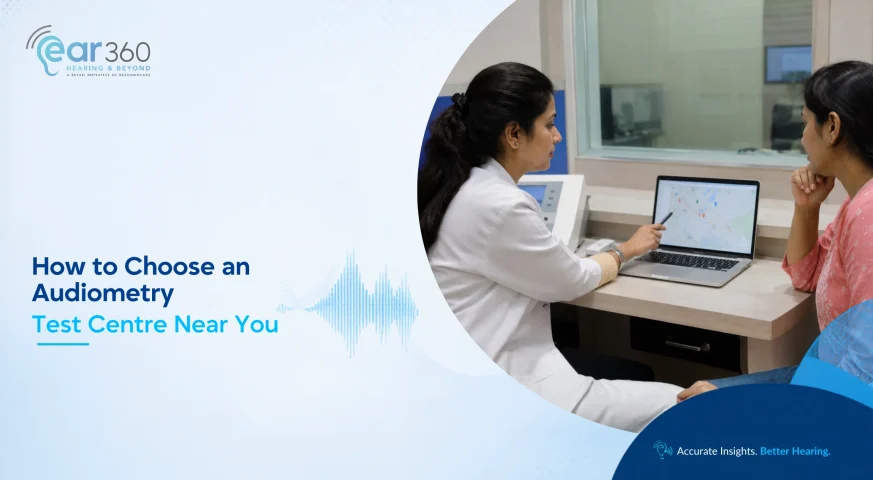
How to Choose an Audiometry Test Centre Near You
September 18, 2026 Comments (0)

How to Choose an Audiometry Test Centre Near You

TL; DR: This blog is intended for individuals experiencing hearing difficulties, parents seeking hearing assessments for their children, caregivers of older adults, and anyone searching for a reliable audiometry test centre near them and wanting guidance on choosing the right provider. This explains why choosing the Right Centre Matters: The article highlights that an audiometry test is only as valuable as the quality of the testing environment, equipment, and professional expertise behind it, making centre selection a critical part of hearing care. Provides Practical Criteria for Evaluating Centres: What to look for in a hearing test provider, including qualified audiologists, sound-treated testing rooms, clear result explanations, age-appropriate care, follow-up support, and access to hearing aid services. Describes the Audiometry Testing Process: What happens during an audiometry test, including ear examination, sound booth testing, tone and speech recognition assessments, and audiogram interpretation, helping patients feel more prepared and confident. Emphasizes Comprehensive Hearing Care Beyond Testing: The article discusses the importance of ongoing support after diagnosis, including treatment recommendations, hearing aid trials, monitoring, home visits, video consultations, and long-term hearing care services. When it comes to selecting a hearing test centre, it is not just the distance from the clinic that matters. It is also important that you have confidence that the test will be conducted properly, the results will be clearly communicated, and that your concerns will be listened to. There are a lot of audiometry clinics, hospitals, and diagnostic centres that are offering audiometry tests, and it may be confusing to know which one to trust. Qualified audiologists, appropriate testing equipment, a quiet testing room, and a patient-friendly approach are all hallmarks of the right centre. This guide can help you know what to check in any audiology testing facility that you consider and select the best one that will provide you with accurate testing, instructions, and proper hearing care. Quick Answer: How Should You Choose an Audiometry Test Centre Near You? Choose an audiometry test centre based on the quality of the assessment not distance alone. Look for a qualified audiologist, an appropriate sound-treated testing environment, suitable hearing-test equipment, clear explanation of your results, age-appropriate testing, and a defined next step after the assessment. Before booking, confirm five things: Who will conduct and interpret the hearing test? Where will the hearing test be performed? Which tests are available if PTA alone is not enough? Will the results be explained rather than only handed to you as a report? What happens if the test identifies hearing loss or another ear problem? A centre that is slightly farther away may be a better choice if it provides a more appropriate clinical assessment and clearer follow-up. Who Is This Guide For? This guide can help if you are comparing nearby hearing-test providers and are unsure whether convenience alone is enough to make the decision. It is particularly relevant for: Adults noticing gradual hearing difficulty People struggling to understand speech in background noise Someone referred for an audiometry test by a doctor or ENT Parents arranging a hearing assessment for a child Families helping an older adult arrange hearing care People who need a hearing report for work, school, or documentation Patients with mobility or travel constraints People comparing a clinic, hospital, diagnostic centre, or dedicated audiology provider Anyone who wants to understand what should happen after the hearing test Your age, symptoms, mobility, type of test required, and expected next step can all change which centre is most suitable. What Is an Audiometry Test? An audiometry test is a hearing test used to assess your hearing ability for sounds at different frequencies and intensities. It may assist in diagnosing whether hearing loss exists, suggest the possible cause of the hearing loss, inform about the severity of the hearing loss, and prepare for any subsequent hearing care decisions. Pure tone, speech, and middle ear function test (tympanometry) may be measured during audiometry. The selection of a testing centre is as significant as the actual test, since audiometry is key to diagnosis. Know More About Audiometry Test: Procedure, Cost & How to Read the Results Audiologist Near Me: How to Choose the Right Hearing Specialist Age-Related Hearing Loss: Signs, Causes & Best Treatment Options Why Do People Look for an Audiometry Test Near Them? There are numerous reasons why individuals might look for an audiometry test in their local area. Some experience  changes in their hearing; others are referred to the test by a doctor. Common reasons include: Having trouble hearing conversations clearly. Recommendation from a general check-up by a doctor. A family history of hearing loss Auditory test requirements for school, work, or official documentation. Worry that an older family member or parent has a hearing change. It’s easy to reach a clinic, and that is what is important. (to be removed) Limited mobility due to age, illness, or disability that hinders travel. If follow-up visits are required, it can be easier to choose a centre that has a convenient location. This ease of testing, however, should not be made at the expense of accurate testing. Choosing a centre that has a qualified audiologist conducting the test and a clear explanation provided of the results is vital. Near Me vs Right for Me: Which Matters More? Distance matters when repeated appointments are likely, but the nearest centre is not necessarily the most appropriate centre for every patient. Decision factor Why it matters Distance from home Important when mobility is limited or repeat appointments are expected Qualified audiologist Important for selecting the right test and interpreting the result Testing environment Background noise can affect hearing-test reliability Tests available Symptoms may require more than one type of hearing assessment Age-appropriate testing Children and adults may require different approaches Result explanation The report should lead to a clear understanding of what happens next Follow-up availability Useful when monitoring, additional testing, medical referral, or hearing support is needed A practical approach is to first shortlist centres that meet the clinical requirements and then compare distance, convenience,

Read More
Top Hearing Aid Clinics in Pune
September 18, 2026 Comments (0)

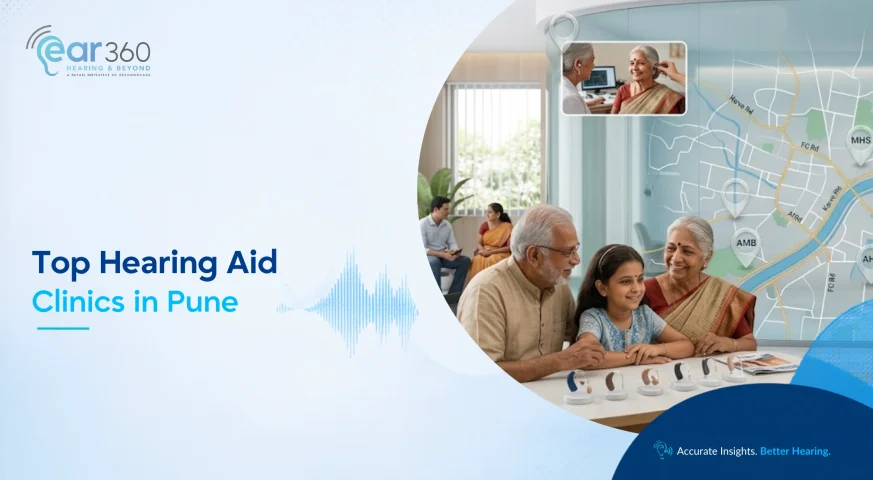
Top Hearing Aid Clinics in Pune

TL; DR: This blog targets patients, families, senior citizens, and caregivers in Pune who are looking for trusted hearing aid clinics, audiologist consultations, hearing tests, hearing aid trials, home visits, video consultations, and aftercare support. The blog explains that choosing the top hearing aid clinics in Pune should not be limited to buying a hearing aid but should also include a proper hearing evaluation, clinical guidance, personalized device selection, fitting support, and follow-up care. It highlights the early signs of hearing loss, such as asking people to repeat themselves, increasing TV or phone volume, difficulty hearing in noise, ringing or buzzing in the ear, missing alarms or doorbells, and avoiding social interactions. The blog outlines Resonnocare’s hearing care process, including case history, ear and symptom review, hearing tests, counseling, hearing aid selection, free hearing aid trials, home visits, video consultations, and aftercare support. It positions Resonnocare as a reliable hearing care provider in Pune by emphasizing qualified audiologists, accurate hearing assessments, personalized care plans, trial options, long-term aftercare, and support for patients across different age groups. When you’re looking for the best hearing aid clinics in Pune, it may all start with a question: How well are you able to hear? You might find yourself struggling to get the gist of conversations; phone calls may grow louder and longer; the volume of the TV keeps climbing; or an older family member might quietly fade away from the current conversations. Initially, it is a slow-onset hearing loss, but not the only thing that is affected. Can affect communication, confidence, relationships, independence, and quality of life. Therefore, it is critical to choose the right hearing care aid. The proper evaluation, counseling, fitting, and follow-up services should be offered at clinics that provide hearing aids. We ensure our patients and families are supported throughout the hearing care journey at Resonnocare, Pune’s best hearing doctors. Here are some tips on when to visit an audiologist, how hearing loss is identified, what to expect during hearing aid maintenance, and what Resonnocare can do to help you make a confident choice for your hearing solution. How Can You Verify an Audiologist Before Booking? Before booking, ask the clinic for the audiologist’s qualification, professional credentials or registration details where applicable, and experience with the hearing concern you are bringing to the appointment. A clinic should be able to explain who will conduct the assessment, who will interpret the results, and who will provide fitting or follow-up support if a hearing aid is recommended. Useful questions include: Who will conduct my hearing assessment? What qualification does the audiologist hold? Does the audiologist regularly work with my age group and hearing concern? Who will explain the hearing-test results? Who will program and adjust the hearing aid if one is recommended? Does the clinic provide an ENT or medical referral pathway when red-flag symptoms are identified? Verifying the clinician is especially important for children, sudden or one-sided hearing changes, severe hearing loss, tinnitus with warning signs, and patients who have previously struggled with hearing aids. What Makes Resonnocare One of the Top Hearing Aid Clinics in Pune? Don’t expect to see a hearing aid from a good hearing clinic first. It should start with listening to you. The first step to getting your care at Resonnocare is to gain an understanding of your hearing needs, how they affect you, your medical history, your lifestyle, your comfort needs, and your expectations. This helps us recommend a hearing solution for you rather than one for everyone. Most individuals who look for the best hearing aid clinics in Pune seek guidance and a solution, along with reliable clinical support. A one-in-a-million hearing aid does not exist. The choice of device depends on the type and severity of your hearing loss, your ability to understand speech, ear comfort, your age, your lifestyle, your dexterity, and your budget. Resonnocare is not just about buying a hearing aid; it’s about comprehensive hearing care. We can conduct hearing tests, provide hearing aid consultations, help guide you in choosing a hearing aid, fit it for you, assist you in trying it out, offer home visit services, provide video hearing aid consultations, and offer post-fitting support as required. For people from childhood to adulthood, and for older family members, our team makes it easy to understand the condition and take the next step with confidence. What Are the Early Signs That You May Need a Hearing Test? Some types of hearing loss develop slowly. Many people don’t realize it right away as they slowly change their habits. Signs might first be recognized by family members. If you or a loved one has one of the following changes, you should have a hearing test: Repeating things to people a lot Increasing the volume of the TV or phone more than usual Difficulty following conversations in crowds or noisy settings Feeling that others are mumbling or not speaking clearly Hearing difficulties with phones. Failure to hear doorbells, alarms, or soft sounds Delaying social interactions because of hearing loss Ringing, buzzing, or other sounds in the ear Struggle to hear what people say, despite hearing loud noises Any of these symptoms should not be ignored, particularly if they persist for longer than a few days or affect the ability to communicate on a daily basis. A hearing test will help determine whether it is temporary or age-related, noise-related, or related to another ear problem. How Do the Top Hearing Aid Clinics in Pune Assess Hearing Loss? The Top Hearing Aid Clinics in Pune should begin with a detailed hearing assessment before recommending any device. At Resonnocare, our audiology team first understands your symptoms, medical history, communication challenges, and lifestyle needs. A typical hearing evaluation may include: Case History Our team asks about when the hearing difficulty started, whether one or both ears are affected, exposure to loud noise, ear infections, family history, medication use, and related symptoms such as tinnitus, dizziness, or ear fullness. Ear and Symptom Review Some hearing problems

Read More
Age-Related-Hearing-Loss-Signs-Causes-and-Best-Treatment-Options-1
September 18, 2026 Comments (0)

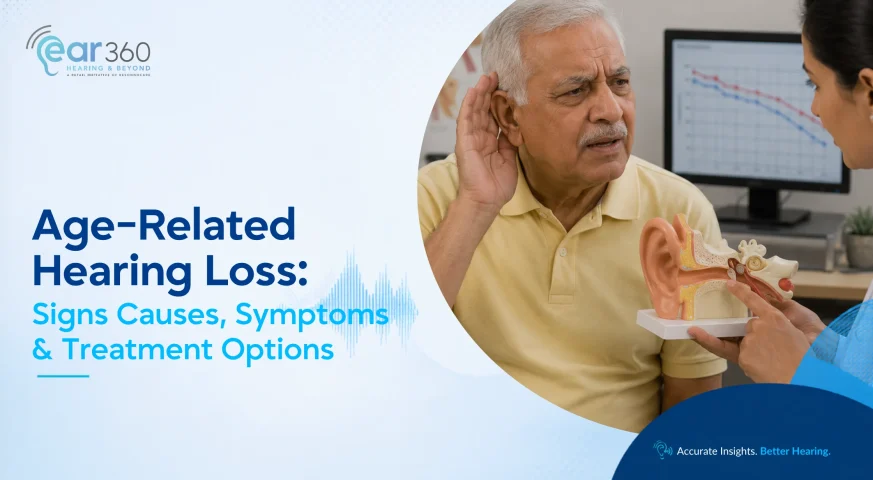
Age-Related Hearing Loss: Signs, Causes, and Best Treatment Options

TL; DR: This blog is written for senior citizens, their family members, and caregivers who are noticing gradual hearing difficulty, repeated requests to increase volume, or trouble following conversations. Age-related hearing loss, also called presbycusis, usually develops slowly and affects both ears, which is why many people ignore it in the early stage. Common signs include difficulty hearing speech in groups, asking people to repeat themselves, increasing the volume on the phone or TV, feeling that others are mumbling, and sometimes ringing or buzzing in the ears. Diagnosis requires a proper hearing assessment by an audiologist, including otoscopy, pure-tone audiometry, speech audiometry, and tympanometry to understand the type and severity of hearing loss. Although age-related inner ear damage cannot be reversed, hearing aids, communication guidance, auditory rehabilitation, home visits, online consultations, and regular aftercare can significantly improve daily communication and quality of life. Presbycusis can begin gradually. The parent may request the television to be turned up. Grandparents are not required to attend group conversations. A senior might be able to hear a person talking, but it may be difficult to hear what the person is saying. These minor adjustments can begin to affect confidence, family communication, and comfort over time. Medical professionals refer to this as “presbycusis” (age-related hearing loss). It typically develops slowly over time as the person ages and is often bilateral (both sides). This change is gradual, and many seniors and families think that it is a normal part of aging and put off seeking help. What is important to know is that age-related hearing loss can be evaluated and managed. Many seniors can communicate more effectively and remain more connected with family and those around them with a proper hearing test, guidance from an audiologist, and appropriate hearing support, if necessary. Our audiology team at Resonnocare provides regular services to older adults with hearing concerns, including advice on hearing aids, follow-up services, and family counseling. This guide discusses the causes of age-related hearing loss, how it can be diagnosed, and what can realistically be done to improve hearing and quality of life. What Is Age-Related Hearing Loss? Age-related hearing loss is the natural decline in hearing that occurs over time. It usually affects both ears and evolves gradually over many years, which is why it can go unnoticed or ignored in its early stages. Age-related hearing loss typically affects high-frequency sounds first. As a result, speech may become difficult to understand, especially when background noise is present, or the speaker has a higher-pitched voice, or if the speaker’s voice is distorted by background noise. Low-pitched sounds, such as a truck on the street, can still be heard quite well, and this can give a false sense of good hearing. Presbycusis is a form of sensorineural hearing loss caused by age-related damage to the sensory hair cells of the inner ear, which gradually lose their ability to convert sound into electrical signals. Sensorineural hearing loss (damage) is not reversible, whereas conductive hearing loss is hearing loss due to blockage or mechanical issues in the outer or middle ear. However, with proper management, its impact on communication and quality of life can often be significantly reduced. What Does Age-Related Hearing Loss Usually Look Like on an Audiogram? Age-related hearing loss commonly shows a gradual reduction in hearing sensitivity at the higher frequencies. On an audiogram, this may appear as a downward-sloping pattern, with better hearing at lower frequencies and greater hearing loss at higher frequencies. This pattern helps explain why an older adult may still hear that someone is speaking but miss parts of the words. High-frequency speech sounds contribute important clarity, including sounds such as “s,” “f,” “th,” “sh,” and other consonants. However, an audiogram pattern alone should not be used to diagnose age-related hearing loss. The audiologist also considers: Whether both ears show a similar pattern The degree of hearing loss at each frequency Speech-understanding results Middle-ear function Ear examination findings Medical and noise-exposure history Whether hearing changed gradually or suddenly Whether one ear is significantly different from the other A hearing pattern that is strongly one-sided, suddenly changed, or inconsistent with typical age-related loss may require further medical evaluation. What Causes Age-Related Hearing Loss? Age-related hearing loss results from gradual changes in the structures of the inner ear over a person’s lifetime. If the hair cells in the cochlea that enable hearing are damaged, they cannot be repaired. As usual, these cells tend to decrease in number and activity as we grow older. But it is not usually the only factor involved in aging. There are a number of conditions and exposures that can accelerate or worsen hearing loss in older adults. The inner ear deteriorates much faster when an individual is exposed to loud noise over a long period, such as years spent working in a factory or on a construction site, or listening to loud music at concerts or through headphones. The cochlea depends on a healthy blood supply. Cardiovascular disease and poor circulation may reduce blood flow and impair its function. Damage to blood vessels and nerves throughout the body is another risk of diabetes and can result in hearing loss. Certain medications can be ototoxic (toxic to hearing), and are administered over long periods of time, such as some diuretics, chemotherapy, or aspirin in high doses. Other factors are smoking, hypertension, and hearing loss in family members. Knowing about them is important because, if you manage underlying health problems, you could slow the progression of age-related hearing loss, though it cannot be reversed. What Are the Early Signs of Age-Related Hearing Loss? Age-related hearing loss usually develops gradually, which is why many people do not notice it right away. In fact, family members often spot the signs before the individual does. What may seem like a minor hearing difficulty can slowly start affecting conversations, social interactions, and overall quality of life. Some common early signs of age-related hearing loss include: Frequently asking people to repeat themselves Finding it difficult

Read More

Resonnocare Health-Tech Private Limited Provides hearing and audiology services through a structured, clinically guided approach.

Popular Clinic Locations:

Delhi | Bangalore | Pune | Ludhiana

contact info

RESONNOCARE HEALTH-TECH PVT. LTD

Head Office 403, Office Block ‘C’

4th Floor – Above Retail Block R1 & R5,

M3M URBANA, Sector 67, Gurgaon 122101 Haryana

2026, All rights reserved by Resonnocare  health-tech private limited