
TL: DR;
This blog is for people searching for an audiologist near them, especially adults with hearing difficulty, seniors with age-related hearing loss, parents concerned about a child’s hearing, and anyone experiencing tinnitus, muffled hearing, or trouble understanding speech.
- An audiologist does more than selling hearing aids. They assess hearing problems, conduct hearing evaluations such as pure-tone audiometry, speech audiometry, and tympanometry, explain the reports, identify the type of hearing loss, and recommend the appropriate care plan.
- Early warning signs should not be ignored. Repeatedly asking people to repeat themselves, increasing TV or phone volume, struggling in noisy places, ringing in the ears, blocked-ear sensation, or delayed response to sound in children are signs that a hearing evaluation may be needed.
- Choosing the right audiologist depends on clinical quality and aftercare. Patients should look for appropriate qualifications, detailed hearing testing, experience with their specific concern, access to multiple hearing aid options, and post-fitting support, such as programming, counseling, and follow-ups.
The best audiologist near you may not simply be the closest clinic. Look for a professional who conducts appropriate testing, explains the findings clearly, recommends only clinically suitable care, and provides continued support after the first appointment.
It may be frustrating to find conversations difficult to follow, to have to ask people to repeat themselves, to turn up the volume on the television, or to experience constant ringing in the ears.
It is at this stage that people begin to search for an “audiologist near me” they can rely on for hearing care.
Selecting an audiologist is not simply a matter of choosing the closest audiology clinic.
It is about finding a qualified hearing specialist who can properly assess your hearing, explain your hearing-test results in a simple manner, and inform you about the appropriate hearing care based on your age, symptoms, lifestyle, and listening needs.
From a baby who has been referred for early hearing-screening support to older adults and seniors experiencing hearing loss, tinnitus, hearing aid problems, or age-related hearing changes, our clinical team is available to assist.
This guide will help you understand when you should see an audiologist, what an audiologist does, what happens during an appointment, and how to find one.
This article provides general educational information and does not replace an individual hearing assessment, medical diagnosis, or advice from an ENT specialist or another qualified healthcare professional.
What Is an Audiologist?
An audiologist is a healthcare professional trained to assess, identify, manage, and rehabilitate hearing and balance disorders in people of all ages. Audiologists work with newborns, children, adults, and older people who experience hearing loss, tinnitus, sound sensitivity, balance difficulties, or problems using hearing devices.
Audiologists may provide:
- Hearing screening and diagnostic assessment
- Pure-tone and speech audiometry
- Middle-ear testing
- OAE and BERA or ABR testing
- Pediatric hearing assessment
- Hearing aid evaluation, fitting, and programming
- Cochlear implant candidacy support and rehabilitation
- Tinnitus assessment and counselling
- Balance and vestibular testing where available
- Hearing-conservation and noise-protection advice
- Assistive listening-device recommendations
- Communication and auditory rehabilitation
- Referrals for medical or specialist care
Audiologists assess and rehabilitate hearing and balance disorders, but they are not medical doctors and do not perform ear surgery. Audiologists and ENT specialists often work together when a patient requires both audiological and medical care.
What Does an Audiologist Actually Do?
An audiologist is a trained healthcare professional who specializes in the assessment, identification, management, and rehabilitation of hearing and balance disorders.
They can perform a thorough hearing evaluation, which includes pure-tone audiometry, speech audiometry, tympanometry, and other tests, and explain the results and what they mean for your hearing health.
Important: An audiologist is not a hearing aid salesperson.
Their job is more comprehensive: determining the type and extent of hearing loss and creating a plan of care to meet your personal needs.
They also coordinate with ENT specialists or other medical practitioners, if needed, for cases that require further investigation.
Depending on the patient’s needs and the services available at the clinic, an audiologist may also:
- Examine the ear canal and eardrum before testing
- Assess the impact of hearing loss on communication
- Recommend hearing aids or assistive devices
- Program and verify hearing aids
- Provide hearing aid trials
- Teach patients and caregivers how to use and maintain devices
- Monitor changes in hearing
- Support people with tinnitus
- Assess selected balance symptoms
- Provide auditory rehabilitation and communication strategies
- Refer patients to an ENT, neurologist, pediatrician, speech-language therapist, or another professional
An audiologist’s recommendation should be based on the assessment results and the patient’s communication needs, not on the need to sell a particular device.
Audiologist vs ENT vs Hearing Aid Dispenser
Professional | Primary Role | Common Services | When You May Need Them |
Audiologist | Assessment and rehabilitation of hearing and balance disorders | Hearing tests, hearing aid fitting, tinnitus support, balance testing, and auditory rehabilitation | Hearing difficulty, tinnitus, hearing aid needs, or selected balance concerns |
ENT specialist | Medical and surgical care for ear, nose, and throat conditions | Diagnosis, medication, procedures, surgery, and management of ear diseases | Ear pain, discharge, infection, sudden hearing loss, structural problems, or surgery |
Hearing aid dispenser or technician | Device supply or selected hearing-aid-related services, depending on training and local regulations | Product demonstration, basic fitting support, maintenance, or earmould services | Device-related support under an appropriate clinical care pathway |
Speech-language therapist | Assessment and treatment of speech, language, voice, fluency, and communication difficulties | Speech and language therapy, communication development, and rehabilitation | Speech delay, language delay, articulation concerns, or communication difficulties |
An audiologist and an ENT are not interchangeable. The audiologist evaluates hearing and supports rehabilitation, while the ENT investigates and treats medical or surgical ear conditions. Many patients benefit from coordinated care between both professionals.
Which Type of Audiologist Should You Choose?
The right audiologist should have experience that matches the patient and the reason for the visit. A clinician who regularly works with adult hearing-aid fittings may not necessarily provide the same specialist services as one focused on infants, children, cochlear implants, tinnitus, or vestibular assessment.
Your concern | Experience to look for | Useful question to ask before booking |
Adult hearing difficulty | Adult diagnostic audiology, speech testing, hearing rehabilitation | “Do you routinely assess adults with my type of hearing concern?” |
Child or infant hearing concern | Pediatric audiology, age-appropriate behavioural testing, OAE/BERA where required | “Do you provide pediatric hearing assessment for my child’s age?” |
Hearing-aid selection or fitting | Hearing-aid evaluation, fitting, programming, verification, aftercare | “How do you verify that the hearing aid is programmed appropriately?” |
Tinnitus | Tinnitus assessment, hearing evaluation, counselling, referral pathway | “Do you assess tinnitus and refer to an ENT when medical review is needed?” |
Dizziness or balance symptoms | Vestibular assessment where available and appropriate referral pathways | “Do you provide vestibular testing, or will I be referred to the appropriate specialist?” |
Existing hearing aid not working well | Device troubleshooting, programming review, physical-fit assessment, reassessment | “Can you review my existing hearing aid even if it was purchased elsewhere?” |
Matching the clinician’s expertise to the patient’s concern can be more important than choosing the nearest clinic alone.
Who Should Search for an Audiologist Near Me?
Consider booking an appointment with an audiologist if you or a family member:
- Frequently asks people to repeat themselves
- Feels that people mumble
- Struggles to understand conversation in background noise
- Turns the television or telephone volume higher than others prefer
- Has difficulty understanding telephone calls
- Misses doorbells, alarms, announcements, or high-pitched voices
- Experiences persistent tinnitus
- Feels that one ear hears better than the other
- Has a history of repeated ear infections
- Has been exposed to occupational or recreational noise
- Experiences listening fatigue
- Avoids social situations because hearing feels difficult
- Uses hearing aids but finds them unclear or uncomfortable
- Needs a hearing aid trial, fitting, adjustment, or repair
- Has concerns about a child’s response to sound
- Is worried about speech or language delay
- Has been referred by an ENT, pediatrician, neurologist, or physician
- Requires hearing monitoring because of medicine, treatment, or workplace exposure
- Experiences dizziness or balance concerns that may involve the hearing and vestibular systems
Audiologists support people of all ages, and a person does not need to wait until hearing loss becomes severe before arranging an assessment.
What Are the Early Signs That You Need to Find an Audiologist Near Me?
Many people put off seeking help because hearing loss occurs slowly.
When it is finally recognized, it may already have been affecting communication and daily life for years.
Become familiar with the following early signs:
- Frequently asking people to repeat words or sentences
- Increasing the volume of the television or telephone when others would prefer it to be quieter
- Difficulty understanding speech in a noisy environment, such as a restaurant, wedding, or busy office
- Listening to people talk but not comprehending the words very well
- Repeatedly experiencing ringing, buzzing, or hissing in one or both ears
- Experiencing a blocked or muffled-ear sensation
- Finding it harder to hear women’s or children’s voices
- Missing parts of meetings or group conversations
- Watching people’s faces closely to understand speech
- Feeling tired after prolonged listening
- Avoiding telephone calls or social gatherings
- Feeling that one ear hears differently from the other
If hearing loss occurs suddenly in one ear, seek immediate medical evaluation.
Early signs can also be observed in infants and children.
Any child who does not turn towards sounds, respond consistently to their name, develop speech as expected, or frequently says “what?” should have their hearing evaluated.
Other possible signs in children include:
- Delayed babbling or first words
- Speaking unusually loudly or softly
- Turning one ear towards sound
- Increasing the television volume
- Appearing inattentive in class
- Following visual cues more reliably than spoken instructions
- Having repeated ear infections
- Losing speech or language skills previously acquired
These signs do not confirm hearing loss, but they indicate that an appropriate hearing assessment may be needed.
Common Symptoms and What They May Indicate
Symptom | Possible Hearing-Care Concern | Suggested Next Step |
Difficulty understanding speech in noise | Early or high-frequency hearing loss, reduced speech processing, or auditory difficulty | Comprehensive hearing assessment |
Blocked or muffled hearing | Earwax, middle-ear fluid, infection, or hearing loss | Ear examination and hearing testing |
Persistent tinnitus | Hearing loss, noise exposure, medicine-related effects, or another ear condition | Audiologist and, where indicated, ENT evaluation |
Sudden hearing loss | Possible sudden sensorineural hearing loss or another urgent condition | Urgent medical or ENT evaluation |
Repeated ear infections | Middle-ear dysfunction or fluctuating hearing | ENT and audiological assessment |
Speech delay in a child | Possible hearing, developmental, speech, or language concern | Hearing assessment and appropriate developmental evaluation |
Dizziness with hearing change | Inner-ear or vestibular concern | Prompt medical, ENT, and audiological assessment |
Hearing aid discomfort or poor clarity | Physical fit, programming, maintenance, or hearing change | Hearing aid review and reassessment |
Similar symptoms can have different causes. An appropriate assessment is necessary before deciding whether the patient needs earwax management, medical care, hearing aids, rehabilitation, or monitoring.
When Should You See an Audiologist Rather Than Waiting It Out?
This is one of the most common questions we receive.
The reality is: sooner than you think.
Do not ignore hearing loss.
It may begin as a minor issue, such as missing words in conversation or turning up the television volume, but over time it can have a significant impact on daily communication, confidence, relationships, and quality of life.
Having the appropriate assistance when and where needed can make a difference.
If you experience any abrupt or persistent hearing loss, it is time to see an audiologist in your area.
Sudden hearing loss should be taken seriously and requires urgent medical assessment rather than waiting for a routine appointment.
Sudden sensorineural hearing loss is considered a medical emergency. People may mistake it for earwax, congestion, or an infection, but delaying assessment can reduce the opportunity for timely treatment.
Ear pain or pressure, ear heaviness, or ear blockage that does not improve is also a reason to seek help.
Any discharge from the ear, dizziness, vertigo, or balance problem should also be evaluated by a specialist, as this may be associated with an ear-related problem.
When you experience ringing, buzzing, or whistling, particularly when it is new or worsening, it is best to have it clinically reviewed.
Also important is the slow, gradual loss of hearing.
An audiologist can evaluate your hearing and recommend what to do if you are having difficulty hearing conversations at home, at work, in meetings, or during social events.
For newborns and young children, the Resonnocare hearing-care team recommends early screening as part of routine developmental care.
Current early-hearing benchmarks recommend screening newborns by one month of age, completing diagnostic assessment by three months when a baby does not pass, and beginning intervention no later than six months when hearing loss is identified.
When Should You See an ENT or Seek Urgent Medical Care?
An audiologist may be part of the assessment, but the following symptoms require prompt medical or ENT evaluation:
- Sudden hearing loss in one or both ears
- Hearing loss that develops over a few hours or days
- New one-sided hearing loss
- Severe ear pain
- Ear discharge or bleeding
- Hearing loss after a head injury
- A foreign object in the ear
- Severe dizziness or loss of balance with hearing change
- Facial weakness, numbness, or another neurological symptom
- Persistent one-sided tinnitus
- Pulsatile tinnitus that follows the heartbeat
- Rapidly worsening hearing
- A suspected perforated eardrum
- Repeated ear infections that do not improve
- Unexplained major differences between the two ears
A responsible audiologist should recognize medical warning signs and refer the patient rather than proceeding directly with a hearing aid fitting.
Benefits of Seeing an Audiologist Early
An early audiological evaluation may help:
- Identify whether hearing loss is present
- Determine the type and degree of hearing loss
- Recognize differences between the ears
- Identify possible middle-ear dysfunction
- Detect symptoms that require ENT referral
- Establish a baseline for future monitoring
- Reduce delays in childhood hearing support
- Guide hearing aid or assistive-device selection
- Improve communication strategies
- Support safer participation in daily activities
- Address hearing aid problems before the device is abandoned
- Provide realistic expectations about treatment and rehabilitation
Early assessment does not always mean that treatment or hearing aids are immediately required. In some cases, the appropriate next step may be monitoring, hearing protection, medical referral, counselling, or another type of evaluation.
How Is a Hearing Assessment Conducted?
The hearing-testing process is painless, non-invasive, usually takes about 45 minutes to one hour, and is performed by a qualified audiologist.
The duration can vary depending on the patient’s age, symptoms, tests required, and ability to respond.
The following is typical.
Case History
An audiologist will start with a case history, which includes details of your symptoms, how long they have been present, family history of hearing loss, noise exposure, medicines, and general health.
The audiologist may also ask about:
- Whether one or both ears are affected
- Ear infections or surgery
- Tinnitus
- Dizziness or balance symptoms
- Workplace and recreational noise
- Communication difficulties
- Previous hearing aid use
- Speech and language development in children
- The patient’s most important listening goals
Ear Examination
Next, a physical examination of the ear canal and eardrum is performed using otoscopy to look for earwax buildup, infection, discharge, a foreign object, or structural problems.
If the audiologist identifies a condition that needs medical management, testing may be modified or the patient may be referred to an ENT specialist.
Pure-Tone Audiometry
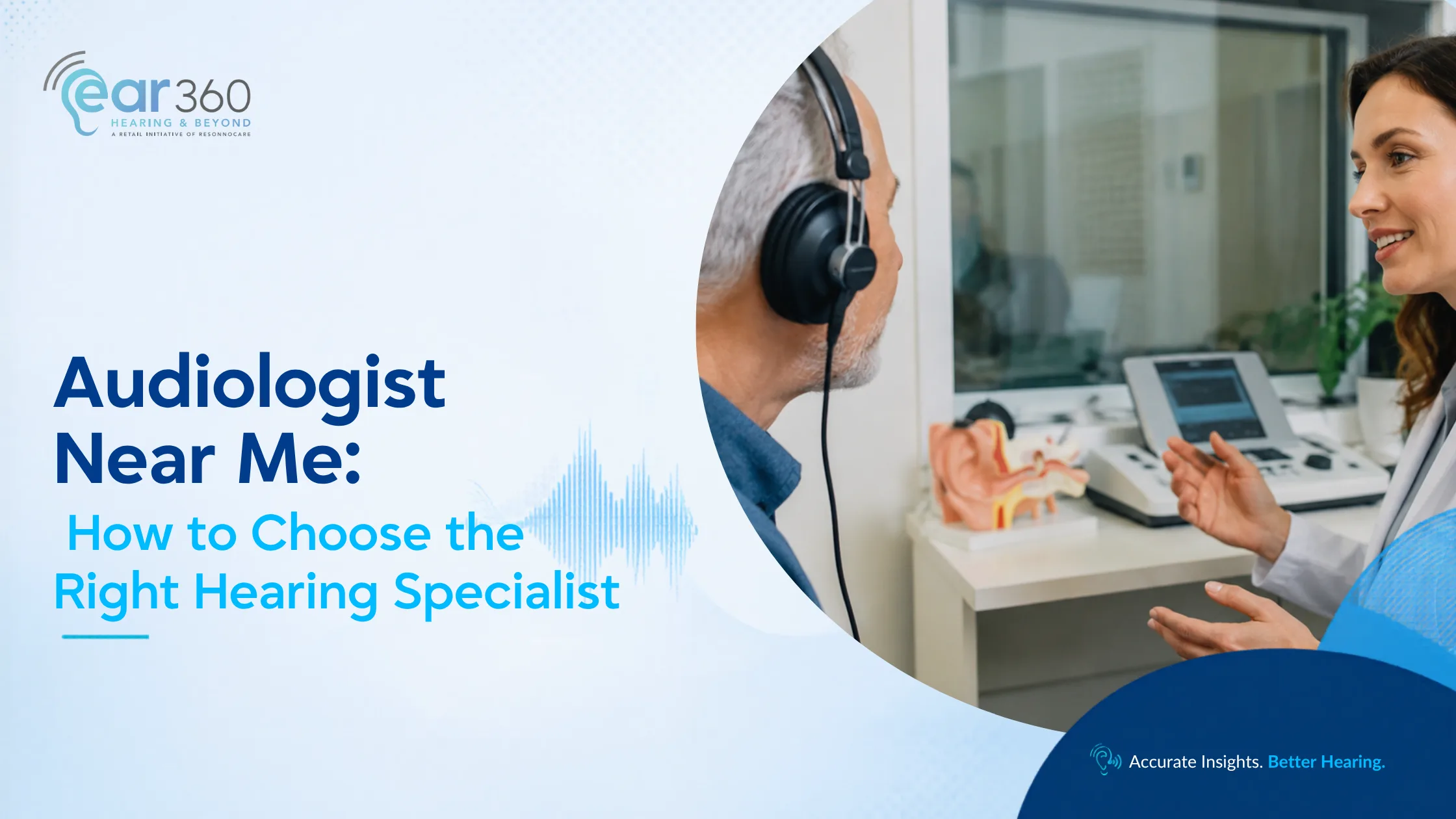
During pure-tone audiometry, you listen to tones of different frequencies and intensities through headphones or insert earphones and respond when you hear them.
This produces an audiogram, a chart showing your hearing levels across different frequencies.
Bone-conduction testing may also be used to help determine whether hearing loss involves the outer or middle ear, the inner ear, or both.
Speech Audiometry
Speech audiometry evaluates how softly speech can be detected and how accurately words can be understood at selected sound levels.
It provides information about how clearly you understand speech in addition to whether you can detect sound.
This can be particularly useful when a patient says, “I can hear people talking, but I cannot understand the words.”
Tympanometry
Tympanometry assesses eardrum and middle-ear function.
It can help identify middle-ear fluid, abnormal pressure, restricted movement, a perforated eardrum, or Eustachian tube dysfunction.
Additional Tests
Depending on the patient’s age and symptoms, the audiologist may also recommend:
- Otoacoustic emissions
- BERA or auditory brainstem response testing
- Acoustic reflex testing
- Aided hearing testing
- Real-ear measurement
- Tinnitus assessment
- Balance or vestibular testing
- Hearing aid evaluation
- Referral for imaging or medical assessment
Your audiologist can use these results to determine the type and degree of hearing loss and recommend further action.
Common Hearing Tests Explained
Test | What It Assesses | Who It May Be Used For |
Pure-tone audiometry | Softest sounds heard at different frequencies | Cooperative older children and adults |
Speech audiometry | Speech detection and word understanding | Children and adults able to respond reliably |
Tympanometry | Eardrum movement and middle-ear function | Patients with suspected fluid, pressure, or eardrum problems |
OAE | Outer hair-cell response in the cochlea | Newborns, children, and patients unable to complete behavioural tests |
BERA or ABR | Auditory nerve and brainstem response to sound | Infants, difficult-to-test patients, and selected neurological concerns |
Real-ear measurement | Sound delivered by a hearing aid inside the patient’s ear | People undergoing hearing aid fitting or verification |
Vestibular testing | Selected balance and inner-ear functions | Patients with dizziness, vertigo, or imbalance |
Not every patient needs every test. The audiologist should select the assessment based on the symptoms, age, medical history, and reason for referral.
Step-by-Step: What Happens at an Audiologist Appointment?
Step 1: Discussion of Your Concerns
The audiologist asks what you have noticed, when the problem began, and which situations are most difficult.
Step 2: Review of Medical and Hearing History
The clinician reviews ear infections, surgery, medicines, noise exposure, tinnitus, dizziness, family history, and previous hearing tests.
Step 3: Examination of the Ears
The ear canals and eardrums are checked for wax, discharge, blockage, or other visible concerns.
Step 4: Hearing Tests
The audiologist performs the tests appropriate for your age, symptoms, and ability to respond.
Step 5: Explanation of the Results
The findings should be explained in simple language, including the type and degree of hearing loss, differences between the ears, and speech-understanding ability.
Step 6: Identification of Medical Warning Signs
If the results or symptoms suggest a medical ear condition, the audiologist may refer you to an ENT specialist.
Step 7: Discussion of Suitable Options
The recommendations may include monitoring, hearing protection, medical referral, communication strategies, hearing aids, assistive devices, tinnitus support, or rehabilitation.
Step 8: Written Report or Care Plan
You may receive an audiogram, written report, referral, quotation, or follow-up plan depending on the purpose of the appointment.
Step 9: Follow-Up
Further testing, device fitting, counselling, or reassessment may be scheduled when required.
What Should You Bring to an Audiology Appointment?
Consider bringing:
- Previous hearing-test reports
- ENT prescriptions or medical records
- A list of current medicines
- Details of ear infections, surgery, or head injury
- Information about workplace or recreational noise
- Your existing hearing aids
- Chargers, batteries, domes, and accessories
- A list of difficult listening situations
- Your smartphone if hearing aid connectivity is important
- Newborn hearing-screening records for a baby
- Speech, language, or developmental reports for a child
- A family member or caregiver
- Questions about testing, treatment, price, warranty, and aftercare
A family member can help describe communication difficulties, remember instructions, and understand how to provide support after the appointment.
What Should You Look for When Choosing an Audiologist Near Me?
Selecting the appropriate audiologist is crucial because hearing care is not just a hearing test or a purchase.
It is about finding a qualified hearing specialist who understands your concerns, provides a thorough hearing examination, and helps you make an informed decision.
Appropriate Education and Professional Registration
A good audiologist should hold a recognized degree in audiology or an RCI-recognized qualification such as BASLP or another eligible audiology qualification.
It is also beneficial to ask whether they have experience with your particular issue, whether it is hearing loss, hearing aid fitting, tinnitus, speech-related hearing difficulties, balance concerns, or hearing issues in children.
In India, audiologists and speech therapists with recognized qualifications are among the professional categories registered in the Central Rehabilitation Register. Ask whether the clinician’s registration is active and current.
Appropriate Hearing Assessment Before Recommendations
Any audiologist you trust should first conduct the appropriate hearing assessment before recommending treatment.
Be cautious of clinics that rapidly promote hearing aids without testing or explanation.
The audiologist should clearly explain your hearing report and make recommendations based on your hearing needs.
A short screening or product demonstration should not be treated as a complete diagnostic hearing assessment.
Experience With Your Specific Concern
Ask whether the audiologist regularly works with patients who have your particular concern, such as:
- Pediatric hearing loss
- Newborn hearing screening follow-up
- Hearing aid fitting
- Severe or profound hearing loss
- Tinnitus
- Balance disorders
- Auditory neuropathy
- Cochlear implants
- Noise-induced hearing loss
- Age-related hearing loss
- Difficulties using an existing hearing aid
Experience with one area of audiology does not automatically mean that every clinician provides every specialist service.
Access to Multiple Hearing Aid Options
If hearing aids are necessary, it is better to choose a clinic that offers a variety of hearing aid brands or can objectively compare more than one suitable option.
This provides greater flexibility and allows the audiologist to recommend a device that matches your hearing level, lifestyle, comfort, and budget.
Ask why a specific style, brand, technology level, or pair of devices is being recommended.
Clear Explanation of Results
The audiologist should explain:
- Whether hearing loss is present
- The type and degree of hearing loss
- Whether one or both ears are affected
- Which frequencies are difficult to hear
- How clearly speech is understood
- Whether an ENT referral is required
- Which treatment or rehabilitation options may be suitable
- What the patient can realistically expect
Do not hesitate to ask for a copy of the audiogram or written report.
Professional Hearing Aid Fitting
Once you purchase a hearing aid, hearing care is not over.
For better long-term results, it is important that the device is fitted properly, programmed, verified, and supported through counselling, follow-up visits, cleaning, and adjustments.
Once you have selected a clinic, be sure to inquire about the aftercare offered.
Ask how the audiologist will verify the fitting, how many follow-up appointments are included, and what happens if the device remains uncomfortable or unclear.
Transparent Pricing
A trustworthy clinic should explain the cost of:
- The hearing assessment
- Additional diagnostic tests
- Hearing aids
- Fitting and programming
- Custom earmoulds
- Accessories
- Follow-up visits
- Repairs
- Warranty claims
- Home visits
- Future reassessment
Ask for a written quotation and confirm whether a hearing aid price is for one device or a pair.
Structured Aftercare
Aftercare may include:
- Follow-up reviews
- Programming changes
- Physical fit adjustments
- Cleaning
- Wax-filter or dome replacement
- Battery or charging support
- Repair coordination
- Counselling
- Reassessment if hearing changes
A clinic that provides no clear support after the fitting may not be the best long-term choice.
Questions to Ask an Audiologist Before You Book
A short conversation before booking can help you understand whether the clinic is appropriate for your needs. Consider asking:
- What qualification does the audiologist hold, and is the professional registration current?
- Does the audiologist regularly work with adults, children, seniors, tinnitus, balance concerns, or hearing-aid fittings relevant to my case?
- Which hearing tests are available at this clinic?
- Will my ears be examined before hearing testing where appropriate?
- Will I receive an audiogram or written report after the assessment?
- Will the audiologist explain the results and recommended next steps in detail?
- If hearing aids are recommended, can I compare more than one suitable option?
- How are hearing aids fitted, programmed, and verified?
- What follow-up appointments and aftercare are included?
- What is the consultation or hearing-test fee, and are any additional tests charged separately?
- Can the clinic refer me to an ENT or another specialist if a medical warning sign is identified?
- Are home visits or online consultations available for suitable parts of the care pathway?
These questions help distinguish a clinically structured hearing-care service from a consultation focused mainly on selling a device.
Can an Audiologist Recommend, Fit, and Program Hearing Aids?
Yes. Hearing-aid evaluation, selection, fitting, programming, counselling, and follow-up are core parts of audiological rehabilitation when the clinician has the appropriate professional qualification and the patient is clinically suitable for amplification. An audiologist should first assess the hearing loss and identify whether medical referral is required before recommending a device.
A professional hearing-aid pathway may include:
- Reviewing the audiogram and speech-understanding results
- Selecting an appropriate hearing-aid style and technology level
- Programming the device according to the hearing profile
- Checking physical comfort and ear-canal fit
- Verifying amplification where appropriate
- Explaining use, charging or battery care, cleaning, and maintenance
- Reviewing performance during follow-up appointments
- Adjusting the programming when listening needs or hearing levels change
An audiologist does not replace an ENT when medication, surgery, or medical diagnosis of an ear disease is required.
Home Visits and Online Consultations
For elderly patients or those with mobility limitations, the ability to access an audiologist through a home visit or video consultation can make a meaningful difference in consistent follow-up care.
However, some diagnostic tests, ear examinations, impressions, initial fittings, and verification procedures may still require an in-clinic appointment. Ask which parts of your care can be completed safely at home or online.
Can an Audiologist Review a Hearing Report Online?
An online consultation can be useful for discussing an existing audiogram, understanding previously completed test results, reviewing hearing-aid concerns, or deciding what type of in-person assessment may be needed next. However, an online report review cannot replace every part of a complete audiological or medical examination.
An in-clinic visit may still be required when the audiologist needs to:
- Examine the ear canal or eardrum
- Repeat or verify hearing thresholds
- Perform tympanometry, OAE, BERA/ABR, vestibular, or other equipment-based tests
- Take an earmould impression
- Physically assess hearing-aid fit
- Complete fitting verification
- Investigate sudden, asymmetric, or medically concerning hearing changes
If you are booking an online consultation, keep the full hearing report, audiogram, ENT notes, current hearing-aid details, and a list of symptoms available for review.
Checklist for Choosing the Best Audiologist Near Me
What to Check | Why It Matters |
Recognized qualification and active registration | Helps verify professional training and accountability |
Experience with your concern | Pediatric, tinnitus, balance, and hearing aid needs may require different expertise |
Appropriate diagnostic equipment | Supports accurate and reliable testing |
Detailed case history and ear examination | Helps identify symptoms requiring medical referral |
Clear explanation of the audiogram | Allows you to understand the problem before deciding on care |
Evidence-based recommendations | Reduces the risk of unnecessary or unsuitable treatment |
Multiple device options | Provides flexibility in style, technology, and budget |
Fitting verification | Checks whether the hearing aid is providing suitable amplification |
Transparent written pricing | Reduces unexpected costs |
Trial policy | Allows selected devices to be assessed before purchase |
Warranty and repair support | Important for long-term device ownership |
Structured aftercare | Supports adjustment, maintenance, and changing hearing needs |
ENT referral pathway | Ensures medical warning signs are managed appropriately |
Accessible appointments | Home or video support may improve continuity of care |

Quick Pre-Booking Checklist for an Audiologist Near You
Before confirming an appointment, check whether the clinic can answer “yes” to the points that matter for your situation:
- Qualified audiologist with appropriate professional registration
- Experience with your age group and specific hearing concern
- Appropriate diagnostic hearing tests available
- Clear pathway for ENT or medical referral when needed
- Audiogram and results explained in understandable language
- Access to suitable hearing-aid options when amplification is required
- Professional fitting, programming, and verification
- Transparent consultation, testing, device, and follow-up costs
- Defined trial, warranty, repair, and aftercare policies
- Home or online appointment options where clinically appropriate
- Convenient location and realistic follow-up access
A clinic does not need to provide every specialist service, but it should clearly explain what it offers and when referral to another professional is appropriate.
Why Choose Resonnocare for Hearing and Audiology Care?
At Resonnocare, every element of our care is designed around clinical accuracy and genuine patient outcomes.
Our audiologists follow evidence-based procedures for every assessment.
Diagnosis or appropriate assessment always precedes any recommendation, and nothing is suggested without clinical justification.
Our clinical excellence framework ensures that every Resonnocare audiologist meets high standards of training, professional practice, and ongoing education.
Patients may ask about the qualifications and current professional registration of the audiologist conducting their assessment.
Whether you are visiting an EAR360 clinic in your city or accessing care remotely, our diagnostic evaluations are thorough, well-documented, and explained clearly so you understand exactly what your results mean.
Where a complete diagnosis requires physical testing, calibrated equipment, or an ear examination, an in-clinic appointment may be recommended rather than relying only on remote consultation.
We do not believe in one-size-fits-all solutions.
Your hearing profile, lifestyle, budget, and preferences all shape the plan our team recommends, whether that involves a hearing aid, another intervention, monitoring, communication strategies, or a referral to an ENT specialist.
Resonnocare offers a wide range of services under one roof.
You can explore a free hearing aid trial before committing to a device, access care through online video consultations from anywhere in India, and rely on our aftercare program for continued support long after your first visit.
Our hearing and audiology services may include:
- Comprehensive hearing assessments
- Pediatric hearing assessment
- OAE and BERA testing
- Hearing aid evaluation
- Hearing aid trials
- Device fitting and programming
- Aftercare and repairs
- Home-visit support where appropriate
- Online consultation for selected services
- ENT referral when medical care is required
- Care for children, adults, and older people
Find a Resonnocare Clinic Near You
Select your city to find the nearest Resonnocare clinic and book an appointment with our hearing care team.
Bangalore
Ear 360, Jayanagar
Ground Floor, Site No. 499, Municipal No. 499/97, East End Main Road, 9th Block, Jayanagar, Bangalore, Karnataka 560041
Timings: 10:00 AM to 7:00 PM
[Call] [Book an Appointment]
Ear 360, Spandana Sarjapura Hospital
239/205/34A, near Trinity Complex, Sompura Gate, Sarjapura Main Road, Bangalore, Karnataka 562125
Timings: 10:00 AM to 7:00 PM
[Call] [Book an Appointment]
Resonnocare, HSR Layout
150/5/72, 7th Cross, 24th Main, HSR Layout, Bangalore, Karnataka 560102
Timings: 10:00 AM to 7:00 PM
[Call] [Book an Appointment]
Resonnocare, Banashankari
272, 7th Cross Road, BSK 1st Stage, 2nd Block, Srinivasan Agra, 80 Feet Road, Bangalore, Karnataka 560050
Timings: 10:00 AM to 7:00 PM
[Call] [Book an Appointment]
Resonnocare, Indiranagar
34, Wind Tunnel Road, Murugeshpalya, Muniyappa Layout, Bangalore, Karnataka 560017
Timings: 10:00 AM to 7:00 PM
[Call] [Book an Appointment]
Delhi
Ear 360, Dr. Hans Anand Lok
46, Anand Lok Road, Anand Lok, Sadiq Nagar, New Delhi, Delhi 110049
Timings: 10:00 AM to 7:00 PM
[Call] [Book an Appointment]
Resonnocare, Dr. Hans Vasant Vihar
28, Basement, Paschimi Nagar, Vasant Vihar, New Delhi, Delhi 110057
Timings: 10:00 AM to 7:00 PM
[Call] [Book an Appointment]
Gurgaon
Resonnocare Head Office, M3M Urbana
Office 403, Office Block, 4th Floor, above Retail Blocks R1 and R5, M3M Urbana, Sector 67, Gurgaon, Haryana 122101
Timings: 10:00 AM to 7:00 PM
[Call] [Book an Appointment]
Resonnocare, Dr. Hans Sector 28
Plot No. 1SP, adjoining DLF Phase 1 Metro Station, Sector 28, Gurgaon, Haryana 122002
Timings: 10:00 AM to 7:00 PM
[Call] [Book an Appointment]
Ludhiana
Ear 360, BRS Nagar
963, Block B, BRS Nagar, Ludhiana, Punjab 141012
Timings: 10:00 AM to 7:00 PM
[Call] [Book an Appointment]
Resonnocare, Fawwara Chowk
565-A and 565-B, Upper Ground Floor, Cemetery Road, near Fawwara Chowk, West City, Ludhiana, Punjab 141001
Pune
Ear 360, Vighnaharta Healthcare Center
D-106-107, Choice Arcade, opposite Ruby Hall Hospital, Dhole Patil Road, Pune, Maharashtra 411001
Timings: 10:00 AM to 7:00 PM
[Call] [Book an Appointment]
Ear 360, Khan Parab ENT Hospital
Plot No. 102, Anand Nagar, Talegaon Dabhade, Taluka Maval, Pune, Maharashtra 410507
Timings: 10:00 AM to 7:00 PM
[Call] [Book an Appointment]
Tumkur
Resonnocare, Ashok Nagar
PID No. 3563, 8th Main, 8th Cross, Ashok Nagar, Tumkur, Karnataka 572103
Timings: 10:00 AM to 7:00 PM
[Call] [Book an Appointment]
Conclusion
Finding an audiologist near you is an important first step, but the real difference comes from what happens next.
A proper hearing assessment, clear explanation of your results, experienced clinical guidance, and regular follow-up care can help you manage hearing concerns with greater confidence.
If you or a loved one is having difficulty hearing clearly, following conversations, managing ringing in the ears, or using hearing aids comfortably, it is best not to delay.
Early evaluation can help identify the problem, guide appropriate treatment or support, and prevent hearing concerns from further affecting daily life.
When comparing audiologists, consider their qualifications, professional registration, testing process, experience with your concern, access to appropriate equipment, communication style, referral pathway, and long-term aftercare.
The nearest clinic may be convenient, but the best audiologist near you is the professional who listens carefully, tests appropriately, explains the findings honestly, and recommends only what is clinically suitable.
You can book a hearing evaluation at an EAR360 clinic or connect with a Resonnocare audiologist for a home visit or online consultation.
Some assessments and treatments may still require an in-clinic or medical appointment, depending on the symptoms.
FAQ’s
What is the difference between an audiologist and an ENT?
The audiologist is the professional who conducts hearing tests, provides hearing aid services, is an expert in hearing rehabilitation, and is trained in balance testing. An ENT (Ear, Nose, and Throat) doctor is a medical specialist who diagnoses and treats diseases of the ear, nose, and throat and performs surgeries when required. Often, audiologists and ENTs collaborate to provide comprehensive hearing care.
What is the average lifespan of a hearing aid?
The lifespan of hearing aids ranges from 3 to 7 years, depending on the level of care, user, environment (dust and moisture), and product quality. A hearing aid will last a long time if it’s serviced and cared for properly. However, hearing aids may need to be replaced earlier, if required, if there has been any change in the need for the aids or if significant advances in technology have been made to achieve optimal hearing function.
Which hearing aid is best for otosclerosis?
The type and degree of hearing loss also dictate which hearing aid is most appropriate for an individual with otosclerosis. Digital hearing aids are typically prescribed, provide good amplification, and are programmable. In certain instances, bone conduction hearing devices also might be evaluated. Your Audiologist will discuss the results of your hearing test, your lifestyle, and which hearing device best suits your needs.
How much does a tinnitus hearing aid cost?
The average price of a tinnitus hearing aid in India ranges from ₹25,000 to ₹3,00,000 or higher per hearing aid, and this varies with the level of technology, features, and brand. Some tinnitus hearing aids have sound therapy or masking options to help minimize the tinnitus. An audiological evaluation can be useful in determining the most suitable device for an individual’s particular needs.
What is the simple trick to stop tinnitus?
While there is no magic pill that can make tinnitus disappear, background noise can help to lessen the symptoms. A fan, white noise machine, soft music, or tinnitus sound therapy can help diminish the perception of ringing. Stress, noise exposure, and treatment of the underlying hearing loss may also help improve symptoms. If the tinnitus is ongoing, it should be seen by an Audiologist or ENT specialist.