
Voice Therapy

Voice Therapy

Supporting Comfortable and Healthy Voice Use

Your voice is an important part of daily communication. It helps you speak, teach, sing, present, work on calls and express yourself clearly. When the voice becomes hoarse, strained, weak or tired, speaking may feel effortful and uncomfortable.

Voice therapy focuses on improving how the voice is used during everyday communication. At Resonnocare, therapy begins with understanding the voice concern, how long it has been present, how it affects daily life and whether medical evaluation is required before therapy.

Voice therapy is assessment-led and goal-based. The clinician may support better voice habits, breathing coordination, vocal comfort and practical voice use depending on the person’s needs.

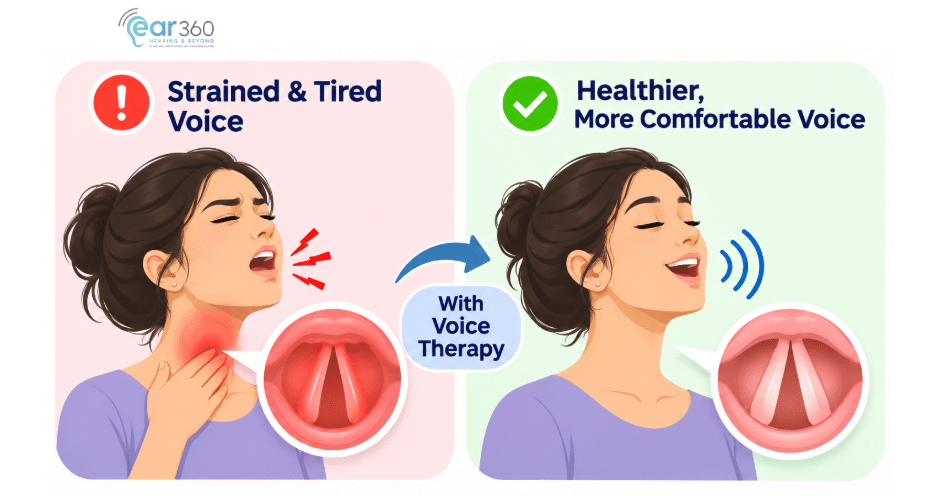
Woman with strained voice vs. healthier voice with voice therapy

Why Voice Therapy Important?

Voice concerns can affect communication, work, confidence and comfort while speaking. A structured voice assessment helps identify the concern and guide the right next step.

Support Hoarseness and Voice Strain

Voice therapy may help people who experience hoarseness, rough voice quality or strain while speaking. The therapist works on identifying speaking patterns that may be adding pressure to the voice and guides the person towards easier, more comfortable voice production.

Reduce Vocal Fatigue During Speaking

Some people feel their voice becomes tired, weak or strained after speaking for a short time. This can affect teachers, professionals, singers, speakers or anyone who uses their voice frequently. Therapy can help improve voice stamina and reduce unnecessary effort during daily communication.

Improve Comfortable Voice Use

Voice therapy focuses on helping the person use their voice in a way that feels clearer, more stable and less tiring. Therapy may include breathing support, relaxation techniques, pitch and loudness control and exercises to reduce tension while speaking.

Guide Healthy Voice Habits and Practice

Healthy voice habits are important for long-term improvement. A therapist may guide the person on hydration, voice rest, avoiding excessive shouting or throat clearing and practising voice exercises correctly at home. These strategies help support better voice care in everyday life.

WhatsApp Image 2026-05-08 at 20.10.59

Introducing Speech, Voice & Language Therapy Services at Resonnocare

Resonnocare provides assessment-led voice therapy support for people experiencing hoarseness, weak voice, vocal strain, voice fatigue or changes in voice quality. Therapy may include voice use education, vocal hygiene guidance, breathing support, gentle voice exercises and communication strategies. The plan is based on the person’s voice concern, daily voice demands and assessment findings. Persistent hoarseness or sudden voice change should be medically evaluated by an ENT specialist before or alongside voice therapy, especially when the concern continues, worsens or is associated with pain, breathing difficulty, swallowing difficulty or other symptoms.

Hoarseness and Voice Quality Changes

Hoarseness may make the voice sound rough, breathy, weak or strained. Some people may feel that their voice breaks, becomes unstable or changes after prolonged speaking. Voice therapy may help when hoarseness is linked to voice use patterns, strain or fatigue. Persistent hoarseness should first be reviewed by an ENT specialist to rule out medical causes.

Vocal Strain and Voice Fatigue

Some people feel tired after speaking for a short time or experience throat discomfort after teaching, presenting, singing or taking calls. Therapy may focus on reducing unnecessary strain, improving voice use habits and supporting more comfortable speaking during daily activities.

Professional Voice Users

Teachers, singers, speakers, trainers, call-center professionals, sales teams, performers and people who speak for long hours may need structured voice support. Voice therapy can help them understand how to use the voice more efficiently and reduce repeated strain during work-related communication.

Voice Changes After Illness or Irritation

Some people notice voice changes after throat infection, coughing, reflux-related irritation, surgery, prolonged voice rest or illness. The clinician may recommend ENT evaluation before therapy when the voice change is persistent, sudden or medically concerning.

Related Speech and Communication Support

Voice therapy is different from speech therapy. Voice therapy focuses on voice quality, strain, pitch, loudness and vocal comfort. Speech therapy focuses more on speech clarity, pronunciation, fluency and communication patterns.

Voice therapy may support people who experience hoarseness, vocal strain, weak voice, voice fatigue or difficulty using their voice comfortably.

Who May Benefit from Voice Therapy?

Image-1-Untitled-design-1-e1771477946188
01

Teachers and trainers

People who speak for long hours in classrooms, training sessions or group settings may experience voice fatigue or strain.

Audiologist-explaining-hearing-aids-to-patient
02

Singers, speakers and performers

People who use their voice professionally may need support for vocal comfort, voice control and healthy voice use.

Kids making binoculars in the grass
03

Call-center and sales professionals

People who spend long hours on calls may notice dryness, tiredness, strain or reduced voice quality by the end of the day.

Image-3-Hearing-test-in-progress-with-audiologist-1
04

People with post-illness voice changes

Voice therapy may be considered when voice changes continue after illness, throat irritation, coughing or medical treatment, after ENT review where required.

Results help guide appropriate device selection, programming adjustments or therapy recommendations.

Supporting Communication Across Age Groups

Speech therapy focuses on improving speech, language and communication abilities through structured intervention. Therapy plans are developed after assessment and are tailored to individual needs.

Speech therapy session with a child

Professional Voice Users

Voice therapy may support professional voice users such as teachers, trainers, singers, speakers, call-center professionals and people who need to speak for long hours as part of their work.

Image-1-Untitled-design-1-e1771477946188

People With Voice Strain

Voice therapy may also support people who experience hoarseness, throat strain while speaking, voice fatigue, or a weak and effortful voice.

Untitled-5000-x-4000-px-2-scaled

People Needing Communication Support

Voice therapy may be helpful when voice-related concerns affect work communication, presentations, meetings, singing or speaking performance, and everyday conversations.

How Voice Therapy Works

Demonstrating-ear-anatomy-with-precision
01

Voice assessment and concern review

The clinician discusses the voice concern, how long it has been present, daily voice use, work demands, medical history and situations where the voice feels strained or tired. ENT evaluation may be recommended when the voice concern is persistent, sudden, severe or medically concerning.

Audiologist-explaining-hearing-aids-to-patient
02

Individual voice therapy goals

Therapy goals are planned according to the person’s voice concern and daily communication needs. Goals may include reducing strain, improving voice comfort, supporting better voice use habits and helping the person manage professional voice demands.

Image-3-Hearing-test-in-progress-with-audiologist-1
03

Structured voice exercises and guidance

Therapy may include voice use education, vocal hygiene guidance, breathing support, resonance-based voice activities and gentle voice exercises where appropriate. Activities are selected according to the assessment findings and clinical suitability.

Image-1-Untitled-design-1-e1771477946188
04

Progress review and home practice

The clinician reviews progress and adjusts activities when required. Home practice may include short voice exercises, vocal care routines, hydration habits, voice-rest guidance and practical strategies for work or daily speaking. Progress varies depending on the cause of the concern, voice use demands, consistency of practice, medical factors and response to therapy.

Why Choose Resonnocare For Voice therapy

Clinician-Guided Voice Therapy

At Resonnocare, voice therapy begins with understanding the concern and identifying whether therapy, ENT evaluation or another next step is most suitable.

Assessment-led approach

The clinician reviews voice quality, strain, fatigue and daily voice use before recommending therapy.

ENT referral when required

Persistent hoarseness, sudden voice change or concerning symptoms are referred for medical evaluation.

Individual therapy planning

Therapy activities are selected according to the person’s needs, voice demands and assessment findings.

Support for professional voice users

Teachers, singers, speakers, call-center professionals and others with high voice use may receive practical voice-care guidance.

Home-practice guidance

The clinician may recommend manageable exercises and vocal hygiene habits for daily routine.

Progress-based care

Therapy goals and activities are reviewed according to progress, comfort and changing voice needs.

Related Services For Voice Therapy

Voice Assessment

A voice assessment helps understand the nature of the voice concern before therapy is planned.

Voice Disorders

Learn more about common voice concerns such as hoarseness, weak voice, voice fatigue and vocal strain.

Speech Therapy

Speech therapy supports speech clarity, fluency, pronunciation and communication confidence.

Frequently Asked Questions

What is voice therapy?

Voice therapy is a clinician-guided service that helps people use their voice more comfortably and efficiently. It may support hoarseness, vocal strain, weak voice, voice fatigue and voice quality concerns.

Who may need voice therapy?

Voice therapy may be helpful for teachers, singers, speakers, call-center professionals and people who experience hoarseness, throat strain, weak voice or tiredness after speaking. It may also support people with voice changes after illness, once medical evaluation is completed where required.

Should I see an ENT before voice therapy?

Persistent hoarseness or sudden voice change should be evaluated by an ENT specialist. This is important when the concern continues, worsens or is associated with pain, breathing difficulty, swallowing difficulty or other symptoms. Voice therapy may be recommended after or alongside medical evaluation.

What happens during voice therapy?

Voice therapy may include voice use education, vocal hygiene guidance, breathing support, gentle voice exercises, resonance or voice placement activities and strategies for reducing strain during daily communication. The exact therapy plan depends on the assessment findings.

How long does voice therapy take?

There is no fixed timeline for voice therapy. Progress depends on the nature of the voice concern, daily voice demands, medical factors, consistency of practice and response to therapy. The clinician reviews progress and adjusts the therapy plan when required.

Book a Speech Assessment

If you or your child are experiencing speech or listening difficulties, a structured assessment can provide clarity and direction.

Schedule a Speech Audiometry or Therapy Consultation at EAR360.

Resonnocare Health-Tech Private Limited Provides hearing and audiology services through a structured, clinically guided approach.

Popular Clinic Locations:

Delhi | Bangalore | Pune | Ludhiana | Indore | 

Tumkur | Mysore | Mangalore

contact info

RESONNOCARE HEALTH-TECH PVT. LTD

Head Office 403, Office Block ‘C’

4th Floor – Above Retail Block R1 & R5,

M3M URBANA, Sector 67, Gurgaon 122101 Haryana

2026, All rights reserved by Resonnocare  health-tech private limited

✓ 14-Day FREE Hearing Aid Trial • Try Before You Decide Chat on WhatsApp → ✓ 14-Day FREE Hearing Aid Trial Call Now →
Powered by Joinchat