

Voice Assessment

Voice Assessment

Understanding Voice Quality. Supporting More Comfortable Communication.

Your voice plays an important role in daily communication. When the voice becomes hoarse, weak, strained or tiring to use, speaking may start to feel effortful at home, work or in social settings.

A voice assessment helps identify the nature of the concern, how long it has been present, how it affects communication and whether voice therapy or medical referral may be needed. At Resonnocare, the assessment is designed to understand both voice quality and voice-use patterns so the next step can be planned appropriately.

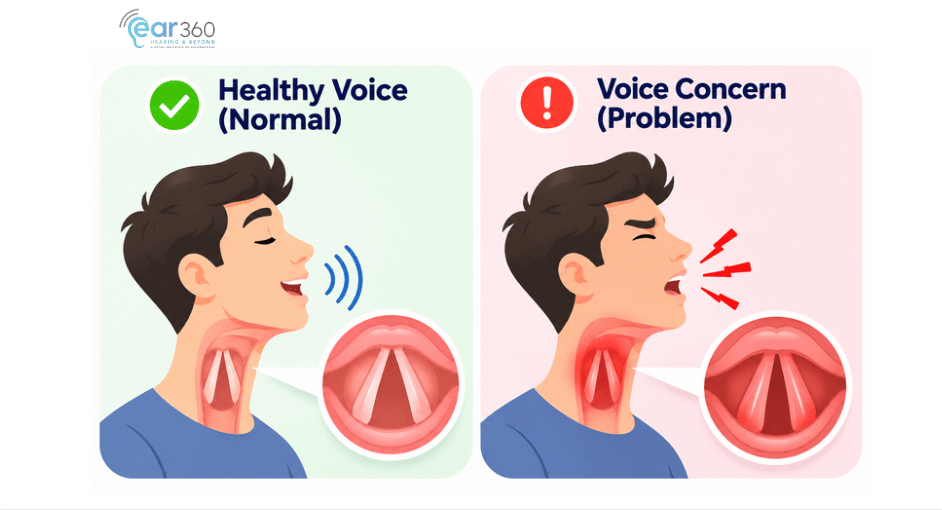
Illustration comparing a healthy voice with normal vocal cords to a voice concern with inflamed vocal cords

Why Voice Assessment is Important?

Voice concerns may seem minor at first, but ongoing hoarseness, strain or fatigue should not be ignored. A structured voice assessment helps clarify the concern and guide suitable support.

Understand Hoarseness and Changes in Voice Quality

A voice assessment helps identify changes in voice quality, such as hoarseness, roughness, breathiness, reduced loudness or an unstable voice. The clinician observes how the voice sounds during speaking and checks whether the concern is affecting clarity and communication.

Review Strain, Effort and Vocal Fatigue

Some people feel pressure, tightness or discomfort while speaking. Others may notice that their voice becomes tired, weak or strained after regular use. The assessment helps understand how much effort the person is using while speaking and whether vocal fatigue is affecting daily communication.

Assess Voice Use in Work and Daily Life

Voice use can vary depending on a person’s routine. Teachers, singers, speakers, call-centre professionals and people who speak for long hours may place higher demands on their voice. The assessment reviews how the person uses their voice at work, at home and in social situations.

Plan Therapy Goals or ENT Referral Where Needed

Based on the assessment findings, the clinician may recommend voice therapy goals, healthy voice habits and structured home practice. If there are signs that require medical evaluation, the person may be referred to an ENT specialist before or along with therapy.

WhatsApp Image 2026-05-08 at 20.10.59

Introducing Voice Assessment Support

Resonnocare offers assessment-led support for people experiencing hoarseness, voice strain, weak voice, vocal fatigue or other changes in voice quality. The purpose of the assessment is to understand how the voice is being used, what symptoms are present and how the concern affects everyday communication. A voice assessment does not follow the same format for everyone. It is guided by the person’s symptoms, speaking demands and history of voice use. The findings help determine whether voice therapy, vocal care guidance or medical review may be the most suitable next step.

What is reviewed during a voice assessment?

A voice assessment may review how the voice sounds during speaking, whether it feels rough, breathy, weak, strained or unstable, and whether the person experiences discomfort while using it. The clinician may also ask how long the change has been present and whether it varies during the day or after longer periods of speaking.

Voice quality, pitch and loudness comfort

Some people feel that their pitch is uncomfortable, their voice does not carry well or speaking loudly causes strain. Others may notice that their voice sounds different from usual. The assessment helps review how comfortable the voice feels across different speaking situations and whether changes in pitch or loudness are affecting communication.

Vocal fatigue and strain

A person may feel that the voice gets tired quickly, becomes weaker by the end of the day or causes throat discomfort after prolonged speaking. This is especially important for people who use their voice heavily during work, teaching, training, calling or public speaking.

Occupational and everyday voice use

The clinician may ask about voice demands during work and daily life. Teachers, singers, speakers, trainers, call-center professionals and people who speak for long hours may place high demand on their voice. Understanding how the voice is used helps the clinician recommend more practical and relevant support.

Symptom duration and warning signs

The assessment also reviews how long the symptoms have been present and whether they are persistent, recurring or worsening over time. Persistent hoarseness should be medically evaluated by an ENT specialist, especially when it continues for more than a short period or occurs with throat pain, breathing difficulty, swallowing difficulty or other concerning symptoms.

A voice assessment helps identify whether the main concern relates to voice quality, vocal strain, fatigue, unhealthy voice-use patterns or the need for medical review.

Who should take this assessment?

Image-1-Untitled-design-1-e1771477946188
01

People with hoarseness or rough voice quality

People who feel that their voice sounds rough, weak, breathy or different from usual may benefit from a voice assessment.

Audiologist-explaining-hearing-aids-to-patient
02

Professional voice users

Teachers, singers, trainers, speakers, sales professionals and call-center teams who rely heavily on their voice may need assessment when strain or fatigue begins affecting communication.

Kids making binoculars in the grass
03

People with vocal fatigue or throat strain

Those who feel tired after speaking, need more effort to talk or experience discomfort after prolonged voice use may benefit from review.

Image-3-Hearing-test-in-progress-with-audiologist-1
04

People with voice change after illness or prolonged voice use

People who notice ongoing voice changes after throat infection, coughing, irritation or repeated strain should consider assessment, especially if the change persists.

Persistent hoarseness should not be ignored. A clinician-guided assessment can help determine whether voice therapy, vocal care support or ENT evaluation may be the right next step.

Supporting Communication Across Age Groups

Speech therapy focuses on improving speech, language and communication abilities through structured intervention. Therapy plans are developed after assessment and are tailored to individual needs.

Speech therapy session with a child

Professional Voice Users

A voice assessment may be helpful for professional voice users such as teachers, trainers, singers, speakers, call-center professionals, and sales or customer-facing professionals who use their voice frequently as part of their work.

Image-1-Untitled-design-1-e1771477946188

People With Hoarseness or Voice Change

A voice assessment may be recommended for people experiencing hoarseness, a rough or weak voice, changes in voice quality, or ongoing discomfort while speaking.

Untitled-5000-x-4000-px-2-scaled

People With Communication Difficulty Due to Voice Strain

A voice assessment may also support people who experience vocal fatigue, speaking effort, throat strain during communication, or reduced comfort while speaking in work, social or everyday situations.

How Voice Assessment Works

Demonstrating-ear-anatomy-with-precision
01

Initial discussion and voice history

The clinician discusses the main concern, how long it has been present, when it becomes more noticeable and how it affects communication. The discussion may also include work demands, speaking habits, previous voice concerns and any related medical history.

Audiologist-explaining-hearing-aids-to-patient
02

Structured review of voice use and symptoms

The clinician reviews how the voice sounds and feels during speaking. This may include observation of hoarseness, vocal effort, fatigue, pitch comfort, loudness comfort and daily voice-use patterns. The goal is to understand how the concern affects practical communication.

Image-3-Hearing-test-in-progress-with-audiologist-1
03

Assessment findings and next-step planning

Once the concern has been reviewed, the clinician explains the findings clearly and discusses whether voice therapy, vocal care support or ENT referral may be appropriate. The recommendations are based on the person’s symptoms, duration of concern and communication needs.

Image-1-Untitled-design-1-e1771477946188
04

Therapy goals, guidance and referral support

If therapy is suitable, the clinician may recommend therapy goals, vocal care guidance and home-practice support. If warning signs or persistent hoarseness are present, ENT referral may also be advised. The plan is chosen according to the person’s symptoms, voice demands and response to care.

Why Choose Resonnocare For Voice Assessment

Clinician-Guided Voice Assessment

At Resonnocare, voice concerns are reviewed through a structured and practical approach that focuses on how the voice sounds, feels and functions in daily life.

Assessment-led support

The clinician first understands the nature of the concern before recommending therapy or referral.

Focus on real-life voice use

The assessment considers work demands, communication needs and everyday voice use.

Support for professional and non-professional voice users

People with heavy occupational voice use as well as those with day-to-day speaking difficulties may benefit from structured guidance.

Therapy planning where appropriate

When voice therapy is suitable, practical goals and guidance are recommended based on assessment findings.

ENT referral when needed

Persistent or concerning voice changes are not ignored and may be referred for medical evaluation.

Clear next-step guidance

The assessment helps the person understand what to do next instead of leaving the concern unclear.

Frequently Asked Questions

What is a voice assessment?

A voice assessment is a structured review of voice quality, strain, fatigue and voice-use patterns. It helps identify the concern and decide whether therapy guidance or referral may be needed.

Who may need a voice assessment?

A voice assessment may help people with hoarseness, voice strain, weak voice, vocal fatigue or voice changes that affect speaking comfort. It may also be useful for teachers, singers, speakers and other professional voice users.

What is reviewed during a voice assessment?

The clinician may review voice quality, pitch and loudness comfort, speaking effort, vocal fatigue, work-related voice demands and how long the symptoms have been present.

Should I see an ENT for hoarseness?

Persistent hoarseness should be medically evaluated by an ENT specialist, especially when it lasts longer than expected or occurs with pain, swallowing difficulty, breathing difficulty or other concerning symptoms.

What happens after the assessment?

After the assessment, the clinician explains the findings and suggests the next step. This may include voice therapy goals, vocal care guidance, home-practice advice or ENT referral if needed.

Book a Speech Assessment

If you or your child are experiencing speech or listening difficulties, a structured assessment can provide clarity and direction.

Schedule a Speech Audiometry or Therapy Consultation at EAR360.

Resonnocare Health-Tech Private Limited Provides hearing and audiology services through a structured, clinically guided approach.

Popular Clinic Locations:

Delhi | Bangalore | Pune | Ludhiana | Indore | 

Tumkur | Mysore | Mangalore

contact info

RESONNOCARE HEALTH-TECH PVT. LTD

Head Office 403, Office Block ‘C’

4th Floor – Above Retail Block R1 & R5,

M3M URBANA, Sector 67, Gurgaon 122101 Haryana

2026, All rights reserved by Resonnocare  health-tech private limited

✓ 14-Day FREE Hearing Aid Trial • Try Before You Decide Chat on WhatsApp → ✓ 14-Day FREE Hearing Aid Trial Call Now →