
Swallowing Therapy

Swallowing Therapy

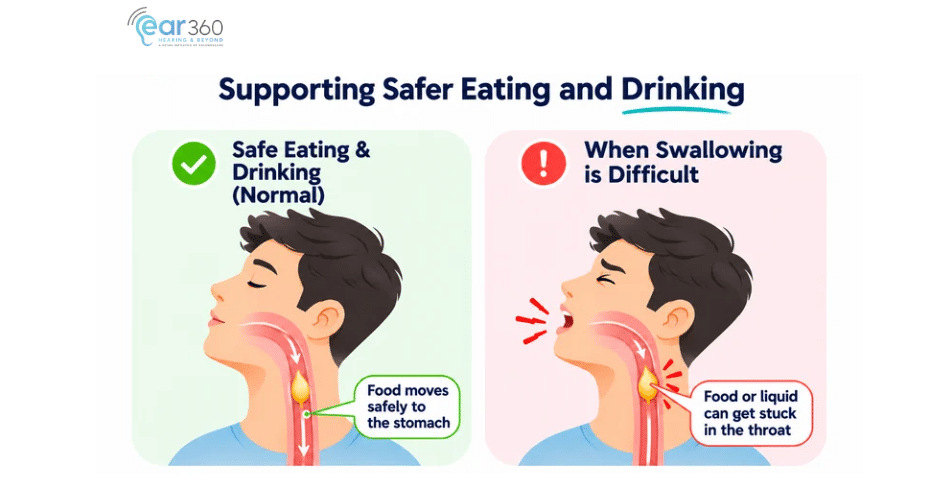
Supporting Safer Eating and Drinking

Swallowing is an important part of eating, drinking and daily wellbeing. When a person has difficulty chewing, swallowing or managing food and liquids safely, meals can become stressful and uncomfortable.

Swallowing concerns may appear as coughing during meals, food sticking in the throat, choking episodes, a wet-sounding voice after eating or avoiding certain foods. These concerns should be reviewed carefully, especially when they are ongoing or affecting nutrition, comfort or safety.

At Resonnocare, swallowing therapy begins with an assessment-led understanding of the concern. The clinician reviews symptoms, mealtime difficulties and safety needs before recommending suitable therapy goals, caregiver guidance or further medical referral where required.

Illustration comparing safe eating vs. difficulty swallowing, showing food path.

Why Swallowing Therapy Important?

Swallowing difficulties can affect eating comfort, nutrition, safety and confidence during meals. A structured assessment helps identify the concern and guide the right support plan.

Identify Swallowing Concerns Early

Early assessment can help identify signs of swallowing difficulty before they lead to repeated choking episodes, poor nutrition, dehydration or fear of eating. It also helps determine whether the concern is occasional or requires professional support.

Understand Coughing or Choking During Meals

Coughing, choking, throat clearing, wet voice or breathing discomfort during meals may indicate that food or liquid is not moving safely. A swallowing assessment helps review these symptoms and understand when they occur, such as with water, solid food, soft food or mixed textures.

Guide Safe Mealtime Strategies

Based on the assessment, the clinician may suggest safer ways to eat and drink. This may include posture changes, pacing, smaller bites or sips, texture modification or other mealtime strategies. These should always be recommended after proper assessment and not used as a general solution for everyone.

Support Caregiver Education and Home Practice

Caregivers play an important role in supporting safe eating and drinking. The clinician may guide family members or caregivers on what signs to watch for, how to support meals safely and when to seek medical help. Home practice may also be recommended based on the person’s specific swallowing needs.

WhatsApp Image 2026-05-08 at 20.10.59

Introducing Swallowing Therapy

Resonnocare provides assessment-led swallowing therapy support for people experiencing difficulty chewing, swallowing, coughing during meals or managing food and liquids safely. Therapy may include swallowing exercises where suitable, posture strategies, safe swallowing techniques, caregiver education and texture-related guidance based only on assessment findings. Swallowing therapy is not the same for every person. The therapy plan depends on the person’s age, symptoms, medical history, swallowing ability and safety needs. Urgent medical care is required if there is choking, breathing difficulty, sudden swallowing change, severe weakness, repeated aspiration concern or sudden difficulty speaking or swallowing.

Swallowing Assessment and Therapy

Swallowing therapy begins with understanding the person’s symptoms, medical history and mealtime difficulties. The clinician may review chewing, swallowing comfort, coughing, throat clearing, voice changes after meals and the person’s ability to manage food or liquids safely. A structured swallowing assessment can help identify the concern before therapy guidance is recommended.

Dysphagia Support

Dysphagia means difficulty swallowing. It may affect chewing, moving food in the mouth, swallowing safely or managing food and liquids after they enter the throat. Dysphagia can occur in children or adults and may be related to developmental, neurological, medical, surgical or age-related factors. The concern should be assessed properly before therapy or food texture changes are recommended.

Feeding and Texture Concerns

Some people may cough while eating, avoid certain foods, take too long to finish meals or feel that food gets stuck in the throat. Children may show difficulty managing textures, chewing properly or accepting certain foods. Food or liquid texture changes should not be followed as general advice. They should be recommended only after assessment by a qualified clinician.

Pediatric and Adult Swallowing Support

Swallowing therapy may support children with feeding, chewing or texture concerns and adults who experience swallowing difficulty after illness, injury, surgery or neurological conditions. The therapy plan is selected according to the person’s symptoms, medical history, safety needs and assessment findings.

Caregiver Guidance and Referral Support

Caregivers may receive guidance on mealtime routines, safe practice activities, symptom monitoring and when to seek further medical help. Medical referral may be recommended when symptoms are sudden, severe, persistent or linked with choking, breathing difficulty, weight loss or repeated chest concerns. Related care may also be coordinated with broader speech and language therapy support where required.

Swallowing therapy focuses on safer eating, drinking and mealtime participation through assessment-led guidance and clinician-supervised support.

Who should take this service?

Image-1-Untitled-design-1-e1771477946188
01

People coughing during meals

People who cough, clear their throat or feel discomfort while eating or drinking may benefit from a swallowing assessment.

Audiologist-explaining-hearing-aids-to-patient
02

People with choking or food sticking concerns

People who feel food gets stuck, experience choking episodes or avoid certain foods may need structured review.

Kids making binoculars in the grass
03

Children with feeding or texture concerns

Children who struggle with chewing, swallowing or managing food textures may require assessment-led support.

Image-3-Hearing-test-in-progress-with-audiologist-1
04

Adults after illness, injury or medical treatment

Adults may need swallowing therapy after neurological illness, surgery, prolonged illness or other medical conditions affecting swallowing.

Results help guide appropriate device selection, programming adjustments or therapy recommendations.

Supporting Communication Across Age Groups

Speech therapy focuses on improving speech, language and communication abilities through structured intervention. Therapy plans are developed after assessment and are tailored to individual needs.

Speech therapy session with a child

Children

Swallowing therapy may support children who experience chewing difficulty, feeding concerns, trouble managing different food textures, or coughing and discomfort during meals.

Image-1-Untitled-design-1-e1771477946188

Adults

Swallowing therapy may support adults who experience coughing during meals, a sensation of food sticking in the throat, a wet voice after eating or drinking, or swallowing changes after an illness or injury.

Untitled-5000-x-4000-px-2-scaled

Caregivers and Families

Guidance may also support caregivers and families in creating safer mealtime routines, monitoring swallowing symptoms, following clinician-recommended strategies and supporting home practice safely.

How Swallowing Therapy Works

Demonstrating-ear-anatomy-with-precision
01

Initial assessment and concern review

The clinician discusses the swallowing concern, medical history, current symptoms and situations where difficulty is noticed during meals.

Audiologist-explaining-hearing-aids-to-patient
02

Swallowing and mealtime observation

The clinician may review chewing, swallowing comfort, coughing, throat clearing, voice changes after meals and the person’s ability to manage food or liquids safely.

Image-3-Hearing-test-in-progress-with-audiologist-1
03

Therapy goals and safety planning

Based on assessment findings, the clinician recommends therapy goals, swallowing strategies, posture guidance or caregiver support where appropriate.

Image-1-Untitled-design-1-e1771477946188
04

Progress review and home guidance

The clinician reviews progress and adjusts recommendations when required. Home guidance may include safe practice activities and mealtime strategies based on the assessment. Progress varies depending on the cause of the swallowing concern, medical factors, consistency of practice and response to therapy.

Frequently Asked Questions

What is swallowing therapy?

Swallowing therapy supports people who have difficulty chewing, swallowing or managing food and liquids safely. It may include assessment-led exercises, posture strategies, caregiver guidance and safe swallowing support.

What are common signs of swallowing difficulty?

Common signs include coughing during meals, choking, food sticking in the throat, wet voice after eating or drinking, avoiding foods, taking too long to eat or unexplained weight loss.

Is swallowing difficulty the same as dysphagia?

Dysphagia means difficulty swallowing. It can affect eating, drinking, chewing or safely moving food and liquids through the throat. A swallowing assessment can help understand the concern.

Should I change food texture at home?

Food or liquid texture changes should not be followed as general advice. They should be recommended based on assessment findings and clinical guidance.

When should I seek urgent help?

Urgent medical care is needed for choking, breathing difficulty, sudden swallowing change, sudden speech difficulty, severe weakness or repeated episodes where food or liquid appears to enter the airway.

Book a Speech Assessment

If you or your child are experiencing speech or listening difficulties, a structured assessment can provide clarity and direction.

Schedule a Speech Audiometry or Therapy Consultation at EAR360.

Resonnocare Health-Tech Private Limited Provides hearing and audiology services through a structured, clinically guided approach.

Popular Clinic Locations:

Delhi | Bangalore | Pune | Ludhiana | Indore | 

Tumkur | Mysore | Mangalore

contact info

RESONNOCARE HEALTH-TECH PVT. LTD

Head Office 403, Office Block ‘C’

4th Floor – Above Retail Block R1 & R5,

M3M URBANA, Sector 67, Gurgaon 122101 Haryana

2026, All rights reserved by Resonnocare  health-tech private limited

✓ 14-Day FREE Hearing Aid Trial • Try Before You Decide Chat on WhatsApp → ✓ 14-Day FREE Hearing Aid Trial Call Now →