
Understanding Swallowing Concerns. Planning Safer Next Steps.
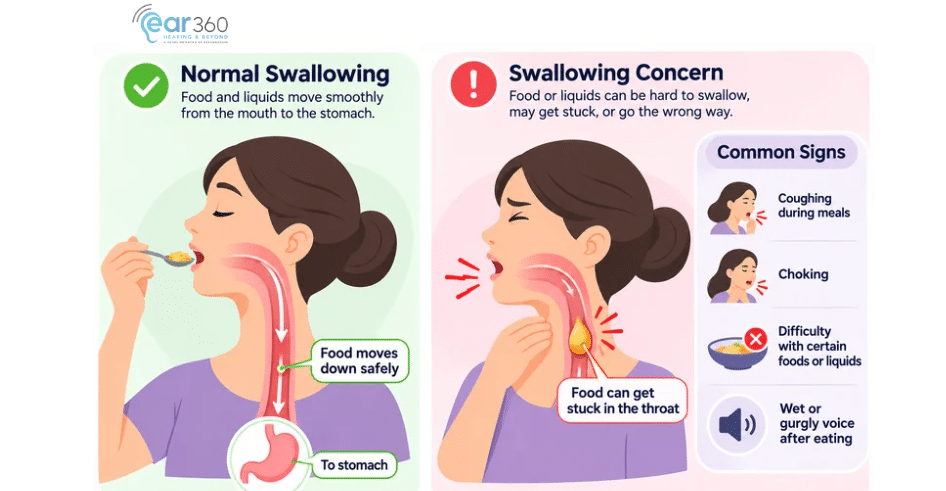
Eating and drinking should feel safe and comfortable. When a person coughs during meals, chokes, feels food stuck in the throat or struggles to manage food and liquids, a swallowing concern may need professional review.
A swallowing assessment helps understand the nature of the difficulty, the symptoms noticed during meals and whether therapy, caregiver guidance or medical referral may be required.
At Resonnocare, swallowing concerns are reviewed through an assessment-led approach. The clinician considers the person’s symptoms, medical history, food and liquid difficulties, safety needs and everyday mealtime challenges before recommending the next step.
Why Is Swallowing Assessment Important?
Swallowing concerns can affect eating comfort, nutrition, safety and confidence during meals. A structured assessment helps identify the concern and guide suitable support.
Identify Swallowing Difficulty Early
Early assessment can help identify swallowing problems before they lead to repeated coughing, choking, reduced food intake, dehydration, weight loss or fear of eating. It also helps determine whether the difficulty is mild, temporary or something that needs structured professional support.
Understand Coughing or Choking Concerns
Coughing, choking, throat clearing, wet voice or breathing discomfort during meals may be signs of swallowing difficulty. The assessment helps understand when these symptoms happen, how often they occur and whether they are linked to specific foods, liquids or eating situations.
Review Food and Liquid Difficulties
Some people may have difficulty swallowing solid foods, while others may struggle more with thin liquids, soft foods or mixed textures. A swallowing assessment reviews what types of food or liquid are difficult to manage and whether changes in texture, pace or posture may be needed.
Plan Therapy, Referral or Caregiver Guidance
Based on the assessment findings, the clinician may recommend swallowing therapy, safe mealtime strategies, caregiver education or referral to a doctor or specialist. This helps ensure that support is planned according to the person’s specific swallowing needs rather than using general exercises or advice.
Introducing Swallowing Assessment
Resonnocare provides swallowing assessment support for children and adults who experience difficulty eating, drinking, chewing, swallowing or managing food and liquids safely. The assessment helps review symptoms such as coughing during meals, choking, food sticking, wet voice after eating, recurrent chest infections, feeding concerns or swallowing difficulty after illness or injury. The assessment does not follow the same format for everyone. It is guided by the person’s age, symptoms, medical history and mealtime needs. If advanced swallowing evaluation is required, the clinician may recommend referral to the appropriate medical specialist or facility.
Swallowing and Mealtime History
The clinician begins by understanding the swallowing concern, when it started and how it affects eating or drinking. The discussion may include coughing, choking, food sticking, meal duration, avoided foods, weight changes, medical history and caregiver observations.
Coughing, Choking and Food Sticking
The assessment may review whether the person coughs while eating, chokes on food or liquids, clears the throat frequently or feels that food gets stuck. These symptoms can help the clinician understand whether swallowing therapy, medical review or further evaluation may be required.
Food and Liquid Difficulty
Some people may have difficulty with specific food textures or liquids. Others may find meals tiring, slow or uncomfortable. Food or liquid changes should not be followed as general advice. Any texture-related guidance should be based on assessment findings and clinical judgement.
Medical History and Referral Needs
Swallowing difficulty may be related to neurological illness, stroke, surgery, prolonged illness, ageing, developmental concerns or other medical factors. If symptoms are sudden, severe, persistent or medically concerning, referral to a doctor, ENT specialist or another healthcare professional may be recommended.
Child Feeding and Swallowing Concerns
Children may need assessment when they show difficulty chewing, managing textures, coughing during meals, avoiding foods or taking very long to eat. The clinician may review feeding history, mealtime behaviour, food acceptance, chewing ability and safety concerns before recommending the next step.
A swallowing assessment helps decide whether the person needs swallowing therapy, caregiver guidance, medical referral or further evaluation for dysphagia-related concerns.
Who should take this assessment?
People coughing or choking during meals
People who cough, choke or clear their throat while eating or drinking may need a swallowing assessment.
People with recurrent chest infections
Repeated chest infections or breathing concerns along with swallowing difficulty may require professional review.
People who feel food gets stuck
A sensation of food sticking in the throat or difficulty moving food safely may need structured assessment.
People with swallowing changes after stroke or illness
Adults may need assessment when swallowing changes occur after stroke, neurological illness, surgery, injury or prolonged medical treatment.
Results help guide appropriate device selection, programming adjustments or therapy recommendations.
Supporting Communication Across Age Groups
Speech therapy focuses on improving speech, language and communication abilities through structured intervention. Therapy plans are developed after assessment and are tailored to individual needs.
Speech Therapy May Be Recommended For:
Children
A swallowing assessment may support children who have feeding concerns, difficulty chewing, trouble managing different food textures, or coughing and discomfort during meals.
Adults
A swallowing assessment may support adults who experience coughing or choking during meals, a sensation of food sticking in the throat, a wet voice after eating or drinking, or swallowing changes after an illness or injury.
People Requiring Referral Guidance
A swallowing assessment may also help when there is a sudden change in swallowing, recurrent chest-related concerns, persistent swallowing difficulty, or a need for advanced swallowing evaluation.
How Swallowing Assessment Works
Initial concern review
The clinician discusses the swallowing concern, symptoms, medical history and situations where difficulty is noticed during meals.
Mealtime and symptom review
The clinician may review coughing, choking, food sticking, throat clearing, wet voice, food or liquid difficulty and caregiver observations.
Safety and referral planning
Based on the assessment findings, the clinician explains whether swallowing therapy, caregiver guidance, medical referral or advanced evaluation may be required.
Guidance and next steps
The clinician may recommend suitable therapy goals, mealtime strategies, home guidance or referral support based on the person’s needs. Urgent medical care is needed if there is choking, breathing difficulty, sudden swallowing change, sudden speech difficulty or severe weakness.
Frequently Asked Questions
What is a swallowing assessment?
A swallowing assessment is a structured review of eating, drinking and swallowing concerns. It helps identify symptoms such as coughing, choking, food sticking, wet voice after meals or difficulty managing food and liquids.
Who needs a swallowing assessment?
A swallowing assessment may be helpful for children or adults who cough during meals, choke, avoid foods, feel food stuck in the throat, have recurrent chest infections or experience swallowing changes after illness or injury.
Is swallowing assessment the same as dysphagia evaluation?
Dysphagia means difficulty swallowing. A swallowing assessment helps understand dysphagia-related concerns and decide whether therapy, caregiver guidance, medical referral or further evaluation is needed.
Will food texture changes be recommended?
Food or liquid texture changes should only be recommended based on assessment findings. They should not be followed as universal instructions without clinician guidance.
When should I seek urgent medical help?
Urgent medical care is needed for choking, breathing difficulty, sudden swallowing change, sudden speech difficulty, severe weakness or repeated episodes where food or liquid may be entering the airway.
If you or your child are experiencing speech or listening difficulties, a structured assessment can provide clarity and direction.
Schedule a Speech Audiometry or Therapy Consultation at EAR360.
